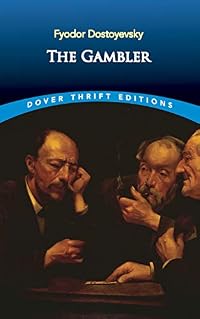
The Gambler
by Fyodor Dostoyevsky
On This Page
Description
Delve into the question of the morality of gambling in this brilliant novella from famed Russian fiction writer Fyodor Dostoyevsky. The author of Crime and Punishment tackles the perennially controversial topic of gambling with his trademark incisiveness in this fast-paced, satisfying read. Literary sleuths say Dostoyevsky had an intimate knowledge of the subject matter—it is rumored that he penned this novella in order to help pay off one of his own gambling debts!.
Tags
Recommendations



















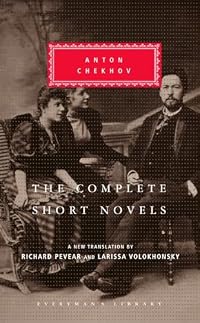

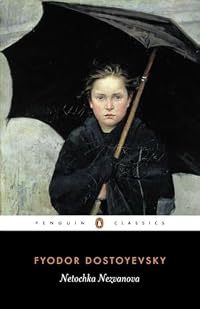
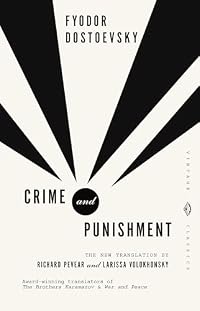
Member Recommendations

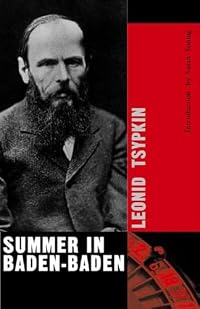
markusnenadovus More Russian literary genius, but a bit more contemporary.
13

JuliaMaria Der Roman "Ein Sommer in Baden-Baden" von Zypkin basiert auf dem autobiografischen Roman "Der Spieler" von Dostojewski.
Member Reviews
I feel a little cheated by this book. The back cover states the book “offers a grim and psychologically probing picture of the fatal attractions of gambling.” For such a small book, I expected a quick deep dive into the throes of gambling sooner than later, becoming lost in all its negativity from start to end. Not quite.
The book begins with a somewhat whiny Alexey Ivanovitch, a trilingual tutor for a formerly wealthy Russian General, playing roulette for the first time because his unrequited love (we are led to believe), Polina Alexandrovna, stepdaughter of the general, asked him to play for her and to win. He notes the gentlemanly way of winning, and more importantly losing. “A real gentleman should not show excitement even if show more he loses his whole fortune. Money ought to be so much below his gentlemanly dignity as to be scarcely worth noticing.” But the control of gambling creeps in unconsciously. Alexey notes, “… I ought to have gone away, but a strange sensation rose up in me, a sort of defiance of fate, a desire to challenge it, to put out my tongue at it. I laid down the largest stake allowed – four thousand guldens – and lost it.”
Alexey isn’t the only love sick puppy in the book. The General pines for Mlle. Blanche, who is willing to marry the General because of his title, pension, and pending inheritance from his Aunt Antonida – “Granny”. The General’s lovesickness provided some of the humor, crying for his love and soothed like a baby. There’s also a Mr. Astley, a wealthy Englishman, who desires Polina and becomes her confidante. Granny was by far the best character. Direct and cantankerous, her mind is sharp and she sees people clearly.
Through his characters, Dostoyevsky doled out the perspectives of Russians and the cultural stereotypes from the early 1800’s. The Poles are the leeches that hang about the gambling table, making unwanted suggestions and awaiting opportunities to steal winnings. The Jews are the shrewd, advising the winning gamblers to get up and leave – before they lose it all. I quinched a bit reading these repeated negative stereotypes, reminding myself it’s normal back then.
On Russians and On Frenchman:
“Why, am I to model myself upon our Russians here? They sit, not daring to open their lips, and almost ready to deny they are Russians.”
“A Frenchman is not often naturally polite. He is always polite, as it were, to order, with a motive. If he sees the necessity for being fantastic, original, a little out of the ordinary, then his freakishness is most stupid and unnatural, and is made up of accepted and long-vulgarized traditions. The natural Frenchman is composed of the most plebeian, petty, ordinary practical sense…”
If I were to expand the definition of gambling (and its implied addiction) beyond money onto love and life, then Dostoyevsky tells a much more interesting story. Alexey exhibits a callousness towards love and life. (hmm, perhaps that’s the whole point of gambling addiction.) Does one declare love with the following?
To Polina: “You are hateful to me, just because I’ve allowed you to take such liberties, and even more hateful because you are so necessary to me.”
And
“…I answered for the hundredth time that I hated her. Yes, she was hateful to me. There were moments (on every occasion at the end of our talks) when I would have given my life to strangle her! I swear if it had been possible on the spot to plunge a sharp knife in her bosom, I believe I should have snatched it up with relish…”
Mr. Astley summed up gambling the best – to Alexey: “You have not only given up life, all your interests, private and public, the duties of a man and a citizen, your friends (and you really had friends) – you have not only given up your objects, such as they were, all but gambling – you have even given up your memories. I remember you at an intense and ardent moment of your life; but I am sure you have forgotten all the best feelings you had then; your dreams, your most genuine desires now do not rise above pair, impair, rouge, noir, the twelve middle numbers, and so on, I am sure!”
All in all, not bad. show less
The book begins with a somewhat whiny Alexey Ivanovitch, a trilingual tutor for a formerly wealthy Russian General, playing roulette for the first time because his unrequited love (we are led to believe), Polina Alexandrovna, stepdaughter of the general, asked him to play for her and to win. He notes the gentlemanly way of winning, and more importantly losing. “A real gentleman should not show excitement even if show more he loses his whole fortune. Money ought to be so much below his gentlemanly dignity as to be scarcely worth noticing.” But the control of gambling creeps in unconsciously. Alexey notes, “… I ought to have gone away, but a strange sensation rose up in me, a sort of defiance of fate, a desire to challenge it, to put out my tongue at it. I laid down the largest stake allowed – four thousand guldens – and lost it.”
Alexey isn’t the only love sick puppy in the book. The General pines for Mlle. Blanche, who is willing to marry the General because of his title, pension, and pending inheritance from his Aunt Antonida – “Granny”. The General’s lovesickness provided some of the humor, crying for his love and soothed like a baby. There’s also a Mr. Astley, a wealthy Englishman, who desires Polina and becomes her confidante. Granny was by far the best character. Direct and cantankerous, her mind is sharp and she sees people clearly.
Through his characters, Dostoyevsky doled out the perspectives of Russians and the cultural stereotypes from the early 1800’s. The Poles are the leeches that hang about the gambling table, making unwanted suggestions and awaiting opportunities to steal winnings. The Jews are the shrewd, advising the winning gamblers to get up and leave – before they lose it all. I quinched a bit reading these repeated negative stereotypes, reminding myself it’s normal back then.
On Russians and On Frenchman:
“Why, am I to model myself upon our Russians here? They sit, not daring to open their lips, and almost ready to deny they are Russians.”
“A Frenchman is not often naturally polite. He is always polite, as it were, to order, with a motive. If he sees the necessity for being fantastic, original, a little out of the ordinary, then his freakishness is most stupid and unnatural, and is made up of accepted and long-vulgarized traditions. The natural Frenchman is composed of the most plebeian, petty, ordinary practical sense…”
If I were to expand the definition of gambling (and its implied addiction) beyond money onto love and life, then Dostoyevsky tells a much more interesting story. Alexey exhibits a callousness towards love and life. (hmm, perhaps that’s the whole point of gambling addiction.) Does one declare love with the following?
To Polina: “You are hateful to me, just because I’ve allowed you to take such liberties, and even more hateful because you are so necessary to me.”
And
“…I answered for the hundredth time that I hated her. Yes, she was hateful to me. There were moments (on every occasion at the end of our talks) when I would have given my life to strangle her! I swear if it had been possible on the spot to plunge a sharp knife in her bosom, I believe I should have snatched it up with relish…”
Mr. Astley summed up gambling the best – to Alexey: “You have not only given up life, all your interests, private and public, the duties of a man and a citizen, your friends (and you really had friends) – you have not only given up your objects, such as they were, all but gambling – you have even given up your memories. I remember you at an intense and ardent moment of your life; but I am sure you have forgotten all the best feelings you had then; your dreams, your most genuine desires now do not rise above pair, impair, rouge, noir, the twelve middle numbers, and so on, I am sure!”
All in all, not bad. show less
There are many things to like about "The Gambler" (1866), which Dostoyevsky wrote simultaneously with "Crime and Punishment" and under great duress. He had lost his first wife, failed at business, and accumulated large debts gambling in Baden Baden, Germany; as with his other works the angst this produced led to raw, memorable fiction.
At its highest level the novel is about the difficulty of controlling one's passions. This is seen in several characters and in a few different forms (women, money, and gambling); Dostoyevsky writes of these passions convincingly, particular the love/hate, obsessive relationship between the narrator and Polina ("When I talk to you I long to tell you everything, everything, everything." ... "I shall simply show more kill you because I have an impulse to devour you." .... "I often have an irresistible longing to beat you, to disfigure you, to strangle you.")
The descriptions of "systems" to beat roulette are of course flawed but fascinating; Dostoyevsky also reflects the gambler's thought process and philosophy ("Why, what, what can they tell me that I do not know? And is that the point? The point is that - one turn of the wheel, and all will be changed, and those very moralists will be the first (I am convinced of that) to come up to congratulate me with friendly jests.").
The character of Granny and her ups and downs in gambling are memorable.
I also enjoyed insight into the Russian psyche, in particular, the struggle Russians had in the 19th century with their own identity, wanting to preserve Russia from bad Western influences but at the same time feeling inferior. ("Why am I to model myself upon our Russians here? They sit, not daring to open their lips, and almost ready to deny they are Russians." ... "The Russian is not only incapable of amassing capital, but dissipates it in a reckless and unseemly way." ... "The Russian abroad is sometimes too easily cowed, and is horribly afraid of what people will say, how they will look at him, and whether this or that will be the proper thing." ... and lastly, "Yes, you have destroyed yourself. You had some abilities, a lively disposition, and were not a bad fellow; you might have even been of service to your country, which is in such need of men, but - you will remain here, and your life is over. I don't blame you. To my mind all Russians are like that, or disposed to be like that. If it is not roulette it is something similar.")
As a corollary to that, the culture clash with other nationalities at the spa town is interesting. This takes strongest form with the French, reflecting disdain, admiration, and envy at the same time ("De Grieux was like all Frenchmen; that is, gay and polite when necessary and profitable to be so, and insufferably tedious when the necessity to be gay and polite was over. ... The natural Frenchman is composed of the most plebeian, petty, ordinary practical sense - in fact, he is one of the most wearisome creatures in the world. In my opinion, only the innocent and inexperienced - especially Russian young ladies - are fascinated by Frenchmen." .... "The national type of Frenchman, or, rather, of Parisian, had been moulded into elegant forms while we were still bears.")
Final quote; on lawyers and arguing metal illness as a self-defense (yes it was happening then too):
"Lawyers have taken to arguing in criminal cases that their clients were not responsible at the moment of their crime, and that it was a form of disease. 'He killed him,' they say, 'and has not memory of it.' And only imagine, General, the medical authorities support them - and actually maintain that there are illnesses, temporary aberrations in which a man scarcely remembers anything..." show less
At its highest level the novel is about the difficulty of controlling one's passions. This is seen in several characters and in a few different forms (women, money, and gambling); Dostoyevsky writes of these passions convincingly, particular the love/hate, obsessive relationship between the narrator and Polina ("When I talk to you I long to tell you everything, everything, everything." ... "I shall simply show more kill you because I have an impulse to devour you." .... "I often have an irresistible longing to beat you, to disfigure you, to strangle you.")
The descriptions of "systems" to beat roulette are of course flawed but fascinating; Dostoyevsky also reflects the gambler's thought process and philosophy ("Why, what, what can they tell me that I do not know? And is that the point? The point is that - one turn of the wheel, and all will be changed, and those very moralists will be the first (I am convinced of that) to come up to congratulate me with friendly jests.").
The character of Granny and her ups and downs in gambling are memorable.
I also enjoyed insight into the Russian psyche, in particular, the struggle Russians had in the 19th century with their own identity, wanting to preserve Russia from bad Western influences but at the same time feeling inferior. ("Why am I to model myself upon our Russians here? They sit, not daring to open their lips, and almost ready to deny they are Russians." ... "The Russian is not only incapable of amassing capital, but dissipates it in a reckless and unseemly way." ... "The Russian abroad is sometimes too easily cowed, and is horribly afraid of what people will say, how they will look at him, and whether this or that will be the proper thing." ... and lastly, "Yes, you have destroyed yourself. You had some abilities, a lively disposition, and were not a bad fellow; you might have even been of service to your country, which is in such need of men, but - you will remain here, and your life is over. I don't blame you. To my mind all Russians are like that, or disposed to be like that. If it is not roulette it is something similar.")
As a corollary to that, the culture clash with other nationalities at the spa town is interesting. This takes strongest form with the French, reflecting disdain, admiration, and envy at the same time ("De Grieux was like all Frenchmen; that is, gay and polite when necessary and profitable to be so, and insufferably tedious when the necessity to be gay and polite was over. ... The natural Frenchman is composed of the most plebeian, petty, ordinary practical sense - in fact, he is one of the most wearisome creatures in the world. In my opinion, only the innocent and inexperienced - especially Russian young ladies - are fascinated by Frenchmen." .... "The national type of Frenchman, or, rather, of Parisian, had been moulded into elegant forms while we were still bears.")
Final quote; on lawyers and arguing metal illness as a self-defense (yes it was happening then too):
"Lawyers have taken to arguing in criminal cases that their clients were not responsible at the moment of their crime, and that it was a form of disease. 'He killed him,' they say, 'and has not memory of it.' And only imagine, General, the medical authorities support them - and actually maintain that there are illnesses, temporary aberrations in which a man scarcely remembers anything..." show less
I do not hate Constance Garnett's translation - but readers should read it AND another translation. I like this work and think its definitely a must-read classic. Trouble is: one has to be in the mood for it. Its frivolous. Serious but frivolous. A different time and a different class of folks. But its accessible, just not all day every day.
This short novel, written from Dostoevsky’s personal experiences of gambling, illustrates what happens when people become hooked on the roulette wheel or blackjack. Alexey Ivanovich considers gambling to be a solid financial strategy but at the same time is horrified when the General’s elderly mother, whom everyone calls Grandmother, comes to visit her son and herself becomes a roulette fiend, losing all the money she came with.
This read quickly and smoothly, with the occasional overwrought emotional scene as I would expect from a Dostoevsky story: in this case, it’s Alexey professing his love for Polina that made me roll my eyes with his feverish declarations that he would throw himself off a cliff if she asked that he do so.
I show more liked this better than the other Dostoevskys I’ve read to this point (The Brothers Karamazov and Crime and Punishment), probably because it is short and there is less room for emotional extremes. show less
This read quickly and smoothly, with the occasional overwrought emotional scene as I would expect from a Dostoevsky story: in this case, it’s Alexey professing his love for Polina that made me roll my eyes with his feverish declarations that he would throw himself off a cliff if she asked that he do so.
I show more liked this better than the other Dostoevskys I’ve read to this point (The Brothers Karamazov and Crime and Punishment), probably because it is short and there is less room for emotional extremes. show less
Tenho dificuldade de engrenar narrativas que abordam jogos, foi assim com The Card Counter do Paul Schrader em que me vi inicialmente entediada com a coisa toda para até o final eu já estar considerando quase uma obra-prima. Aconteceu a mesmíssima coisa ao ler Um Jogador do Dostoievski, passei mais de cem páginas no mais absoluto tédio, me arrastando para conseguir prosseguir, até a narrativa nos levar à presença da Dercy Gonçalves russa, nossa baboulinka preferida e melhor personagem do livro. Acho que nas cem páginas finais que realmente se molda o cerne da compulsão por jogo, tanto da baboulinka, quanto do narrador e são nessas páginas que o Espírito de Dostoievski realmente se faz.
Nos próximos dois anos estarei num show more clube de leitura do Dostoievski, esse é o primeiro da empreitada. show less
Nos próximos dois anos estarei num show more clube de leitura do Dostoievski, esse é o primeiro da empreitada. show less
لأول مرة في حياتي اقرأ احدى روايات دوستويفسكي
رواية عن نوع من انواع الادمان الا وهو "القمار" الذي يأكل ليس فقط المال ولكن الحياة بأكملها
إسلوب الكتابة بالطبع جديد بالنسبة لي لانها مثلما ذكرت اول مرة اقرأ للكاتب وايضا اول مرة اقرأ رواية من الأدب الروسي
لم أستطع حفظ الأسماء بالطبع لصعوبتها الشديدة .. ولكن بالتأكيد اسماء الابطال معروفين
(ألكسي، باولين، الجدة، الجنرال، مستر أستلي، مادموزيل بلانش، واخيرا دي show more جريو)
شخصية الجدة كانت الأظرف بينهم علي الإطلاق وتعاملها مع البطل "أليكسي" وتمييزها له كان مضحك احيانا
باولين لم أفهم طبعا ومرادها الا في النهاية فقط
الجنرال شخصية الرجل العجوز الذي اصابة الجنون بسبب حبه لبلانش
شخصية دي جريو الطماع يهتم بالمال وفقط وكذلك بلانش
أما مستر أستلي فكان ظهورة دائما لتوضيح الكثير والكثير
دوستويفسكي استطاع ان يشرح النفس البشرية وسهولة التلاعب بها عن طريق أحد أخطر انواع الادمان "المقامرة" التي دمرت الكثيرين وكانت سبب في اهدار ثروات كثرة منها التي تعود للجدة وايضا كل ما كان يحصل عليه أليكسي
وأيضا طمع كل أفراد العائلة والأصدقاء علي الرغم من عدم دخولهم في هذا الادمان ولكن حلمهم الوحيد بموت الجدة حتي يحصلوا علي الميراث
وظهورها فجأه لتدمر أحلامهم كلها ولكن كان لها مواقف طريفة جدا طوال الوقت
أعتقد أن بناء الاحداث كان سيصبح أفضل لو كان دوستويفسكي يمتلك المزيد من الوقت للكتابة بتمعن أكثر
وبالتالي كانت النهاية ستكون أكثر وضوحا وذات مغذي أوضح
بالطبع لن تكون القراءة الأخيرة لكتابات دوستويفسكي
ولكن أتمني أن تكون أفضل في المرات القادمة show less
رواية عن نوع من انواع الادمان الا وهو "القمار" الذي يأكل ليس فقط المال ولكن الحياة بأكملها
إسلوب الكتابة بالطبع جديد بالنسبة لي لانها مثلما ذكرت اول مرة اقرأ للكاتب وايضا اول مرة اقرأ رواية من الأدب الروسي
لم أستطع حفظ الأسماء بالطبع لصعوبتها الشديدة .. ولكن بالتأكيد اسماء الابطال معروفين
(ألكسي، باولين، الجدة، الجنرال، مستر أستلي، مادموزيل بلانش، واخيرا دي show more جريو)
شخصية الجدة كانت الأظرف بينهم علي الإطلاق وتعاملها مع البطل "أليكسي" وتمييزها له كان مضحك احيانا
باولين لم أفهم طبعا ومرادها الا في النهاية فقط
الجنرال شخصية الرجل العجوز الذي اصابة الجنون بسبب حبه لبلانش
شخصية دي جريو الطماع يهتم بالمال وفقط وكذلك بلانش
أما مستر أستلي فكان ظهورة دائما لتوضيح الكثير والكثير
دوستويفسكي استطاع ان يشرح النفس البشرية وسهولة التلاعب بها عن طريق أحد أخطر انواع الادمان "المقامرة" التي دمرت الكثيرين وكانت سبب في اهدار ثروات كثرة منها التي تعود للجدة وايضا كل ما كان يحصل عليه أليكسي
وأيضا طمع كل أفراد العائلة والأصدقاء علي الرغم من عدم دخولهم في هذا الادمان ولكن حلمهم الوحيد بموت الجدة حتي يحصلوا علي الميراث
وظهورها فجأه لتدمر أحلامهم كلها ولكن كان لها مواقف طريفة جدا طوال الوقت
أعتقد أن بناء الاحداث كان سيصبح أفضل لو كان دوستويفسكي يمتلك المزيد من الوقت للكتابة بتمعن أكثر
وبالتالي كانت النهاية ستكون أكثر وضوحا وذات مغذي أوضح
بالطبع لن تكون القراءة الأخيرة لكتابات دوستويفسكي
ولكن أتمني أن تكون أفضل في المرات القادمة show less
Passe, manque, noir, rouge.......words which can destroy a life! Dostoevsky's novella, based on his personal experience, portrays the destructive force of gambling. The tutor, the wealthy grandmother, the ingenue.....each is ruined in the course of this story, while surrounded by observers and others who make their way in life by latching on to the winners and dumping the losers. Powerful psychological insight lends great depth to this story of being human, of being Russian, and of being vulnerable to risk-taking in love and in finance! Great read!
Members
- Recently Added By
Lists

Russian Literature
184 works; 35 members

Favourite 19th century fiction
257 works; 60 members

Best of World Literature
431 works; 51 members

A Novel Cure
742 works; 23 members

GreatBooks Worldview Academy Lists
133 works; 4 members

Bibliografia essenziale
86 works; 2 members

Books Read in 2024
4,623 works; 126 members

My Favorite Russian Novels
37 works; 2 members

Fyodor Dostoevsky books
17 works; 1 member
Author Information

1,434+ Works 179,693 Members
One of the most powerful and significant authors in all modern fiction, Fyodor Dostoevsky was the son of a harsh and domineering army surgeon who was murdered by his own serfs (slaves), an event that was extremely important in shaping Dostoevsky's view of social and economic issues. He studied to be an engineer and began work as a draftsman. show more However, his first novel, Poor Folk (1846), was so well received that he abandoned engineering for writing. In 1849, Dostoevsky was arrested for being a part of a revolutionary group that owned an illegal printing press. He was sentenced to be executed, but the sentence was changed at the last minute, and he was sent to a prison camp in Siberia instead. By the time he was released in 1854, he had become a devout believer in both Christianity and Russia - although not in its ruler, the Czar. During the 1860's, Dostoevsky's personal life was in constant turmoil as the result of financial problems, a gambling addiction, and the deaths of his wife and brother. His second marriage in 1887 provided him with a stable home life and personal contentment, and during the years that followed he produced his great novels: Crime and Punishment (1886), the story of Rodya Raskolnikov, who kills two old women in the belief that he is beyond the bounds of good and evil; The Idiots (1868), the story of an epileptic who tragically affects the lives of those around him; The Possessed (1872), the story of the effect of revolutionary thought on the members of one Russian community; A Raw Youth (1875), which focuses on the disintegration and decay of family relationships and life; and The Brothers Karamazov (1880), which centers on the murder of Fyodor Karamazov and the effect the murder has on each of his four sons. These works have placed Dostoevsky in the front rank of the world's great novelists. Dostoevsky was an innovator, bringing new depth and meaning to the psychological novel and combining realism and philosophical speculation in his complex studies of the human condition. (Bowker Author Biography) show less

Fyodor Dostoyevsky has a Legacy Library. Legacy libraries are the personal libraries of famous readers, entered by LibraryThing members from the Legacy Libraries group.
Some Editions
Awards and Honors
Series
Belongs to Publisher Series
ספריה לעם (143)
Babel (34)
GF Flammarion (866)
Serie Piper (507)
Rowohlt Jahrhundert (63)
Gallimard, Folio Classique (6587)
Lanterne (L 81)
Prisma Klassieken (72)
Libro amigo [Bruguera] (407)
Reclams Universal-Bibliothek (2128)
Gallimard, Folio (324-893)
Work Relationships
Is contained in
Grandi romanzi: Le notti bianche-Delitto e castigo-Il giocatore-l'idiota-I demoni. Ediz. integrali by Fedor Dostoevskij
Has the adaptation
Inspired
Common Knowledge
- Canonical title
- The Gambler
- Original title
- Игрок; Игрокъ
- Alternate titles*
- Peluri; Pelaaja
- Original publication date
- 1866; 1887 (English) (English)
- People/Characters
- Alexei Ivanovich; The General; Maria Fillipova; Polina Aleksandrovna; Antonida Vasilevna; Madamoiselle Blanche De Cominges (show all 9); Madame La Comtesse; Marquis De Grieux; Mr. Astley
- Important places
- Germany; Baden-Baden, Baden-Württemberg, Germany
- Related movies
- The Gambler (1968 | IMDb)
- First words*
- Eindelijk ben ik terug, na een afwezigheid van twee weken.
- Last words*
- (Click to show. Warning: May contain spoilers.)Morgen, morgen zal het allemaal voorbij zijn!
- Original language
- Russian
*Some information comes from Common Knowledge in other languages. Click "Edit" for more information.
Classifications
- Genres
- General Fiction, Fiction and Literature
- DDC/MDS
- 891.733 — Literature & rhetoric Asian Literature East Indo-European and Celtic literatures Russian and East Slavic languages Russian fiction 1800–1917
- LCC
- PG3326 .I4 — Language and Literature Slavic languages and literatures. Baltic languages. Albanian language Slavic. Baltic. Albanian Russian literature Individual authors and works 1800-1870 Dostoyevsky
- BISAC
Statistics
- Members
- 4,829
- Popularity
- 2,925
- Reviews
- 66
- Rating
- (3.78)
- Languages
- 31 — Albanian, Arabic, Basque, Catalan, Czech, Danish, Dutch, English, Finnish, French, German, Greek, Hebrew, Hungarian, Italian, Japanese, Latvian, Lithuanian, Norwegian (Bokmål), Norwegian, Farsi/Persian, Polish, Romanian, Russian, Serbian, Croatian, Spanish, Swedish, Turkish, Portuguese (Portugal), Portuguese (Brazil)
- Media
- Paper, Audiobook, Ebook
- ISBNs
- 511
- UPCs
- 1
- ASINs
- 136