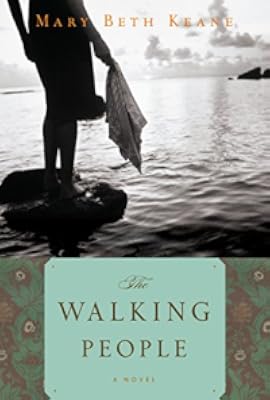
The Walking People
by Mary Beth Keane
On This Page
Description
A "beautifully crafted" novel of two sisters' lives, spanning from 1950s Ireland to modern-day America (Colum McCann, author of Let the Great World Spin).Greta Cahill never believed she would leave her village in west Ireland. Yet one day she found herself on a ship bound for New York, along with her sister, Johanna, and a boy named Michael Ward, a son of itinerant tinkers.
Back home, her family hadn't expressed much confidence in her abilities, but Greta discovers that in America she can show more fall in love, earn a living, and build a life. She longs to return and show her family what she has made of herself—but that could mean revealing a secret about her past to her children. So she carefully keeps her life in New York separate from the life she once loved in Ireland, torn from the people she is closest to.
Decades later, she discovers that her children, with the best of intentions, have conspired to unite the worlds she has so painstakingly kept apart. And though the Ireland of her memory may bear little resemblance to that of present day, she fears it is still possible to lose all . . .
"A compelling drama of transatlantic Irish life." —Billy Collins
"Marries a deliciously old-fashioned style of storytelling with a fresh take on the immigrant experience . . . A warm, involving family drama." —Booklist
. show less
Tags
Recommendations



















Member Recommendations
by JGoto
Member Reviews
Sisters Johanna and Greta Cahill encounter Michael Ward for the first time when his mother is found dead on their property in Ballyroan, Ireland. He returns to the area years later and finds the sisters still living there with their mother, Lily, and older brother, Little Tom; their father is dead and their two other brothers have left for Australia. When Lily discovers that Johanna is planning to leave their tiny village for New York with Michael, she allows them to go - but insists they take Greta as well.
Though in Ireland Greta was the "silly goose," the younger, faraway sibling, and Johanna was the brash, confident one, in New York Greta blooms and Johanna sinks into depression. From the prologue, the reader knows that Michael and show more Greta end up together, so the question throughout the book is not what happens, but how does it happen?
The Walking People is a story of resilience, love, loyalty, and family. The pacing is slow, but the story is never dull.
Quotes:
...Lily felt she could really miss only the [families] who'd left most recently. To miss everyone at once, to look up and down the road at the boarded-up houses nearly swallowed by grass, and to think of every single person who used to live in Ballyroan would be too much. (91)
Shannon...drew from the local words her parents had braided into their lives in Queens. Words that, oddly, made sense in that crowded place, where everyone, every single day, talked about home, and where home always meant somewhere else. (92)
Even now, a day later, headed farther west on the same bicycle, he didn't know whether he was leaving or had left or was just taking a few days out of the routine....But...the more he insisted on one way of looking at the thing, the more false that one way seemed. (114)
His father, Michael wanted to explain, thought of all of Ireland as his own, but Michael saw every field, every roof, every turn and dip of the road as belonging to someone else. And they were both right. (129)
I understand now, Michael wanted to tell his father, already shaping the letters in his mind like Greta had taught him. We don't settle in places. We settle in people. (216)
On the rare occasions where their letters arrived on the same day, Greta felt exactly as if her mother had taken her left hand, Johanna her right, and at the same moment decided to walk in opposite directions without letting go. (233)
Dermot Ward always said that too many secrets would turn a woman old before her time. Men, yes, they could handle secrets, but a woman with a secret was a woman turned inside out. (255)
For Greta, home was not a place that coexisted with America, a place that went on and grew and changed at the same time New York was growing and changing. It felt more like Ireland had ended where America began, as if it were something out of America's past. (280)
There were things parents didn't have to explain to children. American parents explained everything to their children....Greta and Michael had explained only as much as they wanted to explain, and placed the rest firmly off limits. (341)
They'd worked so hard to bring Ireland to America as an intact place that they could live inside, and they had succeeded, keeping their customs the same as they were in the year they'd left, making the preservation of the old ways a new kind of religion. They didn't realize until it was too late that home had moved on, grown up, left the old customs behind. It was as if these exiles had used every last dollar to bet on a horse they didn't own, didn't love, weren't interested in loving, but one that had promised to give them the best return. It was as if that horse had been winning, as expected, for the entire race. Winning by yards, in fact. A seemingly untouchable distance. And just as they bent their heads to calculate their earnings, that horse was left behind by the wild card, the underdog, the one they'd have preferred to lay their bet down for in the first place. (372-373)
"You think four hundred years can be erased in forty?" (375) show less
Though in Ireland Greta was the "silly goose," the younger, faraway sibling, and Johanna was the brash, confident one, in New York Greta blooms and Johanna sinks into depression. From the prologue, the reader knows that Michael and show more Greta end up together, so the question throughout the book is not what happens, but how does it happen?
The Walking People is a story of resilience, love, loyalty, and family. The pacing is slow, but the story is never dull.
Quotes:
...Lily felt she could really miss only the [families] who'd left most recently. To miss everyone at once, to look up and down the road at the boarded-up houses nearly swallowed by grass, and to think of every single person who used to live in Ballyroan would be too much. (91)
Shannon...drew from the local words her parents had braided into their lives in Queens. Words that, oddly, made sense in that crowded place, where everyone, every single day, talked about home, and where home always meant somewhere else. (92)
Even now, a day later, headed farther west on the same bicycle, he didn't know whether he was leaving or had left or was just taking a few days out of the routine....But...the more he insisted on one way of looking at the thing, the more false that one way seemed. (114)
His father, Michael wanted to explain, thought of all of Ireland as his own, but Michael saw every field, every roof, every turn and dip of the road as belonging to someone else. And they were both right. (129)
I understand now, Michael wanted to tell his father, already shaping the letters in his mind like Greta had taught him. We don't settle in places. We settle in people. (216)
On the rare occasions where their letters arrived on the same day, Greta felt exactly as if her mother had taken her left hand, Johanna her right, and at the same moment decided to walk in opposite directions without letting go. (233)
Dermot Ward always said that too many secrets would turn a woman old before her time. Men, yes, they could handle secrets, but a woman with a secret was a woman turned inside out. (255)
For Greta, home was not a place that coexisted with America, a place that went on and grew and changed at the same time New York was growing and changing. It felt more like Ireland had ended where America began, as if it were something out of America's past. (280)
There were things parents didn't have to explain to children. American parents explained everything to their children....Greta and Michael had explained only as much as they wanted to explain, and placed the rest firmly off limits. (341)
They'd worked so hard to bring Ireland to America as an intact place that they could live inside, and they had succeeded, keeping their customs the same as they were in the year they'd left, making the preservation of the old ways a new kind of religion. They didn't realize until it was too late that home had moved on, grown up, left the old customs behind. It was as if these exiles had used every last dollar to bet on a horse they didn't own, didn't love, weren't interested in loving, but one that had promised to give them the best return. It was as if that horse had been winning, as expected, for the entire race. Winning by yards, in fact. A seemingly untouchable distance. And just as they bent their heads to calculate their earnings, that horse was left behind by the wild card, the underdog, the one they'd have preferred to lay their bet down for in the first place. (372-373)
"You think four hundred years can be erased in forty?" (375) show less
Opening in 2007 on Michael Ward's last day as a sandhog in NYC, this novel of the Irish immigrant experience is a story of family, of expectations, of place, of love, and lies. Michael and Greta have made a life for themselves in America, far from the drizzly Irish spit of land the Cahills inhabited forever. While they never lost their love of Ireland and an attachment to their roots, they never returned and they never told their children the full story of their lives. But with the advent of Michael's retirement, the two worlds they have kept compartmentalized are going to come crashing together, Ireland coming to life out of the stories they told their children for years. As the collision comes closer, the reader is taken back in time show more to the Ireland of Greta and Michael's childhoods.
Greta Cahill was the baby of the family, forgetful, and odd. She spent her early years always being labelled as the simple child, growing up in the shadow of her bolder, self-confident sister. And she trails Johanna as they meet a traveller family after Julia Ward, the mother in this traveller family, is thrown from a horse and killed practically on their doorstep. Michael Ward, Julia's son, will always hold this place and his mother's grave in his heart, coming back to the Cahill family when he commits the ultimate sin against the travellers, wanting to settle. And it is from this lonely place that Michael, Johanna, and Greta leave on a voyage to America that will leave none of them the same. Through Michael and Greta's life as young parents to their goal of buying a home in the suburbs, the reader follows along as they build a life in a new country that allows them to reinvent themselves.
Keane has written a captivating story, powerful in its themes of family and love. She has gracefully tackled the difficult task of creating characters who change significantly, believably, and yet remain true to their original personas. And while she starts with a larger cast, the winnowing down of characters to focus most strongly on Greta and Michael is achieved effortlessly. The scrimping and saving to make an easier life for their children and the intense desire to better themselves in ways closed to them in Ireland is very true to the immigrant experience as played out in so many newly Americanized families, certainly in the 1950's and 60's as well as today. And Keane has captured it incredibly well.
The only quibble I had with the storyline was the issue of the "big secret" and my feeling of letdown that this thing that seemed less than immense was something that they hid from their children, making it the driving force behind the stress at mixing Ireland and America. Of course, this quibble is coming squarely from my own perspective on how I would handle a situation like this and that is perhaps incredibly unfair given the religious and generational gap (although I was highly annoyed with the daughter--close to my own age--who pushed the confrontation) between the characters and me. And while so much hinged on this secret, I still enjoyed the book for its depth, its evocation of place (in Ireland and New York City), its complex and fully-rounded characters, and its insight into the immigrant experience (both for what drove them from their native land and what they experienced once they arrived in their new country). show less
Greta Cahill was the baby of the family, forgetful, and odd. She spent her early years always being labelled as the simple child, growing up in the shadow of her bolder, self-confident sister. And she trails Johanna as they meet a traveller family after Julia Ward, the mother in this traveller family, is thrown from a horse and killed practically on their doorstep. Michael Ward, Julia's son, will always hold this place and his mother's grave in his heart, coming back to the Cahill family when he commits the ultimate sin against the travellers, wanting to settle. And it is from this lonely place that Michael, Johanna, and Greta leave on a voyage to America that will leave none of them the same. Through Michael and Greta's life as young parents to their goal of buying a home in the suburbs, the reader follows along as they build a life in a new country that allows them to reinvent themselves.
Keane has written a captivating story, powerful in its themes of family and love. She has gracefully tackled the difficult task of creating characters who change significantly, believably, and yet remain true to their original personas. And while she starts with a larger cast, the winnowing down of characters to focus most strongly on Greta and Michael is achieved effortlessly. The scrimping and saving to make an easier life for their children and the intense desire to better themselves in ways closed to them in Ireland is very true to the immigrant experience as played out in so many newly Americanized families, certainly in the 1950's and 60's as well as today. And Keane has captured it incredibly well.
The only quibble I had with the storyline was the issue of the "big secret" and my feeling of letdown that this thing that seemed less than immense was something that they hid from their children, making it the driving force behind the stress at mixing Ireland and America. Of course, this quibble is coming squarely from my own perspective on how I would handle a situation like this and that is perhaps incredibly unfair given the religious and generational gap (although I was highly annoyed with the daughter--close to my own age--who pushed the confrontation) between the characters and me. And while so much hinged on this secret, I still enjoyed the book for its depth, its evocation of place (in Ireland and New York City), its complex and fully-rounded characters, and its insight into the immigrant experience (both for what drove them from their native land and what they experienced once they arrived in their new country). show less
Growing up in a tiny hamlet in Ireland in the mid 1950s, Greta Cahill is the sort of girl called a 'goose' by her family, one who should stay close to home within the safely of her family. Greta is only a teenager when her older sister Johanna decides to leave Ireland for New York City in the company of another youth, Michael Ward, a boy who is one of 'the walking people' - an Irish gypsy. Greta finds herself along for the ride to New York. Greta jumps right into her new life, working and finding a place to leave. A turn of events and a crisis leaves Greta without the one person she'd always thought she would have nearby - Johanna. The story then jumps ahead in time, and we rejoin Greta as a working mother and wife. Greta holds a secret show more from her children, one that she is afraid might destroy the life she has so carefully cultivated. Eventually Greta's children bring together the two worlds she has so successfully kept apart.
I really enjoyed reading The Walking People, Mary Beth Keane's debut novel. I loved the narrative, which is traditional, except for the section in which Greta, Johann, and Michael first come to New York. This part is told in letters back and forth to Ireland; the technique really suits this section of the story. I will admit to being a bit confused when reading the prologue of this book which features Michael working his last day as a Sand Hog - men who work underground New York City on a project spanning many years that will help Manhattanites continue to have a supply of water for years to come. While I was fascinated by the work done by the Sand Hogs and researched it a bit, I was a little confused as to why the story began this way instead of with Greta. By the end of the prologue though, things are clear and the reader already knows a bit of how things will turn out for Greta. The turning point of this novel occurs in the middle of the book and while things certainly 'come to a head' if you will at the end of the novel, there is never really a great climactic moment for the reader - though we know there will be for Greta.
Having said that, I would certainly recommend this book. It is beautifully written and I found myself completely absorbed by it. I loved the varying settings of the novel and getting to know Greta from her youth through adulthood. It is a family sage for sure, and a wonderful portrayal of the modern Irish immigrant experience in America.
Review copy. show less
I really enjoyed reading The Walking People, Mary Beth Keane's debut novel. I loved the narrative, which is traditional, except for the section in which Greta, Johann, and Michael first come to New York. This part is told in letters back and forth to Ireland; the technique really suits this section of the story. I will admit to being a bit confused when reading the prologue of this book which features Michael working his last day as a Sand Hog - men who work underground New York City on a project spanning many years that will help Manhattanites continue to have a supply of water for years to come. While I was fascinated by the work done by the Sand Hogs and researched it a bit, I was a little confused as to why the story began this way instead of with Greta. By the end of the prologue though, things are clear and the reader already knows a bit of how things will turn out for Greta. The turning point of this novel occurs in the middle of the book and while things certainly 'come to a head' if you will at the end of the novel, there is never really a great climactic moment for the reader - though we know there will be for Greta.
Having said that, I would certainly recommend this book. It is beautifully written and I found myself completely absorbed by it. I loved the varying settings of the novel and getting to know Greta from her youth through adulthood. It is a family sage for sure, and a wonderful portrayal of the modern Irish immigrant experience in America.
Review copy. show less
This is an impressive debut novel from talented writer Mary Beth Keane. The story moves through the different eras and settings with panache and ease, capturing the moods of the times and the characters perfectly.
Ireland in the 1950's was rampant with emmigration and many young people left their homes to seek work and fortune abroad. Gretta and Johanna Cahill, along with Michael Ward leave Ballyroan, a decaying village in the far West of Ireland to find work in New York.
Gretta is regarded as a "goose" by her family, a little distracted, but she is sent to America in the company of her more able elder sister. Michael is a member of the travelling community (or one of the Lucht Siúil, or Walking People) who does not want to live the life show more of a travelling gyspy any further. In Ireland, he would find it hard to live as a settled person, but America offers new opportunities.
It is in America that the roles of the Cahill sisters reverse as they make their new lives for themselves. The book moves from the beginning of their lives in the late 1950s through to the end of their working lives in the late 2000s. The secrets that this trio share will echo throughout their entire lives culminating in the final scene of the novel.
Although I did not life the initial opening scenes of the novel, I rapidly found my opinion changing as I continued to read. Keane's writing style captivated me and drew me into the lives of her characters. Keane does a magnificent job in capturing different facets of Irish culture. She interweaves the Irish disaspora with the traditional disdain for the travelling community as well as presenting a story of family secrets. An excellent read. show less
Ireland in the 1950's was rampant with emmigration and many young people left their homes to seek work and fortune abroad. Gretta and Johanna Cahill, along with Michael Ward leave Ballyroan, a decaying village in the far West of Ireland to find work in New York.
Gretta is regarded as a "goose" by her family, a little distracted, but she is sent to America in the company of her more able elder sister. Michael is a member of the travelling community (or one of the Lucht Siúil, or Walking People) who does not want to live the life show more of a travelling gyspy any further. In Ireland, he would find it hard to live as a settled person, but America offers new opportunities.
It is in America that the roles of the Cahill sisters reverse as they make their new lives for themselves. The book moves from the beginning of their lives in the late 1950s through to the end of their working lives in the late 2000s. The secrets that this trio share will echo throughout their entire lives culminating in the final scene of the novel.
Although I did not life the initial opening scenes of the novel, I rapidly found my opinion changing as I continued to read. Keane's writing style captivated me and drew me into the lives of her characters. Keane does a magnificent job in capturing different facets of Irish culture. She interweaves the Irish disaspora with the traditional disdain for the travelling community as well as presenting a story of family secrets. An excellent read. show less
Poignant and beautifully written, Mary Beth Keane’s debut novel, The Walking People, captivated me from the first page of the prologue straight through to the bittersweet ending. Keane’s prose skillfully captures each setting in the story, whether it is the dying village of Ballyroan on the west coast of Ireland, the Irish gypsy camps of “travelers,” or across the ocean in New York and the water tunnels beneath that city. The story spans fifty years and is full of carefully drawn characters. The main focus is on Greta Cahill, whom we meet as an eight year old in Ballyroan. Her family and life there are vividly portrayed, especially her relationship with Johanna, her older sister. In Ireland we are also introduced to Michael show more Ward, from a gypsy camp, one of the “walking people.” Greta, Johanna and Michael travel across the sea together to America in hopes of a better life. There they build family, make choices and share secrets that will affect them throughout their lives. The Walking People is a wonderful book that I highly recommend show less
I have to assume that the author, Mary Beth Kean, comes from a long line fo storytellers. This to me is how The Walking people unfolds. It is the words of a storyteller, laid down in print. This is the best kind of novel.
The Walking People is a rich and absorbing story of the Cahill and Ward families. They first came together in 1956 in Ballyroan, Ireland. We are taken through the years with them until 2007. IT is an smooth and soft story of times that are often hard and rough. The important thing that we are always made to remember is that there is love. These people are family in the purest and most impressive of ways.
The Cahills, three brothers to sisters and their loving but imperfect parents. The Wards, Michael and his father show more Dermott, his mother Julia and the rest are travelers, tinkers, always on the move. These families come together and lives begin to change. A history begins to be woven.
Through the good times and bad, you will never think of leaving this journey unfinished. You will want to know how their story ends, and when you close the book, it will not truly be over. These good people and their story will stay with you for a long time.
Recommended show less
The Walking People is a rich and absorbing story of the Cahill and Ward families. They first came together in 1956 in Ballyroan, Ireland. We are taken through the years with them until 2007. IT is an smooth and soft story of times that are often hard and rough. The important thing that we are always made to remember is that there is love. These people are family in the purest and most impressive of ways.
The Cahills, three brothers to sisters and their loving but imperfect parents. The Wards, Michael and his father show more Dermott, his mother Julia and the rest are travelers, tinkers, always on the move. These families come together and lives begin to change. A history begins to be woven.
Through the good times and bad, you will never think of leaving this journey unfinished. You will want to know how their story ends, and when you close the book, it will not truly be over. These good people and their story will stay with you for a long time.
Recommended show less
Really excellent debut novel, about the Cahill family from Co. Galway who meet a Tinker, Michael Ward as teens, and in the early 60's the two sisters Johanna and Greta along with Michael emmigrate to New York City.
After falling pregnant at 17 with Michael, Johanna abandons her baby, which Greta and Michael raise together.
Wonderfully told and evocative of the ways of the Tinkers, Ireland during the 1950s without electricity and its backwards ways. Rich character development with Greta's changing from an awkward and slow child to an accomplished and strong woman to Michael who worked as a sandhog in the water tunnels underneath Manhattan as he slowly succubs to dementia.
After falling pregnant at 17 with Michael, Johanna abandons her baby, which Greta and Michael raise together.
Wonderfully told and evocative of the ways of the Tinkers, Ireland during the 1950s without electricity and its backwards ways. Rich character development with Greta's changing from an awkward and slow child to an accomplished and strong woman to Michael who worked as a sandhog in the water tunnels underneath Manhattan as he slowly succubs to dementia.
Members
- Recently Added By
Author Information

7 Works 4,159 Members
Awards and Honors
Awards
Common Knowledge
- Original publication date
- 2009
- People/Characters
- Tom Cahill; Lily Cahill; Jack Cahill; Padraic Cahill; Johanna Cahill; Greta Cahill Ward (show all 12); Little Tom Cahill; Michael Ward; Julia Ward; Eavan Ward; James Ward; Ned Powers
- Important places
- Ireland; New York, New York, USA; Ballyroan, Ireland (fictional); County Galway, Ireland
- Epigraph
- How periolous is it to choose
not to love the life we're shown?
--from "Badgers," Seamus Heany, 1979 - Dedication
- TO MOM AND DAD
or, as they will be known by the time they
read this, Mamo and Daideo - First words
- Prologue:
At exactly 6:16 on Friday morning the front attendant at Champion Parking Garage looked up from the nine-inch monitor of his television screen and watched Michael Ward steer his car onto the lot of the const... (show all)ruction site at the corner of Thirtieth Street and Tenth Avenue.
Chapter 1:
At home in Ballyroan, in the single-story cottage that stood beside the sea, in the bed she shared with her older sister, eight-year-old Greta Cahill woke before dawn to a sound that was not the ocean, was n... (show all)ot the animals bawling into the wind, was not a slammed gate, a clanging cowbell, or the rain beating on the gable. - Quotations
- Without Michael she'd be like the child on the low end of the seesaw, no partner to lift her up toward the sky.
- Last words
- (Click to show. Warning: May contain spoilers.)He got up from the table to join her.
- Blurbers
- Collins, Billy; Gordon, Mary
Classifications
Statistics
- Members
- 212
- Popularity
- 154,159
- Reviews
- 22
- Rating
- (3.74)
- Languages
- English, German
- Media
- Paper, Audiobook, Ebook
- ISBNs
- 10
- ASINs
- 7