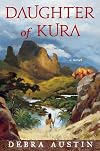
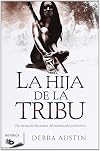
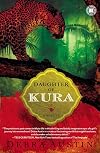
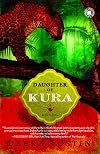
Daughter of Kura
by Debra Austin 
On This Page
Description
IN THE WILDS of southeastern Africa more than half a million years ago sits the village of Kura, a matriarchal society of Homo erectus. Snap--a young, passionate woman--is destined to lead her people, and this year she must select a mate for the first time. As the Bonding ceremony approaches, Snap's future remains unknown. Will she choose someone different each year, or will she find one mate she wants to pick over and over again, like her mother, Whistle, the next leader of Kura? But when show more Whistle's mate doesn't return, Whistle chooses a stranger with ideas more dangerous than the lions that kill with a single slash. Snap challenges the stranger's growing power one too many times and is brutally cast out to survive on her own or perish. Abandoned and alone, she risks her life--and the future of her people--to stand up against an unthinkable evil. Unknown to her, the same danger threatens other villages as well. Soon, Snap and a new band of outcasts will face a force more terrifying--and deadly--than any of prehistoric Africa's natural threats. Both imaginative and believable, Daughter of Kura brings to life an ancient and untamed world. Austin has created an unforgettable heroine who comes of age in a thrilling tale of courage, loyalty, and passion. show lessTags
Recommendations














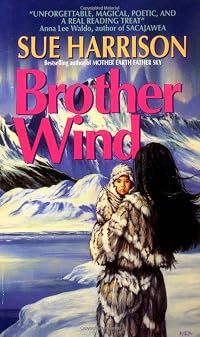





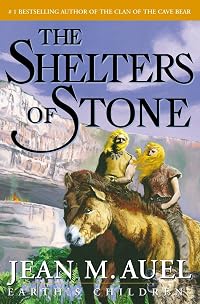






















Member Recommendations

Member Reviews
Daughter of Kura is a coming-of-age story set in southeastern Africa during prehistoric times. Snap's grandmother is the Mother of Kura, the leader of their ukoo. One day Snap will be the clan's Mother, but for now she is concerned with having to choose her winter mate for the first time.
At the end of the summer, the Kura women return to their village from their nomadic harvesting and men from other clans arrive in the hopes of being bonded to one of the Kura women for the winter. While the bonding is usually a cause for celebration, sadness prevails in Snap's kao after the unexpected death of her mother's usual mate. Whistle (Snap's mother) chooses a newcomer named Bapoto who is famed for his hunting skills, while Snap chooses a young show more long-walker named Ash.
While Snap and Ash seem to be a perfect match, there is tension in the kao. Bapoto has strange ideas and is constantly talking about the Great One. He encouraged the men to perform rituals before their hunts. He expects others to thank the Great One for any and all blessings and becomes upset with anyone who does not acquiesce to his request. He also begins to receive visions from the Great One, which only he can interpret. After the death of Snap's grandmother, Whistle becomes Mother and Bapoto the highest ranking male. In his new position Bapoto is able to exert much more control over the people of Kura. When Snap questions Bapoto one too many times, she must risk her life to be true to herself and her ukoo's traditions.
Daughter of Kura was very slow going for me at the start (this was confounded by the fact that the majority of the characters have sound names like rustle and warble making it difficult for me to keep the secondary characters straight), but once I got into the story, I found it very compelling. Despite the fact that Snap is in many ways very different from the reader, she is surprisingly sympathetic.
The world Austin imagines for Snap and the rest of the Kura is finely-wrought and her author's note serves to put it in context. Austin notes that "the geologic features, technologies, and social systems that form the structure of [the protagonist's] life are constructed from a combination of reasonably secure scientific facts, plausible theories, and wild (but not provably wrong) speculation" (303). show less
At the end of the summer, the Kura women return to their village from their nomadic harvesting and men from other clans arrive in the hopes of being bonded to one of the Kura women for the winter. While the bonding is usually a cause for celebration, sadness prevails in Snap's kao after the unexpected death of her mother's usual mate. Whistle (Snap's mother) chooses a newcomer named Bapoto who is famed for his hunting skills, while Snap chooses a young show more long-walker named Ash.
While Snap and Ash seem to be a perfect match, there is tension in the kao. Bapoto has strange ideas and is constantly talking about the Great One. He encouraged the men to perform rituals before their hunts. He expects others to thank the Great One for any and all blessings and becomes upset with anyone who does not acquiesce to his request. He also begins to receive visions from the Great One, which only he can interpret. After the death of Snap's grandmother, Whistle becomes Mother and Bapoto the highest ranking male. In his new position Bapoto is able to exert much more control over the people of Kura. When Snap questions Bapoto one too many times, she must risk her life to be true to herself and her ukoo's traditions.
Daughter of Kura was very slow going for me at the start (this was confounded by the fact that the majority of the characters have sound names like rustle and warble making it difficult for me to keep the secondary characters straight), but once I got into the story, I found it very compelling. Despite the fact that Snap is in many ways very different from the reader, she is surprisingly sympathetic.
The world Austin imagines for Snap and the rest of the Kura is finely-wrought and her author's note serves to put it in context. Austin notes that "the geologic features, technologies, and social systems that form the structure of [the protagonist's] life are constructed from a combination of reasonably secure scientific facts, plausible theories, and wild (but not provably wrong) speculation" (303). show less
 This review was written for LibraryThing Early Reviewers.
I really enjoyed this book. It was quite different and made me have to stretch my way of thinking to try to imagine what life may have been like for our ancesters half a million years ago.
Snap is a girl just entering the realm of adults. She lives in a small village in Africa that has a matriarchal form of leadership. Snap's grandmother and eventually her mother are the leaders of their tribe and hold the highest rank. Eventually Snap is destined to hold this same rank, that of being the Mother of their village, Kura. That is until Bapoto arrives.
Bapoto is essentially the prehistoric version of a sociopathic, narcissistic cult leader who uses his beliefs to gain power and to subjegate women. (Funny how some things literally NEVER show more change!) He comes to the village and takes Snap's mother has his mate, and deviously tries to turn everyone in the village to his beliefs in the "great one," which of course includes the idea that it's the men who should be in power. Snap cannot understand how ANYONE could believe in this "spirit." But many people adopt Bapoto's beliefs and Snap is forced to flee her village to start her own settlement with her mate, Ash. The rest of the story is about how Snap creates a new life for herself and her family, and their attempts to defeat Bapoto.
I got very hooked on this story and finished it in two days. It's not great literature, but it's original, inventive, and engrossing. I'm not sure if the author meant it to be, but more than just a coming of age story, this book is a cautionary tale about how religion may have been created by men in order to subjegate women and take their power in society. It's certainly an interesting tale and worth your time. This book entertained me and made me think--an enjoyable combination. show less
Snap is a girl just entering the realm of adults. She lives in a small village in Africa that has a matriarchal form of leadership. Snap's grandmother and eventually her mother are the leaders of their tribe and hold the highest rank. Eventually Snap is destined to hold this same rank, that of being the Mother of their village, Kura. That is until Bapoto arrives.
Bapoto is essentially the prehistoric version of a sociopathic, narcissistic cult leader who uses his beliefs to gain power and to subjegate women. (Funny how some things literally NEVER show more change!) He comes to the village and takes Snap's mother has his mate, and deviously tries to turn everyone in the village to his beliefs in the "great one," which of course includes the idea that it's the men who should be in power. Snap cannot understand how ANYONE could believe in this "spirit." But many people adopt Bapoto's beliefs and Snap is forced to flee her village to start her own settlement with her mate, Ash. The rest of the story is about how Snap creates a new life for herself and her family, and their attempts to defeat Bapoto.
I got very hooked on this story and finished it in two days. It's not great literature, but it's original, inventive, and engrossing. I'm not sure if the author meant it to be, but more than just a coming of age story, this book is a cautionary tale about how religion may have been created by men in order to subjegate women and take their power in society. It's certainly an interesting tale and worth your time. This book entertained me and made me think--an enjoyable combination. show less
This review was written for LibraryThing Early Reviewers.Daughter of Kura by Debra Austin is a story about a prehistoric girl called Snap who lives in a matriarchal society of hunters and gatherers in Southeast Africa. Their lives rotate around the seasons, with important ceremonies such as the Naming being held in the Spring and the Bonding in the Fall. She is the third most important female in her community. However, when her grandmother dies and her mother takes a mate who has strange, new ideas and is forcing these new ideas upon her Mother and the rest of the people, Snap feels her way of life threatened. When her own mate doesn’t return in time for the Bonding Ceremony, a new mate is forced upon her. Unable to accept this final insult to her position, she strikes out on her own.
The show more author tells an interesting story and although most of the details are speculation, it all flows together well. This is a story of what life might have been like thousands of years ago and I found it an enjoyable read. show less
The show more author tells an interesting story and although most of the details are speculation, it all flows together well. This is a story of what life might have been like thousands of years ago and I found it an enjoyable read. show less
The premise behind Daughter of Kura really intrigued me and I had high hopes for it. But…I just felt that everything was a bit forced. The writing was okay, but the author kept repeating herself in certain things like the bits about the society’s sign language and such but did not really describe the differences in the characters. I found some of the circumstances a bit hard to believe. Granted, it’s fiction, but it was sort of depicted as a “history” so even with suspension of belief, I just couldn’t buy some scenarios. Maybe it was the fact that the plot was somewhat thin and there wasn’t much to grab onto. I guess I was expecting this book to be more character and plot driven rather than morals driven. I’m sure there show more are many people that would enjoy it more, I just unfortunately wasn’t one of them. show less
This review was written for LibraryThing Early Reviewers.Daughter of Kura is a cleverly written and conceived novel. I have to say that it's like nothing I've personally read before.
It's characters live in Africa in a time where communication is primarily physical (hand signing) with a few vocals (growls & hoots). The Kura names are based upon sounds. So much of their way of living belies the dangerous life they live. For example, they never sit, they squat. They don't name their children until they've lived a year or so as the children frequently don't make it to their naming ceremony. They choose their mates based on hunting skills and ability to provide for their families. They take shifts sitting up each night to watch their territory and offer protection. Though I might have learned show more some of this via childhood visits to museums, I enjoyed seeing it lived out in a fictional novel.
The story line centers around a newcomer who offers new ideas of religion and faith. Without going into it, I'll just say that this part of the book alone bumps it up a star in my opinion. Very interesting... show less
It's characters live in Africa in a time where communication is primarily physical (hand signing) with a few vocals (growls & hoots). The Kura names are based upon sounds. So much of their way of living belies the dangerous life they live. For example, they never sit, they squat. They don't name their children until they've lived a year or so as the children frequently don't make it to their naming ceremony. They choose their mates based on hunting skills and ability to provide for their families. They take shifts sitting up each night to watch their territory and offer protection. Though I might have learned show more some of this via childhood visits to museums, I enjoyed seeing it lived out in a fictional novel.
The story line centers around a newcomer who offers new ideas of religion and faith. Without going into it, I'll just say that this part of the book alone bumps it up a star in my opinion. Very interesting... show less
This review was written for LibraryThing Early Reviewers.DAUGHTER OF KURA - Debra Austin; 2009 NY
BookDivas
“Daughter of Kura” by Debra Austin was a fabulous book to sit down with, in order to pass time in a winter snow storm. Set in a time period of about a half million years ago, “Daughter of Kura” tells the tale of Snap, a vibrant young woman in line for leadership of her tribe, the Kura.
In a culture where leadership is maternally set, Snap is now of age to pick a mate and is expected to do so at the Bonding ceremony in the fall. However, Snap is discovering it hard to pick her mate for the next year, until strange men begin to arrive in the village.
One new arrival, Bapoto, makes Snap quite uncomfortable, and even though he believes his ‘god’ medicine cured her of an infection show more from a wildcat wound - Snap is clear in voicing her disbelief. For whatever unknown reason, Snap believes Bapoto isn’t good for her people, the Kura, and remains wary of Bapoto and his increasing interest in her mother - Whistle. Her instincts will undoubtedly prove true.
However, another new arrival is different from the men Snap knows - and soon catches the young woman’s interest - Ash. Though Ash’s many differences leave Snap wondering if he is the man for her, somehow she knows she and Ash are bound for a life together.
With great descriptions of the world so long ago, and fabulous scenarios of life in the days of cave peoples, “Daughter of Kura” is easily reminiscent of “The Clan of the Cave Bears” - and just as well written. “Daughter of Kura” relates the story of a time of great change coming to the prehistoric world. As travellers and traders extend their territories farther, new ideas and ways of life are discovered and are bound to be explored.
“Daughter of Kura” by Debra Austin will definitely hold a place on my “To Read Again” shelf - and I will be passing on my recommendations to read it to all my friends!!
I received this book for free to review from Bookdivas.com. I am a member of Bookdivas, Goodreads, Librarything and the Penguin book club. DBettenson show less
BookDivas
“Daughter of Kura” by Debra Austin was a fabulous book to sit down with, in order to pass time in a winter snow storm. Set in a time period of about a half million years ago, “Daughter of Kura” tells the tale of Snap, a vibrant young woman in line for leadership of her tribe, the Kura.
In a culture where leadership is maternally set, Snap is now of age to pick a mate and is expected to do so at the Bonding ceremony in the fall. However, Snap is discovering it hard to pick her mate for the next year, until strange men begin to arrive in the village.
One new arrival, Bapoto, makes Snap quite uncomfortable, and even though he believes his ‘god’ medicine cured her of an infection show more from a wildcat wound - Snap is clear in voicing her disbelief. For whatever unknown reason, Snap believes Bapoto isn’t good for her people, the Kura, and remains wary of Bapoto and his increasing interest in her mother - Whistle. Her instincts will undoubtedly prove true.
However, another new arrival is different from the men Snap knows - and soon catches the young woman’s interest - Ash. Though Ash’s many differences leave Snap wondering if he is the man for her, somehow she knows she and Ash are bound for a life together.
With great descriptions of the world so long ago, and fabulous scenarios of life in the days of cave peoples, “Daughter of Kura” is easily reminiscent of “The Clan of the Cave Bears” - and just as well written. “Daughter of Kura” relates the story of a time of great change coming to the prehistoric world. As travellers and traders extend their territories farther, new ideas and ways of life are discovered and are bound to be explored.
“Daughter of Kura” by Debra Austin will definitely hold a place on my “To Read Again” shelf - and I will be passing on my recommendations to read it to all my friends!!
I received this book for free to review from Bookdivas.com. I am a member of Bookdivas, Goodreads, Librarything and the Penguin book club. DBettenson show less
This book is an interesting speculation on how a group of Homo Erectus might have lived and interacted. I enjoyed the mix of the plot with these speculations, and I liked the strong main character.
Members
- Recently Added By
Lists

Best Prehistoric Novels
64 works; 10 members

GraceCollection TBR/To Buy List
106 works; 1 member
Author Information
1 Work 84 Members
Common Knowledge
- Canonical title
- Daughter of Kura
- Original publication date
- 2009
- Important places
- Africa
Classifications
Statistics
- Members
- 84
- Popularity
- 378,652
- Reviews
- 13
- Rating
- (3.43)
- Languages
- English, Spanish
- Media
- Paper, Ebook
- ISBNs
- 7
- ASINs
- 3