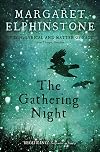
The Gathering Night
by Margaret Elphinstone
On This Page
Description
In the untamed hills in winter you must stick together to survive. So when Alaia's brother goes hunting and never returns, her family is thrust into turmoil. Then a stranger appears with a story of a great wave that has destroyed his people. Is he to be believed?Tags
Recommendations


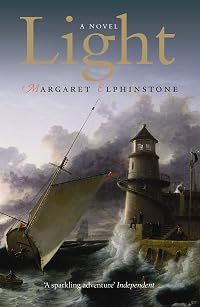

















Member Recommendations

Member Reviews
Stone age Europe- in this case a small group on the Scottish coast. A series of traumatic events has threatened the life of the Auk People. With the help of the spirits, their world is brought back into balance. Wait - no, this book is not what you would expect from that plot line. You will not find any creative hero/ine making new discoveries. You will not find a travelogue of strange customs. What you will find is deep human emotion; conflicts within themselves, with each other, and with the powers of nature, that still move people thousands of years later.
I usually dislike books that change narrators frequently. In this case, it made the whole tribe into the main character. The characters tell the parts of the story they have seen, show more but because they think of themselves first as part of the group, and then as individuals, the intertwining points of view stay connected. The characters are not well developed. They are not modern individuals, but part of their time and tribe. For some reason, this makes them seem more deeply human and less strange than in some other novels dealing with this period. show less
I usually dislike books that change narrators frequently. In this case, it made the whole tribe into the main character. The characters tell the parts of the story they have seen, show more but because they think of themselves first as part of the group, and then as individuals, the intertwining points of view stay connected. The characters are not well developed. They are not modern individuals, but part of their time and tribe. For some reason, this makes them seem more deeply human and less strange than in some other novels dealing with this period. show less
 This review was written for LibraryThing Early Reviewers.
In Mesolithic Scotland a family of hunter gatherers sit and tell the story of an earlier, traumatic time. A young hunter disappears and life changes for his parents and sisters. Told by each person involved the story is a simple one of daily life, moving from camp to camp as the seasons change and different resources become available. The conflicts within the tribe and their resolution.
Margaret Elphinstone has taken the scanty evidence of life of this time and written a beautiful story. Each voice is very much part of the story and as the tale passes from person to person different aspects and attitudes of life are revealed. To be honest when I started reading I wasn't sure about this passing of the story from person to person but it show more does work very well. She has created a wonderful portrait of a way of life, full of human emotion. show less
Margaret Elphinstone has taken the scanty evidence of life of this time and written a beautiful story. Each voice is very much part of the story and as the tale passes from person to person different aspects and attitudes of life are revealed. To be honest when I started reading I wasn't sure about this passing of the story from person to person but it show more does work very well. She has created a wonderful portrait of a way of life, full of human emotion. show less
This review was written for LibraryThing Early Reviewers.This story is told from the alternating narrative viewpoints of a number of different male and female family members. It is set in Mesolithic Scotland (the Mesolithic era or middle stone age was from about 8500-4000 BC). The family are hunter-gatherers and they travel to different places at different times of year.
A young man, Bakar, disappears and is clearly dead, but why and how. His mother sets out to find out.
There was a lot of interesting stuff in this book and it made me want to know more about the way of life at the time, though I'm not clear how much was based on research and how much was speculative or imagined. In a very brief Afterword, the author explains something about the setting, acknowledges some sources and tells us show more about some of her choices, eg the characters apparently have Basque names - although we don't know what they really might have been called, the Basque language Euskadi is the only one that goes so far back. I would have enjoyed a much longer afterword.
As a historical novel, this falls into a common problem of offering a mass of historical detail (whether real or made up). Though the characters tell their story in the first person, I didn't feel a sense of any of them as real people.
I was interested in the parts of the narrative about baby-rearing and naming etc, but I wondered if gender roles were generally as fixed at this time as they are portrayed as being in the novel. It seems unlikely that the research going that far back can establish this, as there aren't the written records that have come down from later periods. I thought that at times the novel reads as though lots of mid 20th century assumptions and ideas have just been plonked a few thousand years back....
I am curious about the history, but this didn't work for me as a novel. show less
A young man, Bakar, disappears and is clearly dead, but why and how. His mother sets out to find out.
There was a lot of interesting stuff in this book and it made me want to know more about the way of life at the time, though I'm not clear how much was based on research and how much was speculative or imagined. In a very brief Afterword, the author explains something about the setting, acknowledges some sources and tells us show more about some of her choices, eg the characters apparently have Basque names - although we don't know what they really might have been called, the Basque language Euskadi is the only one that goes so far back. I would have enjoyed a much longer afterword.
As a historical novel, this falls into a common problem of offering a mass of historical detail (whether real or made up). Though the characters tell their story in the first person, I didn't feel a sense of any of them as real people.
I was interested in the parts of the narrative about baby-rearing and naming etc, but I wondered if gender roles were generally as fixed at this time as they are portrayed as being in the novel. It seems unlikely that the research going that far back can establish this, as there aren't the written records that have come down from later periods. I thought that at times the novel reads as though lots of mid 20th century assumptions and ideas have just been plonked a few thousand years back....
I am curious about the history, but this didn't work for me as a novel. show less
This review was written for LibraryThing Early Reviewers.The setting of this novel is prehistoric Scotland. The reason I know this is because I read the author's afterword after I'd read the novel; when I started reading it, I thought it was probably set among some aboriginal culture, perhaps native Americans. After a while I stopped thinking about when and where the story took place - it wasn't really relevant to the narrative. However, after having finished it, I find myself thinking that this could equally well have been a science fiction story about an alien race - that is not to say that the people are not recognisably human, because they are, but Elphinstone succeeds admirably in creating a culture that does not draw on cultural elements from our own time and reality. The culture is show more based on thorough historical research, but of course the author has to flesh out the meagre bones that have been preserved to our time.
The novel tells the story of life, death and the cycle of the years in a Mesolithic society. Different narrators tell different parts of the story; this is a narrative device I normally enjoy very much but I don't think it worked that well in this instance, because all the different people who tell the story have exactly the same voice, use the same kind of expressions and the same turns of phrase, and it left me wondering why Elphinstone used this device, rather than having a third-person narrator.
There are many fascinating aspects to the Mesolithic culture that is described. Names are extremely important, and the people hold a firm belief in the rebirth of deceased people, who return as newborn babies. It is important that a baby is recognised as a reincarnation of a dead relative soon after birth, and this recognition returns that person's name to the realm of the living. The names of dead people who have not been reborn yet are never mentioned in the story at all; this is very cleverly done and felt completely believable. (That the names are Basque because Basque has "a pre-Indo-European origin" did not feel very believable, though - but that is a different discussion, and as I don't know any Basque I was not bothered by it until I read the afterword.)
Another aspect is the families' movements between different camps and homes as the year changes. This is described in an entirely credible manner, and like the naming conventions and rituals the reader is never explicitly told what is going on - Elphinstone lets us discover it gradually by seeing what happens.
A less credible part of the culture, however, is the gender roles in the society. It is obvious that in a society that depends on muscular strength on the one hand and the ability to bear and rear children on the other, men and women are going to have very clearly defined roles. But the patriarchal society, the rules concerning who is allowed to speak to whom, and the contempt that each gender holds for the other feels more like something that is based on a society where men and women meet very rarely and sex is something unmentionable, than something based on a society where people live very close together and where the greater strength of the males and the females' ability to bear children are recognised as indispensible for the survival of the group. To me, the gender separations felt artificial, like rather exaggerated versions of gender roles from our own age.
Something that felt entirely natural and which I enjoyed very much indeed was the custom of understatement, which shone through many of the dialogues in the novel. That was one of the things that made the people in this story into much more than just primitive humans struggling for survival.
All in all, this was a very enjoyable novel. It is obviously fiction, but I was very interested to read about the historical background of the events and cultures described. show less
The novel tells the story of life, death and the cycle of the years in a Mesolithic society. Different narrators tell different parts of the story; this is a narrative device I normally enjoy very much but I don't think it worked that well in this instance, because all the different people who tell the story have exactly the same voice, use the same kind of expressions and the same turns of phrase, and it left me wondering why Elphinstone used this device, rather than having a third-person narrator.
There are many fascinating aspects to the Mesolithic culture that is described. Names are extremely important, and the people hold a firm belief in the rebirth of deceased people, who return as newborn babies. It is important that a baby is recognised as a reincarnation of a dead relative soon after birth, and this recognition returns that person's name to the realm of the living. The names of dead people who have not been reborn yet are never mentioned in the story at all; this is very cleverly done and felt completely believable. (That the names are Basque because Basque has "a pre-Indo-European origin" did not feel very believable, though - but that is a different discussion, and as I don't know any Basque I was not bothered by it until I read the afterword.)
Another aspect is the families' movements between different camps and homes as the year changes. This is described in an entirely credible manner, and like the naming conventions and rituals the reader is never explicitly told what is going on - Elphinstone lets us discover it gradually by seeing what happens.
A less credible part of the culture, however, is the gender roles in the society. It is obvious that in a society that depends on muscular strength on the one hand and the ability to bear and rear children on the other, men and women are going to have very clearly defined roles. But the patriarchal society, the rules concerning who is allowed to speak to whom, and the contempt that each gender holds for the other feels more like something that is based on a society where men and women meet very rarely and sex is something unmentionable, than something based on a society where people live very close together and where the greater strength of the males and the females' ability to bear children are recognised as indispensible for the survival of the group. To me, the gender separations felt artificial, like rather exaggerated versions of gender roles from our own age.
Something that felt entirely natural and which I enjoyed very much indeed was the custom of understatement, which shone through many of the dialogues in the novel. That was one of the things that made the people in this story into much more than just primitive humans struggling for survival.
All in all, this was a very enjoyable novel. It is obviously fiction, but I was very interested to read about the historical background of the events and cultures described. show less
This review was written for LibraryThing Early Reviewers.A compelling imagining of how our Mesolithic ancestors might have lived, with a lyrical sense of place and evocation of a world where animals, people, mountains and spirits are all part of the same existence and must all be treated with respect.
I'm disappointed that I didn't ever really engage with this book. The writing is beautiful, very measured and considered, staying with concepts that are appropriate to its characters, and the storytelling is divided up between the main characters in a way that keeps the story moving forward. I loved the concept behind it, and the Afterword is helpful and informative (I read it when I was 50 or so pages in, and I don't really see why it can't have been a foreword).
I wanted to love it. Margaret Elphinstone wrote one of my favourite books, Hy Brasil, and I thought both The Sea Road and Voyageurs were excellent (I gave copies of Voyageurs to several people). Perhaps it just wasn't for me, or I was reading it at the wrong time. I'm not show more unwilling to give it another go, and maybe then I'll fall in love with it. If you are looking for a slow, thoughtful book, one you can get dreamily lost in, and that offers a very plausible account of early Mesolithic peoples, then give it a try. show less
I wanted to love it. Margaret Elphinstone wrote one of my favourite books, Hy Brasil, and I thought both The Sea Road and Voyageurs were excellent (I gave copies of Voyageurs to several people). Perhaps it just wasn't for me, or I was reading it at the wrong time. I'm not show more unwilling to give it another go, and maybe then I'll fall in love with it. If you are looking for a slow, thoughtful book, one you can get dreamily lost in, and that offers a very plausible account of early Mesolithic peoples, then give it a try. show less
This review was written for LibraryThing Early Reviewers.The Gathering Night is set in the Mesolithic period in Scotland. It tells the story of the Auk people and the events that follow when a member of the Lynx people joins their tribe.
The story is enjoyable and the way Elphinstone tackles the language and culture of the period is interesting. The tale is told by the main characters as they sit around the fire of the Gathering Camp with their tribe and I think this helps keep a tight narrative; there aren't overly long descriptions of landscape of hunting scenes which would have turned me off. The gender aspects can feel a bit clunky, there are a lot of statements like 'women are always listening to what doesn't concern them' to ram home the idea to the reader that stereotypes might have show more been part of that society. But who I am to say that Mesolithic people didn't speak or think that way??
Overall I enjoyed reading it and I would suggest it to others but it doesn't need to be a permanent fixture on my shelf unlike other Elphinstone books such as Voyageurs or The Sea Road. show less
The story is enjoyable and the way Elphinstone tackles the language and culture of the period is interesting. The tale is told by the main characters as they sit around the fire of the Gathering Camp with their tribe and I think this helps keep a tight narrative; there aren't overly long descriptions of landscape of hunting scenes which would have turned me off. The gender aspects can feel a bit clunky, there are a lot of statements like 'women are always listening to what doesn't concern them' to ram home the idea to the reader that stereotypes might have show more been part of that society. But who I am to say that Mesolithic people didn't speak or think that way??
Overall I enjoyed reading it and I would suggest it to others but it doesn't need to be a permanent fixture on my shelf unlike other Elphinstone books such as Voyageurs or The Sea Road. show less
This review was written for LibraryThing Early Reviewers.Members
- Recently Added By
Lists

Best Prehistoric Novels
64 works; 10 members
Author Information

20+ Works 793 Members
Margaret Elphinstone teaches English Studies at the University of Strathclyde.
Awards and Honors
Notable Lists
Common Knowledge
- Original publication date
- 2009-05
- Important places
- Scotland, UK
Classifications
Statistics
- Members
- 111
- Popularity
- 291,968
- Reviews
- 14
- Rating
- (3.52)
- Languages
- English, Italian
- Media
- Paper, Ebook
- ISBNs
- 8
- ASINs
- 2