
Generation A
by Douglas Coupland
On This Page
Description
Set in the near future world where all bees are extinct when 5 unconnected people from varying parts of world are each stung. Their experience unites them in ways they could not have imagined.Tags
Recommendations








Member Recommendations
Member Reviews
L'inizio fa pensare a un classico fantascientifico del tipo postapocalittico, con le api morte, le coltivazioni geneticamente modificate, tutti in rete e strafatti.
Poi si passa al complottismo antiamericano, con i nostri eroi punti dalle cinque api superstiti, confinati in laboratori neutri a cavallo tra Stephen King e l'Ikea.
Poi arrivano le storie, e un barlume di quel che vuole dire davvero l'autore, e infatti da lì in avanti la strada è segnata, anche se con l'inciampo di un tossicomane cannibale in giro.
Bel libro molto metaforico, ma non eccezionale.
Poi si passa al complottismo antiamericano, con i nostri eroi punti dalle cinque api superstiti, confinati in laboratori neutri a cavallo tra Stephen King e l'Ikea.
Poi arrivano le storie, e un barlume di quel che vuole dire davvero l'autore, e infatti da lì in avanti la strada è segnata, anche se con l'inciampo di un tossicomane cannibale in giro.
Bel libro molto metaforico, ma non eccezionale.
(Reprinted from the Chicago Center for Literature and Photography [cclapcenter.com]. I am the original author of this essay, as well as the owner of CCLaP; it is not being reprinted illegally.)
As I've mentioned here before, about the closest I come to being a literal "completist" of a contemporary author's work is probably Douglas Coupland (I've now read ten of his thirteen novels, and was a pretty obsessive fan at that when I was younger); for those who need a refresher, he's the fifty-something media expert who originally coined the sociological phrase "Generation X" with his 1991 novel, and which ushered in an extra-snarky, extra-pop-culture-laced style of late Postmodernism, which was at first eagerly eaten up by people my age until show more collectively getting pretty sick of it by the time September 11th rolled around, and which was the direct cause of such Scooby-Doo navel-gazing hacks as Augusten Burroughs and Chuck Klosterman during the nadir of that particular movement. And now that I've read so much of Coupland, I've come to realize that most of his work essentially fits into one of two molds, although of course with at least a slight overlap in them all: there is the "realistic" Coupland, who pens stories that for the most part could actually happen out in the real world, and which directly comment on the times in which they were written; and then there's the "fairytale" Coupland, exactly as it sounds, who writes speculative and sometimes even outright science-fiction tales, and which generally attempt to speak metaphorically about much more universal issues of the human condition. (And in fact, I think it's no surprise that his most popular novel to date, 1995's dot-com story Microserfs, is an ingenious and almost equal blend of the real and surreal, a balance I wish he would find in all the books he writes.)
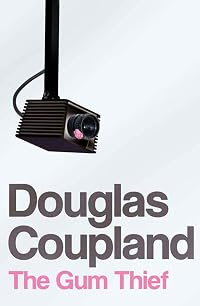
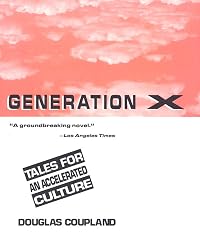
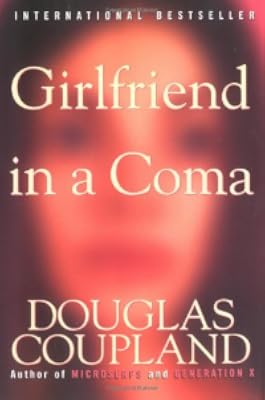
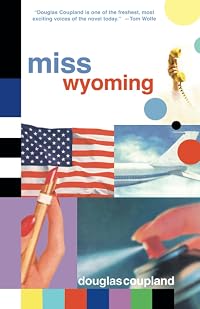
Examples of the former might include his original Generation X, 2001's All Families Are Psychotic, and 2007's surprisingly sad look at the crushing defeats that come with middle-age, The Gum Thief (which I've also reviewed here in the past); while the latter would definitely include 1998's Girlfriend in a Coma (which ends with literally only six people still left on the planet), 2000's Miss Wyoming (in which a former child star miraculously survives a plane crash without anyone knowing, and ends up living in hiding for a year with a stranger she randomly meets one day), and now his latest, the head-scratchingly controversial Generation A, which since coming out last year has garnered an amount of polar-opposite reactions unusual for even him, with everyone who's now read it seemingly either loving or hating it, and hardly anybody ever saying merely "meh." In fact, I'm not even sure what to think of it myself, which should make today's write-up interesting; because in general I liked it quite a bit, but am still not sure if that's only because I'm assigning it too much undeserved goodwill, because of being such a big fan of his in general for so long now.
Because to be clear, this is a strange story you're entering when you pick up this book, perhaps one of the stranger ones now of Coupland's entire career; set just a few years after our own times, it posits a world where the planet's population of bees has died out for unknown reasons, which through a snowballing chain of reactions has affected the population of other insects, which in turn has caused mass pollination problems, which itself has caused a global food crisis, as well as a growing amount of environmental disasters. So then when it's discovered that five random young people across the planet have all been stung by these supposedly extinct bees within the same month -- including a rave-loving farmer in Iowa, a "Slumdog Millionaire" call-center assistant in Sri Lanka, a World Of Warcraft addict in Paris, an evangelical Christian with Tourette Syndrome in Canada, and a Boing-Boing-reading flash-mob enthusiast in New Zealand -- needless to say that the world pays attention, including the five being whisked off by black helicopters that seem at first to be owned by the Center for Disease Control, until it becomes clear at their new cleanhouse environment that they are to be subjected to a kind of examination never heard of before, with all corporate logos in their locked hospital rooms (including on the bottom of furniture and on mattress tags) deliberately removed in a way so thoroughly that it seems like they never even existed, and with the five subjugated for hours each day by an artificially intelligent computer to the kinds of snarky, pop-culture-laced cocktail-party questions that Coupland is precisely known for. ("Can you imagine a situation where pain might feel good?" "Do you shoplift in your head?")
And yes, as you can already pick up on, this leads to one of the first big problems with the book, and I'm sure is one of the main reasons it garners such opposite reactions in the first place -- because for being five random strangers from different walks of life scattered around the planet, they all seem to share a remarkable amount of interests, to be precise the exact same interests that Coupland himself has, a sort of hyperawareness of tech-based ultra-contemporary pop culture usually only seen in smartass creative-class Caucasians in North America and Western Europe with way too much time on their hands. And it'd be one thing if this remained the case throughout, but near the end Coupland actually offers up an explanation for why these five characters all seem so similar to each other, which I'll let remain a secret but that does beg two questions: of whether a hasty explanation that close to the end justifies our misunderstanding of the situation during the rest (which let's face it, is a storytelling device that usually only works when the ending is a shocking surprise, like is the case with Fight Club or The Usual Suspects); and whether the explanation itself even holds water in the first place, which I suspect that many people will argue does not.
This of course is the problem with writing metaphorical fairytales, and why they're trickier to pull off than more realistic storylines -- that since you're deliberately relying on elements that sometimes make no rational sense in the physical world, it requires a much bigger suspension of disbelief on the part of the reader, a much bigger allowance for "artistic license" than some audience members are willing to give. And so it's easy to see Generation A as a silly, pretentious mess if you're determined to see it that way -- after all, it features such eye-rolling details as giant obscene crop circles done specifically to piss off Google employees, an aboriginal Southeast Asian who calms himself in stressful situations by repeating mantra-like the unending list of Abercromie & Fitch sweater colors, and a shadowy corporate conspiracy that apparently relies on hundreds of "Simpsons" references for its success, not to mention an entire last third of the manuscript consisting of not much more than the supposedly extemporaneous short stories that our five heroes are supposedly making up on the spot as they sit around a campfire at an abandoned village off the coast of Alaska (don't ask), but that in reality are way too witty and perfect to have ever been composed whole-cloth on the spur of a moment. To truly enjoy a novel like this, you have to be willing to cede these things, to admit for example that such stories could never be made up on the spot but that Coupland is trying to accomplish something grander by including them, or else otherwise, much like an eight-year-old watching "Road Runner" cartoons, you're going to spend the entire length of the novel grimacing and angrily shouting, "Oh, right, I'm so sure!"
Like I said, I in particular ended up really enjoying Generation A by the time it was over (which, by the way, has nothing to do with his original Generation X, but is rather inspired by a famous quote from Kurt Vonnegut at a college commencement speech in 1994, which at the time was actually his attempt at making fun of Coupland); but also like I said, the book certainly has its problems, and for sure takes a whole lot of liberties to get to the point at the end it eventually reaches, liberties that are harder and harder to swallow the less of an existing fan of his you are. It'll be interesting to see how history treats this particular title, whether it'll be chalked up in the future as a minor experiment or hailed as a brilliant early manifesto of this so-called "Age of Sincerity" we now find ourselves in post-9/11; I find it absolutely worth taking a chance on, but please don't come complaining to me if you end up detesting it, which you very well might.
Out of 10: 7.9 show less
As I've mentioned here before, about the closest I come to being a literal "completist" of a contemporary author's work is probably Douglas Coupland (I've now read ten of his thirteen novels, and was a pretty obsessive fan at that when I was younger); for those who need a refresher, he's the fifty-something media expert who originally coined the sociological phrase "Generation X" with his 1991 novel, and which ushered in an extra-snarky, extra-pop-culture-laced style of late Postmodernism, which was at first eagerly eaten up by people my age until show more collectively getting pretty sick of it by the time September 11th rolled around, and which was the direct cause of such Scooby-Doo navel-gazing hacks as Augusten Burroughs and Chuck Klosterman during the nadir of that particular movement. And now that I've read so much of Coupland, I've come to realize that most of his work essentially fits into one of two molds, although of course with at least a slight overlap in them all: there is the "realistic" Coupland, who pens stories that for the most part could actually happen out in the real world, and which directly comment on the times in which they were written; and then there's the "fairytale" Coupland, exactly as it sounds, who writes speculative and sometimes even outright science-fiction tales, and which generally attempt to speak metaphorically about much more universal issues of the human condition. (And in fact, I think it's no surprise that his most popular novel to date, 1995's dot-com story Microserfs, is an ingenious and almost equal blend of the real and surreal, a balance I wish he would find in all the books he writes.)
Examples of the former might include his original Generation X, 2001's All Families Are Psychotic, and 2007's surprisingly sad look at the crushing defeats that come with middle-age, The Gum Thief (which I've also reviewed here in the past); while the latter would definitely include 1998's Girlfriend in a Coma (which ends with literally only six people still left on the planet), 2000's Miss Wyoming (in which a former child star miraculously survives a plane crash without anyone knowing, and ends up living in hiding for a year with a stranger she randomly meets one day), and now his latest, the head-scratchingly controversial Generation A, which since coming out last year has garnered an amount of polar-opposite reactions unusual for even him, with everyone who's now read it seemingly either loving or hating it, and hardly anybody ever saying merely "meh." In fact, I'm not even sure what to think of it myself, which should make today's write-up interesting; because in general I liked it quite a bit, but am still not sure if that's only because I'm assigning it too much undeserved goodwill, because of being such a big fan of his in general for so long now.
Because to be clear, this is a strange story you're entering when you pick up this book, perhaps one of the stranger ones now of Coupland's entire career; set just a few years after our own times, it posits a world where the planet's population of bees has died out for unknown reasons, which through a snowballing chain of reactions has affected the population of other insects, which in turn has caused mass pollination problems, which itself has caused a global food crisis, as well as a growing amount of environmental disasters. So then when it's discovered that five random young people across the planet have all been stung by these supposedly extinct bees within the same month -- including a rave-loving farmer in Iowa, a "Slumdog Millionaire" call-center assistant in Sri Lanka, a World Of Warcraft addict in Paris, an evangelical Christian with Tourette Syndrome in Canada, and a Boing-Boing-reading flash-mob enthusiast in New Zealand -- needless to say that the world pays attention, including the five being whisked off by black helicopters that seem at first to be owned by the Center for Disease Control, until it becomes clear at their new cleanhouse environment that they are to be subjected to a kind of examination never heard of before, with all corporate logos in their locked hospital rooms (including on the bottom of furniture and on mattress tags) deliberately removed in a way so thoroughly that it seems like they never even existed, and with the five subjugated for hours each day by an artificially intelligent computer to the kinds of snarky, pop-culture-laced cocktail-party questions that Coupland is precisely known for. ("Can you imagine a situation where pain might feel good?" "Do you shoplift in your head?")
And yes, as you can already pick up on, this leads to one of the first big problems with the book, and I'm sure is one of the main reasons it garners such opposite reactions in the first place -- because for being five random strangers from different walks of life scattered around the planet, they all seem to share a remarkable amount of interests, to be precise the exact same interests that Coupland himself has, a sort of hyperawareness of tech-based ultra-contemporary pop culture usually only seen in smartass creative-class Caucasians in North America and Western Europe with way too much time on their hands. And it'd be one thing if this remained the case throughout, but near the end Coupland actually offers up an explanation for why these five characters all seem so similar to each other, which I'll let remain a secret but that does beg two questions: of whether a hasty explanation that close to the end justifies our misunderstanding of the situation during the rest (which let's face it, is a storytelling device that usually only works when the ending is a shocking surprise, like is the case with Fight Club or The Usual Suspects); and whether the explanation itself even holds water in the first place, which I suspect that many people will argue does not.
This of course is the problem with writing metaphorical fairytales, and why they're trickier to pull off than more realistic storylines -- that since you're deliberately relying on elements that sometimes make no rational sense in the physical world, it requires a much bigger suspension of disbelief on the part of the reader, a much bigger allowance for "artistic license" than some audience members are willing to give. And so it's easy to see Generation A as a silly, pretentious mess if you're determined to see it that way -- after all, it features such eye-rolling details as giant obscene crop circles done specifically to piss off Google employees, an aboriginal Southeast Asian who calms himself in stressful situations by repeating mantra-like the unending list of Abercromie & Fitch sweater colors, and a shadowy corporate conspiracy that apparently relies on hundreds of "Simpsons" references for its success, not to mention an entire last third of the manuscript consisting of not much more than the supposedly extemporaneous short stories that our five heroes are supposedly making up on the spot as they sit around a campfire at an abandoned village off the coast of Alaska (don't ask), but that in reality are way too witty and perfect to have ever been composed whole-cloth on the spur of a moment. To truly enjoy a novel like this, you have to be willing to cede these things, to admit for example that such stories could never be made up on the spot but that Coupland is trying to accomplish something grander by including them, or else otherwise, much like an eight-year-old watching "Road Runner" cartoons, you're going to spend the entire length of the novel grimacing and angrily shouting, "Oh, right, I'm so sure!"
Like I said, I in particular ended up really enjoying Generation A by the time it was over (which, by the way, has nothing to do with his original Generation X, but is rather inspired by a famous quote from Kurt Vonnegut at a college commencement speech in 1994, which at the time was actually his attempt at making fun of Coupland); but also like I said, the book certainly has its problems, and for sure takes a whole lot of liberties to get to the point at the end it eventually reaches, liberties that are harder and harder to swallow the less of an existing fan of his you are. It'll be interesting to see how history treats this particular title, whether it'll be chalked up in the future as a minor experiment or hailed as a brilliant early manifesto of this so-called "Age of Sincerity" we now find ourselves in post-9/11; I find it absolutely worth taking a chance on, but please don't come complaining to me if you end up detesting it, which you very well might.
Out of 10: 7.9 show less
I'm not certain, but I think this book would have merited five stars if it had a slightly denser texture. That said, it is a tour de force of self-consciously modern literary form; a novel about stories and the collapse of society, lovingly kneaded to form rich satisfying self-referential loops. There are also bees, though their motives remain unclear.
I suppose it's no surprise that I loved this novel; anything pulls together fundamentalist Christian oddities, anti-poverty observations, and anti-cheap corn/Monsanto imagery in the first five pages is bound to appeal to me. Allusions to many other works I love--the internet, Brave New World, media-created phenomenon of H1N1--and allegories of loneliness make this book humorous and appealing to my demographic. (This book strikes me more as allegory than actual Science Fiction; I don't think he's trying to create any illusion of the world described really being an Other from our world right now.) But as the book develops (spoiler alerts) Coupland moves into profound reflections on the place of story and narrative within our world. At the show more end of the book, as the characters comment on the individualism and alienation from community created in the process of novel-reading, I was squirming uncomfortably as my husband asked me questions that I couldn't answer because I was involved in my own little world in the book. What I love about this book is that it brings in the meta-questions without diminishing the importance of the just plain questions--why are the bees dying? Why don't we want to make communities anymore? How can we stop Monsanto? The questions of "What does novel-reading do to us?" and "Is that important or even a good thing?" are not elevated (theory-style) above the content questions and the skewering of corporate culture. I also finished the book in two days and enjoyed every page-turning minute of it. I found Generation A much more readable and intelligent than The Gum Thief; this novel will give me mental floss for weeks. show less
I am a big fan of Douglas Coupland - he might be one of those authors future generations will refer to when describing our times, our anxieties and hopes. I expected "Generation A" to be connected to "Generation X", in the same way J-Pod" and "Microserfs" somehow dialogue between them. But the title is a mere disguise - "Generation A" is not a sequel to "Generation X", but an independent, touching novel that reflects upon the basis of our societies. It really poses the question: what ARE the basis of our society? What brought us together in this way and not any other? As is his other novels, the questionings may be hard to be faced with, but the directions Coupland points as possibles answers are always full of hope and a deep faith in show more Humanity. "Generation A" is fun to read - I really caught myself laughing out loud sometimes. It might be even taken as a light reading, but it makes one reflect on many aspects of our time and life. show less
Apart from a few good quotes, this is an amalgam of crazy characters with unlikely traits living outlandish scenarios. And for what? Yet another diatribe against large pharmaceutical companies, human greed, ecological disasters? Themes du jour to be sure, but they've been treated by others and in a much more comprehensive and creative way. This book just bored me. Only Harj grabbed my attention, but he alone could not save the book.
I've long considered Coupland one of my favorite authors, but I'm having to amend that to "early Coupland" -- much like I like "early Tori Amos." Both, IMHO, have become so full of being an amazing, groundbreaking artist, that they forget how to be authentic.
I suffered through [b:JPod|221059|JPod|Douglas Coupland|http://photo.goodreads.com/books/1172821182s/221059.jpg|820439], didn't mind [b:The Gum Thief|386043|The Gum Thief|Douglas Coupland|http://photo.goodreads.com/books/1266540179s/386043.jpg|2037794] too much, but within the first two chapters of Generation A, I knew that I couldn't muster up the energy to care about a corn farmer with a meth-head dad and whatever other ridiculous characters Coupland dreamed up this time who all show more share the same jaded hipster voice.
I honestly don't know if I'll ever pick up another Coupland book again. show less
I suffered through [b:JPod|221059|JPod|Douglas Coupland|http://photo.goodreads.com/books/1172821182s/221059.jpg|820439], didn't mind [b:The Gum Thief|386043|The Gum Thief|Douglas Coupland|http://photo.goodreads.com/books/1266540179s/386043.jpg|2037794] too much, but within the first two chapters of Generation A, I knew that I couldn't muster up the energy to care about a corn farmer with a meth-head dad and whatever other ridiculous characters Coupland dreamed up this time who all show more share the same jaded hipster voice.
I honestly don't know if I'll ever pick up another Coupland book again. show less
Members
- Recently Added By
Published Reviews
ThingScore 67
Still, the plot of Generation A, which in another writer’s hands might gallop into geopolitical-thriller territory, plays harmony to trademark Couplandian insight: As Diana is taken away from her house, now covered in an isolation bubble, she says “For the first time in my life, the future felt futuristic”; for Julien, the sting took away a life “like a video game that resets to zero show more every time I wake up.” It’s in these details, not the overall picture, that readers will find the generation of which Vonnegut spoke, though as with Coupland’s Generation X, it isn’t a complete portrait. An initially puzzling backdrop gives the narrative just enough momentum to nose these characters into a place where they can explore how much they have in common. show less
added by lampbane
If Generation X gave us “tales for an accelerated culture,” then Generation A is its natural extension, offering tales for the information overloaded. The bite-sized chapters and witty tone will appeal to those with perpetual attention defi cits, and bits of pop culture sprinkled liberally throughout will attract readers highly attuned to the current zeitgeist. Coupland clearly understands show more the minds of the current generation – young people who have never known a time without the Internet – and plays on their desire to jump continually from one subject to the next. show less
added by lampbane
Generation A feels like a slow-motion demonstration of the ways in which technology is destroying story, and not the enacted triumph of story over technology that Coupland so clearly wishes it to be.
added by chazzard
Lists

2000s (the decade, not the century)
184 works; 11 members

Books Read in 2009
464 works; 11 members
Author Information

44+ Works 38,693 Members
Douglas Coupland was born December 30, 1961 on a Canadian military base in Baden-Soellingen, Germany. He graduated from Sentinel Secondary School in West Vancouver in 1979 and went on to McGill University. He was unhappy there and went on to Emily Carr College of Art and Design. He has said that these were the best four years of his life. He show more graduated in 1984 with a focus on sculpture and moved on to study at the European Design Institute in Milan. He also completed a two-year course in Japanese business science in Hawaii in 1986.He soon began writing for magazines as a means of paying the bills. He soon started work on his first novel Generation X: Tales for an Accelerated Culture which was published in 1991. His second novel Shampoo Planet focused on the generation after Generation X and was published in 1992. This generation was termed "Global Teens". His career has consisted of writing, sculpting, and editing and he also hosted The Search for Generation X, a PBS documentary, 1991. Douglas Coupland has also worked on a magazine called Wired . He wrote a short story about the life of the employees of Mocrosoft Corporation. This short story provided inspiration for his novel Microserfs. (Bowker Author Biography) show less
Awards and Honors
Common Knowledge
- Canonical title
- Generation A
- Original title
- Generation A
- Original publication date
- 2009
- People/Characters
- Harj Irumpirai Vetharanayan; Zack Lammle; Samantha Tolliver; Julien Picard; Diana Beaton; Serge Duclos (show all 45); Céline; Uncle Jay; Charles (Zack's customer); Erik Brandeis; Eva Brandeis; Mitch (Diana's neighbor); Louise (New Zealand Project Mellifera Response Team); Finbar Manzies; Simone Ferrero; Hemesh (Harj's boss); Leslie (New York Times); Dr. Rick (Harj's doctor); Andrea (Abercrombie & Fitch); Craig (Abercrombie & Fitch); Sandra (Winnipeg Level-4 Lab); Superman (Zack's story); Yoda (Zack's story); Batman (Zack's story); Zoë (Samantha's story); Coffinshark the Unpleasant (multiple stories); Kimberly Kellogs (Julien's story); Chloë (Diana's story); Jacques (Julien's story); Barry (Diana's story); Brenda (Diana's story); Bev (Harj's story); Bartholomew (multiple stories); Bruiser (Zack's story); Stabby (Zack's story); Stella (Samantha's story); Jessica (Samantha's story); Roy (Samantha's story); Vlakk (Julien's story); Glog (Julien's story); Karen (Julien's story); Lydia (Julien's story); Channel Three News team (multiple stories); Suzanne (Serge's story); Amber (Serge's story)
- Important places
- Trincomalee, Sri Lanka; Mahaska County, Iowa, USA; Palmerston North, Manawatu, New Zealand; 12th arrondissement, Paris, France; North Bay, Ontario, Canada; Research Triangle Park, North Carolina, USA (show all 12); Geneva, Geneva, Switzerland; New Albany, Ohio, USA; Masset, Haida Gwaii, British Columbia, Canada; Mars; Gamalon-5; Montpelier, Occitanie, France
- Epigraph
- "Terrorize, threaten and insult your own useless generation. Suddenly you've become a novel idea and you've got people wanting to join in. You've gained credibility from nothing. You're the talk of the town. Develop this as a... (show all) story you can sell."
Malcolm McLaren
"Now you young twerps want a new name for your generation? Probably not, you just want jobs, right? Well, the media do us all such tremendous favors when they call you Generation X, right? Two clicks away from the very end of... (show all) the alphabet. I hereby declare you Generation A, as much at the begining of a series of astonishing triumphs and failures as Adam and Eve were so long ago."
Kurt Vonnegut
Syracuse University commencement address
May 8, 1994 - Dedication
- To Anne Collins
- First words
- How can we be alive and not wonder about the stories we use to knit together this place we call the world?
- Quotations
- Praying is funny. When you pray, you leave the day-to-day time stream and enter a quieter place that uses different clocks and values things that can't be seen.
- Last words
- (Click to show. Warning: May contain spoilers.)I began to imagine small cells of them—not even hives—surviving from year to year, nesting under highway overpasses and the dusty eaves of failed shopping malls—foraging for pollen in the weeds growing alongside highways, their wings freezing and falling off in the winter and in the summers their wings rotting and leaving them crippled as they tried to keep their queens alive, finding little comfort in each other, finding solace only in the idea that their mission might one day succeed, that they would one day find us, with our strange blood—knowing that we were the only hope they ever had of moving forward—that we were the only hope they had of finding their way home.
Classifications
Statistics
- Members
- 1,012
- Popularity
- 25,722
- Reviews
- 44
- Rating
- (3.50)
- Languages
- 8 — Czech, Dutch, English, French, German, Hungarian, Italian, Spanish
- Media
- Paper, Ebook
- ISBNs
- 28
- ASINs
- 10