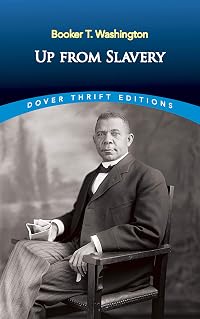
Up from Slavery
by Booker T. Washington
On This Page
Description
Up from Slavery is the 1901 autobiography of Booker T. Washington detailing his personal experiences in working to rise from the position of a slave child during the Civil War, to the difficulties and obstacles he overcame to get an education at the new Hampton University, to his work establishing vocational schools-most notably the Tuskegee Institute in Alabama-to help black people and other disadvantaged minorities learn useful, marketable skills and work to pull themselves, as a race, up show more by the bootstraps. He reflects on the generosity of both teachers and philanthropists who helped in educating blacks and native Americans. He describes his efforts to instill manners, breeding, health and a feeling of dignity to students. His educational philosophy stresses combining academic subjects with learning a trade (something which is reminiscent of the educational theories of John Ruskin). Washington explained that the integration of practical subjects is partly designed to reassure the white community as to the usefulness of educating black people. This book was first released as a serialized work in 1900 through The Outlook, a Christian newspaper of New York. This work was serialized because this meant that during the writing process, Washington was able to hear critiques and requests from his audience and could more easily adapt his paper to his diverse audience. show lessTags
Recommendations


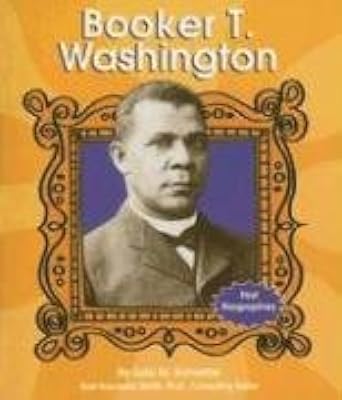
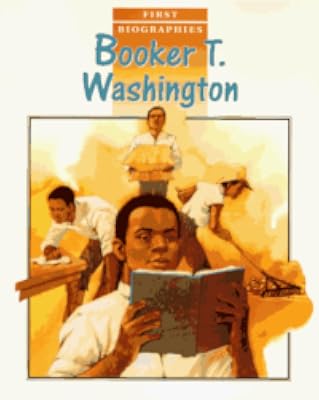



Member Recommendations

HistReader Both former slaves erect establishments which advance their race: Henson, a city with industry and schools; and Washington, a learning institution which was well respected. As well, both men went on to attend, as esteemed guests, events which had not been graced with the representation of non-Whites. Henson, the World's Fair in London; Washington, the Atlanta Exposition.
anonymous user Black history, American History, Black political thought.
Member Reviews
What do you call a trice-married man accused of being a crafty narcissist who punished those in the way of his personal interests? Booker T Washington (see Michael Bieze, Booker T. Washington Rediscovered, 2012, p209).
This is a rag to riches success story telling of Washington's rise up from slavery, through reconstruction, and the developing of the Tuskegee Institute. Washington's story culminates with his rise to political influence--the Atlanta Exposition address, his trip to Europe and his meetings with Presidents Cleveland and McKinley.
Washington is without question a success story and justly remembered for his political gifts, but is criticized for being an accommodationist. He was an African American in the South at the turn of show more last century and worried that being tackling racial inequality head on would invite White backlash (which was probably a correct assessment). So instead, he tried to help African Americans by promoting education and learning a trade (marketable skills).
This is a realist approach which takes seriously personal responsibility, though in a day and age where African Americans are still discriminated against, suffer systemic violence, and under a president who promises to implement more stop-and-frisks, I think a more prophetic stance is needed. I hear this prophetic stance more in Frederick Douglass than I do in Booker T.
Still I would be lying if I said I didn't enjoy reading this. Washington was a generous human being and can talk respectfully, even with affection of former slaveholders while simultaneously affirming that slavery was wrong. show less
This is a rag to riches success story telling of Washington's rise up from slavery, through reconstruction, and the developing of the Tuskegee Institute. Washington's story culminates with his rise to political influence--the Atlanta Exposition address, his trip to Europe and his meetings with Presidents Cleveland and McKinley.
Washington is without question a success story and justly remembered for his political gifts, but is criticized for being an accommodationist. He was an African American in the South at the turn of show more last century and worried that being tackling racial inequality head on would invite White backlash (which was probably a correct assessment). So instead, he tried to help African Americans by promoting education and learning a trade (marketable skills).
This is a realist approach which takes seriously personal responsibility, though in a day and age where African Americans are still discriminated against, suffer systemic violence, and under a president who promises to implement more stop-and-frisks, I think a more prophetic stance is needed. I hear this prophetic stance more in Frederick Douglass than I do in Booker T.
Still I would be lying if I said I didn't enjoy reading this. Washington was a generous human being and can talk respectfully, even with affection of former slaveholders while simultaneously affirming that slavery was wrong. show less
The Preface, by William Andrews, a scholar of African-American literature, called the 1901 autobiography Up From Slavery "one of the few African-American texts that can be legitimately termed a classic" and its subject, Booker T. Washington, "one of the most controversial figures in African-American history." Some months ago I read the landmark 1952 novel of African-American literature by Ralph Ellison, Invisible Man. One of the characters, Bledsoe, is famously based upon Booker T. Washington, and the portrayal is scathing enough to strip paint. Washington has a reputation among some as an "Uncle Tom" and his vision famously conflicted with that of W.E.B. Du Bois. The Preface notes that Du Bois' critique "Of Booker T. Washington and show more Others" in the 1903 The Souls of Black Folk. signaled the beginning of the split on Washington within the African-American community and says that in Up From Slavery Washington wore a "minstrel mask."
I can understand why some respond negatively to the man. At one point, Washington claimed that "the black man got nearly as much out of slavery as the white man." In context though, it's clear he means rather Southern whites were also damaged by the institution--that slavery eroded the work ethic in the South, so that manual labor became something slaves did and was looked upon with derision. Washington also claimed at one point that the very experience of slavery had left American blacks stronger "materially, intellectually, morally and religiously" than their African brethren. He seemed to be protesting too much in constantly insisting on the good relations between black and white Southerners. (At one point claiming the Ku Klux Klan was extinct. Admittedly, I once watched a documentary that noted the organization was in fact greatly diminished after Reconstruction--they'd have a resurgence a decade or so later after the book's publication.) And the praise of his Northern white benefactors seemed a bit...fulsome--and shameless name-dropping. (Of course, probably hits me that way partly because it was the style of the times--this is the Victorian Era after all.) But over the course of the book, that did wear at me.
Of course, I do understand Washington was trying to influence a white audience in a time of eroding civil rights (thus the supposed "minstrel mask"). And never, ever did I get the impression either that Washington thought blacks weren't the equal of whites morally, socially or intellectually or that they should not be legally. It's clear Washington thought both slavery and segregation deeply immoral--even if at times I can understand why Du Bois said Washington pursued "an accommodationist strategy." In his famous Atlanta Exposition Address--which Du Bois called the "Atlanta Compromise," Washington, to the applause of white Southerners, said "in all things that are purely social we can be as separate as the fingers yet one as the hand in all things essential to mutual progress." It's hard to disagree with Du Bois who saw Washington as ceding too much in rejecting political power and not insisting on equal civil rights--and irked at his sometimes anti-intellectualism in his insistence of an "industrial" (think vocational) education over a liberal arts higher education.
That's not to say that I don't think there isn't some value in what Washington has to say and what he accomplished. Du Bois wanted to depend on the training up the "talented tenth" into an intellectual elite and saw political power as key to gaining equal civil rights. Washington argued for economic power through self-reliance, a strong work ethic, and practical vocational education. This isn't just a black issue. I can see echoes of this argument today in contemporary debates on poverty and education. And I can understand why after witnessing the transient and seemingly futile period of black office-holding after Reconstruction, Washington might feel the political route was premature and unreliable as a way of progress. And with the Tuskegee Institute situated right in Alabama, Washington was right in the belly of the beast--in the heart of the once slave-holding Confederacy. He may have felt in conceding on civil rights (if concede he did) he wasn't giving up anything within his reach.
Beyond the political issues, this is at times a fascinating piece of history, particularly in the first 50 pages or so of the 146-page book dealing with the young Washington and his memories of slavery and the Reconstruction Era and his efforts to gain an education. The first paragraph reminded me of the opening of Frederick Douglas' slave narrative. Like Douglas, Washington didn't know his own date of birth. Douglas explained that was something slave owners deliberately tried to deny slaves. Also like Douglas, Washington heard rumors his father was white but didn't know him personally. Washington's lifetime took him from slavery to the Civil War through Reconstruction to Jim Crow. It's more later on, when he started to relate the building of the Tuskegee Institute that something about Washington's style started to grate on me, and much of the account began to be tedious. (Goodness, you wouldn't believe Washington's ode to the toothbrush!) Which is a shame, because as William Andrews noted, this is the story of "a former slave who became the most powerful African-American of this era." He started Tuskegee Institute from a "shanty" and a "hen house" and from it built a great American educational institution. But something felt lacking, absent. Maybe Washington himself. There seemed little introspection or humor or even anything really personal at all in his voice. I get why Andrews feels Washington wore a mask, and it takes close reading and outside information to get it to slip a bit to see the complex man underneath. That's where I did find this Norton Critical Edition, which included essays on Washington, including the famous critique by Du Bois, invaluable. It makes rating this book difficult. I do feel this is worth reading as a piece of history--but as a biography it left me feeling decidedly ambivalent. show less
I can understand why some respond negatively to the man. At one point, Washington claimed that "the black man got nearly as much out of slavery as the white man." In context though, it's clear he means rather Southern whites were also damaged by the institution--that slavery eroded the work ethic in the South, so that manual labor became something slaves did and was looked upon with derision. Washington also claimed at one point that the very experience of slavery had left American blacks stronger "materially, intellectually, morally and religiously" than their African brethren. He seemed to be protesting too much in constantly insisting on the good relations between black and white Southerners. (At one point claiming the Ku Klux Klan was extinct. Admittedly, I once watched a documentary that noted the organization was in fact greatly diminished after Reconstruction--they'd have a resurgence a decade or so later after the book's publication.) And the praise of his Northern white benefactors seemed a bit...fulsome--and shameless name-dropping. (Of course, probably hits me that way partly because it was the style of the times--this is the Victorian Era after all.) But over the course of the book, that did wear at me.
Of course, I do understand Washington was trying to influence a white audience in a time of eroding civil rights (thus the supposed "minstrel mask"). And never, ever did I get the impression either that Washington thought blacks weren't the equal of whites morally, socially or intellectually or that they should not be legally. It's clear Washington thought both slavery and segregation deeply immoral--even if at times I can understand why Du Bois said Washington pursued "an accommodationist strategy." In his famous Atlanta Exposition Address--which Du Bois called the "Atlanta Compromise," Washington, to the applause of white Southerners, said "in all things that are purely social we can be as separate as the fingers yet one as the hand in all things essential to mutual progress." It's hard to disagree with Du Bois who saw Washington as ceding too much in rejecting political power and not insisting on equal civil rights--and irked at his sometimes anti-intellectualism in his insistence of an "industrial" (think vocational) education over a liberal arts higher education.
That's not to say that I don't think there isn't some value in what Washington has to say and what he accomplished. Du Bois wanted to depend on the training up the "talented tenth" into an intellectual elite and saw political power as key to gaining equal civil rights. Washington argued for economic power through self-reliance, a strong work ethic, and practical vocational education. This isn't just a black issue. I can see echoes of this argument today in contemporary debates on poverty and education. And I can understand why after witnessing the transient and seemingly futile period of black office-holding after Reconstruction, Washington might feel the political route was premature and unreliable as a way of progress. And with the Tuskegee Institute situated right in Alabama, Washington was right in the belly of the beast--in the heart of the once slave-holding Confederacy. He may have felt in conceding on civil rights (if concede he did) he wasn't giving up anything within his reach.
Beyond the political issues, this is at times a fascinating piece of history, particularly in the first 50 pages or so of the 146-page book dealing with the young Washington and his memories of slavery and the Reconstruction Era and his efforts to gain an education. The first paragraph reminded me of the opening of Frederick Douglas' slave narrative. Like Douglas, Washington didn't know his own date of birth. Douglas explained that was something slave owners deliberately tried to deny slaves. Also like Douglas, Washington heard rumors his father was white but didn't know him personally. Washington's lifetime took him from slavery to the Civil War through Reconstruction to Jim Crow. It's more later on, when he started to relate the building of the Tuskegee Institute that something about Washington's style started to grate on me, and much of the account began to be tedious. (Goodness, you wouldn't believe Washington's ode to the toothbrush!) Which is a shame, because as William Andrews noted, this is the story of "a former slave who became the most powerful African-American of this era." He started Tuskegee Institute from a "shanty" and a "hen house" and from it built a great American educational institution. But something felt lacking, absent. Maybe Washington himself. There seemed little introspection or humor or even anything really personal at all in his voice. I get why Andrews feels Washington wore a mask, and it takes close reading and outside information to get it to slip a bit to see the complex man underneath. That's where I did find this Norton Critical Edition, which included essays on Washington, including the famous critique by Du Bois, invaluable. It makes rating this book difficult. I do feel this is worth reading as a piece of history--but as a biography it left me feeling decidedly ambivalent. show less
The first half of this book gripped me and had the feel of a classic. The author’s account of his birth, manumission, and youth are a valuable record of the last years of slavery and the first years of reconstruction. His struggles to find work and the obstacles he overcame to gain an education are inspiring. The second half of the book, in contrast, let me down. I don’t begrudge the author his victory lap, recounting how the hard work and sacrifice paid off in the success of the Tuskegee Institute or the encomia he received from Harvard, the White House, and other centers of learning and power. But along with this, he dispenses advice reminiscent of the self-satisfied tone of businessmen and political leaders of his day on how to show more succeed. More disquieting is his persistent optimism. While acknowledging in passing the problems of lynching, vote suppression, as well as the day-to-day disabilities brought on by segregation, his tone is consistently one of optimism, that racial prejudice is passing, and that if his fellow blacks would simply bathe daily and work hard, then the last barriers to full citizenship would fall away. What this Panglossian attitude may have cost him personally is suggested by the fact of his death before turning sixty. An autopsy showed that he suffered from chronic hypertension. All in all, this book is a poignant record of the life of one of the greatest Americans. show less
1865. End of the Civil war. Booker T. Washington, still a child, is, as every other slaves, emancipated.
Here was a sudden freedom, though, which was then like a difficult burden to carry. Yes, slaves were finally free! But.. What of them now? The future, uncertain, seemed to be full of challenges. And yet... Booker T. Washington might have been just a child, but he understood something crucial: the key importance of education. Without education, one cannot go anywhere in life, and, so, started here for him a lifelong journey, that of educating himself and promote education as a way to empower oneself. Obviously, it wasn't an easy endeavour...
His family was poor. His step-father (his real father was a White man who never bothered to show more care about him) needed him to financially help the struggling family. He therefore worked in a coal mine. The work was tough, brutish, exhausting, but the child still found the time to go to school; one of these schools for Black people that were then blossoming all across the South, and where teaching was done mostly by ex-soldiers from the Northern army. It was very rudimentary, but never mind! He learnt how to read, and he read everything he could, sharpening his mind and growing more and more ambitious in the process. More: he wanted to attend a better school, with 'real' teachers.
Supported by his mother, he therefore went on to Hampton University. Here was a key turning point in his life. Hampton indeed was the first school founded by Black people. It was, also, the most prestigious of its kind. When Booker T. Washington was admitted, the principal was General Samuel C. Armstrong, a White man who had fought under the Union flag; and, Armstrong didn't mess about: 'mind, heart and hands', education to him was as much about sharpening the intellect as about learning a trade, and, gain solid moral values. Such vision will stay with Booker Washington for the rest of his life.
He was a brilliant pupil too; so much so that, when Samuel C. Armstrong decided to open another school in Alabama, he will be asked -when he was barely 25!- to become its principal. The school in question? Tuskegee University. The rest is history.
The rest is history, first, because he became thus the first African-American ever to manage a University. This wasn't an easy fate -he knew perfectly well that, were he to fail, his failure would reflect upon Black people as a whole. Then, because the pupil surpassed the master. At Tuskegee indeed, learning was more than about books. Girls were taught about household chores, boys about farming or construction works, and all about the importance of hygiene and health. Learning a trade or gaining practical skills were as important as sharpening the mind, and when students weren't busy engrossed in books, they were working on the constructions of the surrounding buildings! The school quickly acquired a reputation...
Booker T. Washington, in fact, will use such reputation to raise founds and further his cause. For he was more than a pedagogue; he was, most importantly, an activist and campaigner, and education was at the heart of his ideas. When others were battling for political reckoning and civil rights, he considered all that as merely 'secondary causes'. It's not that they weren't important, but, his goal in educating the still then largely marginalised Black people was to teach them useful trades, requiring skills, and, therefore, rendering them indispensable to society. If anybody, including White people, could benefit from such education and usefulness, then, he thought, the rest -political reckoning and civil rights, let alone respect- would follow.
His ideas were scandalous at times, including among Black people themselves (e.g. his Atlanta speech, in which he asked them to don't engage in political lobbying, but, focus on vocational training instead, didn't go as well as he had planned...) he, nevertheless, attempted to be a bridge between Whites and Blacks, at a time when the country was still trying to recover from slavery. Booker T. Washington, of course, was deeply naïve when it comes to how strongly entrenched racism was; yet, there is no denying that his views on education were indeed empowering, if not as much as he would have wished. Here were the early days of emancipation, and a whole century of battle and challenges will follow, but his work, as such, remained a foundation stone, and inspirational to many. 'Up from Slavery' is a great insight into his views (it includes the infamous Atlanta speech). show less
Here was a sudden freedom, though, which was then like a difficult burden to carry. Yes, slaves were finally free! But.. What of them now? The future, uncertain, seemed to be full of challenges. And yet... Booker T. Washington might have been just a child, but he understood something crucial: the key importance of education. Without education, one cannot go anywhere in life, and, so, started here for him a lifelong journey, that of educating himself and promote education as a way to empower oneself. Obviously, it wasn't an easy endeavour...
His family was poor. His step-father (his real father was a White man who never bothered to show more care about him) needed him to financially help the struggling family. He therefore worked in a coal mine. The work was tough, brutish, exhausting, but the child still found the time to go to school; one of these schools for Black people that were then blossoming all across the South, and where teaching was done mostly by ex-soldiers from the Northern army. It was very rudimentary, but never mind! He learnt how to read, and he read everything he could, sharpening his mind and growing more and more ambitious in the process. More: he wanted to attend a better school, with 'real' teachers.
Supported by his mother, he therefore went on to Hampton University. Here was a key turning point in his life. Hampton indeed was the first school founded by Black people. It was, also, the most prestigious of its kind. When Booker T. Washington was admitted, the principal was General Samuel C. Armstrong, a White man who had fought under the Union flag; and, Armstrong didn't mess about: 'mind, heart and hands', education to him was as much about sharpening the intellect as about learning a trade, and, gain solid moral values. Such vision will stay with Booker Washington for the rest of his life.
He was a brilliant pupil too; so much so that, when Samuel C. Armstrong decided to open another school in Alabama, he will be asked -when he was barely 25!- to become its principal. The school in question? Tuskegee University. The rest is history.
The rest is history, first, because he became thus the first African-American ever to manage a University. This wasn't an easy fate -he knew perfectly well that, were he to fail, his failure would reflect upon Black people as a whole. Then, because the pupil surpassed the master. At Tuskegee indeed, learning was more than about books. Girls were taught about household chores, boys about farming or construction works, and all about the importance of hygiene and health. Learning a trade or gaining practical skills were as important as sharpening the mind, and when students weren't busy engrossed in books, they were working on the constructions of the surrounding buildings! The school quickly acquired a reputation...
Booker T. Washington, in fact, will use such reputation to raise founds and further his cause. For he was more than a pedagogue; he was, most importantly, an activist and campaigner, and education was at the heart of his ideas. When others were battling for political reckoning and civil rights, he considered all that as merely 'secondary causes'. It's not that they weren't important, but, his goal in educating the still then largely marginalised Black people was to teach them useful trades, requiring skills, and, therefore, rendering them indispensable to society. If anybody, including White people, could benefit from such education and usefulness, then, he thought, the rest -political reckoning and civil rights, let alone respect- would follow.
His ideas were scandalous at times, including among Black people themselves (e.g. his Atlanta speech, in which he asked them to don't engage in political lobbying, but, focus on vocational training instead, didn't go as well as he had planned...) he, nevertheless, attempted to be a bridge between Whites and Blacks, at a time when the country was still trying to recover from slavery. Booker T. Washington, of course, was deeply naïve when it comes to how strongly entrenched racism was; yet, there is no denying that his views on education were indeed empowering, if not as much as he would have wished. Here were the early days of emancipation, and a whole century of battle and challenges will follow, but his work, as such, remained a foundation stone, and inspirational to many. 'Up from Slavery' is a great insight into his views (it includes the infamous Atlanta speech). show less
Whatever charges of too much faith in white folks giving black folks their rights,
via their "pleasure" or "duty,"
Booker T. Washington created The Tuskegee Institute with No building or supplies!
He borrowed $500, bought 10 acres of land (in Alabama!) and built a school based on agriculture,
construction, education and a successful brick foundry.
Along with his many other gifts - advisor to Theodor Roosevelt and fund raiser supreme among them -
he was well known as a Great Teacher!
Unfortunately, his lightweight descriptions of the horrors of slavery contradict all of his
fellow men and women who had been enslaved.
via their "pleasure" or "duty,"
Booker T. Washington created The Tuskegee Institute with No building or supplies!
He borrowed $500, bought 10 acres of land (in Alabama!) and built a school based on agriculture,
construction, education and a successful brick foundry.
Along with his many other gifts - advisor to Theodor Roosevelt and fund raiser supreme among them -
he was well known as a Great Teacher!
Unfortunately, his lightweight descriptions of the horrors of slavery contradict all of his
fellow men and women who had been enslaved.
You can read this book on many levels. As literature, as historical document, as propaganda. But what shines through, on every page, is Washington’s love of his people and his belief in human dignity and the power of hard work. At a nadir in Black American history, he saw a nation about to be lifted up. This autobiography testifies to his incredible contribution to that uplifting.
Articulate, and an incredible story.
Washington tells of how he worked to become the principal of the Tuskegee Institute for African American people. By sheer force of will and determination, this man managed (not without help) to erect a school especially for black people, in the South, in the late 1800's and early 1900's.
I love how Washington writes, he's so melodic. I can sense his relief, his sadness, his gratefulness. I loved hearing about him as a teacher because I'm trained as an elementary teacher so I really do feel the love for his students through him.
Parts of the book were dry because he spoke of donor after donor of people who donated to the school. Which is fine, but it felt almost like a list he had to read off, at show more times. At others, I felt a genuine note come through in the text.
He is the American dream incarnate, and he embodies that so much, and I don't know how to feel about that. Of course he succeeded and is using his privilege to lift up others. And it's not as if he hasn't directly faced (and overcome) the obstacles put in front of him by systems not designed for him, but to keep him out.
He was very mild in his descriptions of the South and rarely referred to any personal slights a racist person might've had against him, only ever referring to the plights of his race as a whole. Which, again, is fine, but it did feel a little as though someone had edited it to be directed towards a milder audience.
Either that, or Washington is excellent at forgiveness. I suspect it's both.
The part where he went on holiday for the first time in his 18 years of tireless work nearly made me cry. A book that will stay with me for a long time, and hopefully I will include it in a video to come. show less
Washington tells of how he worked to become the principal of the Tuskegee Institute for African American people. By sheer force of will and determination, this man managed (not without help) to erect a school especially for black people, in the South, in the late 1800's and early 1900's.
I love how Washington writes, he's so melodic. I can sense his relief, his sadness, his gratefulness. I loved hearing about him as a teacher because I'm trained as an elementary teacher so I really do feel the love for his students through him.
Parts of the book were dry because he spoke of donor after donor of people who donated to the school. Which is fine, but it felt almost like a list he had to read off, at show more times. At others, I felt a genuine note come through in the text.
He is the American dream incarnate, and he embodies that so much, and I don't know how to feel about that. Of course he succeeded and is using his privilege to lift up others. And it's not as if he hasn't directly faced (and overcome) the obstacles put in front of him by systems not designed for him, but to keep him out.
He was very mild in his descriptions of the South and rarely referred to any personal slights a racist person might've had against him, only ever referring to the plights of his race as a whole. Which, again, is fine, but it did feel a little as though someone had edited it to be directed towards a milder audience.
Either that, or Washington is excellent at forgiveness. I suspect it's both.
The part where he went on holiday for the first time in his 18 years of tireless work nearly made me cry. A book that will stay with me for a long time, and hopefully I will include it in a video to come. show less
Members
- Recently Added By
Lists

Modern Library 100 Best Nonfiction Books
100 works; 8 members

Black Authors
384 works; 32 members

Phi Beta Kappa reading list
260 works; 8 members

Well-Educated Mind
150 works; 3 members

Ryan Holiday's Books To Base Your Life On
97 works; 2 members

Beautiful Feet Books
304 works; 7 members

Books Read in 2020
4,379 works; 124 members

Books Read in 2021
5,361 works; 113 members

Classical Conversations Challenge I Exposition
20 works; 1 member

Mustich's 1000 Books to Read Before You Die: A Life Changing List
1,001 works; 19 members

Best 20th Century Books as of 1924
100 works; 6 members

The Well-Educated Mind, Susan Wise Bauer, 2016
179 works; 3 members

Sonlight Books
1,487 works; 25 members

Trinity College Booklist (1951): Class Six, Biography
119 works; 4 members

Writers at Risk
106 works; 17 members

Charleston Syllabus (waitingtoderail)
143 works; 2 members

Books Read in 2014
2,343 works; 89 members

CCE 100 Great Books List
145 works; 8 members

CCE 1000 Good Books List
1,033 works; 12 members

GreatBooks Worldview Academy Lists
133 works; 4 members

Libertarian Books
102 works; 19 members
Author Information

84+ Works 6,267 Members
Booker Taliaferro Washington, 1856 - 1915 Booker T. Washington was born a slave in Hales Ford, Virginia, near Roanoke. After the U.S. government freed all slaves in 1865, his family moved to Malden, West Virginia. There, Washington worked in coal mines and salt furnaces. He went on to attend the Hampton, Virginia Normal and Agricultural Institute show more from 1872-1875 before joining the staff in 1879. In 1881 he was selected to head the Tuskegee Normal and Industrial Institute, a new teacher-training school for blacks, which he transformed into a thriving institution, later named Tuskegee University. His controversial conviction that blacks could best gain equality in the U.S. by improving their economic situation through education rather than by demanding equal rights was termed the Atlanta Compromise, because Washington accepted inequality and segregation for blacks in exchange for economic advancement. Washington advised two Presidents, Theodore Roosevelt and William Howard Taft, on racial problems and policies, as well as influencing the appointment of several blacks to federal offices. Washington became a shrewd political leader and advised not only Presidents, but also members of Congress and governors. He urged wealthy people to contribute to various black organizations. He also owned or financially supported many black newspapers. In 1900, Washington founded the National Negro Business League to help black business firms. Washington fought silently for equal rights, but was eventually usurped by those who ideas were more radical and demanded more action. Washington was replaced by W. E. B. Du Bois as the foremost black leader of the time, after having spent long years listening to Du Bois deride him for his placation of the white man and the plight of the negro. He died in 1915. (Bowker Author Biography) show less
Some Editions
Awards and Honors
Awards
Series
Belongs to Publisher Series
Work Relationships
Is contained in
Up from Slavery / The Souls of Black Folk / Narrative of the Life of Frederick Douglass by Booker T. Washington
The Souls of Black Folk / Up From Slavery / Narrative of the Life of Frederick Douglass / Incidents in the Life of a Slave Girl / Narrative of Sojourner Truth / Twelve Years a Slave by W. E. B. Du Bois
Up from Slavery with Selected Slaves Narratives (New York Public Library Collector's Editions) by Booker T. Washington
Is abridged in
Reader's Digest Condensed Books 1960 v04: Surface at the Pole / The Devil's Advocate / Up from Slavery / Hook / Mistress of Mellyn / The Days Were too Short by Reader's Digest
Common Knowledge
- Canonical title
- Up from Slavery
- Original publication date
- 1901
- People/Characters
- Booker T. Washington; Samuel C. Armstrong; Joseph H. Choate; Grover Cleveland; Olivia A. Davidson; Charles W. Eliot, LL.D. (show all 22); Francis J. Garrison; Collis P. Huntington; Morris K. Jesup; Mary F. Mackie; Warren Logan; J. B. F. Marshall; Horace Porter; John Addison Porter; John D. Rockefeller; Baker T. Washington; Fannie N. Smith; Margaret J. Murray; Ernest Davidson Washington; John H. Washington; Portia M. Washington; Roger Wolcott
- Important places
- Antwerp, Belgium; Atlanta, Georgia, USA; Boston, Massachusetts, USA; Charleston, West Virginia, USA; Chicago, Illinois, USA; Framingham, Massachusetts, USA (show all 18); Hampton Institute, Hampton, Virginia, USA; Hampton, Virginia, USA; London, England, UK; Madison, Wisconsin, USA; Malden, West Virginia, USA; Missouri, USA; Paris, France; Rhode Island, USA; Richmond, Virginia, USA; St. Louis, Missouri, USA; Tuskegee, Alabama, USA; Washington, D.C., USA
- Dedication
- This volume is dedicated to my Wife, Mrs. Margaret James Washington And to my Brother, Mr. John H. Washington.
Whose patience, fidelity and hard work have gone far to make the work at Tuskegee successful.
Washington, Margaret James
Washington, John H. - First words
- I was born a slave on a plantation in Franklin County, Virginia.
- Last words
- (Click to show. Warning: May contain spoilers.)In the presence of hundreds of coloured people, many distinguished white citizens, the City Council, the state Legislature, and state officials, I delivered my message, which was one of hope and cheer; and from the bottom of my heart I thanked both races for this welcome back to the state that gave me birth.
- Canonical LCC
- E185.97.W4 A37 1986
Classifications
- Genres
- Biography & Memoir, History, Nonfiction, General Nonfiction
- DDC/MDS
- 370.92 — Society, government, & culture Education Education History, geographic treatment, biography Educational biography
- LCC
- E185.97 .W4 .A37 — History of the United States United States Elements in the population Afro-Americans Biography. Genealogy
- BISAC
Statistics
- Members
- 5,065
- Popularity
- 2,745
- Reviews
- 44
- Rating
- (3.96)
- Languages
- 8 — Czech, Danish, Dutch, English, French, German, Japanese, Thai
- Media
- Paper, Audiobook, Ebook
- ISBNs
- 243
- UPCs
- 2
- ASINs
- 147