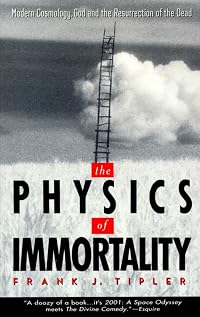
The Physics of Immortality: Modern Cosmology, God and the Resurrection of the Dead
by Frank J. Tipler
On This Page
Description
Frank J. Tipler is a major theoretician in the field of global general relativity, the rarefied branch of physics created by Stephen Hawking and Roger Penrose. Like most modern scientists, Tipler was an atheist who gave little thought to questions of theology. Yet, in devising a mathematical model of the end of the universe, Tipler came to a stunning conclusion: Using the most advanced and sophisticated methods of modern physics, relying solely on the rigorous procedures of logic that show more science demands, he had created a proof of the existence of God. Tipler's model of the universal end-time is called the Omega Point Theory. For the last seventeen years, Tipler has explored the implications of the Omega Point Theory, one of which is even more astonishing than the evidence of God's existence: It is not only possible, but likely, that every human being who ever lived will be resurrected from the dead. As Tipler writes in his preface, he arrived at his proofs of God and immortality "in exactly the same way physicists calculate the properties of the electron." In The Physics of Immortality Tipler guides the general reader through the details of his exhilarating discoveries. Displaying an awesome command of disciplines as diverse as computer science, economics, particle physics, cosmology, and evolutionary biology, Tipler constructs a stunningly plausible argument for God and the universal resurrection. Lucid in style, audacious in aim, breathtaking in scope, powerfully argued, and, finally, deeply moving, this is a book that will change the way you think. No reader, whether skeptic or believer, will look at the universe in the same way after encountering this remarkable work. show lessTags
Recommendations






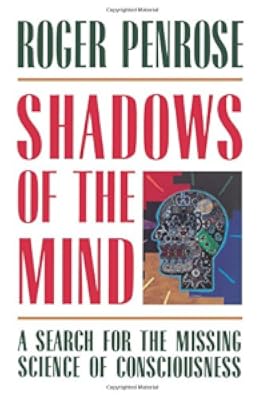
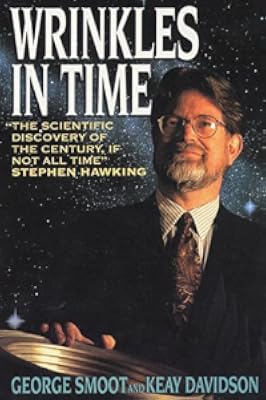











Member Recommendations

PhileasHannay The protagonist of this novel reads a book about the Omega Point, rather similar to Tipler's, and the characters spend much time discussing its implications.
Member Reviews
This is definitely a very odd book. Two decades ago, Frank Tipler, a seriously bright cosmologist and mathematical physicist, attempted to prove that the core revelation of religion - that God exists and we are immortal - could be derived from contemporary physics.
Tipler writes quite well so, noting the sections of pure science that cannot be easily understood (and their appendices 'for scientists' that perhaps only a handful of humans can comprehend), this can be read as serious entertainment at least by intelligent lay people.
His intelligence is not in doubt. He does not, at any time, fall into some of the more obvious traps of those who want religious revelation to be true but the book is ultimately unpersuasive. It stands as a show more theory of possibility and speculative science but no more.
The problem throughout is one of base-line assumptions. To get to the point where God exists, as absolute information at Omega Point, and can reconstruct us in physical form as an immortal physical sub-programme, he has to make a number of early leaps in the dark.
I do not doubt what I cannot understand - the mathematical physics - but I can reasonably doubt these assumptions and so the attempt to create a modern science-based primordialism becomes interesting and even entertaining but not something that will change my life.
As with many of my reviews, my interest is less on the claims of the author but why such claims appear culturally at a particular point in time and particular place - in this case, the United States in the final fifth of the twentieth century.
Perhaps the best way of approaching this is to look for the cultural clues when Tipler abandons science and starts looking into revelation and opinion - into theology, other religions and American Deism. Why does he even need to do this? Just to connect to his readers?
Surely his Omega Point Theory should stand on its own two feet as theoretical science and lead us to the conclusions without any requirement for any reference to the beliefs of the past. Is he suggesting that great minds in the past 'intuited' scientific truth?
There is an ambiguity and woolly-mindeness here that he corrects himself frequently but which will puzzle the European reader in particular. It reads a little as a variant of 'Fox Mulderism' - if not 'I want to believe' then 'I know you need to believe'.
What seems to be going on here is that a sincere mathematical physicist thinks he has found a theory of cosmology that ends up with outcomes close to those of the great religions and he wants to connect with his confused and less bright audience by offering hope.
One can imagine that some people might grasp at this straw - though I see no evidence that either scientists or theologians have en masse taken his theories very seriously. It is a straw that hopes to reintegrate science and religion, the liberal dream of the age.
There are clues to the ethical motivation throughout - family horror at the Holocaust (a nightmare that has become demonically symbolic for American liberals), the problem of evil, the fear of extinction, the quiet unusually ignorant rage against existentialism.
This is a cry for help from a decent man whose science has stripped away all hope in a culture that still believes in non-sense on no scientific basis at all. Science is superior to faith so someone needs to give faith a scientific basis! He tries. He fails.
It is a cry from the depths of an America that suffers from a cultural internal contradiction that is playing itself out with even more intensity two decades later - between simple stupid faith and the complexities of a science understood by only a few.
Recent decades have seen many attempts, often laughable, to reconcile religion and science, faith and reason. They usually end up a liberal spiritual mush that evades and avoids deep thought.
Tipler is rightly critical of liberal theologians who actually believe in nothing but a vague good will and an ethics based on no serious consideration of their origin. His is not a soft option by any means. His notes are sometimes worth reading on this score.
But we are not dealing with one of the more ridiculous appropriations of science to invent reasons to believe - you know the sort of thing: that quantum physics has proved that spirit inhabits all of existence. Aum! No, it does not.
To his credit, Tipler sweeps all this nonsense away so that his theory is not non-sense - it makes good sense once certain assumptions are taken for granted - but science of a sort. Unfortunately, it is highly speculative science. Little can be built on it.
'Speculative science' has its logic but it sits between the science of experiment and science fiction. It is science but not reliable or true in itself, a source of wonder which yet cannot be taken as a description of the world. Still, it drives the liberal imagination
However, frustrating though the book has been, there are insights into a wide variety of areas - and not just science. Unusually among scientists, Tipler has a breadth of knowledge that applies critical thinking to fields as diverse as history, ethics and religion.
I cannot really recommend this book ultimately to anyone looking for meaning in the universe - to find meaning in it would be to be guilty, I think, of 'mauvaise foi' - nor is it entertaining as such but I can suggest it to any intelligent reader for its nuggets of insight.
This is a book that could only have been written in the United States during a crisis of faith by a man of fundamentally liberal values faced with the internal contradictions of his own culture.
The book may last not as science but I think it may do as a text that helps document that crisis, a crisis that has since gone global ... show less
Tipler writes quite well so, noting the sections of pure science that cannot be easily understood (and their appendices 'for scientists' that perhaps only a handful of humans can comprehend), this can be read as serious entertainment at least by intelligent lay people.
His intelligence is not in doubt. He does not, at any time, fall into some of the more obvious traps of those who want religious revelation to be true but the book is ultimately unpersuasive. It stands as a show more theory of possibility and speculative science but no more.
The problem throughout is one of base-line assumptions. To get to the point where God exists, as absolute information at Omega Point, and can reconstruct us in physical form as an immortal physical sub-programme, he has to make a number of early leaps in the dark.
I do not doubt what I cannot understand - the mathematical physics - but I can reasonably doubt these assumptions and so the attempt to create a modern science-based primordialism becomes interesting and even entertaining but not something that will change my life.
As with many of my reviews, my interest is less on the claims of the author but why such claims appear culturally at a particular point in time and particular place - in this case, the United States in the final fifth of the twentieth century.
Perhaps the best way of approaching this is to look for the cultural clues when Tipler abandons science and starts looking into revelation and opinion - into theology, other religions and American Deism. Why does he even need to do this? Just to connect to his readers?
Surely his Omega Point Theory should stand on its own two feet as theoretical science and lead us to the conclusions without any requirement for any reference to the beliefs of the past. Is he suggesting that great minds in the past 'intuited' scientific truth?
There is an ambiguity and woolly-mindeness here that he corrects himself frequently but which will puzzle the European reader in particular. It reads a little as a variant of 'Fox Mulderism' - if not 'I want to believe' then 'I know you need to believe'.
What seems to be going on here is that a sincere mathematical physicist thinks he has found a theory of cosmology that ends up with outcomes close to those of the great religions and he wants to connect with his confused and less bright audience by offering hope.
One can imagine that some people might grasp at this straw - though I see no evidence that either scientists or theologians have en masse taken his theories very seriously. It is a straw that hopes to reintegrate science and religion, the liberal dream of the age.
There are clues to the ethical motivation throughout - family horror at the Holocaust (a nightmare that has become demonically symbolic for American liberals), the problem of evil, the fear of extinction, the quiet unusually ignorant rage against existentialism.
This is a cry for help from a decent man whose science has stripped away all hope in a culture that still believes in non-sense on no scientific basis at all. Science is superior to faith so someone needs to give faith a scientific basis! He tries. He fails.
It is a cry from the depths of an America that suffers from a cultural internal contradiction that is playing itself out with even more intensity two decades later - between simple stupid faith and the complexities of a science understood by only a few.
Recent decades have seen many attempts, often laughable, to reconcile religion and science, faith and reason. They usually end up a liberal spiritual mush that evades and avoids deep thought.
Tipler is rightly critical of liberal theologians who actually believe in nothing but a vague good will and an ethics based on no serious consideration of their origin. His is not a soft option by any means. His notes are sometimes worth reading on this score.
But we are not dealing with one of the more ridiculous appropriations of science to invent reasons to believe - you know the sort of thing: that quantum physics has proved that spirit inhabits all of existence. Aum! No, it does not.
To his credit, Tipler sweeps all this nonsense away so that his theory is not non-sense - it makes good sense once certain assumptions are taken for granted - but science of a sort. Unfortunately, it is highly speculative science. Little can be built on it.
'Speculative science' has its logic but it sits between the science of experiment and science fiction. It is science but not reliable or true in itself, a source of wonder which yet cannot be taken as a description of the world. Still, it drives the liberal imagination
However, frustrating though the book has been, there are insights into a wide variety of areas - and not just science. Unusually among scientists, Tipler has a breadth of knowledge that applies critical thinking to fields as diverse as history, ethics and religion.
I cannot really recommend this book ultimately to anyone looking for meaning in the universe - to find meaning in it would be to be guilty, I think, of 'mauvaise foi' - nor is it entertaining as such but I can suggest it to any intelligent reader for its nuggets of insight.
This is a book that could only have been written in the United States during a crisis of faith by a man of fundamentally liberal values faced with the internal contradictions of his own culture.
The book may last not as science but I think it may do as a text that helps document that crisis, a crisis that has since gone global ... show less
While this looked promising, the argument was based on a premise, given early in the book, that I couldn't in conscience accept. The physics has since not panned out, either (looks as if the universe is not set to collapse). Oh well.
Good read but a bit heavy on the examples.
It's a wild idea, God as the infinite Turing Machine at the collapse of the universe.
This book states a point ever so more eloquently than I could ever about the physics of immortality.
This book is a description of the Omega Point Theory, which is a testable physical theory for an omnipresent, omniscient, omnipotent God who will one day in the far future resurrect every single one of us to live forever in an abode which is in all essentials the Judeo-Christian Heaven. .... I shall make no appeal, anywhere, to revelation. I shall appeal instead to the solid results of modern physical science. ... I shall describe the physical mechanism of the universal resurrection. I shall show exactly how physics will permit the resurrection to eternal life of everyone who has lived, is living, and will live. I shall show exactly why show more this power to resurrect which modern physics allows will actually exist in the far future, and why it will in fact be used. If any reader has lost a loved one, or is afraid of death, modern physics says: 'Be comforted, you and they shall live again.' (p.1)
[T]he open universe is not infinite in all directions. Although it is spatially infinite, it is finite in momentum space: there is a universal upper bound to the energy everywhere in this universe. This is important because the state of the universe is given by its phase space position, not merely by its configuration space position. Complexity can increase without limit in a closed universe by using higher and higher energy states to code information. Also, from life's point of view the infinity of configuration space is an illusion. If the universe is roughly the same everywhere, then if life travels sufficiently far in any direction it will run into some other life form's territory. Thus the amount of material available to our descendents is finite, unless they take it away from someone else. This won't happen in a closed universe because the momentum space our descendents will eventually use is currently unoccupied by anybody. And the total energy available diverges to infinity, so there is plenty for everybody. (p.119).
To emphasise the scientific nature of the Omega Point Theory, let me state here that I am at present forced to consider myself an atheist, in the literal sense that I am not a theist. ... I do not even believe in the Omega Point. The Omega Point Theory is a viable scientific theory of the future of the physical universe, but the only evidence in its favour at the moment is theoretical beauty, for there is as yet no confirming experimental evidence for it. Thus scientifically one is not compelled to accept it at the time of my writing these words. ... If the Omega Point Theory and all possible variations of it are disconfirmed, then I think atheism .. is the only rational alternative. But of course I also think the Omega Point Theory has a very good chance of being right, otherwise I would never have troubled to write this book. If the Omega Point Theory is confirmed, I shall then consider myself a theist. (p.305)
https://infidels.org/library/modern/graham_oppy/tipler.html
https://en.m.wikipedia.org/wiki/Frank_J._Tipler
http://www.nytimes.com/1994/10/09/books/the-odds-on-god.html?pagewanted=all show less
This book is a description of the Omega Point Theory, which is a testable physical theory for an omnipresent, omniscient, omnipotent God who will one day in the far future resurrect every single one of us to live forever in an abode which is in all essentials the Judeo-Christian Heaven. .... I shall make no appeal, anywhere, to revelation. I shall appeal instead to the solid results of modern physical science. ... I shall describe the physical mechanism of the universal resurrection. I shall show exactly how physics will permit the resurrection to eternal life of everyone who has lived, is living, and will live. I shall show exactly why show more this power to resurrect which modern physics allows will actually exist in the far future, and why it will in fact be used. If any reader has lost a loved one, or is afraid of death, modern physics says: 'Be comforted, you and they shall live again.' (p.1)
[T]he open universe is not infinite in all directions. Although it is spatially infinite, it is finite in momentum space: there is a universal upper bound to the energy everywhere in this universe. This is important because the state of the universe is given by its phase space position, not merely by its configuration space position. Complexity can increase without limit in a closed universe by using higher and higher energy states to code information. Also, from life's point of view the infinity of configuration space is an illusion. If the universe is roughly the same everywhere, then if life travels sufficiently far in any direction it will run into some other life form's territory. Thus the amount of material available to our descendents is finite, unless they take it away from someone else. This won't happen in a closed universe because the momentum space our descendents will eventually use is currently unoccupied by anybody. And the total energy available diverges to infinity, so there is plenty for everybody. (p.119).
To emphasise the scientific nature of the Omega Point Theory, let me state here that I am at present forced to consider myself an atheist, in the literal sense that I am not a theist. ... I do not even believe in the Omega Point. The Omega Point Theory is a viable scientific theory of the future of the physical universe, but the only evidence in its favour at the moment is theoretical beauty, for there is as yet no confirming experimental evidence for it. Thus scientifically one is not compelled to accept it at the time of my writing these words. ... If the Omega Point Theory and all possible variations of it are disconfirmed, then I think atheism .. is the only rational alternative. But of course I also think the Omega Point Theory has a very good chance of being right, otherwise I would never have troubled to write this book. If the Omega Point Theory is confirmed, I shall then consider myself a theist. (p.305)
https://infidels.org/library/modern/graham_oppy/tipler.html
https://en.m.wikipedia.org/wiki/Frank_J._Tipler
http://www.nytimes.com/1994/10/09/books/the-odds-on-god.html?pagewanted=all show less
Prof. Frank J. Tipler points out on pg. 95 of The Physics of Christianity, "if the other universes and the multiverse do not exist, then quantum mechanics is objectively false. This is not a question of physics. It is a question of mathematics. I give a mathematical proof of [this] in my earlier book ..." That book is: “The Physics of Immortality: Modern Cosmology, God and the Resurrection of the Dead” (New York: Doubleday, 1994), Appendix I: "The Many Worlds Interpretation of Quantum Mechanics," pp. 483-488.)
There exists only one interpretation of quantum mechanics, and that is the many-worlds interpretation. All other so-called "interpretations" either make no attempt to actually explain quantum phenomena (such as the Statistical show more interpretation), or they are merely the many-worlds interpretation in denial (such as David Bohm's pilot-wave interpretation).
Anything that acts on reality is real and exists. Quite strange then that quantum phenomena behave exactly as if the other particles in the multiverse exist if in fact they don't exist. If the actual physical nature of the "wave functions" and "pilot waves" are not the other particles in the multiverse, then new physical entities with their own peculiar physics are being invoked: for if these aren't the other particles in the multiverse interacting with the particles in this universe, then we will do well to ask what is their actual physical nature? Pinball flippers, bumpers and ramps? What is their actual physical form, and why do they behave exactly as if the other particles in the multiverse exist?
Furthermore, all wave phenomena are nothing more than particle phenomena: there is no particle-wave duality. A wave is simply a collection of particles interacting with each other. It is the particles that actually exist; the wave is simply an action by particles interacting with each other. We see this with waves through, e.g., liquids: the individual molecules are jostled about via interacting with the other molecules. Likewise, a single photon in this universe behaves as a wave because it's interacting with the ocean of its parallel photons in the multiverse.
As well, experiments confirming "nonlocality" are actually confirming the existence of the multiverse: see Frank J. Tipler, "Does Quantum Nonlocality Exist? Bell's Theorem and the Many-Worlds Interpretation," arXiv:quant-ph/0003146, March 30, 2000.
See also David Deutsch, "Comment on Lockwood," British Journal for the Philosophy of Science, Vol. 47, No 2 (June 1996), pp. 222-228; also released as "Comment on ‘Many Minds’ Interpretations of Quantum Mechanics by Michael Lockwood,” 1996. Quantum mechanics is strictly deterministic across the multiverse. If one does away with causation then one also does away with the possibility of explanation, as all explanation is predicated on explicating cause-and-effect relationships. So if by "interpretation" it is meant explanation, then Prof. Deutsch's point in his above paper about there actually only being one known interpretation of quantum mechanics is again found to be inescapable. And as Deutsch writes in “The Fabric of Reality: The Science of Parallel Universes--and Its Implications”, Chapter 9: "Quantum Computers," pg. 217: "The argument of Chapter 2, applied to *any* interference phenomenon destroys the classical idea that there is only one universe. Logically, the possibility of complex quantum computations adds nothing to a case that is already unanswerable. But it does add psychological impact. With Shor's algorithm, the argument has been writ very large. To those who still cling to a single-universe world view, I issue this challenge: *explain how Shor's algorithm works*. I do not merely mean predict that it will work, which is merely a matter of solving a few uncontroversial equations. I mean provide an explanation. When Shor's algorithm has factorized a number, using 10^500 or so times the computational resources that can be seen to be present, where was that number factorized? There are only about 10^80 atoms in the entire visible universe. So if the visible universe were the extent of physical reality, physical reality would not even remotely contain the resources required to factorize such a large number. Who did factorize it, then? How, and where, was the computation performed?”
See also the below paper by Prof. Tipler:
Frank J. Tipler, "Testing Many-Worlds Quantum Theory By Measuring Pattern Convergence Rates," arXiv:0809.4422, September 25, 2008. show less
There exists only one interpretation of quantum mechanics, and that is the many-worlds interpretation. All other so-called "interpretations" either make no attempt to actually explain quantum phenomena (such as the Statistical show more interpretation), or they are merely the many-worlds interpretation in denial (such as David Bohm's pilot-wave interpretation).
Anything that acts on reality is real and exists. Quite strange then that quantum phenomena behave exactly as if the other particles in the multiverse exist if in fact they don't exist. If the actual physical nature of the "wave functions" and "pilot waves" are not the other particles in the multiverse, then new physical entities with their own peculiar physics are being invoked: for if these aren't the other particles in the multiverse interacting with the particles in this universe, then we will do well to ask what is their actual physical nature? Pinball flippers, bumpers and ramps? What is their actual physical form, and why do they behave exactly as if the other particles in the multiverse exist?
Furthermore, all wave phenomena are nothing more than particle phenomena: there is no particle-wave duality. A wave is simply a collection of particles interacting with each other. It is the particles that actually exist; the wave is simply an action by particles interacting with each other. We see this with waves through, e.g., liquids: the individual molecules are jostled about via interacting with the other molecules. Likewise, a single photon in this universe behaves as a wave because it's interacting with the ocean of its parallel photons in the multiverse.
As well, experiments confirming "nonlocality" are actually confirming the existence of the multiverse: see Frank J. Tipler, "Does Quantum Nonlocality Exist? Bell's Theorem and the Many-Worlds Interpretation," arXiv:quant-ph/0003146, March 30, 2000.
See also David Deutsch, "Comment on Lockwood," British Journal for the Philosophy of Science, Vol. 47, No 2 (June 1996), pp. 222-228; also released as "Comment on ‘Many Minds’ Interpretations of Quantum Mechanics by Michael Lockwood,” 1996. Quantum mechanics is strictly deterministic across the multiverse. If one does away with causation then one also does away with the possibility of explanation, as all explanation is predicated on explicating cause-and-effect relationships. So if by "interpretation" it is meant explanation, then Prof. Deutsch's point in his above paper about there actually only being one known interpretation of quantum mechanics is again found to be inescapable. And as Deutsch writes in “The Fabric of Reality: The Science of Parallel Universes--and Its Implications”, Chapter 9: "Quantum Computers," pg. 217: "The argument of Chapter 2, applied to *any* interference phenomenon destroys the classical idea that there is only one universe. Logically, the possibility of complex quantum computations adds nothing to a case that is already unanswerable. But it does add psychological impact. With Shor's algorithm, the argument has been writ very large. To those who still cling to a single-universe world view, I issue this challenge: *explain how Shor's algorithm works*. I do not merely mean predict that it will work, which is merely a matter of solving a few uncontroversial equations. I mean provide an explanation. When Shor's algorithm has factorized a number, using 10^500 or so times the computational resources that can be seen to be present, where was that number factorized? There are only about 10^80 atoms in the entire visible universe. So if the visible universe were the extent of physical reality, physical reality would not even remotely contain the resources required to factorize such a large number. Who did factorize it, then? How, and where, was the computation performed?”
See also the below paper by Prof. Tipler:
Frank J. Tipler, "Testing Many-Worlds Quantum Theory By Measuring Pattern Convergence Rates," arXiv:0809.4422, September 25, 2008. show less
Ratings
Members
- Recently Added By
Lists

Books referenced in Jim Holt's Why Does the World Exist?
119 works; 1 member
Author Information
5+ Works 1,294 Members
Frank J. Tipler is a professor of mathematical physics at Tulane University.
Common Knowledge
- Original publication date
- 1994
Classifications
Statistics
- Members
- 702
- Popularity
- 40,806
- Reviews
- 6
- Rating
- (2.60)
- Languages
- 7 — Dutch, English, German, Italian, Portuguese, Romanian, Spanish
- Media
- Paper, Audiobook
- ISBNs
- 14
- ASINs
- 5