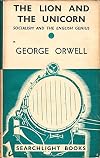
The Lion and the Unicorn: Socialism and the English Genius
by George Orwell 
On This Page
Description
George Orwell's moving reflections on the English character and his passionate belief in the need for political change. The Lion and the Unicorn was written in London during the worst period of the blitz. It is vintage Orwell, a dynamic outline of his belief in socialism, patriotism and an English revolution. His fullest political statement, it has been described as 'one of the most moving and incisive portraits of the English character' and is as relevant now as it ever has been.Tags
Recommendations














Member Reviews
Orwell is so much more than 1984, and The Lion and the Unicorn is unassailable proof
Comprised of three essays: England Your England; Shopkeepers at War; and The English Revolution, TLATU is as relevant today in early 2021 as the days it was written in the middle of WWII, when the outcome was far from decided.
The first essay tears down the British Establishment and is as good a reasoning of Brexit as you'll find. The second could be describing the Establishment's actions – or inactions – during the Covid crisis. The third's description of the failures of the Labour party applies just as easily today, and its cry for revolution – the opportunity for which was sadly missed post WWII – provides a contemporary template for action.
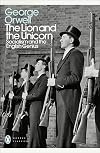
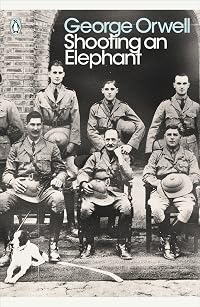
The show more cover picture of the Eton Rifles is icing on the cake.
Sup up your beer and collect your fags
There's a row going on down near Slough
Get out your mat and pray to the west
I'll get out mine and pray for myself.
Thought you were smart when you took them on
But you didn't take a peep in their artillery room
All that rugby puts hairs on your chest
What chance have you got against a tie and a crest? show less
Comprised of three essays: England Your England; Shopkeepers at War; and The English Revolution, TLATU is as relevant today in early 2021 as the days it was written in the middle of WWII, when the outcome was far from decided.
The first essay tears down the British Establishment and is as good a reasoning of Brexit as you'll find. The second could be describing the Establishment's actions – or inactions – during the Covid crisis. The third's description of the failures of the Labour party applies just as easily today, and its cry for revolution – the opportunity for which was sadly missed post WWII – provides a contemporary template for action.
The show more cover picture of the Eton Rifles is icing on the cake.
Sup up your beer and collect your fags
There's a row going on down near Slough
Get out your mat and pray to the west
I'll get out mine and pray for myself.
Thought you were smart when you took them on
But you didn't take a peep in their artillery room
All that rugby puts hairs on your chest
What chance have you got against a tie and a crest? show less
I don’t intend to discuss this at great length, or attempt a detailed analysis of the many strands of argument it contains, but having just reread it for the first time in many years, I would like to make a few general observations.
The Lion and the Unicorn is an extended essay written during the Battle of Britain and the Blitz. Following an exploration of the English ‘national character’, and a description of the class-ridden and grossly unequal nature of English society, Orwell proceeds to argue, in a clear echo of his transformative experience in revolutionary Barcelona which finally converted him to socialism, that the war against fascism can only be won by turning it into a revolutionary war. He then outlines a six-point show more programme (including nationalisation of land, banks, railways and major industries; limitation of incomes; and democratic reform of the education system) for the transformation of Britain into a democratic socialist society. It’s an essay which tells you a lot about the England of the time, much of which remains astonishingly and depressingly true, but it also tells you a lot about Orwell, and a knowledge of it can help correct a distorted perception of his work that has been created over the years.
In his essay on Dickens Orwell said: ‘Dickens is one of those writers who are well worth stealing’. The same applies to Orwell who has been stolen by Cold War warriors, libertarians, social democrats, and conservatives. He spent so much time criticising socialists that some have concluded he wasn’t really a socialist at all. This essay, the most complete articulation of Orwell’s political philosophy, leaves no doubt that he was a radical socialist and egalitarian, an uncompromising anti-capitalist who detested privilege, inequality, militarism, imperialism, and injustice. His faith in ordinary people as representing what he felt to be the true, semi-submerged values of England, comes across strongly, and the roots of his patriotism in the radical English dissenting tradition made clear. It’s also evident that Orwell’s antagonism towards the left-wing intelligentsia of the 1930s had nothing to do with either distrust of socialism or intellectuals. He simply thought they were hopelessly separated from the common culture and, ultimately, not serious about radical social change: ‘There is little in them except the irresponsible carping of people who have never been and never expect to be in a position of power’.
Not surprisingly, those who revere Orwell for his anti-communism, or his vigorous defence of personal liberty and intellectual freedom, but run a mile from his socialism, have tended to downplay this essay with its call for revolutionary change, or even dismiss it as an aberration brought about by the stresses of war. Bernard Crick, however, in his introduction to the 1982 Penguin edition I read, argues convincingly that it is a key Orwell text, an expression of fundamental beliefs that he continued to hold for the rest of his short life. Viewed in the context of this essay, and many others written from the late ‘30s to the mid ‘40s, interpretations of Animal Farm as anti-revolutionary or Nineteen Eighty-Four as anti-socialist, become untenable. As Crick observes: ‘the values in it are those that Nineteen Eighty-Four warns us we could lose, and it is written in basically the same mood and mental framework as his next work, Animal Farm - the allegory of revolution betrayed, not of its impossibility’.
Orwell once said that he wanted to turn political writing into an art form. The Lion and the Unicorn is one of the works in which he did just that. You might disagree with what he says, but the way he says it can’t be faulted. It is urgent, passionate, angry and pungent. It is also at times imbued with a lyricism not usually associated with Orwell. And it’s full of stinging and resonant one-liners. The one about England being ‘a family with the wrong members in control’, is probably the most famous, but there are many others. This is a magnificent piece of writing and one of the most inspiring polemical and visionary essays ever written. show less
The Lion and the Unicorn is an extended essay written during the Battle of Britain and the Blitz. Following an exploration of the English ‘national character’, and a description of the class-ridden and grossly unequal nature of English society, Orwell proceeds to argue, in a clear echo of his transformative experience in revolutionary Barcelona which finally converted him to socialism, that the war against fascism can only be won by turning it into a revolutionary war. He then outlines a six-point show more programme (including nationalisation of land, banks, railways and major industries; limitation of incomes; and democratic reform of the education system) for the transformation of Britain into a democratic socialist society. It’s an essay which tells you a lot about the England of the time, much of which remains astonishingly and depressingly true, but it also tells you a lot about Orwell, and a knowledge of it can help correct a distorted perception of his work that has been created over the years.
In his essay on Dickens Orwell said: ‘Dickens is one of those writers who are well worth stealing’. The same applies to Orwell who has been stolen by Cold War warriors, libertarians, social democrats, and conservatives. He spent so much time criticising socialists that some have concluded he wasn’t really a socialist at all. This essay, the most complete articulation of Orwell’s political philosophy, leaves no doubt that he was a radical socialist and egalitarian, an uncompromising anti-capitalist who detested privilege, inequality, militarism, imperialism, and injustice. His faith in ordinary people as representing what he felt to be the true, semi-submerged values of England, comes across strongly, and the roots of his patriotism in the radical English dissenting tradition made clear. It’s also evident that Orwell’s antagonism towards the left-wing intelligentsia of the 1930s had nothing to do with either distrust of socialism or intellectuals. He simply thought they were hopelessly separated from the common culture and, ultimately, not serious about radical social change: ‘There is little in them except the irresponsible carping of people who have never been and never expect to be in a position of power’.
Not surprisingly, those who revere Orwell for his anti-communism, or his vigorous defence of personal liberty and intellectual freedom, but run a mile from his socialism, have tended to downplay this essay with its call for revolutionary change, or even dismiss it as an aberration brought about by the stresses of war. Bernard Crick, however, in his introduction to the 1982 Penguin edition I read, argues convincingly that it is a key Orwell text, an expression of fundamental beliefs that he continued to hold for the rest of his short life. Viewed in the context of this essay, and many others written from the late ‘30s to the mid ‘40s, interpretations of Animal Farm as anti-revolutionary or Nineteen Eighty-Four as anti-socialist, become untenable. As Crick observes: ‘the values in it are those that Nineteen Eighty-Four warns us we could lose, and it is written in basically the same mood and mental framework as his next work, Animal Farm - the allegory of revolution betrayed, not of its impossibility’.
Orwell once said that he wanted to turn political writing into an art form. The Lion and the Unicorn is one of the works in which he did just that. You might disagree with what he says, but the way he says it can’t be faulted. It is urgent, passionate, angry and pungent. It is also at times imbued with a lyricism not usually associated with Orwell. And it’s full of stinging and resonant one-liners. The one about England being ‘a family with the wrong members in control’, is probably the most famous, but there are many others. This is a magnificent piece of writing and one of the most inspiring polemical and visionary essays ever written. show less
Wish I could give it 3.5 stars, that feels far more fair. This book is split into 3 parts, detailing first Orwell's conception of the English character, the struggles the current capitalist system of the country and it's deficiencies in fighting against the centrally planned economy of Nazi Germany, and lastly the form the revolutionary socialist government should take. The 2nd and 3rd parts are of far greater interest, as they provide a ground level view of the country at the time, not just as relates to the war, but also to the composition and character of the various social classes as well as the Conservative and Labor parties at the time. Orwell even briefly touches on the colonial government of India and his belief that it (as well show more as other members of the British empire) should be brought as equals to England, and have the ability to declare independence after the conclusion of the war.
There are some deficiencies in the book, chiefly his belief that the war cannot be won without a socialist revolution. This was clearly not the case, and while there was a brief growth of the welfare state from 1945 to 1951, it's clear the moneyed interests kept a far firmer grip on the government than Orwell hoped. He also relies on some arguments being "obvious" - while I agree with his conclusions by-and-large, other readers may not find them so self-evident. His view on Marxism/Communism is rather misguided as well, as he views it as a purely 19th century phenomenon, and the USSR as the true ideological heirs of it, despite many different competing strands existing in his time. I think his lack of grounding on materialist grounds is what lead to his optimistic belief that a socialist England would face far less resistance than it did in reality.
Despite these issues, [b:The Lion and the Unicorn|1235687|The Lion and the Unicorn Socialism and the English Genius|George Orwell|https://i.gr-assets.com/images/S/compressed.photo.goodreads.com/books/1329620714l/1235687._SY75_.jpg|17359042] is an interesting piece of historical literature that gives a bit of insight into the character of England and it's internal conflicts during WW2. While some of it's aspects are dated, the solutions that Orwell argues for, such as nationalization of the railroads, banks, land, etc, and the idea of capping incomes at a 10:1 ratio still hold their weight as ideas for building a more fair and free society. show less
There are some deficiencies in the book, chiefly his belief that the war cannot be won without a socialist revolution. This was clearly not the case, and while there was a brief growth of the welfare state from 1945 to 1951, it's clear the moneyed interests kept a far firmer grip on the government than Orwell hoped. He also relies on some arguments being "obvious" - while I agree with his conclusions by-and-large, other readers may not find them so self-evident. His view on Marxism/Communism is rather misguided as well, as he views it as a purely 19th century phenomenon, and the USSR as the true ideological heirs of it, despite many different competing strands existing in his time. I think his lack of grounding on materialist grounds is what lead to his optimistic belief that a socialist England would face far less resistance than it did in reality.
Despite these issues, [b:The Lion and the Unicorn|1235687|The Lion and the Unicorn Socialism and the English Genius|George Orwell|https://i.gr-assets.com/images/S/compressed.photo.goodreads.com/books/1329620714l/1235687._SY75_.jpg|17359042] is an interesting piece of historical literature that gives a bit of insight into the character of England and it's internal conflicts during WW2. While some of it's aspects are dated, the solutions that Orwell argues for, such as nationalization of the railroads, banks, land, etc, and the idea of capping incomes at a 10:1 ratio still hold their weight as ideas for building a more fair and free society. show less
It seems harsh to criticise George Orwell's optimism when he implies that socialism has become inevitable: he was writing in 1941, I thought so in 1980. Sadly, Ronald Reagan, Margaret Thatcher and, more significantly, their political gurus, came up with neoliberalism and history went into reverse.
The book is, with the advantage of hind sight, a little naive in places, but it is good to get a positive reminder occasionally.
Onward we go...
The book is, with the advantage of hind sight, a little naive in places, but it is good to get a positive reminder occasionally.
Onward we go...
Excellent pamphlet on need of country restructuring in order to defeat the Nazi's.
This work and its message will never get old - only thing required for society to blossom is that it moves toward the better inner organization that will benefit all. It's a long process but in order to have everything the same change is required otherwise stagnation and demise will follow.
Highly recommended.
This work and its message will never get old - only thing required for society to blossom is that it moves toward the better inner organization that will benefit all. It's a long process but in order to have everything the same change is required otherwise stagnation and demise will follow.
Highly recommended.
Man, this one did not age well. It had really good points and the usual wry sense of humour, but I will stick to the ones he could write keeping a healthy distance that makes his fiction just perfect.
Really good, and of a much more optimistic tone than that of 1984
Members
- Recently Added By
Lists

Backlisted
109 works; 9 members

Works Cited in The Life and Death of Democracy by John Keane
278 works; 1 member
Author Information

373+ Works 222,302 Members
George Orwell was born Eric Arthur Blair on June 25, 1903 in Motihari in Bengal, India and later studied at Eton College for four years. He was an assistant superintendent with the Indian Imperial Police in Burma. He left that position after five years and moved to Paris, where he wrote his first two books: Burmese Days and Down and Out in Paris show more and London. He then moved to Spain to write but decided to join the United Workers Marxist Party Militia. After being decidedly opposed to communism, he served in the British Home Guard and with the Indian Service of the BBC during World War II. After the war, he wrote for the Observer and was literary editor for the Tribune. His best known works are Animal Farm and 1984. His other works include A Clergyman's Daughter, Keep the Aspidistra Flying, The Road to Wigan Pier, Homage to Catalonia, and Coming Up for Air. He died on January 21, 1950 at the age of 46. (Bowker Author Biography) show less
George Orwell has a Legacy Library. Legacy libraries are the personal libraries of famous readers, entered by LibraryThing members from the Legacy Libraries group.
Some Editions
Awards and Honors
Notable Lists
Series
Belongs to Publisher Series
Work Relationships
Common Knowledge
- Alternate titles
- The lion and the unicorn: socialism and English genius (cover title) (cover title)
- Original publication date
- 1941
Classifications
- Genres
- Nonfiction, General Nonfiction
- DDC/MDS
- 335.00941 — Society, government, & culture Economics Socialism and related systems Standard subdivisions History, geographic treatment, biography Europe British Isles
- LCC
- HX246 .O7 — Social sciences Socialism. Communism. Anarchism Socialism. Communism. Anarchism
- BISAC
Statistics
- Members
- 310
- Popularity
- 102,541
- Reviews
- 8
- Rating
- (3.67)
- Languages
- 7 — Czech, English, Greek, Hungarian, Japanese, Polish, Spanish
- Media
- Paper, Audiobook, Ebook
- ISBNs
- 18
- ASINs
- 8