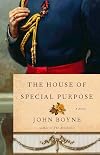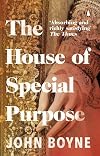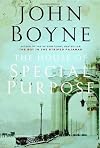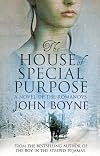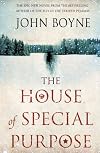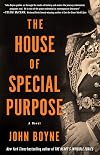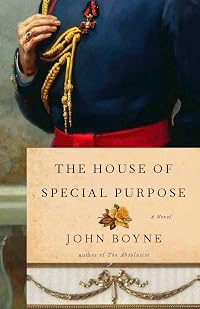
The House of Special Purpose
by John Boyne
On This Page
Description
From the author of The Absolutist comes a propulsive novel of the Russian Revolution and the fate of the Romanovs. Part love story, part historical epic, part tragedy, The House of Special Purpose illuminates an empire at the end of its reign. Eighty-year-old Georgy Jachmenev is haunted by his past-a past of death, suffering, and scandal that will stay with him until the end of his days. Living in England with his beloved wife, Zoya, Georgy prepares to make one final journey back to the show more Russia he once knew and loved, the Russia that both destroyed and defined him. As Georgy remembers days gone by, we are transported to Saint Petersburg, to the Winter Palace of the tzar, in the early twentieth century-a time of change, threat, and bloody revolution. As Georgy overturns the most painful stone of all, we uncover the story of the house of special purpose. show lessTags
Recommendations
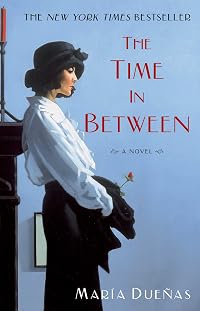

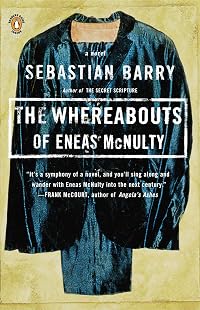
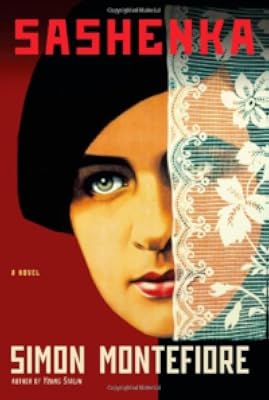
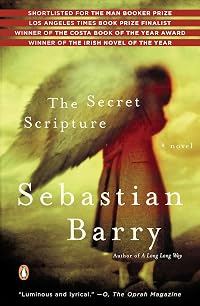















Member Reviews
In 1981, narrator and protagonist Georgy Daniilovich Jachmenev, now in his eighties, sits by the hospital bed of his wife and reflects back on their eventful life. As a teen living in Kashin, Russia, he takes a bullet intended for the commander of the czar’s troops. As a result, he is invited to the Winter Palace in St. Petersburg to work for the Romanovs. We meet the royal family: Nicholas II, his eleven-year-old heir and hemophiliac son, Alexei, and his daughters, focusing on Maria and Anastasia. We meet the czarina, Alexandra, and learn of her trust in Father Gregory (Rasputin). It features the last years of the Romanovs, the Russian Revolution, and WWII. In addition to the historical story, we learn of Georgy’s personal life, show more his love for his wife, Zoya, and his daughter, Arina.
Set in Russia, and later in France and England, the story is told in non-linear segments, flashing forward and backward, to tell Georgy’s life story. It is, at its heart, a love story between the two young people at opposite ends of the class spectrum. Georgy gradually becomes captivated with the royal family and is smitten with one of the daughters. It is filled with both tragedies and triumphs. The characters are well developed, with both admirable traits, flaws, and impetuous decisions.
It is beautifully told. We can picture the striking beauty of the Russian landscape and the opulent lifestyle of the Romanovs. The Romanovs are seen through Georgy’s viewpoint. He begins to feel as if he is part of their family. When the revolution comes, he tries to save them. My only slight disappointment is a few liberties taken with the historical record. I ended up treating it as an alternative history. The storytelling is wonderfully executed, and I felt fully invested from beginning to end. show less
Set in Russia, and later in France and England, the story is told in non-linear segments, flashing forward and backward, to tell Georgy’s life story. It is, at its heart, a love story between the two young people at opposite ends of the class spectrum. Georgy gradually becomes captivated with the royal family and is smitten with one of the daughters. It is filled with both tragedies and triumphs. The characters are well developed, with both admirable traits, flaws, and impetuous decisions.
It is beautifully told. We can picture the striking beauty of the Russian landscape and the opulent lifestyle of the Romanovs. The Romanovs are seen through Georgy’s viewpoint. He begins to feel as if he is part of their family. When the revolution comes, he tries to save them. My only slight disappointment is a few liberties taken with the historical record. I ended up treating it as an alternative history. The storytelling is wonderfully executed, and I felt fully invested from beginning to end. show less
Eighty-year-old Georgy Jachmenchev is haunted by his past - a past of death, suffering and scandal that will stay with him until the end of his days. Living in England, with his beloved wife Zoya, Georgy prepares to make one final journey, back to the Russia he once knew and loved, the Russia that both destroyed and defined him. As Georgy remembers days gone by, we are transported on an exciting and emotive journey to St Petersburg in the early twentieth century, to the Winter Palace of the Tsar and his family. It was a time of change, threat and bloody revolution. And, as Georgy overturns the most painful stone of all, we uncover a truly horrifying story, the story of 'the house of special purpose', a so-called safe house that was in show more fact a place of confinement, destruction and death.
My Thoughts:
There is no doubt that JB is a great storyteller. What he does is add a twist to real events.
My problem with this book is that I guessed quite early on who was who and what the twist was. So reading the book I plodded on waiting for the reveal which was what I thought it would be.
This does not distract from the story which is told in two past and present. The present is told going backwards in time to meet up with the past which I found unusual.
The story will appeal to anybody who likes history and especially the story of the Romanovs and Anastasia. Had I not have guessed early on then I would have enjoyed this book a lot more. I would highly recommend John Boyne and have in the past enjoyed ‘The Boy in the Striped Pyjamas’ and ‘Crippen’ show less
My Thoughts:
There is no doubt that JB is a great storyteller. What he does is add a twist to real events.
My problem with this book is that I guessed quite early on who was who and what the twist was. So reading the book I plodded on waiting for the reveal which was what I thought it would be.
This does not distract from the story which is told in two past and present. The present is told going backwards in time to meet up with the past which I found unusual.
The story will appeal to anybody who likes history and especially the story of the Romanovs and Anastasia. Had I not have guessed early on then I would have enjoyed this book a lot more. I would highly recommend John Boyne and have in the past enjoyed ‘The Boy in the Striped Pyjamas’ and ‘Crippen’ show less
In 1981, narrator and protagonist Georgy Daniilovich Jachmenev, now in his eighties, sits by the hospital bed of his wife and reflects back on their eventful life. As a teen living in Kashin, Russia, he takes a bullet intended for the commander of the czar’s troops. As a result, he is invited to the Winter Palace in St. Petersburg to work for the Romanovs. We meet the royal family: Nicholas II, his eleven-year-old heir and hemophiliac son, Alexei, and his daughters, focusing on Maria and Anastasia. We meet the czarina, Alexandra, and learn of her trust in Father Gregory (Rasputin). It features the last years of the Romanovs, the Russian Revolution, and WWII. In addition to the historical story, we learn of Georgy’s personal life, show more his love for his wife, Zoya, and his daughter, Arina.
Set in Russia, and later in France and England, the story is told in non-linear segments, flashing forward and backward, to tell Georgy’s life story. It is, at its heart, a love story between the two young people at opposite ends of the class spectrum. Georgy gradually becomes captivated with the royal family and is smitten with one of the daughters. It is filled with both tragedies and triumphs. The characters are well developed, with both admirable traits, flaws, and impetuous decisions.
It is beautifully told. We can picture the striking beauty of the Russian landscape and the opulent lifestyle of the Romanovs. The Romanovs are seen through Georgy’s viewpoint. He begins to feel as if he is part of their family. When the revolution comes, he tries to save them. My only slight disappointment is a few liberties taken with the historical record. I ended up treating it as an alternative history. The storytelling is wonderfully executed, and I felt fully invested from beginning to end. show less
Set in Russia, and later in France and England, the story is told in non-linear segments, flashing forward and backward, to tell Georgy’s life story. It is, at its heart, a love story between the two young people at opposite ends of the class spectrum. Georgy gradually becomes captivated with the royal family and is smitten with one of the daughters. It is filled with both tragedies and triumphs. The characters are well developed, with both admirable traits, flaws, and impetuous decisions.
It is beautifully told. We can picture the striking beauty of the Russian landscape and the opulent lifestyle of the Romanovs. The Romanovs are seen through Georgy’s viewpoint. He begins to feel as if he is part of their family. When the revolution comes, he tries to save them. My only slight disappointment is a few liberties taken with the historical record. I ended up treating it as an alternative history. The storytelling is wonderfully executed, and I felt fully invested from beginning to end. show less
This engrossing, though slightly flawed, novel followed two time streams. In the first Georgy is an aging Russian living in London in 1981 looking after his dying wife, Zoya. In alternating chapters, Georgy is a young boy pulled from the obscurity of a peasant village in 1915 after he saves the life of the Tsar's uncle and brought to St Petersburg to act as bodyguard to the Tsarevich Alexei. A rather overly romantic and implausible start, but captivating. The two timelines converge, and we learn more about Georgy and Zoya's earlier lives, with plenty of tragedy and heartache along the way; and about Georgy's boyhood adventures at the Russian court. In the end the timelines intersect at the eponymous house in Yekaterinburg in July 1918. show more The final revelation is entirely predictable to anyone familiar with Russian history and that of the Romanovs (I saw it early on and was half expecting a final countertwist similar to that in Robert Alexander's The Kitchen Boy), but still holds your attention to find out exactly how it plays out.
There are several historical aspects that don't ring true - both Maria and Anastasia are slipping out from the Winter Palace to have romantic liaisons with members of the imperial bodyguard behind their parents' backs. When they are imprisoned in the House at the end, the guards also let them go out for long walks unaccompanied, which certainly didn't happen in reality. And, although this isn't crucial to the narrative, the recounting of revolutionary history is telescoped to the point of distortion and the Bolsheviks appear to take power here in the first revolution of March 1917 and that of October that did bring to the Bolsheviks to power is completely skated over. These flaws drop it half a point, but this is an absorbing read. 4.5/5 show less
There are several historical aspects that don't ring true - both Maria and Anastasia are slipping out from the Winter Palace to have romantic liaisons with members of the imperial bodyguard behind their parents' backs. When they are imprisoned in the House at the end, the guards also let them go out for long walks unaccompanied, which certainly didn't happen in reality. And, although this isn't crucial to the narrative, the recounting of revolutionary history is telescoped to the point of distortion and the Bolsheviks appear to take power here in the first revolution of March 1917 and that of October that did bring to the Bolsheviks to power is completely skated over. These flaws drop it half a point, but this is an absorbing read. 4.5/5 show less
I can say without any reservations whatsoever that John Boyne is now on my shortlist of favorite authors. The House of Special Purpose is an exemplary work of historical fiction that had me hooked from the very first page. The main character, Georgy Jachmenev, is a man that you have no difficulty relating to and that makes the story that much more powerful. The narrative begins in 1981 London and leaps around through time from World War I in Russia. (I've discussed before how this narrative format can be jarring unless done correctly and this is a perfect example of a story smoothly transitioning so that the reader remains in the story.) A nobody from a small Russian village, Georgy, is elevated to personal bodyguard to the future Tsar show more of Russia, Alexei (the youngest son). I don't want to give too much of the story away because its unfolding majesty, tragedy, and revelation should be experienced without being spoiled. I will only say that if you're looking for a story that has romance, bravery, suspense, and heart then this is the book for you. Also, if you have any interest in the history of Russia and the Romanovs then this is a must read for you. show less
John Boyne writes so well he makes me want to reread his lovely sentences. This is one of the biggest reasons I've given five stars to all of his books that I've read so far. And I would have given five to THE HOUSE OF SPECIAL PURPOSE, too, but for its beginning. While Boyne's writing is as beautiful as ever in this book, it seemed to me in the first quarter that this was going to be a character-driven story with little plot, less a story than a series of incidences.
Later I realized these incidences are what the story depends on.
Also, Boyne skips from one year to another, sometimes back and sometimes forward. I didn’t see the logic of that at first. It seemed haphazard. But it wasn’t.
I saw how skillfully Boyne builds anticipation in show more this way. Rather than just present a story, he manages his presentation.
In the end, I love this book as much as his others. But I rate it with four stars rather than five because it didn’t grab me right away. show less
Later I realized these incidences are what the story depends on.
Also, Boyne skips from one year to another, sometimes back and sometimes forward. I didn’t see the logic of that at first. It seemed haphazard. But it wasn’t.
I saw how skillfully Boyne builds anticipation in show more this way. Rather than just present a story, he manages his presentation.
In the end, I love this book as much as his others. But I rate it with four stars rather than five because it didn’t grab me right away. show less
Georgy Jachmenev is a teenager living in a povery-stricken region of Russia with his parents and three sisters. He is hit by a bullet intended for the commander of the Tzar's troops as they parade through his town of Kashin in an attempt to keep his best friend from shooting. He is slightly wounded as a result, and declared a hero by the Tsar and moved to the White Palace, the home of the Romanov family. There he eventually becomes one of the retinue guarding the czar's only son, Alexi. Alexi suffers from hemophiloia and must be kept from any danger as the sole heir to the throne. George is eventually elevated to the Tsar's retinue.
Georgy's story is told from his perspective as a young man and also as an elderly man in alternating show more chapters. It is rich in the history of the Russian Revolution, Rasputin, Lenin and the Romanov family. It is also the story of Georgy's love as a youth for Anastasia, the youngest Romanov daughter. As an adult, he loves Zoya and their daughter, Arina. Georgy is not a likeable character - I found him to be pompous and overbearing in his later years. As a young man, his gratitude for his much-improved lifestyle soon turned to entitlement. Particularly disturbuing was how he dismissed his sister's wish to also serve at the White Palace when it was within his power to make that happen.
This is well-researched fictional history with a twist that requires a suspension of disbelief. John Boyne is a very talented writer. He brings the landscape of Russia and its people to life within the pages of this book. show less
Georgy's story is told from his perspective as a young man and also as an elderly man in alternating show more chapters. It is rich in the history of the Russian Revolution, Rasputin, Lenin and the Romanov family. It is also the story of Georgy's love as a youth for Anastasia, the youngest Romanov daughter. As an adult, he loves Zoya and their daughter, Arina. Georgy is not a likeable character - I found him to be pompous and overbearing in his later years. As a young man, his gratitude for his much-improved lifestyle soon turned to entitlement. Particularly disturbuing was how he dismissed his sister's wish to also serve at the White Palace when it was within his power to make that happen.
This is well-researched fictional history with a twist that requires a suspension of disbelief. John Boyne is a very talented writer. He brings the landscape of Russia and its people to life within the pages of this book. show less
Members
- Recently Added By
Published Reviews
ThingScore 50
Boyne writes with consummate ease, and is particularly good at drawing the indecently rich world of the pre-revolutionary Romanovs. But as the story lines multiplied and the flashbacks came rapidly, I found myself feeling a little put-upon, as if a manic railwayman was switching the points with demonic energy. The journey was ultimately worth it (if unashamedly fantastical), but a simpler show more route might have given the tale the enduring resonance that made The Boy in the Striped Pyjamas so unforgettable show less
added by ozzer
Lists

History: Eastern Europe
97 works; 2 members

I Could Live There
185 works; 12 members
Author Information

44+ Works 31,885 Members
Acclaimed Irish novelist John Boyne was born in Dublin, Ireland on April 30, 1971. He studied English Literature at Trinity College, Dublin and Creative Writing at the University of East Anglia. He has written dozens of short stories and many novels, including the New York Times bestseller The Boy in the Striped Pyjamas. An award-winning film show more adaptation of this work was released in 2008. In 2015 his title, A History of Lonelines made The New Zealand Best Seller List. (Bowker Author Biography) show less
Common Knowledge
- Canonical title
- The House of Special Purpose
- Original title
- The House of Special Purpose
- Alternate titles*
- Ne m'appelle plus Anastasia; La Maison des intentions particulières
- Original publication date
- 2005
- People/Characters
- Georgy Jachmenev; Grand Duchess Maria Nikolaevna of Russia; Sophie; Ralph; Mikael; Arina (show all 15); Leo; Grand Duchess Anastasia Nicholaevna; Zoya Jachmenev; Nicholas II, Emperor of Russia; Grand Duchess Olga Nikolaievna of Russia; Grand Duchess Tatiana Nicholaevna; Alexei Nikolayevich Tsesarevich of Russia; Alexandra Feodorovna, Empress of Russia; Grigori Rasputin
- Important places
- Paris, France; St. Petersburg, Russia; London, England, UK; Tsarskoye Selo, Russia
- Important events
- Execution of the Romanov family (1918-07-17); February Revolution (1917)
- Dedication*
- Voor Mark Herman, David Heyman & Rosie Alison, met dank
- First words*
- Mijn vader en moeder hadden geen gelukkig huwelijk.
- Last words*
- (Click to show. Warning: May contain spoilers.)Dus zo is het om alleen te zijn.
- Original language*
- Anglais (Irlande) (Irlande)
- Canonical DDC/MDS
- 823.92
- Canonical LCC
- PR6102.O96
*Some information comes from Common Knowledge in other languages. Click "Edit" for more information.
Classifications
Statistics
- Members
- 912
- Popularity
- 29,485
- Reviews
- 59
- Rating
- (3.82)
- Languages
- 10 — Catalan, Dutch, English, Finnish, French, German, Italian, Norwegian (Bokmål), Portuguese, Spanish
- Media
- Paper, Audiobook, Ebook
- ISBNs
- 48
- ASINs
- 11