On This Page
Description
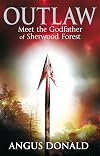
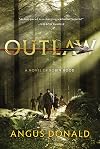
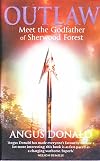
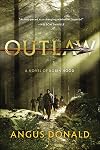
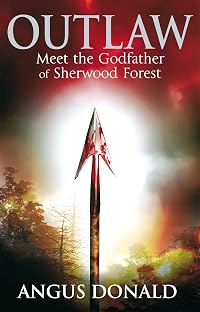
In the tradition of Bernard Cornwell and Ben Kane, Outlaw is a rousing historical novel that mixes legend with fact to bring to life the time, the lives and the struggles of late 12th century England. As the Henry II struggles with his rebelious children and the conflict between the Saxon nobility and the Norman conquerors continues on as bloody as ever, there is a figure that has remained firmly fixed in the imagation of generations - Robin Hood, an outlaw and a renegade nobility determined show more to bring down the men who took his land, his family, and his position. When he's caught stealing, young Alan Dale is forced to leave his family and go to live with a notorious band of outlaws in Sherwood Forest. Their leader is the infamous Robin Hood. A tough, bloodthirsty warrior, Robin is more feared than any man in the county. And he becomes a mentor for Alan; with his fellow outlaws, Robin teaches Alan how to fight - and how to win. But Robin is a ruthless man - and although he is Alan's protector, if Alan displeases him, he could also just as easily become his bloody battles to riotous feast days to marauding packs of wolves, Outlaw is a gripping, action-packed historical thriller that delves deep into the fascinating legend of Robin Hood. show lessTags
Recommendations
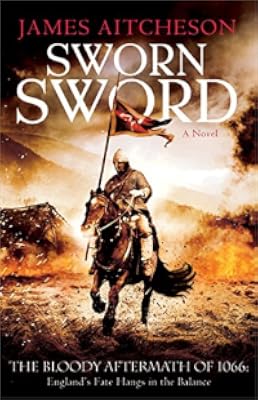
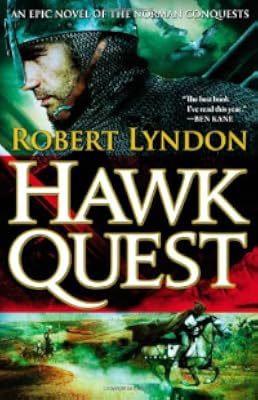
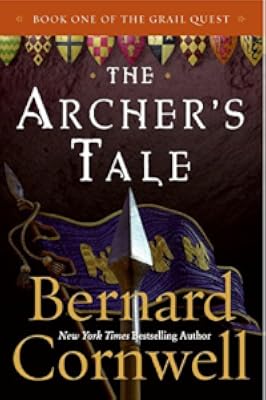
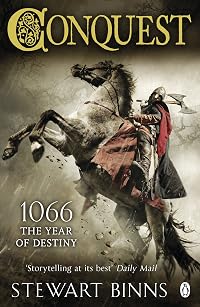





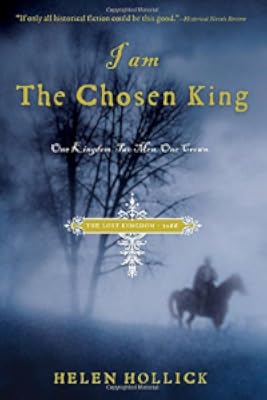
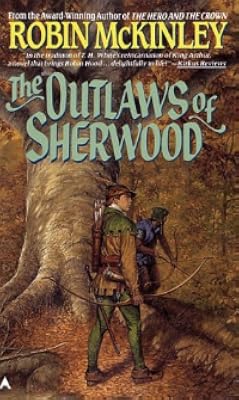
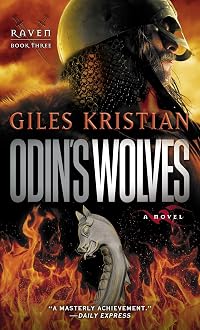
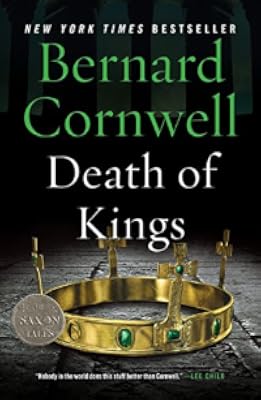
Member Recommendations
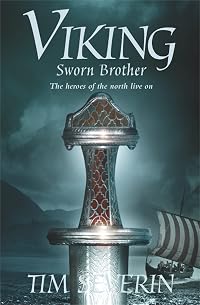
DistortedSmile Taking the Robin Hood story to a whole new dimension....Basing it off of the commonly accepted idea that Robin Hood was actually a Welshman and also incorporating the mythological elements of the traditional Robin Hood tale.
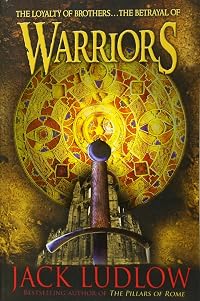
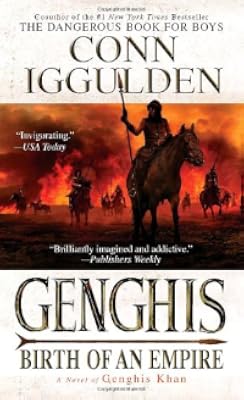
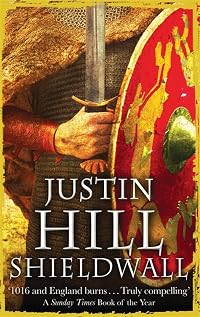
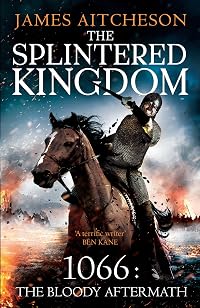
JGolomb Similar in style and theme. Both are strong action historical fiction novels.

viking2917 good historical/literary history of the legend of Robin Hood
Member Reviews
'Outlaw', is an enjoyable, even memorable, re-imagining and re-exploration if you will, of the Robin Hood legend. All our favourite fiends, friends and enemies are here - 'Maid Marion', Friar Tuck, 'Little' John, the Sherrif of Nottingham, and Guy of Gisborne - there's action and adventure a-plenty and it all takes place in and around Sherwood Forest.
But forget what you thought you knew of Robin Hood. There's no swinging happily through Sherwood Forest's lush, leafy glades, no slapping thighs while dressed in Lincoln green. He still robs from the rich of course, but he keeps more than a bit for himself, as you would. This Robin Hood is a successful leader, an inspiring personality, a friend, a lover - but he's also a constant, show more threatening presence; you're never entirely sure what he believes or what he will do next. It is the last throws of an older England, an ancient, honest England fighting to survive against the overwhelming odds of the all-conquering Normans.
However, the story is perhaps more about the young Alan Dale. From an impoverished childhood and an early - not entirely successful - career as common thief in Nottingham, he becomes involved with the real thieves and outlaws of Robin Hood and Sherwood Forest. Typically, one (Nor)man's thief, is another (English)man's freedom fighter and Alan Dale is inexorably drawn to the outlaws through necessity and curiosity. The book follows battles to remain alive, his 'education' at the hands of themtough forest outlaws - but also from a whole host of troubadors, Knights, lords and ladies - through many adventures up and down England, leading to the Outlaws' final confrontation in Sherwood, with the seemingly superior forces of the Sherrif of Nottingham. It's not really a surprise that he survives, of course; he has already made clear that he is narrating this in the latter days of a long life, but it is genuinely interesting, not to say tensely exciting, finding out how he is to do it.
"And there are many here who have been forced to leave their families, their hearths and homes by so called law-men, by bullies who claim power of life and death over you in the name of the King...And there are many here who have been injured, humiliated and denied your natural rights as free Englishmen"
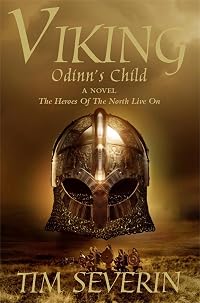
Yet there is another all-conquering force at work in this book's (not so) Merrie England; Christianity. It seems there are many ordinary free Englishmen who are still unrepentantly Pagan and in this, the book reminded me a lot of the struggle to keep the pagan faith alive, that is central to another book I read recently, 'Viking: King's Man', by Tim Severin. Indeed, 'Little' John is clearly Viking inspired.
Christianity is obviously the religion of the rich and powerful. It is a 'top down' religion, closely bound up with and indeed cynically used by, the Normans. Used to instil a fear of their 'betters' - and a fear of the consequences of revolt - in the ordinary people of England. As a Norman comments on a speech Robin Hood makes on the eve of battle;
"He talks like a ranting priest, but he rants about the most extraordinary Godless, unnatural things: Freedom from the Church? Freedom from our rightful lords, who have been set above us by God? What nonsense, what dangerous, heretical nonsense."
However, the older, Pagan beliefs, are closely associated with the fields and forests and wild places. An honest, down to earth faith. As a denizen of Sherwood, living in a seemingly Christian society, this Robin Hood uneasily straddles the two faiths. But, as a true man of the people, he is more Pagan than Christian. Or is he? Several times through the book, just as Alan Dale seems to have got a fix on Robin Hood's values, or what he believes; Robin moves in another mysterious way. He seems to hate Christianity and perhaps with good reason, for Christianity is bound up with the Normans, the two forces combining to oppress the ordinary, hard-working, pagan worshiping English people. Robin's honest, down to earth people need a hero, they need a new King Arthur and Robin Hood is it.
Was he a real person? He is surely, historically speaking, more a fantasy figure, than a real, historically provable figure. Robin Hood is almost certainly a coalescence of the ordinary people's collective hopeful imagination - hoping for inspiration, help and comfort against the oppressive regime of the Normans and the voracious march of Christianity. Much in the vein of King Arthur, who is mentioned many times in 'Outlaw'; Robin Hood is a rememberance of a glorious 'golden' age of England, now lost, the return of which needs an Arthur-like spear-head figure. Robin Hood.
Was he a real? Probably not. But if he had been, he would certainly more like Angus Donald's Robin, than all the Hollywood or tv studio versions you're more familiar with. Looking forward to getting hold of the next in the series. show less
But forget what you thought you knew of Robin Hood. There's no swinging happily through Sherwood Forest's lush, leafy glades, no slapping thighs while dressed in Lincoln green. He still robs from the rich of course, but he keeps more than a bit for himself, as you would. This Robin Hood is a successful leader, an inspiring personality, a friend, a lover - but he's also a constant, show more threatening presence; you're never entirely sure what he believes or what he will do next. It is the last throws of an older England, an ancient, honest England fighting to survive against the overwhelming odds of the all-conquering Normans.
However, the story is perhaps more about the young Alan Dale. From an impoverished childhood and an early - not entirely successful - career as common thief in Nottingham, he becomes involved with the real thieves and outlaws of Robin Hood and Sherwood Forest. Typically, one (Nor)man's thief, is another (English)man's freedom fighter and Alan Dale is inexorably drawn to the outlaws through necessity and curiosity. The book follows battles to remain alive, his 'education' at the hands of themtough forest outlaws - but also from a whole host of troubadors, Knights, lords and ladies - through many adventures up and down England, leading to the Outlaws' final confrontation in Sherwood, with the seemingly superior forces of the Sherrif of Nottingham. It's not really a surprise that he survives, of course; he has already made clear that he is narrating this in the latter days of a long life, but it is genuinely interesting, not to say tensely exciting, finding out how he is to do it.
"And there are many here who have been forced to leave their families, their hearths and homes by so called law-men, by bullies who claim power of life and death over you in the name of the King...And there are many here who have been injured, humiliated and denied your natural rights as free Englishmen"
Yet there is another all-conquering force at work in this book's (not so) Merrie England; Christianity. It seems there are many ordinary free Englishmen who are still unrepentantly Pagan and in this, the book reminded me a lot of the struggle to keep the pagan faith alive, that is central to another book I read recently, 'Viking: King's Man', by Tim Severin. Indeed, 'Little' John is clearly Viking inspired.
Christianity is obviously the religion of the rich and powerful. It is a 'top down' religion, closely bound up with and indeed cynically used by, the Normans. Used to instil a fear of their 'betters' - and a fear of the consequences of revolt - in the ordinary people of England. As a Norman comments on a speech Robin Hood makes on the eve of battle;
"He talks like a ranting priest, but he rants about the most extraordinary Godless, unnatural things: Freedom from the Church? Freedom from our rightful lords, who have been set above us by God? What nonsense, what dangerous, heretical nonsense."
However, the older, Pagan beliefs, are closely associated with the fields and forests and wild places. An honest, down to earth faith. As a denizen of Sherwood, living in a seemingly Christian society, this Robin Hood uneasily straddles the two faiths. But, as a true man of the people, he is more Pagan than Christian. Or is he? Several times through the book, just as Alan Dale seems to have got a fix on Robin Hood's values, or what he believes; Robin moves in another mysterious way. He seems to hate Christianity and perhaps with good reason, for Christianity is bound up with the Normans, the two forces combining to oppress the ordinary, hard-working, pagan worshiping English people. Robin's honest, down to earth people need a hero, they need a new King Arthur and Robin Hood is it.
Was he a real person? He is surely, historically speaking, more a fantasy figure, than a real, historically provable figure. Robin Hood is almost certainly a coalescence of the ordinary people's collective hopeful imagination - hoping for inspiration, help and comfort against the oppressive regime of the Normans and the voracious march of Christianity. Much in the vein of King Arthur, who is mentioned many times in 'Outlaw'; Robin Hood is a rememberance of a glorious 'golden' age of England, now lost, the return of which needs an Arthur-like spear-head figure. Robin Hood.
Was he a real? Probably not. But if he had been, he would certainly more like Angus Donald's Robin, than all the Hollywood or tv studio versions you're more familiar with. Looking forward to getting hold of the next in the series. show less
My copy of this book as a sticker on the front that reads "As good as Bernard Cornwell, or your money back".
Well, I guess they owe me some cash, because Cornwell is the master, but having said that, I think he may have a worthy apprentice in Angus Donald.
This is the tale of Robin Hood, told from the POV of one of his not-so-merry men. But this isn't your shiny, goody, Hollywood Robin. This Robin Hood is dark, gritty, and not very nice at all, but frankly an awful lot more plausible than the traditional portrayal of the character.
For fans of Cornwell, the set-up is very reminiscent of Derfel and Arthur in the Warlord Chronicles. Those being my favourites, I can think of worse books Donald could have emulated...
I very much enjoyed this show more first book in the series, and I'm looking forward to picking up the next one. show less
Well, I guess they owe me some cash, because Cornwell is the master, but having said that, I think he may have a worthy apprentice in Angus Donald.
This is the tale of Robin Hood, told from the POV of one of his not-so-merry men. But this isn't your shiny, goody, Hollywood Robin. This Robin Hood is dark, gritty, and not very nice at all, but frankly an awful lot more plausible than the traditional portrayal of the character.
For fans of Cornwell, the set-up is very reminiscent of Derfel and Arthur in the Warlord Chronicles. Those being my favourites, I can think of worse books Donald could have emulated...
I very much enjoyed this show more first book in the series, and I'm looking forward to picking up the next one. show less
A superb but extremely gory tale of Alan Dale who hooks up with the Outlaw Robin Hood. This is the first Angus Donald book I have read and I'll definitely finish the rest of the series. The story does keep you interested throughout but if you don't like extremely graphic descriptions of death, battle and torture then it probably is not for you.
Outlaw seems like a great idea for a book. A new take on the story of a man fighting against those who bleed the common man for personal gain and to pay for unpopular foreign wars. In this current economic and political climate you'd think that would resonate.
Sadly, the book fails to present a compelling narrative. It isn't that the story is told from the perspective of Alan Dale, proto-bard and proto-outlaw. This is an acceptable choice for framing a third person perspective in a second person structure, as it is actually written as a memoir from an old Alan. No, what fails is the sense of continuity and effective story arc. The book feels like a series of scenes strung together with the loosest threads, and part of me wonders what show more happened here. Many classic Robin Hoods are in fact just a series of scenes (Notably the Pyle version) set down as individual stories, with no compelling need to connect them to each other. And that would fit fine in the context of a set of memoirs from the bardic member of the band. Instead, by trying to weave these disparate scenes together into a single story, what ends up happening is that the reader is even more painfully aware of the radically different character of each of the scenes. Combined with the darker, perhaps even morose attitudes towards warfare and pagan religion that are imbued in this Robin Hood, it ends up leaving me wondering if this is really a story of Robin Hood, or just a story that borrows the name and setting of Robin Hood. The book goes from scenes of Robin Hood in a village, almost exacting tribute, to scenes of outlaws training in a allies base, to scenes of pagan rituals to the final scene of organized military warfare and politics. I have little issue with variations on the legend, but very little of this book echoes the real sense of an underdog taking down the top dog a peg or three to balance the scales. Instead it feels more like a story of a radical splinter rebel militia taking advantage of the class warfare to serve its own purposes. Although the book tries to pick up on the historical political themes often sprinkled throughout the Robin Hood stories (Wars in France, Crusades, Norman vs Anglo-Saxon, NOrth vs South), they feel more like a justification for the staging of battle scenes than a real cause or motivation to the peoples involved.
All in all, it is probably best that the book is titled 'Outlaw' rather than anything including the name Robin Hood, because it misses much of what makes Robin Hood, well, Robin Hood, instead of any other populist outlaw. show less
Sadly, the book fails to present a compelling narrative. It isn't that the story is told from the perspective of Alan Dale, proto-bard and proto-outlaw. This is an acceptable choice for framing a third person perspective in a second person structure, as it is actually written as a memoir from an old Alan. No, what fails is the sense of continuity and effective story arc. The book feels like a series of scenes strung together with the loosest threads, and part of me wonders what show more happened here. Many classic Robin Hoods are in fact just a series of scenes (Notably the Pyle version) set down as individual stories, with no compelling need to connect them to each other. And that would fit fine in the context of a set of memoirs from the bardic member of the band. Instead, by trying to weave these disparate scenes together into a single story, what ends up happening is that the reader is even more painfully aware of the radically different character of each of the scenes. Combined with the darker, perhaps even morose attitudes towards warfare and pagan religion that are imbued in this Robin Hood, it ends up leaving me wondering if this is really a story of Robin Hood, or just a story that borrows the name and setting of Robin Hood. The book goes from scenes of Robin Hood in a village, almost exacting tribute, to scenes of outlaws training in a allies base, to scenes of pagan rituals to the final scene of organized military warfare and politics. I have little issue with variations on the legend, but very little of this book echoes the real sense of an underdog taking down the top dog a peg or three to balance the scales. Instead it feels more like a story of a radical splinter rebel militia taking advantage of the class warfare to serve its own purposes. Although the book tries to pick up on the historical political themes often sprinkled throughout the Robin Hood stories (Wars in France, Crusades, Norman vs Anglo-Saxon, NOrth vs South), they feel more like a justification for the staging of battle scenes than a real cause or motivation to the peoples involved.
All in all, it is probably best that the book is titled 'Outlaw' rather than anything including the name Robin Hood, because it misses much of what makes Robin Hood, well, Robin Hood, instead of any other populist outlaw. show less
 This review was written for LibraryThing Early Reviewers.
Swords. Babes. And even a little sorcery...or at least pagan poetry. Outlaw - A Novel of Robin Hood combines the realism of a historical novel with a pop-culture fictional character to great effect.
The story follows one of Robin's merry men -- Alan Dale, from his escape as a petty thief to his training and maturity as one of Robin's trusted warriors. Robin is already established as a larger-than-life character, a champion of oppressed people, and, of course, the object of the notorious Sheriff of Nottingham's ire. All is not black and white, however. Robin loses some of his luster engaging in pagan rituals and ruthlessly carrying out his own form of justice. Young Alan struggles to reconcile this great, beloved person with the demons show more that surface as needed. He learns that to be a warrior is to kill or be killed. And while he never becomes entirely comfortable on the battlefield, he acquits himself well in the end.
Unlike most historical novels, this one seems "one and done." The story we are most familiar with has come and gone. Alan is still young, however, and he is recounting this story as an old man. Meanwhile, our hero Robin has become "respectable", a confidant of Richard the Lionheart and his mother, Eleanor of Aquitaine. And I do believe he's agreed to take up the cloth and do battle alongside the Knights Templar in their battles against the Saracens under Saladin. Perhaps another, not-so-familiar tale is forthcoming? show less
The story follows one of Robin's merry men -- Alan Dale, from his escape as a petty thief to his training and maturity as one of Robin's trusted warriors. Robin is already established as a larger-than-life character, a champion of oppressed people, and, of course, the object of the notorious Sheriff of Nottingham's ire. All is not black and white, however. Robin loses some of his luster engaging in pagan rituals and ruthlessly carrying out his own form of justice. Young Alan struggles to reconcile this great, beloved person with the demons show more that surface as needed. He learns that to be a warrior is to kill or be killed. And while he never becomes entirely comfortable on the battlefield, he acquits himself well in the end.
Unlike most historical novels, this one seems "one and done." The story we are most familiar with has come and gone. Alan is still young, however, and he is recounting this story as an old man. Meanwhile, our hero Robin has become "respectable", a confidant of Richard the Lionheart and his mother, Eleanor of Aquitaine. And I do believe he's agreed to take up the cloth and do battle alongside the Knights Templar in their battles against the Saracens under Saladin. Perhaps another, not-so-familiar tale is forthcoming? show less
This review was written for LibraryThing Early Reviewers.Growing up, the legend of Robin Hood was everywhere as the ultimate hero who stood up for the little guy against evil oppressors: corrupt sheriffs and greedy churchmen. We all knew the stories of loyal Little John, the strong right hand man; tipsy Friar Tuck; Will Scarlet, handy with a sword; Alan A-Dale the minstrel; and the chaste, beautiful and smart Maid Marian, Robin’s enduring love. After stirring adventures, good King Richard arrives in time to pardon the outlaws, give them lands and titles and marry Robin and Marian.
It’s an iconic tale of good vs. evil and "happily ever afters" that attracts artists back to the theme over and over. Numerous books have updated the story or tinkered with the timelines.Directors have put their show more own stamp on the story from the Mel Brooks’ satirical “Men in Tights” to the most recent Ridley Scott entry, where yeoman Robin is responsible for the Magna Carta. It’s very hard to bring something new or fresh to the story.
Which brings me to Outlaw by Angus Donald. All the traditional pieces are in place: time, setting, characters. The story is told in first person by Alan Dale as an old man recounting his youthful adventures with the outlawed Robin:
“With this instrument, the Lord wiling, I will write his story, and my story, and set before the world the truth about the vicious outlaw and master thief, the murderer, the mutilator, and tender lover, the victorious Earl and commander of an army, and ultimately, the great magnate who brought a King of England to the table at Runnymede and made him submit to the will of the people of the land; the story of a man I knew simply as Robin Hood.”
Yes, you read right “the vicious outlaw and master thief, the murderer, the mutilator.” Robin in Donald’s tale is a mafia don. A younger son of nobility, outlawed for torturing and murdering a priest who abused him. According to Friar Tuck a “cold-hot man…with the raging power of anger but the icy control of a calm man…the most dangerous of all.” Our first glimpse of Robin is him holding court, in a scene reminiscent of The Godfather. Peasants bring their protection money (food, drink, armaments, supplies.) Robin settles disputes between neighbors and metes out justice to an informer, by cutting out his tongue. The Merry Men are a bunch of tough enforcers.
In this story, Robin Hood steals from the rich, but not because he identifies with, or wants to help the poor, but because…well…they’re rich. You know the answer to the old joke about why the thief robbed the bank? “That’s where the money is.” And Robin needs money. He uses his stolen cash to fund his loan-shark business, with the local Jews as fronts (usury being forbidden to Christians.) As the story unfolds, we get a picture of a complicated man: educated for that age, shrewd, intelligent, ruthless, a brilliant strategist with a chivalric love and a taste for good music. Robin, a scion of the ruling class, is a man with a plan. Ailing King Henry II and his likely heir Richard are bankrupting the country with their wars. Robin plans to buy a title from a desperate ruler, restore his respectability and marry his loyal love Marie-Anne.
While trying to accomplish this goal, Donald gives us a rollicking story: ambushes, intrigue, a traitor, and strange denizens of the deep forest; court life, troubadours and Templars. We learn about medieval weapons, class divisions, food, clothing, and pagan rituals. It’s fast-paced with well-developed characters, plot twists, and an exciting climax. I read the second half of the book straight through. It’s a well-told tale. I’d recommend it to anyone who likes historical fiction and enjoys a different take on an old story.
Please note: I received this Advance Reading Copy of "Outlaw" through the Early Reading Program of LibraryThing.com. The opinions in this review are my own. This is an abbreviated version of a review posted on my blog which contains links to more Robin Hood content: http://faithljustice.wordpress.com/2011/03/31/review-outlaw/ show less
It’s an iconic tale of good vs. evil and "happily ever afters" that attracts artists back to the theme over and over. Numerous books have updated the story or tinkered with the timelines.Directors have put their show more own stamp on the story from the Mel Brooks’ satirical “Men in Tights” to the most recent Ridley Scott entry, where yeoman Robin is responsible for the Magna Carta. It’s very hard to bring something new or fresh to the story.
Which brings me to Outlaw by Angus Donald. All the traditional pieces are in place: time, setting, characters. The story is told in first person by Alan Dale as an old man recounting his youthful adventures with the outlawed Robin:
“With this instrument, the Lord wiling, I will write his story, and my story, and set before the world the truth about the vicious outlaw and master thief, the murderer, the mutilator, and tender lover, the victorious Earl and commander of an army, and ultimately, the great magnate who brought a King of England to the table at Runnymede and made him submit to the will of the people of the land; the story of a man I knew simply as Robin Hood.”
Yes, you read right “the vicious outlaw and master thief, the murderer, the mutilator.” Robin in Donald’s tale is a mafia don. A younger son of nobility, outlawed for torturing and murdering a priest who abused him. According to Friar Tuck a “cold-hot man…with the raging power of anger but the icy control of a calm man…the most dangerous of all.” Our first glimpse of Robin is him holding court, in a scene reminiscent of The Godfather. Peasants bring their protection money (food, drink, armaments, supplies.) Robin settles disputes between neighbors and metes out justice to an informer, by cutting out his tongue. The Merry Men are a bunch of tough enforcers.
In this story, Robin Hood steals from the rich, but not because he identifies with, or wants to help the poor, but because…well…they’re rich. You know the answer to the old joke about why the thief robbed the bank? “That’s where the money is.” And Robin needs money. He uses his stolen cash to fund his loan-shark business, with the local Jews as fronts (usury being forbidden to Christians.) As the story unfolds, we get a picture of a complicated man: educated for that age, shrewd, intelligent, ruthless, a brilliant strategist with a chivalric love and a taste for good music. Robin, a scion of the ruling class, is a man with a plan. Ailing King Henry II and his likely heir Richard are bankrupting the country with their wars. Robin plans to buy a title from a desperate ruler, restore his respectability and marry his loyal love Marie-Anne.
While trying to accomplish this goal, Donald gives us a rollicking story: ambushes, intrigue, a traitor, and strange denizens of the deep forest; court life, troubadours and Templars. We learn about medieval weapons, class divisions, food, clothing, and pagan rituals. It’s fast-paced with well-developed characters, plot twists, and an exciting climax. I read the second half of the book straight through. It’s a well-told tale. I’d recommend it to anyone who likes historical fiction and enjoys a different take on an old story.
Please note: I received this Advance Reading Copy of "Outlaw" through the Early Reading Program of LibraryThing.com. The opinions in this review are my own. This is an abbreviated version of a review posted on my blog which contains links to more Robin Hood content: http://faithljustice.wordpress.com/2011/03/31/review-outlaw/ show less
This review was written for LibraryThing Early Reviewers.Angus Donald's Outlaw, the first novel in a series about Robin Hood, is quite unlike any novel I've read featuring one of histories most enduring legends. Dark, gritty and violent are not words that usually come to mind when one thinks of the Robin Hood legend but, in the Sherwood Forest of Outlaw, each of these words provides an apt description of Robin Hood himself, as well as of the world in which he lived and thrived. While many of the characters familiar to fans of the legend are featured in this novel - it is narrated by Alan Dale - they are definitely not the band of merry men usually associated with the legend. Robin Hood himself is characterized as a ruthless man, one who cares very little about justice or giving back to the show more poor. Instead, this Robin is more intent on exacting revenge - often in a violent fashion - on those he perceives to have done him and his band of fellow outlaws harm. While I found the Robin Hood of Outlaw difficult to like and even harder to respect, the traits given to him by Donald make it easy to understand why he was leader of the Sherwood outlaws.
Overall, I enjoyed this novel. While I found certain scenes a little too violent for my tastes, they did serve to give the book a more authentic feel. The late 12th century was not an easy time for idealists, life was tough for those less fortunate and the penalties for breaking the King's law were harsh, especially when applied by ruthless, self-serving men such as the Sheriff of Nottinghamshire. I would expect any man who wished to survive life as an outlaw would need to be a cutthroat to do so, caring little for gallantry or chivalry when his, and perhaps his family's, life was on the line. As Outlaw clearly conveys, life could be extremely violent in the 12th century for those living outside of the law. My main criticism of the novel concerns the relationship between Robin and Marie-Anne of Locksley, which I thought was poorly developed and hard to accept given Robin's personality. It was difficult for me to believe that a noblewoman of Marie-Anne's stature would fall in love with a man as ruthless as Robin. It is my hope that Donald introduces the reader to a more human side of Robin in the next installment of the series.
I recommend this book to historical fiction fans, although I do so with a word of caution. This novel is at times violent. Readers who are bothered by violence might be better off staying away from this book. show less
Overall, I enjoyed this novel. While I found certain scenes a little too violent for my tastes, they did serve to give the book a more authentic feel. The late 12th century was not an easy time for idealists, life was tough for those less fortunate and the penalties for breaking the King's law were harsh, especially when applied by ruthless, self-serving men such as the Sheriff of Nottinghamshire. I would expect any man who wished to survive life as an outlaw would need to be a cutthroat to do so, caring little for gallantry or chivalry when his, and perhaps his family's, life was on the line. As Outlaw clearly conveys, life could be extremely violent in the 12th century for those living outside of the law. My main criticism of the novel concerns the relationship between Robin and Marie-Anne of Locksley, which I thought was poorly developed and hard to accept given Robin's personality. It was difficult for me to believe that a noblewoman of Marie-Anne's stature would fall in love with a man as ruthless as Robin. It is my hope that Donald introduces the reader to a more human side of Robin in the next installment of the series.
I recommend this book to historical fiction fans, although I do so with a word of caution. This novel is at times violent. Readers who are bothered by violence might be better off staying away from this book. show less
Members
- Recently Added By
Published Reviews
El bosque de Sherwood queda lejos de aquí, pero el pub se llama The Archers, las mesas son tan viejas que podría haberse acodado en ellas Juan sin Tierra y el hombre que tengo delante ha visto más sangre que el mismísimo sheriff de Nottingham. Angus Donald es el autor de Robin Hood el proscrito (Edhasa), una estremecedora novela histórica que va a las fuentes de la leyenda para mostrarnos show more a un Robin muy distinto del de Errol Flynn y sus alegres camaradas, aquellos simpáticos arqueros enfundados en leotardos verdes tan apretados que causaba rubor verlos. show less
added by jpers36
Lists

Authors from Scotland
9 works; 1 member
Author Information

Series

Common Knowledge
- Canonical title
- Outlaw
- Original publication date
- 2009
- People/Characters
- Robin Hood; Alan Dale; Richard I, King of England
- Important places
- Sherwood Forest, Nottinghamshire, England, UK
- Related movies*
- Robin Hood: Prince of Thieves (1991 | IMDb); Robin Hood (2010 | IMDb); Robin of Sherwood (1984 | IMDb)
- Dedication
- For my lovely wife Mary, who makes everything possible
- First words
- A thin, sour rain is falling on the orchard outside my window, but I thank God for it.
- Last words
- (Click to show. Warning: May contain spoilers.)"In my experience, that's exactly what Earls do," said John.
- Blurbers
- DeMille, Nelson
- Original language
- English
*Some information comes from Common Knowledge in other languages. Click "Edit" for more information.
Classifications
Statistics
- Members
- 401
- Popularity
- 77,587
- Reviews
- 45
- Rating
- (3.46)
- Languages
- 5 — Dutch, English, German, Portuguese, Spanish
- Media
- Paper, Audiobook, Ebook
- ISBNs
- 16
- ASINs
- 6