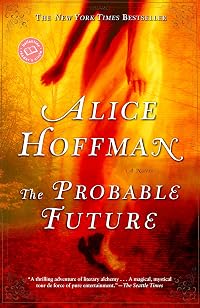
The Probable Future
by Alice Hoffman
On This Page
Description
Alice Hoffman's most magical novel to date--three generations of extraordinary women are driven to unite in crisis and discover the rewards of reconciliation and love. Women of the Sparrow family have unusual gifts. Elinor can detect falsehood. Her daughter, Jenny, can see people's dreams when they sleep. Granddaughter Stella has a mental window on the future--a future that she might not want to see. In The Probable Future this vivid and intriguing cast of characters confronts a show more haunting past--and a very current murder--against the evocative backdrop of small-town New England. By turns chilling and enchanting, The Probable Future chronicles the Sparrows's legacy as young Stella struggles to cope with her disturbing clairvoyance. Her potential to ruin or redeem becomes unbearable when one of her premonitions puts her father in jail, wrongly accused of homicide. Yet this ordeal also leads Stella to the grandmother she was forbidden to meet and to a historic family home full of talismans from her ancestors. Poignant, arresting, unsettling, The Probable Future showcases the lavish literary gifts that have made Alice Hoffman one of America's most treasured writers. Praise for The Probable Future "A thrilling adventure of literary alchemy . . . A magical, mystical tour de force of pure entertainment."--The Seattle Times "Delicious . . . Hoffman is an unapologetic optimist, and optimism is in short supply these days. It feels like a vacation to curl up with [The Probable Future]."--The New York Times Book Review "Instantly alluring . . . A mysterious, modern-day fairy tale . . . Hoffman is an amazingly talented writer with a beautiful sense of sentence construction, an intriguing imagination, and the ability to create compelling, complex characters that readers care about."--Fort Worth Star-Telegram "Hoffman's ethereal tale of a family of women with supernatural gifts is a magical escape, grounded in the complex relationships between mothers and daughters."--Marie Claire show lessTags
Recommendations

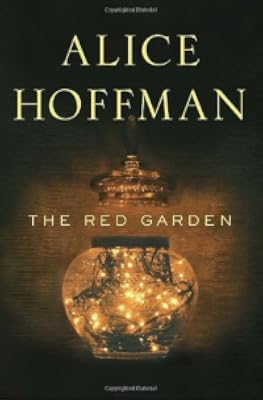
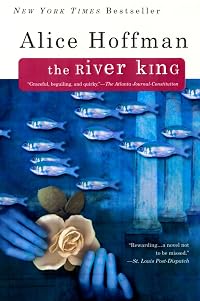


Member Recommendations
JessyHere Similar small town history that consumes the whole town.
Member Reviews
Alice Hoffman loves to weave elements of magic, myth, and fairy tales into her novels and I am so glad she does! Mothers and daughters are the theme here, as well as how women's histories underpin a Colonial town, even when they are written out of the official story. Beautiful language and evocative imagery on every page. My only critiques are that a) I hate to find errors in a finished book (DUE instead of DO! and other such avoidable idiocies), and b) that the entire plot occurs in less than three months, from March to June. Not only did that strain credulity to believe that the characters themselves would change and redeem in such a short time, but also unlikely that the small New England town [I lived in one very much like this for show more seven years] would accept change so rapidly. But other than that, I loved the book. show less
Written after Hoffman’s runaway hit witchy novel Practical Magic, but before she fully came into her own (in my opinion at least) with the prequel novel The Rules of Magic, this book treads much of the same territory and hits somewhere in between in terms of excellence. In its pages we see three generations of the Sparrow family women learn to live, love, and deal with their unique witchy powers - one who sees all lies for what they are, one who can peer into dreams, and one who catches glimpses of coming death. And yet, these powers (like all intuitions) do the women no good, as each of their talents deceives them in turn; there is really no such thing as a probable future, and they are led down unexpected paths as they make choices show more that were never quite understood until years later. Hoffman uses her talents to deftly weave their stories (and their family history) together from the small town of Unity outwards to Boston before bringing all three back together for a grande finale tinged with equal parts heartache and happiness. Having come to the conclusion, we may not have been totally engaged quite the whole way through (like I said, Hoffman hasn’t hit her peak yet), but the ties that bound the family together throughout have bound us in turn to see their ending through. Like the final lines of the story we must “close [our] eyes and listen… then walk twenty paces farther than [we] thought necessary. Just when [we]’re certain [we]’ve lost [our] way completely, [we]’ll be there.” show less
I’m almost embarrassed to admit that this is my first Alice Hoffman, but what a great book I chose as my introduction to this author. I suppose it’s what’s called “magic realism,” which is a suitable label. The narrative focuses on the long line of Sparrow women, a lineage dating back many generations to Rebecca Sparrow who could feel no pain. All were born in March and all have a gift. Jenny Sparrow can dream other people’s dreams. Her mother, Elinor, can tell a lie from the truth. And Jenny’s daughter, Stella, who just turned 13, can see how people die.
It’s Stella’s newfound talent that provides the emotional thrust of the story, and sets the plot in motion. Out to dinner with her father (a self-absorbed man who is show more estranged from her mother) to celebrate her birthday, Stella sees the murder of a woman in the restaurant. She tells her father, Will, and insists he do something. Will reports the premonition to the police, not mentioning Stella, and when the woman’s body is found soon after, he’s the prime suspect.
Estrangement runs through the book, mothers estranged from daughters, and lovers who never found each other. Is what Stella sees inevitable? Or is it a possible future, something that can be changed? Is there hope for Elinor and Jenny to reconcile? For Stella and Jenny to repair their strained relationship? For Jenny to come to terms with Will and for Will’s brother, Matt, to realize the love he’s never been able to have? Stella, eager to learn her family history, becomes the catalyst and as secrets about the Sparrow women come to light, the living Sparrow women learn what matters most.
Hoffman employs a omniscient narrator who tells as much or more than he or she shows the reader and it took me a while to get used to it. But soon enough, I was absorbed by the Sparrow family and the townspeople of Unity, MA, so much so that I didn’t want to leave them.
Now I need to see what else Hoffman has written that strikes my fancy. show less
It’s Stella’s newfound talent that provides the emotional thrust of the story, and sets the plot in motion. Out to dinner with her father (a self-absorbed man who is show more estranged from her mother) to celebrate her birthday, Stella sees the murder of a woman in the restaurant. She tells her father, Will, and insists he do something. Will reports the premonition to the police, not mentioning Stella, and when the woman’s body is found soon after, he’s the prime suspect.
Estrangement runs through the book, mothers estranged from daughters, and lovers who never found each other. Is what Stella sees inevitable? Or is it a possible future, something that can be changed? Is there hope for Elinor and Jenny to reconcile? For Stella and Jenny to repair their strained relationship? For Jenny to come to terms with Will and for Will’s brother, Matt, to realize the love he’s never been able to have? Stella, eager to learn her family history, becomes the catalyst and as secrets about the Sparrow women come to light, the living Sparrow women learn what matters most.
Hoffman employs a omniscient narrator who tells as much or more than he or she shows the reader and it took me a while to get used to it. But soon enough, I was absorbed by the Sparrow family and the townspeople of Unity, MA, so much so that I didn’t want to leave them.
Now I need to see what else Hoffman has written that strikes my fancy. show less
This has magical realism -- not just a Usan style of it, reminiscent of John Crowley's Little, Big, but a specifically New English breed. It has the type of history New England excels at: genealogical, village ("municipal" is too antiseptic), and architectural. The genealogical element concerned (largely) a string of single daughters and therefore mother-daughter relationships and tensions wound themselves throughout the plot.* It has a house that, like Edgewood and the Buendias' house, is a character unto itself. And water, lots of water, including an Hourglass Lake that I don't think was a deliberate nod to Lolita (which also is set, not as noticeably, mostly in New England) but did make me grin, and more water, and types of rain, and show more trees and gardens and cooking and bees.
The last two elements reminded me pleasantly of Robin McKinley, of the baking in Sunshine (which I love) and the bees and honey of Chalice (which I do not love except for the bees and honey).
Plus the novel has a horse. A perfect novel written especially for me doesn't need one, but a horse in a novel with magical realism (well, Winter's Tale crosses my line into fantasy) reminds me of Athansor, and that's another good thing.
I wish I had read it either before or much longer after Hoffman's River King, which it is better than, because two books with similar elements -- water, New England, fantasy -- by the same author, in only two months, is too many. I would rather feel that River King is derivative of this than vice versa. And even though I am sure Practical Magic is a much better book than "Practical Magic" is a movie, I do wonder if she is a bit of a one-trick pony. Good trick, anyway.
Good aside from her weaknesses, anyway. I don't mind the idyllic New England -- such a puny town does not get such frequent rail service with its own station -- but the timeframe is impossibly compressed.
I'm struggling to articulate why it's not a Perfect Novel despite its charming (but not derivative) kinship to Little, Big and Winter's Tale. Its language is good, the metaphors lovely and suitably aquatic, and the characters get their just desserts, and it even passes the Canine Mortality test. Maybe because it's not epic, as those two favorites and One Hundred Years of Solitude and Quincunx and even Song of Solomon, Gilligan's Wake and Cloud Atlas are? Because its microcosm isn't infinitely expandable, as Edgewood and Macondo are? Because no one character shines forth as Fiver and Atticus and Sully do? Because its bows are tied too neatly? I just read a review whose author uses the term "womyn" without intentional irony, and maybe that indicates the reason: -- I've internalized the patriarchy!
Minutes after my initial post, I realized the obvious: because the language didn't stir me up or churn my guts, and because the novel as a whole didn't rip my heart or brain into shreds.
The hardcover text I borrowed has two homophone misspellings that I noticed: a boarder instead of a border, and making due instead of making do.
* Ha! "Wound" occurred to me as the past tense of "wind" but of course it suits "mother-daughter relationships and tensions" very well. The sentence should be in the present tense but, to keep that homograph, I kept it in the past. show less
The last two elements reminded me pleasantly of Robin McKinley, of the baking in Sunshine (which I love) and the bees and honey of Chalice (which I do not love except for the bees and honey).
Plus the novel has a horse. A perfect novel written especially for me doesn't need one, but a horse in a novel with magical realism (well, Winter's Tale crosses my line into fantasy) reminds me of Athansor, and that's another good thing.
I wish I had read it either before or much longer after Hoffman's River King, which it is better than, because two books with similar elements -- water, New England, fantasy -- by the same author, in only two months, is too many. I would rather feel that River King is derivative of this than vice versa. And even though I am sure Practical Magic is a much better book than "Practical Magic" is a movie, I do wonder if she is a bit of a one-trick pony. Good trick, anyway.
Good aside from her weaknesses, anyway. I don't mind the idyllic New England -- such a puny town does not get such frequent rail service with its own station -- but the timeframe is impossibly compressed.
I'm struggling to articulate why it's not a Perfect Novel despite its charming (but not derivative) kinship to Little, Big and Winter's Tale. Its language is good, the metaphors lovely and suitably aquatic, and the characters get their just desserts, and it even passes the Canine Mortality test. Maybe because it's not epic, as those two favorites and One Hundred Years of Solitude and Quincunx and even Song of Solomon, Gilligan's Wake and Cloud Atlas are? Because its microcosm isn't infinitely expandable, as Edgewood and Macondo are? Because no one character shines forth as Fiver and Atticus and Sully do? Because its bows are tied too neatly? I just read a review whose author uses the term "womyn" without intentional irony, and maybe that indicates the reason: -- I've internalized the patriarchy!
Minutes after my initial post, I realized the obvious: because the language didn't stir me up or churn my guts, and because the novel as a whole didn't rip my heart or brain into shreds.
The hardcover text I borrowed has two homophone misspellings that I noticed: a boarder instead of a border, and making due instead of making do.
* Ha! "Wound" occurred to me as the past tense of "wind" but of course it suits "mother-daughter relationships and tensions" very well. The sentence should be in the present tense but, to keep that homograph, I kept it in the past. show less
The Sparrows are a family of women who've lived in a small Massachusetts town since colonial times, their lives enlivened by a magical gift (different for each of them) that first manifests itself on their thirteenth birthdays. As is often the case with magic, the term "gift" is applied here fairly loosely. In the present day, Elinor always knows a lie, her daughter Jenny experiences other people's dreams, and granddaughter Stella, just turned thirteen, has developed the ability to see how people will die. The relationship-wrecking potential of the first two gifts is of course blindingly obvious, and the third would be a heavy burden for anyone to bear—especially a thirteen-year-old who's not speaking to the mother who's screwing up show more their relationship by trying to avoid all of her mother's mistakes.
These are well-drawn characters who often inspire, simultaneously, the desire to give them tea and crackers and the desire to knock their heads together. Jenny is completely justified and utterly wrong-headed in her resentment of her mother; so is Stella. Jenny is absolutely correct in having concluded, after having it pounded into her head repeatedly, that Stella's father, Will Avery, is a lying, cheating bastard who can be relied on only to let everyone down. Stella is also right in believing him to be a loving, devoted parent who actually listens to her, which her mother does not.
There is a plot in here, involving Stella's gift of seeing deaths accidentally landing Will in jail, charged with murder, but the plot is not the point. The focus of this book is the engaging, and ultimately optimistic, story of the tangled relationships of the Sparrow women and their friends and relations.
An enjoyable lazy-afternoon read. show less
These are well-drawn characters who often inspire, simultaneously, the desire to give them tea and crackers and the desire to knock their heads together. Jenny is completely justified and utterly wrong-headed in her resentment of her mother; so is Stella. Jenny is absolutely correct in having concluded, after having it pounded into her head repeatedly, that Stella's father, Will Avery, is a lying, cheating bastard who can be relied on only to let everyone down. Stella is also right in believing him to be a loving, devoted parent who actually listens to her, which her mother does not.
There is a plot in here, involving Stella's gift of seeing deaths accidentally landing Will in jail, charged with murder, but the plot is not the point. The focus of this book is the engaging, and ultimately optimistic, story of the tangled relationships of the Sparrow women and their friends and relations.
An enjoyable lazy-afternoon read. show less
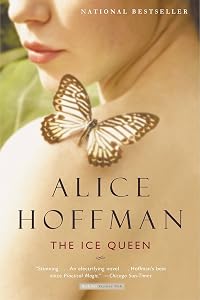
I had only read one Alice Hoffman book before this -- "The Ice Queen," which, although I read it first, actually was published two years after "The Probable Future" (in 2005). I was completely enthralled by "The Ice Queen," so I was all the more disappointed at my reaction to the earlier book.
In the Reader's Guide at the back of the paperback edition I read, Hoffman tells an interviewer that the book requires the reader to "suspend disbelief." Well, of course -- most novels require that, because novels are not real life, and things can happen in novels that could never happen in real life. But novels do have to be internally consistent – in other words, events and characters in a novelist's fictional world have to make sense within show more that world. The reader must suspend disbelief to accept the author's imagined premises – otherwise, no one could enjoy the experience of reading a novel. But the book has to be consistent with those premises. As Tom Clancy said, “The difference between fiction and reality is that fiction has to make sense.” And this book doesn't.
The novel starts out with an intriguing premise: Three generations of women in the Sparrow family – Elinor, her daughter Jenny, and Jenny's daughter Stella – living in a small New England town each wake up on their 13th birthday having a specific supernatural gift. Elinor's sense of smell tells her when people are lying. Jenny sees others' dreams while they sleep. Stella, who turns 13 when the book opens, discovers that she suddenly knows exactly how the people around her will die. The reader is clearly given to understand from the first page that these abilities – which began centuries ago with the family matriarch, Rebecca Sparrow – are burdens as much as they are gifts, alienating the women of each generation from each other and from themselves. Elinor and Jenny have not spoken to each other for years. Jenny awaits the day her own daughter turns 13 with dread, wondering what terrible ability she will suddenly have on that day. Stella herself is dismayed to find, in very short order, that her newfound ability to see people's deaths is a very mixed blessing when she urges her father, Will Avery, to warn a young woman about the brutal murder Stella foresees for her, and thereby makes him the prime suspect after the woman is, indeed, murdered.
One would think that such unusual abilities would have something to do with character and plot development, but they do not. Having made a point of telling us about them in the very first chapter, Hoffman simply drops them. Even being falsely accused of murder turns out to be a nothing event. The police sensibly agree that Will Avery had nothing to do with the crime, let him go, and that's that. The issue barely comes up at all after that.
Alice Hoffman is known for using magical realism, but magical realism doesn't work – at least, not for me -- unless it suffuses reality and changes it, somehow. That's what happened in The Ice Queen – getting struck by lightning fundamentally transforms the never-named woman at the center of the book in every way – physically, spiritually, emotionally. It releases her from the psychological frozen state in which she has existed since her mother's death in a car accident for which she blames herself.
In The Probable Future, the magic is like wrapping paper around the physical reality of the book: It lies on top of the book's imaginary world, but never becomes part of it. Instead, we have a cast of characters who seem curiously wooden – like puppets the author manipulates. They are made to move and speak and act by the author, but they never feel like real people. They do things for reasons that are never clear, and change abruptly, almost from one moment to the next, without any intervening development either in their inner emotional states or in external events that could make the changes believable.
Will Avery and Jenny Sparrow are good examples. Through most of the novel, Will is just impossibly awful. He cheats on Jenny throughout their marriage; he does not have a job and makes no effort to find one. For reasons that are never explained and in my view make no sense, Jenny invites him to move into her apartment after she moves in with her mother at the ancestral family home called Cake House. She then continues to pay the rent on the apartment while Will stays in bed half the day, drinks himself into a stupor for the rest of it, and trashes the place – letting the garbage pile up, putting the bags in the hallway and never taking them out, leaving beer bottles and take-out food containers strewn all over the place, and ignoring the increasingly hostile complaints of the neighbors and landlady.
Then, close to the end of the novel, Will undergoes a sudden personality change after a woman he invites to a dinner party – the owner of a local bakery who has hired Jenny to work for her – falls in love with Will on the spot. Will quickly figures out that Liza loves him, and decides that he is in love with her as well. I put it this way for a reason. It's not that they fall in love with each other – the way Hoffman presents it, Liza falls in love with Will as soon as she sees him at the dinner party, and Will then falls in love with Liza because she loves him. That may not be what Hoffman intended, but that's the way it comes across to me. Then, having had his falling in love button activated by the realization that Liza is in love with him, he undergoes a full 180-degree personality change, morphing overnight into a model of responsibility and faithful devotion to his new love. Jenny, meanwhile, falls in love with Will's brother Matt, who has loved Jenny unrequitedly throughout her marriage to Will. Again, her feelings do not appear to develop in any way – although she does know that Matt has loved her for a long time, there is no indication that she returns his love until, one night, she goes to his house, walks into his bedroom while he's sleeping, gets into his bed, and proceeds to initiate lovemaking.
Some reviews I have read suggest that Hoffman is using the Sparrow women's magical abilities metaphorically, and it's certainly possible. Perhaps she's trying to say that when Elinor “smells” a lie, or when Jenny sees someone else's dream, or when Stella has a vision of how another person will die, they are only sensing probabilities, not certainties. The book's title is The Probable Future, after all. Love, however, seems to be a certainty – at least it does for the fictional characters in Hoffman's novel. Perhaps Hoffman is making the point that love is the real magic.
It's a lovely thought. But if that is, indeed, the meaning that Hoffman intends, for this reader, at least, the literary synapses are not firing. show less
In the Reader's Guide at the back of the paperback edition I read, Hoffman tells an interviewer that the book requires the reader to "suspend disbelief." Well, of course -- most novels require that, because novels are not real life, and things can happen in novels that could never happen in real life. But novels do have to be internally consistent – in other words, events and characters in a novelist's fictional world have to make sense within show more that world. The reader must suspend disbelief to accept the author's imagined premises – otherwise, no one could enjoy the experience of reading a novel. But the book has to be consistent with those premises. As Tom Clancy said, “The difference between fiction and reality is that fiction has to make sense.” And this book doesn't.
The novel starts out with an intriguing premise: Three generations of women in the Sparrow family – Elinor, her daughter Jenny, and Jenny's daughter Stella – living in a small New England town each wake up on their 13th birthday having a specific supernatural gift. Elinor's sense of smell tells her when people are lying. Jenny sees others' dreams while they sleep. Stella, who turns 13 when the book opens, discovers that she suddenly knows exactly how the people around her will die. The reader is clearly given to understand from the first page that these abilities – which began centuries ago with the family matriarch, Rebecca Sparrow – are burdens as much as they are gifts, alienating the women of each generation from each other and from themselves. Elinor and Jenny have not spoken to each other for years. Jenny awaits the day her own daughter turns 13 with dread, wondering what terrible ability she will suddenly have on that day. Stella herself is dismayed to find, in very short order, that her newfound ability to see people's deaths is a very mixed blessing when she urges her father, Will Avery, to warn a young woman about the brutal murder Stella foresees for her, and thereby makes him the prime suspect after the woman is, indeed, murdered.
One would think that such unusual abilities would have something to do with character and plot development, but they do not. Having made a point of telling us about them in the very first chapter, Hoffman simply drops them. Even being falsely accused of murder turns out to be a nothing event. The police sensibly agree that Will Avery had nothing to do with the crime, let him go, and that's that. The issue barely comes up at all after that.
Alice Hoffman is known for using magical realism, but magical realism doesn't work – at least, not for me -- unless it suffuses reality and changes it, somehow. That's what happened in The Ice Queen – getting struck by lightning fundamentally transforms the never-named woman at the center of the book in every way – physically, spiritually, emotionally. It releases her from the psychological frozen state in which she has existed since her mother's death in a car accident for which she blames herself.
In The Probable Future, the magic is like wrapping paper around the physical reality of the book: It lies on top of the book's imaginary world, but never becomes part of it. Instead, we have a cast of characters who seem curiously wooden – like puppets the author manipulates. They are made to move and speak and act by the author, but they never feel like real people. They do things for reasons that are never clear, and change abruptly, almost from one moment to the next, without any intervening development either in their inner emotional states or in external events that could make the changes believable.
Will Avery and Jenny Sparrow are good examples. Through most of the novel, Will is just impossibly awful. He cheats on Jenny throughout their marriage; he does not have a job and makes no effort to find one. For reasons that are never explained and in my view make no sense, Jenny invites him to move into her apartment after she moves in with her mother at the ancestral family home called Cake House. She then continues to pay the rent on the apartment while Will stays in bed half the day, drinks himself into a stupor for the rest of it, and trashes the place – letting the garbage pile up, putting the bags in the hallway and never taking them out, leaving beer bottles and take-out food containers strewn all over the place, and ignoring the increasingly hostile complaints of the neighbors and landlady.
Then, close to the end of the novel, Will undergoes a sudden personality change after a woman he invites to a dinner party – the owner of a local bakery who has hired Jenny to work for her – falls in love with Will on the spot. Will quickly figures out that Liza loves him, and decides that he is in love with her as well. I put it this way for a reason. It's not that they fall in love with each other – the way Hoffman presents it, Liza falls in love with Will as soon as she sees him at the dinner party, and Will then falls in love with Liza because she loves him. That may not be what Hoffman intended, but that's the way it comes across to me. Then, having had his falling in love button activated by the realization that Liza is in love with him, he undergoes a full 180-degree personality change, morphing overnight into a model of responsibility and faithful devotion to his new love. Jenny, meanwhile, falls in love with Will's brother Matt, who has loved Jenny unrequitedly throughout her marriage to Will. Again, her feelings do not appear to develop in any way – although she does know that Matt has loved her for a long time, there is no indication that she returns his love until, one night, she goes to his house, walks into his bedroom while he's sleeping, gets into his bed, and proceeds to initiate lovemaking.
Some reviews I have read suggest that Hoffman is using the Sparrow women's magical abilities metaphorically, and it's certainly possible. Perhaps she's trying to say that when Elinor “smells” a lie, or when Jenny sees someone else's dream, or when Stella has a vision of how another person will die, they are only sensing probabilities, not certainties. The book's title is The Probable Future, after all. Love, however, seems to be a certainty – at least it does for the fictional characters in Hoffman's novel. Perhaps Hoffman is making the point that love is the real magic.
It's a lovely thought. But if that is, indeed, the meaning that Hoffman intends, for this reader, at least, the literary synapses are not firing. show less
This is the second book I've read by this author and I'm hooked. I love how she writes the atmosphere of the story without writing it as poetry. (ex. A breeze had come up and there was the scent of loam in the air. Hay and fertilizer. Sweet grass and wild ginger. April.) I have a hard time with poetry. That may sound insulting or maybe not like a compliment but she writes straightforward without the meaning being hidden by cleverly written metaphors. I cannot read Tanith Lee because of her style if you need a comparison.
There is the skeleton of the story which has magic, love, family, loss, hope, life, death and then there is the town and the woods and nature. I just loved the story.
If I ever read it again I need to make a list of all show more the names and descriptions for rain that Elinor used. "... it wasn't any sort of rain Elinor could identify. Not rose rain or fish rain, or stone rain, not daffodil rain, only the sound of water. ..." show less
There is the skeleton of the story which has magic, love, family, loss, hope, life, death and then there is the town and the woods and nature. I just loved the story.
If I ever read it again I need to make a list of all show more the names and descriptions for rain that Elinor used. "... it wasn't any sort of rain Elinor could identify. Not rose rain or fish rain, or stone rain, not daffodil rain, only the sound of water. ..." show less
Members
- Recently Added By
Lists

Best Contemporary Literary Fiction (Around the Last 30 Years)
400 works; 124 members

Magic Realism
371 works; 52 members

Page Turners
185 works; 11 members

Books by Jewish Authors
68 works; 5 members
Author Information

74+ Works 61,477 Members
Alice Hoffman, an American novelist and screenwriter, was born in New York City on March 16, 1952. She earned a B.A. from Adelphi University in 1973 and an M.A. in creative writing from Stanford University in 1975 before publishing her first novel, Property Of, in 1977. Known for blending realism and fantasy in her fiction, she often creates show more richly detailed characters who live on society's margins and places them in extraordinary situations as she did with At Risk, her 1988 novel about the AIDS crisis. Her other works include The Drowning Season, Seventh Heaven, The River King, Blue Diary, The Probable Future, The Ice Queen, and The Dovekeepers. Her book, The Third Angel, won the 2008 New England Booksellers' Award for fiction. Two of her novels, Practical Magic and Aquamarine, were made into films. She has also written numerous screenplays, including adaptations of her own novels and the original screenplay, Independence Day. Her title's The Museum of Exteaordinary Things, The Marriage of Opposites, Seventh Heaven, and The Rules of Magic made The New York Times Best Seller List. (Bowker Author Biography) show less
Some Editions
Awards and Honors
Distinctions
Common Knowledge
- Canonical title
- The Probable Future
- Original publication date
- 2003
- People/Characters
- Stella Sparrow; Jenny Sparrow; Elinor Sparrow; Will Avery; Matt Avery; Hap Stewart
- Important places
- Boston, Massachusetts, USA
- Dedication
- For Tom
- First words
- Anyone born and bred in Massachusetts learns early on to recognize the end of winter.
- Quotations
- Proof of love could be found in a single blade of grass, in what was kept and what was thrown away.
- Last words
- (Click to show. Warning: May contain spoilers.)Open your eyes.
- Blurbers
- Claire, Marie
Classifications
Statistics
- Members
- 2,085
- Popularity
- 9,973
- Reviews
- 63
- Rating
- (3.79)
- Languages
- 7 — Dutch, English, French, German, Hungarian, Spanish, Swedish
- Media
- Paper, Audiobook, Ebook
- ISBNs
- 32
- ASINs
- 10