
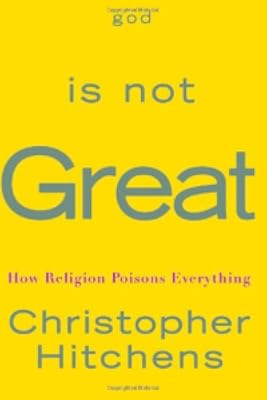
God Is Not Great
by Christopher Hitchens
On This Page
Description
Whether you're a lifelong believer, a devout atheist, or someone who remains uncertain about the role of religion in our lives, this insightful manifesto will engage you with its provocative ideas.With a close and studied reading of the major religious texts, Christopher Hitchens documents the ways in which religion is a man-made wish, a cause of dangerous sexual repression, and a distortion of our origins in the cosmos. With eloquent clarity, Hitchens frames the argument for a more secular show more life based on science and reason, in which hell is replaced by the Hubble Telescope's awesome view of the universe, and Moses and the burning bush give way to the beauty and symmetry of the double helix.
In the tradition of Bertrand Russell's Why I Am Not a Christian and Sam Harris's The End of Faith, Christopher Hitchens makes the ultimate case against religion. show less
Tags
Recommendations
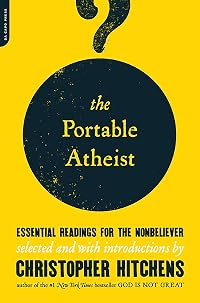
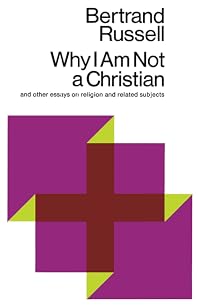
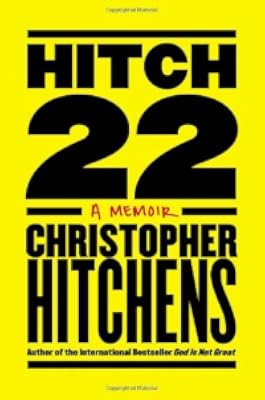

Member Recommendations

Member Reviews
“The various forms of worship, which prevailed in the Roman world, were all considered by the people to be equally true, by the philosopher as equally false, and by the magistrate as equally useful” Edward Gibbon
Hitchens is irate. He declares belief in God as not only foolish and unwise but immoral as well. Religion breeds intolerance for other beliefs and for atheists. This book is an impassioned indictment of the belief in God, and an argument for the man-made character of religious belief. Hitchens writes very well and with a very sharp wit at times. He begins with recent events, the 9-11 tragedy, and the Christian response, and the current events in Iraq and elsewhere. He trounces Biblical history and creation stories, decodes show more the Ten Commandments as a a combination of monotheistic tyranny, common sense morality and attempted thought control, destroys Joseph Smith as a huckster and the Mormons as a fraud, and even shows Japanese Zen Buddhism as a nationalist and intolerant sham. He has choice quotes and anecdotes, laments the sexual pre-occupation of Western religions and likens many practices to totalitarianism. His finest chapter is a brisk historical review of philosophers and others, starting with Socrates, whose rationality stood as a challenge to belief. He reminds that openly expressing such opinions had severe consequences - Spinoza signed all of his letters “Caute” Latin for “take care”. Hume, Voltaire, Lucretius, Sigmund Freud and Darwin were probably unbelievers, but were cautious about revealing the fact. show less
Hitchens is irate. He declares belief in God as not only foolish and unwise but immoral as well. Religion breeds intolerance for other beliefs and for atheists. This book is an impassioned indictment of the belief in God, and an argument for the man-made character of religious belief. Hitchens writes very well and with a very sharp wit at times. He begins with recent events, the 9-11 tragedy, and the Christian response, and the current events in Iraq and elsewhere. He trounces Biblical history and creation stories, decodes show more the Ten Commandments as a a combination of monotheistic tyranny, common sense morality and attempted thought control, destroys Joseph Smith as a huckster and the Mormons as a fraud, and even shows Japanese Zen Buddhism as a nationalist and intolerant sham. He has choice quotes and anecdotes, laments the sexual pre-occupation of Western religions and likens many practices to totalitarianism. His finest chapter is a brisk historical review of philosophers and others, starting with Socrates, whose rationality stood as a challenge to belief. He reminds that openly expressing such opinions had severe consequences - Spinoza signed all of his letters “Caute” Latin for “take care”. Hume, Voltaire, Lucretius, Sigmund Freud and Darwin were probably unbelievers, but were cautious about revealing the fact. show less
I read this before, but after Hitchens' passing, I picked up this audiobook since it is narrated by Hitch, and this a chance to hear his voice again. His radical, anti-theistic atheism is so overt I don't think he is going to win any converts here, but for laughing at those god-hugger, there is a lot of material here. On this second read, some things that stood out to me is this time:
1) the quirky roots of Mormonism (I always like that story) with Joseph Smith's wife not abiding the BS and challenging a re-revealing of identical text
2) The illiterate Muhammad and the fetishistic fixation as unalterable a vowel-less antique Koran
and,
3) Maybe Jesus was a historical personage, as this explains the tortured contradiction of Herod, Cyrenius show more the governor (Luke 2:2), and the census to all point to a non-date but bring in biblical prophecy and explain both Nazareth and Bethlehem. show less
1) the quirky roots of Mormonism (I always like that story) with Joseph Smith's wife not abiding the BS and challenging a re-revealing of identical text
2) The illiterate Muhammad and the fetishistic fixation as unalterable a vowel-less antique Koran
and,
3) Maybe Jesus was a historical personage, as this explains the tortured contradiction of Herod, Cyrenius show more the governor (Luke 2:2), and the census to all point to a non-date but bring in biblical prophecy and explain both Nazareth and Bethlehem. show less
It is fun to read Hitchens, and this book is no disappointment. His sparkling wit, his urbane literary references, the razor-slash of his acid pen. Oh, but Hitchens makes no arguments not made by Voltaire or Paine centuries ago, perhaps with some science thrown in via Dawkins and other neo-Darwinists. These arguments are answered, perhaps not to yours or Hitchens's satisfaction, but answered adequately they have been.
Hitchens makes several minor mistakes that make you question his whole oeuvre. For instance, it was William Miller, not George Miller (pp. 60, 162, 169-170). And no, scholars don't "admit" that Jesus was born in "at least AD 4." Most scholars think 4 BC. Perhaps we can chalk this up to sloppy mistakes. He still clings to show more the debunked evolutionary proof of "ontology recapitulates phylogeny" (p. 85) in the human womb.
But what's worse is Hitchens's argument that religion poisons everything and that we should instead embrace his brand of enlightened humanism. He, for instance, in chapter 17, argues that the great atheist dictatorships of the twentieth century were indeed supported by various religious people. So, for example, if some rando Roman Catholic (a totalitarianism itself) supported Mussolini or Hitler or Franco, then quod erat demonstrandum fascists were supported by religion. And if Stalin let some state-run churches operate in the Soviet Union during the Second World War, then ipso facto it was religious too. This is pure bunkum. He roundly ignores the state sanctioned anti-religiousness of these regimes and their complete submergence in the ideals and idealism of science. Hitler's Germany and Stalin's USSR were buttressed and pushed by science science science writ large. Darwin, evolution, math, logic. It is the logic of whatever we can scientifically prove is beneficial, then individual person's be damned. It began with the French Revolution, which gets a pass from Hitchens too, and it continues through to Mao's China and other dictatorial/totalitarian regimes, many of which Hitchens roundly ignores because they don't fit into his "religion is bad" paradigm. The plain truth is, man is totally depraved whether religion animates them or science animates them. Which is why I shudder when liberal/progressives in the US exclaim "Let's follow the science!" and "Let's do what the science says." It wasn't that long ago that science supposedly proved Jim Crow segregation was cool.
It wasn't that long ago when scientific regimes pushed sterilization and elimination of "interior races." Eugenics, Margaret Sanger, and Planned Parenthood get no mention in the book. Which brings us to proof of Hitchens's intellectual bankruptcy when it comes to his humanism. He says several times that you don't need religion to be moral, and that mere "humanism" can create a society of morals beginning with, for example, thou shalt not murder. Yet Hitchens torpedoes his own argument with his talk on abortion (pp. 220-223). To his credit, he buys from science and logic "as a materialist" that "it has been demonstrated that an embryo is a separate body and entity, and not merely (as some really did use to argue) a growth on or in the female body" (p. 220). Well, Hitchens must have stopped talking to the average pro-abortion feminist, who still maintain that a human embryo is a "growth" and merely part of a female body to be discarded "like an appendix or even... a tumor" (pp. 220-221). Still, even though Hitchens considers the embryo a separate and distinct person, in his scientific materialist humanism, he still supports abortion (pp. 221-222) and fails to give that pre-born person his due as a human being. Why? What happened to his humanism? Well, he doesn't say this, but his progressive-materialist-sortaMarxism still maintains that there is no such thing as an individual when it comes to the collective good or the collective will. If a mere individual person gets in the way of the collective will, well (to quote Whittaker Chambers, who gets a derogatory mention on p. 79) "To a gas chamber -- go!" The materialist humanism of Hitchens does not create, cannot create morals, because science and collectivism has no morals. Humanism will not create a prohibition against murder (or other things) because the idea of individual human lives worthy of protection and care descends from the Judeo-Christian idea of man being a soul/body/person made in the image of God (see Genesis 1). If you jettison the Judeo-Christian underpinnings of our morality, the humanism of Hitchens will not necessarily, and probably not ever, fill that gap. People have done bad things in the name of religion, but the twentieth century proves, despite Hitchens's cherry-picking, it does much more in the science-driven absence of religion.
To quote Benjamin Franklin, whom Hitchens lauds while failing to mention this Franklin truism: "If Men are so wicked as we now see them with Religion what would they be if without it?" show less
Hitchens makes several minor mistakes that make you question his whole oeuvre. For instance, it was William Miller, not George Miller (pp. 60, 162, 169-170). And no, scholars don't "admit" that Jesus was born in "at least AD 4." Most scholars think 4 BC. Perhaps we can chalk this up to sloppy mistakes. He still clings to show more the debunked evolutionary proof of "ontology recapitulates phylogeny" (p. 85) in the human womb.
But what's worse is Hitchens's argument that religion poisons everything and that we should instead embrace his brand of enlightened humanism. He, for instance, in chapter 17, argues that the great atheist dictatorships of the twentieth century were indeed supported by various religious people. So, for example, if some rando Roman Catholic (a totalitarianism itself) supported Mussolini or Hitler or Franco, then quod erat demonstrandum fascists were supported by religion. And if Stalin let some state-run churches operate in the Soviet Union during the Second World War, then ipso facto it was religious too. This is pure bunkum. He roundly ignores the state sanctioned anti-religiousness of these regimes and their complete submergence in the ideals and idealism of science. Hitler's Germany and Stalin's USSR were buttressed and pushed by science science science writ large. Darwin, evolution, math, logic. It is the logic of whatever we can scientifically prove is beneficial, then individual person's be damned. It began with the French Revolution, which gets a pass from Hitchens too, and it continues through to Mao's China and other dictatorial/totalitarian regimes, many of which Hitchens roundly ignores because they don't fit into his "religion is bad" paradigm. The plain truth is, man is totally depraved whether religion animates them or science animates them. Which is why I shudder when liberal/progressives in the US exclaim "Let's follow the science!" and "Let's do what the science says." It wasn't that long ago that science supposedly proved Jim Crow segregation was cool.
It wasn't that long ago when scientific regimes pushed sterilization and elimination of "interior races." Eugenics, Margaret Sanger, and Planned Parenthood get no mention in the book. Which brings us to proof of Hitchens's intellectual bankruptcy when it comes to his humanism. He says several times that you don't need religion to be moral, and that mere "humanism" can create a society of morals beginning with, for example, thou shalt not murder. Yet Hitchens torpedoes his own argument with his talk on abortion (pp. 220-223). To his credit, he buys from science and logic "as a materialist" that "it has been demonstrated that an embryo is a separate body and entity, and not merely (as some really did use to argue) a growth on or in the female body" (p. 220). Well, Hitchens must have stopped talking to the average pro-abortion feminist, who still maintain that a human embryo is a "growth" and merely part of a female body to be discarded "like an appendix or even... a tumor" (pp. 220-221). Still, even though Hitchens considers the embryo a separate and distinct person, in his scientific materialist humanism, he still supports abortion (pp. 221-222) and fails to give that pre-born person his due as a human being. Why? What happened to his humanism? Well, he doesn't say this, but his progressive-materialist-sortaMarxism still maintains that there is no such thing as an individual when it comes to the collective good or the collective will. If a mere individual person gets in the way of the collective will, well (to quote Whittaker Chambers, who gets a derogatory mention on p. 79) "To a gas chamber -- go!" The materialist humanism of Hitchens does not create, cannot create morals, because science and collectivism has no morals. Humanism will not create a prohibition against murder (or other things) because the idea of individual human lives worthy of protection and care descends from the Judeo-Christian idea of man being a soul/body/person made in the image of God (see Genesis 1). If you jettison the Judeo-Christian underpinnings of our morality, the humanism of Hitchens will not necessarily, and probably not ever, fill that gap. People have done bad things in the name of religion, but the twentieth century proves, despite Hitchens's cherry-picking, it does much more in the science-driven absence of religion.
To quote Benjamin Franklin, whom Hitchens lauds while failing to mention this Franklin truism: "If Men are so wicked as we now see them with Religion what would they be if without it?" show less
I started this months ago, maybe years, but got distracted and had to return it to the library. I got it back recently and made sure to prioritize it.
Sex: Are there any religions that don’t have something to say about sex? I am pro-sex myself and think most religions are anti-sex. Most of the religions Hitchens describes also seem anti sex. He links circumcision in men and women to a reduction in sensitivity and sexual pleasure and thinks those are deliberate and serve a religious desire to curb desire and throttle sex. He gives vivid descriptions of traditional circumcisions and relates accounts of babies infected with herpes, syphilis, and other STDs by infected mohels.
Pigs: I quite enjoyed the chapter on pork and on the very show more strong religious feelings for and against the pig. In the anti-pork camp are Judaism, Islam, and some Christian sects, which is a significant number of people, but pork is still the most consumed meat by volume. He makes a link between pigs and people an thinks the prohibition is related to the abandonment of human sacrifice. He claims firefighters don’t like pork because it reminds them of the smell of burning human flesh. I need to find a firefighter and ask about this.
Mother Theresa. Hitchens testified against her canonization, so he has some history with her. His points seem to be 1) She was a hypocrite and flew out of India for advanced medical treatment not provided by her hospices, 2) she actively worked against the interests of women by lobbying against abortion and divorce in many countries, 3) she told him herself that her work was about converting more Catholics and not about helping the poor, 4) There are some accounting questions about where all the money she raised went, and 5) her miracles are pretty clearly BS.
Mormons. They cleaned themselves up, but Joseph Smith and the creation of Mormonism are plain crazy. I do feel compelled to defend them on one point. The Mormon Church does seem more willing to change than many other faiths. They have walked back their position on plural marriage, non-white membership, and a few other points. I think being willing to change with the times is a good thing. However, I can also see how it is a troubling thing in a religion. Does god change his/her/its mind? Should the true believers be unbending in their adherence to doctrine? Or, more reasonably, since doctrine is written by people and people make mistakes, should doctrine be subject to change?
Being ‘good.’ One pro-religion argument is that the morals and traditions of religions cause people to behave and to form a more harmonious society. Hitchens disagrees. First, he says that sword cuts both ways. Religious arguments were made in favor of slavery, conquest of the Americas, apartheid, the crusades, wife beating, and the holocaust. He doesn’t blame all of those on religion (though it’s hard to imagine the crusades without a religious motivation), but notes that lots of participants had religious motivation or justification. Second, he notes that lots of atheists/secularists/humanists and the otherwise non-religious do lots of good in the world.
The counter to the above. Hitchens says that a counter to his arguments about ‘goodness,’ is to say that most of the harm in the world has been caused by avowed atheists like Stalin, Mao, Pol Pot, ect. Those figures did do a lot of damage. Hitchens argues that in most cases they were abetted by religious leaders or ideas. Stalin preserved the Orthodox Church as an arm of the state and its role waxed and waned with Soviet fortunes. Mao sponsored the Cultural Revolution, but used traditional Confucian roles and values to his advantage (Hitchens doesn’t say much about Mao, I think because his argument there is weak). However, Mao, the Kim’s in North Korea, and other personality cults have some elements of religion even as they profess atheism.
What do we know about the real beliefs of our ancestors? He has a short passage wondering about the historical prevalence of atheism or agnosticism. I’ve wondered about this too. As a non-religious person, even in a modern secular society there is strong pressure to conform, to avoid openly questioning religion, and to pay at least some lip service to having faith. All of this was much worse in even the recent past. Admitting that you did not believe in the prevailing faith of your region or culture could have been a death sentence for many of our ancestors. How many of them did not believe, but had to act like they did? Were Ben Franklin, Jefferson, Newton, and other great thinkers real believers, or closet atheists?
The group of strangers. He relates a story of a debate opponent who asked him if: he was alone on the streets of an unfamiliar city and was approached by a group of strangers, would he feel better or worse knowing they had just come from a religious service. I agree with his general sentiment that it’s safer if the strangers didn’t just come from worship, but have beef with the argument. Demographics are more important than faith here. A group of young men is far more dangerous than a gaggle of old ladies regardless of their religious leanings.
New Enlightenment. He ends with a call for a new enlightenment. I’m all for it, but I think we are getting anything but. This is the age of fake news and partisan politics as religion. The left and right in America are something like religions. The right cleaves closely to established Judeo Christian traditions. The left embraces dogmatic secularism and an unpleasant, identity based humanism. Neither side seems to place a premium on truth or discovery.
This was a good book and I will recommend it. show less
Sex: Are there any religions that don’t have something to say about sex? I am pro-sex myself and think most religions are anti-sex. Most of the religions Hitchens describes also seem anti sex. He links circumcision in men and women to a reduction in sensitivity and sexual pleasure and thinks those are deliberate and serve a religious desire to curb desire and throttle sex. He gives vivid descriptions of traditional circumcisions and relates accounts of babies infected with herpes, syphilis, and other STDs by infected mohels.
Pigs: I quite enjoyed the chapter on pork and on the very show more strong religious feelings for and against the pig. In the anti-pork camp are Judaism, Islam, and some Christian sects, which is a significant number of people, but pork is still the most consumed meat by volume. He makes a link between pigs and people an thinks the prohibition is related to the abandonment of human sacrifice. He claims firefighters don’t like pork because it reminds them of the smell of burning human flesh. I need to find a firefighter and ask about this.
Mother Theresa. Hitchens testified against her canonization, so he has some history with her. His points seem to be 1) She was a hypocrite and flew out of India for advanced medical treatment not provided by her hospices, 2) she actively worked against the interests of women by lobbying against abortion and divorce in many countries, 3) she told him herself that her work was about converting more Catholics and not about helping the poor, 4) There are some accounting questions about where all the money she raised went, and 5) her miracles are pretty clearly BS.
Mormons. They cleaned themselves up, but Joseph Smith and the creation of Mormonism are plain crazy. I do feel compelled to defend them on one point. The Mormon Church does seem more willing to change than many other faiths. They have walked back their position on plural marriage, non-white membership, and a few other points. I think being willing to change with the times is a good thing. However, I can also see how it is a troubling thing in a religion. Does god change his/her/its mind? Should the true believers be unbending in their adherence to doctrine? Or, more reasonably, since doctrine is written by people and people make mistakes, should doctrine be subject to change?
Being ‘good.’ One pro-religion argument is that the morals and traditions of religions cause people to behave and to form a more harmonious society. Hitchens disagrees. First, he says that sword cuts both ways. Religious arguments were made in favor of slavery, conquest of the Americas, apartheid, the crusades, wife beating, and the holocaust. He doesn’t blame all of those on religion (though it’s hard to imagine the crusades without a religious motivation), but notes that lots of participants had religious motivation or justification. Second, he notes that lots of atheists/secularists/humanists and the otherwise non-religious do lots of good in the world.
The counter to the above. Hitchens says that a counter to his arguments about ‘goodness,’ is to say that most of the harm in the world has been caused by avowed atheists like Stalin, Mao, Pol Pot, ect. Those figures did do a lot of damage. Hitchens argues that in most cases they were abetted by religious leaders or ideas. Stalin preserved the Orthodox Church as an arm of the state and its role waxed and waned with Soviet fortunes. Mao sponsored the Cultural Revolution, but used traditional Confucian roles and values to his advantage (Hitchens doesn’t say much about Mao, I think because his argument there is weak). However, Mao, the Kim’s in North Korea, and other personality cults have some elements of religion even as they profess atheism.
What do we know about the real beliefs of our ancestors? He has a short passage wondering about the historical prevalence of atheism or agnosticism. I’ve wondered about this too. As a non-religious person, even in a modern secular society there is strong pressure to conform, to avoid openly questioning religion, and to pay at least some lip service to having faith. All of this was much worse in even the recent past. Admitting that you did not believe in the prevailing faith of your region or culture could have been a death sentence for many of our ancestors. How many of them did not believe, but had to act like they did? Were Ben Franklin, Jefferson, Newton, and other great thinkers real believers, or closet atheists?
The group of strangers. He relates a story of a debate opponent who asked him if: he was alone on the streets of an unfamiliar city and was approached by a group of strangers, would he feel better or worse knowing they had just come from a religious service. I agree with his general sentiment that it’s safer if the strangers didn’t just come from worship, but have beef with the argument. Demographics are more important than faith here. A group of young men is far more dangerous than a gaggle of old ladies regardless of their religious leanings.
New Enlightenment. He ends with a call for a new enlightenment. I’m all for it, but I think we are getting anything but. This is the age of fake news and partisan politics as religion. The left and right in America are something like religions. The right cleaves closely to established Judeo Christian traditions. The left embraces dogmatic secularism and an unpleasant, identity based humanism. Neither side seems to place a premium on truth or discovery.
This was a good book and I will recommend it. show less
With a title like "God is not great", you don't start reading expecting a nuanced look at religion. And with an author like the late Christopher Hitchens, you don't expect anything less than a thorough damnation of whatever he turns his mind to.
Hitchens describes his own religious journey to atheism and then raises ideas like 'Is Religion Child Abuse' (yes) and 'The Nightmare of the "Old" Testament' (although I think that most people would agree many parts of the Old Testament are NSFW). He doesn't pull any punches in his attacks on religion and I can't help but think that he isn't going to win any new converts, and is just preaching to the converted. Still, Hitchens could put a sentence together like few others and he's in top form show more here. So for an old fence sitting agnostic like myself it was an interesting diversion for me while holidaying in Monaco recently. show less
Hitchens describes his own religious journey to atheism and then raises ideas like 'Is Religion Child Abuse' (yes) and 'The Nightmare of the "Old" Testament' (although I think that most people would agree many parts of the Old Testament are NSFW). He doesn't pull any punches in his attacks on religion and I can't help but think that he isn't going to win any new converts, and is just preaching to the converted. Still, Hitchens could put a sentence together like few others and he's in top form show more here. So for an old fence sitting agnostic like myself it was an interesting diversion for me while holidaying in Monaco recently. show less
I believe that Christopher Hitchens' book god is not Great: How Religion Poisons Everything [capitalization in the original] merits four stars; however, with a book such as this, the rating is really beside the point. Those who will enjoy this provocative book know who they are; those who will not even be able to finish the first chapter know who they are.
Like the McCarthyite Ann Coulter, Hitchens' steadfast purpose is to preach to the choir. From the deliberately confrontational use of the lower-case "god" for the deity to chapter titles like "The Evil of the 'New' Testament," "Religion as Original Sin," and "Is Religion Child Abuse?" it's pretty clear Hitchens has no intention of trying to convert (pardon the pun) anyone. True show more believers, whether Jewish, Christian, Muslim, Hindu or Buddhist, needn't bother, as they'll simply feel insulted.
That said, Hitchens' painstakingly researched tome gives plenty of food for thought for atheists or agnostics or simply those interested in well-crafted if contrarian argument. Admonitions that religion, at any rate, makes humans behave themselves fall somewhat flat in light of Catholic priests cooperating with genocide in Rwanda (and remaining shielded by the Vatican), the atrocities of the Taliban, and the Christian fundamentalist Lord's Resistance Army in Uganda.
But the best part is that Hitchens, as ever, pens the most marvelous turns of phrase. Take this on page 67, for example: "Many religions now come before us with ingratiating smirks and outspread hands, like an unctuous merchant in a bazaar. They offer consolation and solidarity and uplift, competing as they do in a marketplace. But we have a right to remember how barbarically they behaved when they were strong and were making an offer that people could not refuse. And if we chance to forget what that must have been like, we have only to look to those states and societies where the clergy still has the power to dictate its own terms." Who can read such lines without an inward smile? show less
Like the McCarthyite Ann Coulter, Hitchens' steadfast purpose is to preach to the choir. From the deliberately confrontational use of the lower-case "god" for the deity to chapter titles like "The Evil of the 'New' Testament," "Religion as Original Sin," and "Is Religion Child Abuse?" it's pretty clear Hitchens has no intention of trying to convert (pardon the pun) anyone. True show more believers, whether Jewish, Christian, Muslim, Hindu or Buddhist, needn't bother, as they'll simply feel insulted.
That said, Hitchens' painstakingly researched tome gives plenty of food for thought for atheists or agnostics or simply those interested in well-crafted if contrarian argument. Admonitions that religion, at any rate, makes humans behave themselves fall somewhat flat in light of Catholic priests cooperating with genocide in Rwanda (and remaining shielded by the Vatican), the atrocities of the Taliban, and the Christian fundamentalist Lord's Resistance Army in Uganda.
But the best part is that Hitchens, as ever, pens the most marvelous turns of phrase. Take this on page 67, for example: "Many religions now come before us with ingratiating smirks and outspread hands, like an unctuous merchant in a bazaar. They offer consolation and solidarity and uplift, competing as they do in a marketplace. But we have a right to remember how barbarically they behaved when they were strong and were making an offer that people could not refuse. And if we chance to forget what that must have been like, we have only to look to those states and societies where the clergy still has the power to dictate its own terms." Who can read such lines without an inward smile? show less
Mr. Hitchens is both a very bright and very bitter man. He has penned a very intellectual debunking of religion and made a thorough case for atheism. While I didn't disagree with him on many of his points, he seems to take a bit too much joy in his task, which subtracted from my overall enjoyment. That being said, when spending as much time researching the evils of religion as this man has, it would be hard to come away without a modicum of fury. Excellent reading for those looking to read a solid counter-point to the argument for religion and well worth the time.
Members
- Recently Added By
Published Reviews
ThingScore 63
Observers of the Christopher Hitchens phenomenon have been expecting a book about religion from him around now. But this impressive and enjoyable attack on everything so many people hold dear is not the book we were expecting. . . He has written, with tremendous brio and great wit, but also with an underlying genuine anger, an all-out attack on all aspects of religion.
added by jlelliott
On the evidence of this book, Hitchens has spent too much time around religion, not too little. Like an ex-smoker who grows to loathe the habit more than those who have not tasted nicotine, he abominates God with the zealotry implicit in dictatorial faith. Anyone who has grown up in the shadow of hellfire evangelism will recognise some answering echo here. This is a papal bull for the show more non-believer. show less
added by SnootyBaronet
A positive review
added by Susini
Lists

Books That Changed Me
157 works; 47 members

Recommend the 20 best books you've read in the last five years
2,168 works; 601 members

Banned Books Week 2014
268 works; 63 members

Books I want to read
25 works; 3 members

Atheism, humanism, freethought, &c. — Best nonfiction books in favour of
167 works; 14 members

Books Read in 2019
4,052 works; 108 members

Books Read in 2018
4,360 works; 110 members
Author Information

87+ Works 29,804 Members
Christopher Hitchens was born in Portsmouth, England on April 13, 1949. He was a contributing editor to Vanity Fair and wrote for numerous other publications throughout his lifetime. He was the author of numerous books including No One Left to Lie To, For the Sake of Argument, Prepared for the Worst, God Is Not Great, Hitch-22: A Memoir, and show more Arguably. He died due to complication from esophageal cancer on December 15, 2011 at the age of 62. (Bowker Author Biography) show less
Some Editions
Awards and Honors
Series
Belongs to Publisher Series
Stile libero [Einaudi] (Inside)
Work Relationships
Common Knowledge
- Canonical title
- God Is Not Great
- Original title
- God Is Not Great: The Case Against Religion
- Alternate titles
- god is not Great (stylized) (stylized); God Is Not Great: How Religion Poisons Everything (US) (US)
- Original publication date
- 2007
- People/Characters
- God; Joseph Smith; Martin Luther King, Jr.; Baruch Spinoza; Mohandas Gandhi
- Epigraph
- Oh, wearisome condition of humanity,
Born under one law, to another bound;
Vainly begot, and yet forbidden vanity,
Created sick, commanded to be sound.
-Fulke Greville, Mustapha
And do you think that unto such as you
A maggot-minded, starved, fanatic crew
God gave a secret, and denied it me?
Well, well - what matters it? Believe that, too!
-The Rubaiyat of Omar Khayyam
(Richar... (show all)d Le Gallienne translation)
Peacefully they will die, peacefully they will expire in your name, and beyond the grave they will find only death. But we will keep the secret, and for their own happiness we will entice them with a heavenly and eternal rewa... (show all)rd.
-The Grand Inquisitor to his "Savior" in
The Brothers Karamazov - Dedication
- For Ian McEwan
In serene recollection of
La Refulgencia - First words
- If the intended reader of this book should want to go beyond disagreement with its author and try to identify the sins and deformities that animated him to write it (and I have certainly noticed that those who publicly affirm... (show all) charity and compassion and forgiveness are often inclined to take this course), then he or she will not just be quarreling with the unknowable and ineffable creator who - presumably - opted to make me this way.
- Quotations
- The voice of Reason is soft. But it is very persistent.
And here is the point, about myself and my co-thinkers. Our belief is not a belief. Our principles are not a faith. We do not rely solely upon science and reason, because these are necessary rather than sufficient factors... (show all), but we distrust anthing that contradicts science or outrages reason. ("Putting it Mildly") - Last words
- (Click to show. Warning: May contain spoilers.)To clear the mind for the project, it has become necessary to know the enemy, and to prepare to fight it.
- Original language
- English
- Canonical DDC/MDS
- 211
- Canonical LCC
- BL2775.H58
Classifications
Statistics
- Members
- 8,989
- Popularity
- 1,190
- Reviews
- 222
- Rating
- (3.87)
- Languages
- 13 — Chinese, Czech, Danish, Dutch, English, Finnish, French, German, Italian, Polish, Portuguese, Spanish, Swedish
- Media
- Paper, Audiobook, Ebook
- ISBNs
- 72
- ASINs
- 40