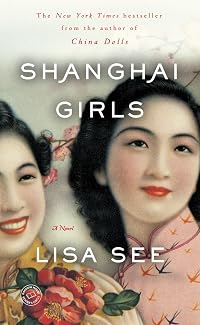
On This Page
Description
NEW YORK TIMES BESTSELLER • “A gifted writer . . . explores the bonds of sisterhood while powerfully evoking the often nightmarish American immigrant experience.”—USA TodayBONUS: This edition contains a Shanghai Girls discussion guide and an excerpt from Lisa See's Dreams of Joy.
In 1937, Shanghai is the Paris of Asia, a city of great wealth and glamour, the home of millionaires and beggars, gangsters and gamblers, patriots and revolutionaries, artists and warlords. Thanks to show more the financial security and material comforts provided by their father’s prosperous rickshaw business, twenty-one-year-old Pearl Chin and her younger sister, May, are having the time of their lives. Though both sisters wave off authority and tradition, they couldn’t be more different: Pearl is a Dragon sign, strong and stubborn, while May is a true Sheep, adorable and placid. Both are beautiful, modern, and carefree . . . until the day their father tells them that he has gambled away their wealth and that in order to repay his debts he must sell the girls as wives to suitors who have traveled from California to find Chinese brides.
As Japanese bombs fall on their beloved city, Pearl and May set out on the journey of a lifetime, one that will take them through the Chinese countryside, in and out of the clutch of brutal soldiers, and across the Pacific to the shores of America. In Los Angeles they begin a fresh chapter, trying to find love with the strangers they have married, brushing against the seduction of Hollywood, and striving to embrace American life even as they fight against discrimination, brave Communist witch hunts, and find themselves hemmed in by Chinatown’s old ways and rules.
At its heart, Shanghai Girls is a story of sisters: Pearl and May are inseparable best friends who share hopes, dreams, and a deep connection, but like sisters everywhere they also harbor petty jealousies and rivalries. They love each other, but each knows exactly where to drive the knife to hurt the other the most. Along the way they face terrible sacrifices, make impossible choices, and confront a devastating, life-changing secret, but through it all the two heroines of this astounding new novel hold fast to who they are: Shanghai girls.
Praise for Shanghai Girls
“A buoyant and lustrous paean to the bonds of sisterhood.”–Booklist
“A rich work . . . as compulsively readable as it is an enlightening journey.”—Denver Post. show less
Tags
Recommendations
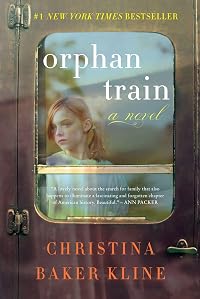
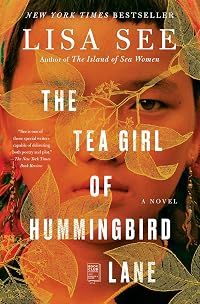
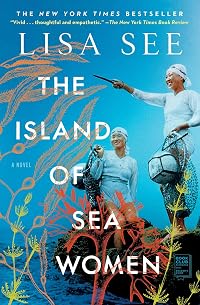
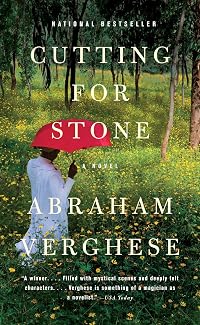





Member Recommendations
Member Reviews
Shanghai Girls is addictive. I could not put it down. Where was this going? I just wanted to know. It’s the story of two sisters, Pearl and May. It starts in 1937 Shanghai. They are two “beautiful girls” having grown up as daughters in the household of a wealthy merchant with several servants. They are in open rebellion to their parent’s tradition bound ways. Their mother even has tightly bound feet. They are modeling for an artist, Z.G., who creates calendars featuring them together. The older sister, Pearl, has gone to college and speaks perfect English as well as the dialects of Shanghai and their family’s traditional region. The younger sister is just graduating High School. They have friends in the International show more Settlement. Shanghai is a British port but the region is already embroiled in the Civil war raging across China. They feel immune and carefree. It’s downhill from here.
One day they learn their father has lost his entire fortune gambling and has sold both of them into arranged marriages. They immediately contemplate running away even as they meet their husbands whose father, living in Los Angeles, has come to China to find wives for his sons. The girls are convinced by their mother that unless they obey they will bring ruin on their entire family. Even though they intend to escape, they briefly comply, hoping they will find a way out. Thus begins a several decade journey with them joined at the hip but going through several layers of degradation.
Unfortunately these include recurring instances of racism and immigration “events”. While we often think of racism impacting Blacks and the notorious Japanese internment there was also the Chinese exclusion act and the similar impacts such as holding cells and restricted covenants. The west coast had more of that than what I knew of. The anti-Communist nightmare of the fifties included China as well as Russia and focused on California’s movies as well as residents. Racism limited what jobs Chinese could aspire to, what schools they could go to, where they could live, where they could eat, who they could marry, what roles they could play, and even who would look at them. In this book we see how this impacted individuals, families, neighborhoods. While today we see the disastrous and inhumane impact of ICE this book shows how these techniques have a long history. Chinese people were picked out just by their looks and needed to carry their papers. When arriving from China they were often processed separately and detained for potentially months in squalid conditions.
Language plays a major role in their story. Besides living in a place where English is spoken it’s also China where different dialects are unintelligible to many of those who speak another dialect. Pearl knows all of the dialects but May hasn’t spent the time to learn anything other than English which she learned in school and the dialect that is spoken in Shanghai. And there’s the dialect that is spoken by the American who speaks a differently. This creates a dynamic where which language is spoken creates a way to include or exclude people, even the INS agents. It adds an interesting layer to the entire story. Like most cultures there are some subjects that can’t be spoken about directly. Here we learn of certain euphemisms that everyone seems to understand. These were used at several points within the story - doing “the husband-wife-thing”, being visited by “the little Red Sister”, and those women described as “three-hole-woman”. No one seems to need these translated.
Another constant feature of this story is references to traditions, white for death, overwhelming preference for male offspring, strict obedience, sayings appropriate to the occasion, elder brother or sister, younger brother or sister, naming conventions, and many more. They use phrases to indicate clans, government, others, and especially foreigners. The book has hundreds of Chinese words and phrases used without translation.
There is one section which is crucial to the entire story but requires substantial suspension of disbelief. While being detained by INS on Angel Island in a cramped room full of other women and children the sisters decide that they have to make everyone believe that Pearl is pregnant and has a child there while it was actually May’s. Yes everyone wanted to maintain their privacy at all costs I just have trouble believing these sisters could have pulled this off. Makes a great story and they work hard to pull it off. And this is not represented as a real story so I had to let it pass. It’s a secret the sisters will never share with anyone else.
The bulk of this book is told from the point of view of the older sister, Pearl. She’s the educated one and May, the younger one, is portrayed as a party girl who doesn’t invest the time to study or learn another dialect. She occasionally comes up with an important point but seeing her as the light weight seems consistent with how Pearl sees her. In a major flip flop May challenges Pearl with a different version of several critical events in their history which Pearl immediately rejects but as May persists she seems to be the one who was seeing clearly rather than Pearl. This makes you wonder, who’s right here? Did we buy the line Pearl? Were we convinced by Pearl when there was a better explanation all along? An excellent twist.
And then there’s Joy, the girl who has grown up believing Pearl is her mother and Sam is her father. She overhears May’s challenge to Pearl. Her entire history is now turned upside down. Joy is now a freshman at University of Chicago and believes that Mao may have the better way for China. She needs to figure all this out. But that’s where we are left.
I strongly recommend this book. show less
One day they learn their father has lost his entire fortune gambling and has sold both of them into arranged marriages. They immediately contemplate running away even as they meet their husbands whose father, living in Los Angeles, has come to China to find wives for his sons. The girls are convinced by their mother that unless they obey they will bring ruin on their entire family. Even though they intend to escape, they briefly comply, hoping they will find a way out. Thus begins a several decade journey with them joined at the hip but going through several layers of degradation.
Unfortunately these include recurring instances of racism and immigration “events”. While we often think of racism impacting Blacks and the notorious Japanese internment there was also the Chinese exclusion act and the similar impacts such as holding cells and restricted covenants. The west coast had more of that than what I knew of. The anti-Communist nightmare of the fifties included China as well as Russia and focused on California’s movies as well as residents. Racism limited what jobs Chinese could aspire to, what schools they could go to, where they could live, where they could eat, who they could marry, what roles they could play, and even who would look at them. In this book we see how this impacted individuals, families, neighborhoods. While today we see the disastrous and inhumane impact of ICE this book shows how these techniques have a long history. Chinese people were picked out just by their looks and needed to carry their papers. When arriving from China they were often processed separately and detained for potentially months in squalid conditions.
Language plays a major role in their story. Besides living in a place where English is spoken it’s also China where different dialects are unintelligible to many of those who speak another dialect. Pearl knows all of the dialects but May hasn’t spent the time to learn anything other than English which she learned in school and the dialect that is spoken in Shanghai. And there’s the dialect that is spoken by the American who speaks a differently. This creates a dynamic where which language is spoken creates a way to include or exclude people, even the INS agents. It adds an interesting layer to the entire story. Like most cultures there are some subjects that can’t be spoken about directly. Here we learn of certain euphemisms that everyone seems to understand. These were used at several points within the story - doing “the husband-wife-thing”, being visited by “the little Red Sister”, and those women described as “three-hole-woman”. No one seems to need these translated.
Another constant feature of this story is references to traditions, white for death, overwhelming preference for male offspring, strict obedience, sayings appropriate to the occasion, elder brother or sister, younger brother or sister, naming conventions, and many more. They use phrases to indicate clans, government, others, and especially foreigners. The book has hundreds of Chinese words and phrases used without translation.
There is one section which is crucial to the entire story but requires substantial suspension of disbelief. While being detained by INS on Angel Island in a cramped room full of other women and children the sisters decide that they have to make everyone believe that Pearl is pregnant and has a child there while it was actually May’s. Yes everyone wanted to maintain their privacy at all costs I just have trouble believing these sisters could have pulled this off. Makes a great story and they work hard to pull it off. And this is not represented as a real story so I had to let it pass. It’s a secret the sisters will never share with anyone else.
The bulk of this book is told from the point of view of the older sister, Pearl. She’s the educated one and May, the younger one, is portrayed as a party girl who doesn’t invest the time to study or learn another dialect. She occasionally comes up with an important point but seeing her as the light weight seems consistent with how Pearl sees her. In a major flip flop May challenges Pearl with a different version of several critical events in their history which Pearl immediately rejects but as May persists she seems to be the one who was seeing clearly rather than Pearl. This makes you wonder, who’s right here? Did we buy the line Pearl? Were we convinced by Pearl when there was a better explanation all along? An excellent twist.
And then there’s Joy, the girl who has grown up believing Pearl is her mother and Sam is her father. She overhears May’s challenge to Pearl. Her entire history is now turned upside down. Joy is now a freshman at University of Chicago and believes that Mao may have the better way for China. She needs to figure all this out. But that’s where we are left.
I strongly recommend this book. show less
Pearl and May Chin were born into a family of wealth and prosperity in 1930′s Shanghai. They are beautiful girls and live a carefree, glamorous life. They love to shop, consider themselves modern, spend lavishly on beautiful silk dresses and often spend their days modeling for local artists.
One day their world comes crashing down on them. Their father has gambled away his rickshaw business and is heavily in debt. To save himself he sells his daughters to an American who wants brides for his sons. The sisters are devastated and have no intention of complying. Before they can make other plans, war with Japan breaks out and amid the atrocities and brutality of the invading soldiers, their only escape is to make their way to America and show more the safety of their new husbands.
Lisa See captured the essence of what it was like to be a stranger, a foreigner, in a new country. I felt the pain along with the sisters of having their world turned upside down, to go from a privileged life to that of an outsider, the need to learn new customs, new language and to tolerate the discrimination against the Chinese that was so prevalent in America. Ultimately this is a story about sisters and their relationships. Pearl and May are so very different and yet at the same time complimentary. I doubt either could be happy without the other.
I enjoy historical novels especially when they are so beautifully written. The wonderful descriptive prose made the story come alive. I listened to the audio version and Janet Song’s narration was a pleasure to listen to. I was captivated by the sisters story and eagerly listened for hours at a time stopping only to change the batteries on my mini mp3 player.
I missed reading this book when it came out a few years ago. I read it now because I want to read the just published Dreams of Joy, Lisa See’s newest novel and the sequel to Shanghai Girls. Highly recommended. show less
One day their world comes crashing down on them. Their father has gambled away his rickshaw business and is heavily in debt. To save himself he sells his daughters to an American who wants brides for his sons. The sisters are devastated and have no intention of complying. Before they can make other plans, war with Japan breaks out and amid the atrocities and brutality of the invading soldiers, their only escape is to make their way to America and show more the safety of their new husbands.
Lisa See captured the essence of what it was like to be a stranger, a foreigner, in a new country. I felt the pain along with the sisters of having their world turned upside down, to go from a privileged life to that of an outsider, the need to learn new customs, new language and to tolerate the discrimination against the Chinese that was so prevalent in America. Ultimately this is a story about sisters and their relationships. Pearl and May are so very different and yet at the same time complimentary. I doubt either could be happy without the other.
I enjoy historical novels especially when they are so beautifully written. The wonderful descriptive prose made the story come alive. I listened to the audio version and Janet Song’s narration was a pleasure to listen to. I was captivated by the sisters story and eagerly listened for hours at a time stopping only to change the batteries on my mini mp3 player.
I missed reading this book when it came out a few years ago. I read it now because I want to read the just published Dreams of Joy, Lisa See’s newest novel and the sequel to Shanghai Girls. Highly recommended. show less
This book is an historical novel which takes place in the early 20th century at a time when Japan overruns China. It is written so well that the information virtually flies off the page and the character's personalities seem real not fictional.
The reader watches as May and Pearl, sisters aged 16 and 19, model for an artist who paints “Beautiful Girl” calendars, watches them as they party at night and feels their sense of adventure and joy, their sense of abandon, and then, ultimately watches them hear their father's tale of woe as he informs them that he has lost everything to gambling debts and must sell them as wives to settle these debts so he can continue to provide for himself, their mother and mentally deficient brother. Their show more carefree life of luxury is suddenly over.
The reader now feels the girl’s shock, bewilderment and ultimate defiance as they suddenly descend into another world of poverty and hardship, no parties, no fun, no room for careless, thoughtless or selfish behavior any longer. As one year follows another, the reader is taken on their journey, experiencing the horrors of war and reeling from the shock of their losses and suffering their tragedies with them. It is not a book that leaves you with many happy thoughts but it is a book that you will find hard to put down until you finish. Although, you will read it in a matter of days and into the night, you will think about it far longer than that. The story stays with you.
As the book moves along, we follow the girls as they quickly lose their innocence trying to survive. We watch them keep trying to climb back up again. Their family secrets and deceptions are revealed. Many, which began in innocence, cause even greater pain and sadness with the passage of time. We watch as one sister deceives the other and brings about tragic consequences because of her naivete and jealousy. Each domino falls, followed by another, causing additional pain. There are so many levels of underlying deceit and corruption touching the lives of these characters that the truth and lies merge into a seamless pattern, making it hard to distinguish one from the other.
It is a book about family obligations, love, jealousy, hate and discrimination with all the accompanying inequities. It is a book about the miseries of war with its rape, torture and death in its quest for power and control. It is a book about the acceptance of one's fate based on one's history and ancestry.
The main characters face a constant battle to overcome all of the obstacles placed in their way. This book cries out for a sequel because it leaves many unanswered questions about the ultimate fate of the three main female characters, Joy, Pearl and May. I, for one, am hoping for a sequel soon! show less
The reader watches as May and Pearl, sisters aged 16 and 19, model for an artist who paints “Beautiful Girl” calendars, watches them as they party at night and feels their sense of adventure and joy, their sense of abandon, and then, ultimately watches them hear their father's tale of woe as he informs them that he has lost everything to gambling debts and must sell them as wives to settle these debts so he can continue to provide for himself, their mother and mentally deficient brother. Their show more carefree life of luxury is suddenly over.
The reader now feels the girl’s shock, bewilderment and ultimate defiance as they suddenly descend into another world of poverty and hardship, no parties, no fun, no room for careless, thoughtless or selfish behavior any longer. As one year follows another, the reader is taken on their journey, experiencing the horrors of war and reeling from the shock of their losses and suffering their tragedies with them. It is not a book that leaves you with many happy thoughts but it is a book that you will find hard to put down until you finish. Although, you will read it in a matter of days and into the night, you will think about it far longer than that. The story stays with you.
As the book moves along, we follow the girls as they quickly lose their innocence trying to survive. We watch them keep trying to climb back up again. Their family secrets and deceptions are revealed. Many, which began in innocence, cause even greater pain and sadness with the passage of time. We watch as one sister deceives the other and brings about tragic consequences because of her naivete and jealousy. Each domino falls, followed by another, causing additional pain. There are so many levels of underlying deceit and corruption touching the lives of these characters that the truth and lies merge into a seamless pattern, making it hard to distinguish one from the other.
It is a book about family obligations, love, jealousy, hate and discrimination with all the accompanying inequities. It is a book about the miseries of war with its rape, torture and death in its quest for power and control. It is a book about the acceptance of one's fate based on one's history and ancestry.
The main characters face a constant battle to overcome all of the obstacles placed in their way. This book cries out for a sequel because it leaves many unanswered questions about the ultimate fate of the three main female characters, Joy, Pearl and May. I, for one, am hoping for a sequel soon! show less
Pearl and May are young women growing up at a time just after foot binding was banned and arranged marriages seemed to be heading in the same direction. It was the 1930s in Shanghai, the Paris of the Orient. Pearl is oldest sister and college educated, but May has the love of her parents. She is prettier, has a gorgeous complexion, and can seemingly get away with murder. Pearl takes her role as being the oldest sister seriously and tries not to let her jealousy of May come between them. They are not traditional Chinese women anyway. They are out all night posing as Beautiful Girls. Their painted images used to sell anything and they live as if they own Shanghai. They do until their father's gambling debts force him to sell them into show more arranged marriages to a man whose sons lived in America. At the same time, the Japanese attack Shanghai, shattering their hope completely. They need to discover if they are more than simply Beautiful Girls, able to survive whatever fate life brings them.
Shanghai Girls is in equal parts a novel about Chinese life and immigration and the bond between sisters. Just as in Snow Flower and the Secret Fan, Lisa See's work brings Chinese history, particularly as it relates to women, to life. In this novel, women have more freedom and options under the Republic than they had previously, at least for those women living in as cosmopolitan a place as Shanghai. While these changes are for the good, they bring about additional stress within families. This change in culture is so apparent in the opening scenes with Pearl, May, and their parents. It was interesting to watch their attitudes and beliefs evolve with their life experiences. Still, when you take away the Beautiful Girls, their heritage, and the environments in which they live, you are sisters. They grew up in the same house with the same parents and they each notice anything and everything that is not the same. Who has a sibling and doesn't do that? What I found exceptional about these particular sisters is how they loved each other so fiercely despite the jealousies and resentments that accumulate over time. They each take their roles as older and younger sister every bit as seriously as their culture once dictated.
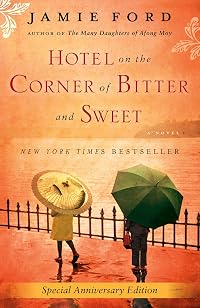
War makes up a great part of Shanghai Girls. Pearl and May's time as Beautiful Girls would have come to an end at the hands of the Japanese during World War II if it hadn't been because of their father's weaknesses. This perspective of China under attack is something I haven't read about before. Even before the war, the scene with the girls stepping over a baby that had been left to die on the street was sickening. When war broke out, it was that much more fascinating and horrific. The fear and chaos came across so clearly in Pearl and May's reactions to all that they witnessed and survived. As this tied in to the girls' experiences in Los Angeles as immigrants, I was reminded of Hotel on the Corner of Bitter and Sweet. These novels would go together quite well if one wanted to explore the experiences of Chinese immigrants in the United States during WWII.
After reading Snow Flower and the Secret Fan, I bought Peony in Love very quickly. I loved Snow Flower so much that I kept looking at my copy of Peony in Love with longing nearly every time I looked through my bookshelf. I didn't have to think very hard when I was asked to take part in this tour. I wanted and needed the excuse to pick up another of Lisa See's books. I was not disappointed in the least. Although there was much sorrow and darkness to this novel, I could not tear myself away. There was one scene in particular between Pearl and her mother which will remain with me for a very long time. It brought tears to my eyes and made me feel lucky to be alive, which is saying quite a lot under the circumstances. I fully connected to this novel as a sister, a woman, and as a human being. My only regret was not being able to make time with this book during the holidays in time to send questions to the author. She remains one of my favorite modern authors. show less
Shanghai Girls is in equal parts a novel about Chinese life and immigration and the bond between sisters. Just as in Snow Flower and the Secret Fan, Lisa See's work brings Chinese history, particularly as it relates to women, to life. In this novel, women have more freedom and options under the Republic than they had previously, at least for those women living in as cosmopolitan a place as Shanghai. While these changes are for the good, they bring about additional stress within families. This change in culture is so apparent in the opening scenes with Pearl, May, and their parents. It was interesting to watch their attitudes and beliefs evolve with their life experiences. Still, when you take away the Beautiful Girls, their heritage, and the environments in which they live, you are sisters. They grew up in the same house with the same parents and they each notice anything and everything that is not the same. Who has a sibling and doesn't do that? What I found exceptional about these particular sisters is how they loved each other so fiercely despite the jealousies and resentments that accumulate over time. They each take their roles as older and younger sister every bit as seriously as their culture once dictated.
War makes up a great part of Shanghai Girls. Pearl and May's time as Beautiful Girls would have come to an end at the hands of the Japanese during World War II if it hadn't been because of their father's weaknesses. This perspective of China under attack is something I haven't read about before. Even before the war, the scene with the girls stepping over a baby that had been left to die on the street was sickening. When war broke out, it was that much more fascinating and horrific. The fear and chaos came across so clearly in Pearl and May's reactions to all that they witnessed and survived. As this tied in to the girls' experiences in Los Angeles as immigrants, I was reminded of Hotel on the Corner of Bitter and Sweet. These novels would go together quite well if one wanted to explore the experiences of Chinese immigrants in the United States during WWII.
After reading Snow Flower and the Secret Fan, I bought Peony in Love very quickly. I loved Snow Flower so much that I kept looking at my copy of Peony in Love with longing nearly every time I looked through my bookshelf. I didn't have to think very hard when I was asked to take part in this tour. I wanted and needed the excuse to pick up another of Lisa See's books. I was not disappointed in the least. Although there was much sorrow and darkness to this novel, I could not tear myself away. There was one scene in particular between Pearl and her mother which will remain with me for a very long time. It brought tears to my eyes and made me feel lucky to be alive, which is saying quite a lot under the circumstances. I fully connected to this novel as a sister, a woman, and as a human being. My only regret was not being able to make time with this book during the holidays in time to send questions to the author. She remains one of my favorite modern authors. show less
Pearl and May are Shanghai girls, beautiful girls, modern girls, privileged girls...until, they're not. Their mother has told them many times, "There are no happy endings" (5). But they had no experience to the contrary until their father informs them he has lost all of the family money and they now have arranged marriages, despite the fact that they are modern girls in 1930s China. Yet, even while obeying her father,. Yet, Pearl is a Dragon, and she must take care of her Sheep sister. As she says, ""A Dragon doesn't surrender. A Dragon fights fate..Mama's voice comes floating to me, reciting one of her favorite sayings, 'There is no catastrophe except death; one cannot be poorer than a beggar.' I want--need--to do something braver and show more finer than dying" (82-83).
Shanghai Girls is the story of Pearl and May and their life journey together--from the loss of their untroubled life in Shanghai to bottomless troubles in Shanghai during the Japanese occupation to their protracted detainment on Angel Island to their eventual settlement in Hollywood and LA where they are constantly discriminated against and viewed with suspicion. Through each life experience and transition, the sisters survive by drawing on their unbreakable bond and their love for each other. As May tells Pearl, "When our hair is white, we'll still have our sister love" (309).
The ending felt a bit abrupt, largely because I wanted to keep reading until the completion of Pearl's and May's stories. But a story has to end at some point, and, overall, Shanghai Girls is a gripping story well worth reading--full of life triumphs and tragedies, gains and loss, love and hate. It's also a vivid window into Chinese culture during the historical period it covers. Shanghai Girls is a beautifully written work of fiction about two beautiful girls, and fans of See's other works will not be disappointed.
Note: This review is based on an Advance Reader's Edition received as a part of the Library Thing Early Reviewer's Program. show less
Shanghai Girls is the story of Pearl and May and their life journey together--from the loss of their untroubled life in Shanghai to bottomless troubles in Shanghai during the Japanese occupation to their protracted detainment on Angel Island to their eventual settlement in Hollywood and LA where they are constantly discriminated against and viewed with suspicion. Through each life experience and transition, the sisters survive by drawing on their unbreakable bond and their love for each other. As May tells Pearl, "When our hair is white, we'll still have our sister love" (309).
The ending felt a bit abrupt, largely because I wanted to keep reading until the completion of Pearl's and May's stories. But a story has to end at some point, and, overall, Shanghai Girls is a gripping story well worth reading--full of life triumphs and tragedies, gains and loss, love and hate. It's also a vivid window into Chinese culture during the historical period it covers. Shanghai Girls is a beautifully written work of fiction about two beautiful girls, and fans of See's other works will not be disappointed.
Note: This review is based on an Advance Reader's Edition received as a part of the Library Thing Early Reviewer's Program. show less
 This review was written for LibraryThing Early Reviewers.
Lisa See completely transcends genre with her newest novel [Shanghai Girls].
Individual identity is a tricky thing. Are we the product of an ethnicity? A nation? A family? A sign of the Zodiac? A name? Can a collection of personal traits, from appearance to abilities, adequately define a person or direct their path in life?
From one angle, See’s novel is obviously a reduction of the Chinese experience, from the streets of Shanghai at its pinnacle as the Paris of Asia, to the Japanese invasion of China, to an immigration camp on Angel Island in Northern California, and, finally, to the spread of Communism and its shadow on Chinatown in 1950s Los Angeles. All of these places and events, as viewed by Pearl, the story’s narrator, are like show more prisms in a constantly shifting kaleidoscope, and with each twist she finds a new perspective on her place in the world.
With its colorful packaging and feminine title, some readers might pass over this novel, pigeonholing it as vapid chick lit. But [Shanghai Girls] is a rare novel, offering something for a wide range of readers. Like Margaret Atwood’s [The Handmaid’s Tale], [Shanghai Girls] manages true feminist values without overdosing on estrogen. See calmly tells Pearl’s story in the context of a broader, more complicated world, where women and men alike struggle to establish and maintain their identities.
5 bones!!!! show less
Individual identity is a tricky thing. Are we the product of an ethnicity? A nation? A family? A sign of the Zodiac? A name? Can a collection of personal traits, from appearance to abilities, adequately define a person or direct their path in life?
From one angle, See’s novel is obviously a reduction of the Chinese experience, from the streets of Shanghai at its pinnacle as the Paris of Asia, to the Japanese invasion of China, to an immigration camp on Angel Island in Northern California, and, finally, to the spread of Communism and its shadow on Chinatown in 1950s Los Angeles. All of these places and events, as viewed by Pearl, the story’s narrator, are like show more prisms in a constantly shifting kaleidoscope, and with each twist she finds a new perspective on her place in the world.
With its colorful packaging and feminine title, some readers might pass over this novel, pigeonholing it as vapid chick lit. But [Shanghai Girls] is a rare novel, offering something for a wide range of readers. Like Margaret Atwood’s [The Handmaid’s Tale], [Shanghai Girls] manages true feminist values without overdosing on estrogen. See calmly tells Pearl’s story in the context of a broader, more complicated world, where women and men alike struggle to establish and maintain their identities.
5 bones!!!! show less
I find that Lisa See's novels are both comforting and challenging, with their blending of historical events and fictional characters. In this one, sisters Pearl and May are living middle class lives in 1937 Shanghai and enjoying their notoriety as "beautiful girls", models for calendars and magazine covers, until their father gambles away the family's funds and status. He then sells the sisters to a Chinese family living in Los Angeles as wives for two sons. The girls ignore their circumstances until the Japanese invade the city, and they abandon their father and try to escape to Hong Kong with their mother, but they are discovered by Japanese soldiers and Pearl and her mother are brutally raped and their mother murdered. May manages to show more rescue them and they embark on their journey to the US, landing at Angel Island in San Francisco Bay. The second half of the novel has them becoming wives, sharing a beloved daughter, and becoming part of the Hollywood scene as extras - and most importantly, dealing with government agents who try to deport them back to what is now Communist China. It's a broad landscape with moments of tragic horrors and small triumphs. show less
Members
- Recently Added By
Published Reviews
ThingScore 75
Lisa See’s “Shanghai Girls” is much loftier than its cover art’s stunning portrait of beautifully adorned Asian women. The author of “Snow Flower and the Secret Fan” has written a broadly sweeping tale...
added by Shortride
Lists

Best Fiction Set in China
43 works; 27 members

The Immigrant's Stories
74 works; 19 members

Best Books With Sisters
130 works; 30 members

Women in War
148 works; 30 members

Best family sagas
244 works; 34 members

Books Set in California
112 works; 15 members

Expand Your Reading Demographics!
47 works; 15 members

Mothers and Daughters
114 works; 11 members

Urban Fiction
74 works; 7 members

Books Read in 2016
4,666 works; 199 members

Books Set in San Francisco
31 works; 8 members

Asian American Literature
46 works; 6 members

Books With Place Names in the Title
257 works; 11 members

Asia
178 works; 7 members

High School Novels about Immigration
40 works; 1 member

Top Five Books of 2025
954 works; 303 members
Author Information

21+ Works 33,205 Members
Lisa See was born in Paris but grew up in Los Angeles, spending much of her time in Chinatown. She is of Chinese decent. Her first book, On Gold Mountain: The One Hundred Year Odyssey of My Chinese-American Family (1995), was a national bestseller and a New York Times Notable Book. The book traces the journey of Lisa's great-grandfather, Fong See. show more Her first fiction novel, Flower Net (1997) was a national bestseller, a New York Times Notable Book, and on the Los Angeles Times Best Books List for 1997. Flower Net was also nominated for an Edgar award for best first novel. In addition to writing books, Ms. See was the Publishers Weekly West Coast Correspondent for 13 years. Her bestselling novels, all inspired by her Chinese heritage, include Snow Flower and the Secret Fan, A Peony in Love, Shanghi Girls, Dreams of Joy and China Dolls. Among her awards and recognitions are the Organization of Chinese Americans Women's 2001 award as National Woman of the Year and the 2003 History Makers Award presented by the Chinese American Museum. See serves as a Los Angeles City Commissioner. (Bowker Author Biography) show less
Awards and Honors
Series

Work Relationships
Common Knowledge
- Canonical title
- Shanghai Girls
- Original title
- Shanghai girls
- Original publication date
- 2009-05-26
- People/Characters
- Pearl Chin; May Chin; Sam Louie; Z.G. Li; Betsy Howell; Baba (show all 14); Mama; Vern Louie; Joy Louie; Old Man Louie; Vernon Louie; Joy; Yen-yen Louie; Tom Gubbins
- Important places
- Shanghai, China; San Francisco, California, USA; Los Angeles, California, USA
- Important events
- Battle of Shanghai (1937); World War II; Second Sino-Japanese War
- Related movies
- The Good Earth (1937 | IMDb)
- Dedication
- For my cousin Leslee Leong, my cohort in memory keeping.
- First words
- 'Our daughter looks like a South China peasant with those red cheeks,' my father complains, pointedly ignoring the soup before him. 'Can't you do something about them?'
- Last words
- (Click to show. Warning: May contain spoilers.)Because somehow, some way, I'm going to find Joy, and I'm going to bring my daughter, our daughter, home to my sister and me.
- Original language*
- Amerikanisch
*Some information comes from Common Knowledge in other languages. Click "Edit" for more information.
Classifications
Statistics
- Members
- 5,049
- Popularity
- 2,763
- Reviews
- 324
- Rating
- (3.80)
- Languages
- 12 — Arabic, Catalan, Czech, Danish, Dutch, English, Finnish, French, German, Italian, Russian, Spanish
- Media
- Paper, Audiobook, Ebook
- ISBNs
- 47
- ASINs
- 12
