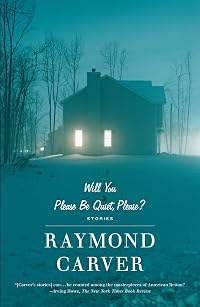
Will You Please Be Quiet, Please?: Stories
by Raymond Carver
On This Page
Description
With this, his first collection of stories, Raymond Carver breathed new life into the American short story and instantly became both the recognized master of the form and one of our best-loved and most widely read fiction writers. Carver shows us the humor and tragedy that dwell in the hearts of ordinary people; his stories are the classics of our time.Tags
Recommendations




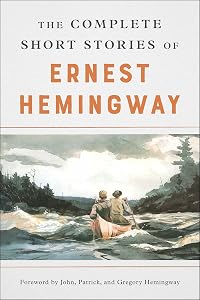
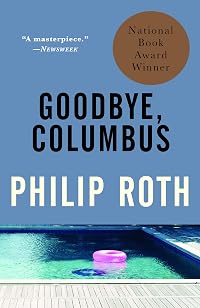
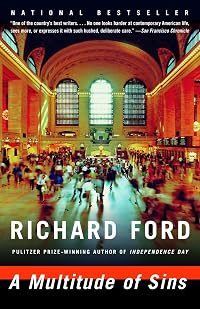
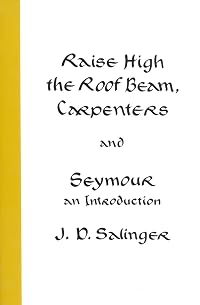


Member Recommendations

Member Reviews
Reading this collection of short stories had me thinking of two other authors: Hemingway, for his iceberg principle; and Bukowski, for his grunginess. Not like Kerouac, for there is a definite late 1960s/early 1970s feel to the characters and situations, and not quite as grungy as Bukowski, but certainly Hemingway-esque in the way the story doesn't leave you for some time after reading. I think, too, that Carver's work does to the imagination what Hemingway's iceberg principle does, but on steroids.
Hemingway left enough for the imagination, and at times I would read commentary on his work and discover something I had missed. But with Carver, I have read commentaries that envision his stories as they are written. In many, I found my show more imagination unresolved, wondering what happened next, what was meant, but delightfully bewildered all the same.
I knew little about Carver and chose the book because I like the Vintage Classics series. After reading, I went to The Paris Review and the Poetry Foundation to see what else I could learn about Carver. From his late interviews, he appears rather Stoic (as opposed to stoic) in his philosophy, and humble in that he worked for most of his life and only achieved fame much later.
I was also impressed by his gratitude towards his partner, fellow poet Tess Gallagher, who would read and provide feedback on Carver's work after the fourth draft. Gallagher is now in her mid-70s and has a book of poetry to be released in 2019.
I recall Scott Fitzgerald commenting that nobody wanted to read about poor people, but Carver writes about lower-middle class people who end up realising that they won't ever really get ahead. I could feel the grunge from my 1970s childhood in his stories, even though geographically I was on the other side of the world and so young.
What I like about Carver's work is that it takes me back to a time that is somewhat familiar, and much harder to glorify. Conversely, Hemingway's era was so long ago that it is all new. Carver's era has a touch of sentimentality (for me), but his subjects are such that there is less nostalgia, more "things are different now yet somehow the same".
Carver's subjects are not rags to riches or riches to rags stories; they are people striving to be more than they are and then becoming bankrupt or divorced or alcoholic or just downright strange as they do what they do. There is no real political statement in his work, rather a social commentary, stemming from his own upbringing.
These are wonderful stories and I enjoyed the way Carver makes my imagination work, even to the point of frustration. I also like that there is no way to find out what he really meant - he meant for the reader to reach their own conclusion.
This work would have made my day in high school English. Whenever we were asked what the author meant in a particular work, I would become frustrated with the teacher telling us and say something like "How are we supposed to know that. Did you ask them?" I've heard this same rot from my students!
But there appears to be an absence of hidden meaning and morality in Carver's work. In his own words, literature is "superior amusement", and maybe with a hint of spirituality. I found the grunginess of the stories frighteningly familiar, as if all of my embarrassing failures in life had been recorded and put into a collection of short stories.
That, I believe is what Carver does best. He captures the lives of ordinary battlers and uses his experiences and the stories he has heard from others as the baseline for a work of fiction, fiction that is true enough to be real but fictional enough not to be true.
If ever there was a genre that combined Hemingway's and Bukowski's styles, then this is it. Apparently, Carver didn't like his style being referred to as "minimalist". I wonder how he would feel about "grunge iceberg"? show less
Hemingway left enough for the imagination, and at times I would read commentary on his work and discover something I had missed. But with Carver, I have read commentaries that envision his stories as they are written. In many, I found my show more imagination unresolved, wondering what happened next, what was meant, but delightfully bewildered all the same.
I knew little about Carver and chose the book because I like the Vintage Classics series. After reading, I went to The Paris Review and the Poetry Foundation to see what else I could learn about Carver. From his late interviews, he appears rather Stoic (as opposed to stoic) in his philosophy, and humble in that he worked for most of his life and only achieved fame much later.
I was also impressed by his gratitude towards his partner, fellow poet Tess Gallagher, who would read and provide feedback on Carver's work after the fourth draft. Gallagher is now in her mid-70s and has a book of poetry to be released in 2019.
I recall Scott Fitzgerald commenting that nobody wanted to read about poor people, but Carver writes about lower-middle class people who end up realising that they won't ever really get ahead. I could feel the grunge from my 1970s childhood in his stories, even though geographically I was on the other side of the world and so young.
What I like about Carver's work is that it takes me back to a time that is somewhat familiar, and much harder to glorify. Conversely, Hemingway's era was so long ago that it is all new. Carver's era has a touch of sentimentality (for me), but his subjects are such that there is less nostalgia, more "things are different now yet somehow the same".
Carver's subjects are not rags to riches or riches to rags stories; they are people striving to be more than they are and then becoming bankrupt or divorced or alcoholic or just downright strange as they do what they do. There is no real political statement in his work, rather a social commentary, stemming from his own upbringing.
These are wonderful stories and I enjoyed the way Carver makes my imagination work, even to the point of frustration. I also like that there is no way to find out what he really meant - he meant for the reader to reach their own conclusion.
This work would have made my day in high school English. Whenever we were asked what the author meant in a particular work, I would become frustrated with the teacher telling us and say something like "How are we supposed to know that. Did you ask them?" I've heard this same rot from my students!
But there appears to be an absence of hidden meaning and morality in Carver's work. In his own words, literature is "superior amusement", and maybe with a hint of spirituality. I found the grunginess of the stories frighteningly familiar, as if all of my embarrassing failures in life had been recorded and put into a collection of short stories.
That, I believe is what Carver does best. He captures the lives of ordinary battlers and uses his experiences and the stories he has heard from others as the baseline for a work of fiction, fiction that is true enough to be real but fictional enough not to be true.
If ever there was a genre that combined Hemingway's and Bukowski's styles, then this is it. Apparently, Carver didn't like his style being referred to as "minimalist". I wonder how he would feel about "grunge iceberg"? show less
Working my way through the canon. Raymond Carver is one of the most pre-eminent writers of the past century, ranking alongside Hemingway, Chekhov and Cheever as a master of the short story. (And also as one of the key figures giving rise to the romanticism of the alcoholic author, along with Hemingway and Kingsley Amis.) Will You Please Be Quiet, Please is his first collection of short fiction, published in 1976.
Carver, again like Hemingway, is famous for having a fairly bare style. I’m not a fan of this. I’m OK with it when Hemingway uses it to describe lion hunting in Africa and skiing in Switzerland, but not so much when Carver uses it to describe unhappy middle-class couples in mid-century America having evasive conversations. I show more like short stories to have either a vivid, baroque writing style, or an interesting plot, or ideally both. Carver sadly checks neither box. Will You Please Be Quiet, Please has a few stories in it that piqued my interest – specifically “Jerry, Molly and Sam,” about a father driving his kids’ dog out into the middle of nowhere and abandoning it, and “Are These Actual Miles?”, about a man in financial trouble who suspects his wife of infidelity – but for the most part I found them formulaic and somewhat empty; brimming with dull moments of epiphany. I half-suspect whoever wrote the Wikipedia page for this collection is taking the piss; consider this synopsis for the story “How About This:”
A couple comes to look at the woman’s father’s deserted place in the country. Maybe they will move there.
It’s all well and good to cite the Iceberg Theory and have a story where much remains unsaid and you have to read between the lines, but I don’t have much inclination to do so in stories about struggling relationships (and more than half the stories in here are about struggling relationships) with bitter comments made in restaurants and living rooms. I don’t really feel like googling an analysis of a story after I’ve read it. This collection often feels like it comprises of stories made to be dissected in a classroom discussion, rather than to be read, appreciated and enjoyed. show less
Carver, again like Hemingway, is famous for having a fairly bare style. I’m not a fan of this. I’m OK with it when Hemingway uses it to describe lion hunting in Africa and skiing in Switzerland, but not so much when Carver uses it to describe unhappy middle-class couples in mid-century America having evasive conversations. I show more like short stories to have either a vivid, baroque writing style, or an interesting plot, or ideally both. Carver sadly checks neither box. Will You Please Be Quiet, Please has a few stories in it that piqued my interest – specifically “Jerry, Molly and Sam,” about a father driving his kids’ dog out into the middle of nowhere and abandoning it, and “Are These Actual Miles?”, about a man in financial trouble who suspects his wife of infidelity – but for the most part I found them formulaic and somewhat empty; brimming with dull moments of epiphany. I half-suspect whoever wrote the Wikipedia page for this collection is taking the piss; consider this synopsis for the story “How About This:”
A couple comes to look at the woman’s father’s deserted place in the country. Maybe they will move there.
It’s all well and good to cite the Iceberg Theory and have a story where much remains unsaid and you have to read between the lines, but I don’t have much inclination to do so in stories about struggling relationships (and more than half the stories in here are about struggling relationships) with bitter comments made in restaurants and living rooms. I don’t really feel like googling an analysis of a story after I’ve read it. This collection often feels like it comprises of stories made to be dissected in a classroom discussion, rather than to be read, appreciated and enjoyed. show less
I find these stories to be very unsettling. That’s good I guess? I’m not sure if I get anything from them. They kind of make me feel bad. So I kind of admire the artistry there. Not really sure what the point is. I don’t like the characters, but I feel sorry for them. Very confusing.
Read Carver's collections in reverse order. My understanding is that this was his first collection. I can see a maturity of sorts in Cathedral, which came later but this collection is incredible, too. "Put Yourself in My Shoes" is extraordinary. It's given me a lot to think about and I love the devices employed: story within story. "Please Will You Be Quiet, Please?" the final story - phew! So glad I discovered this guy. Man, what talent.
I just finished [b:Will You Please Be Quiet, Please?|11446|Will You Please Be Quiet, Please?|Raymond Carver|http://photo.goodreads.com/books/1166476709s/11446.jpg|1038760] by Raymond Carver. I'm dovetailed reading Carver with reading the biography the came out last year, [b:Raymond Carver: A Writer's Life|5789689|Raymond Carver A Writer's Life|Carol Sklenicka|http://photo.goodreads.com/books/1274275666s/5789689.jpg|5961634]by Carol Sklenicka.
I must say, I really am finding Carver to be a kindred spirit. I remember those desperate days of my youth when I was a student, lived on a shoestring, and moved house frequently. These early stories mostly concern married couples in that condition, or people transgressing societal boundaries. show more Restless people trying to eke out their version of the American Dream.
Each of these stories, in and of itself, could give a book group enough to chew on over a couple hours of dinner conversation. The endings are invariably ambiguous enough to be susceptible to several different interpretations. All of the stories will leave you feeling uneasy. Some are downright creepy.
The title story is the longest one in the book. In it, a husband and wife have been living with an elephant in the room for several years: the specter of the wife's possible infidelity and the husband's violent reaction to that possibility. When the infidelity is finally revealed, the husband sets out one night's odyssey before he decides what to do about the new information he's gained. I use the term "odyssey" advisedly, as there are echoes of both Odysseus and Leopold Bloom here, although here an epic is presented in a clean twenty pages.
I look forward to watching Carver continue to master the shirt story form. show less
I must say, I really am finding Carver to be a kindred spirit. I remember those desperate days of my youth when I was a student, lived on a shoestring, and moved house frequently. These early stories mostly concern married couples in that condition, or people transgressing societal boundaries. show more Restless people trying to eke out their version of the American Dream.
Each of these stories, in and of itself, could give a book group enough to chew on over a couple hours of dinner conversation. The endings are invariably ambiguous enough to be susceptible to several different interpretations. All of the stories will leave you feeling uneasy. Some are downright creepy.
The title story is the longest one in the book. In it, a husband and wife have been living with an elephant in the room for several years: the specter of the wife's possible infidelity and the husband's violent reaction to that possibility. When the infidelity is finally revealed, the husband sets out one night's odyssey before he decides what to do about the new information he's gained. I use the term "odyssey" advisedly, as there are echoes of both Odysseus and Leopold Bloom here, although here an epic is presented in a clean twenty pages.
I look forward to watching Carver continue to master the shirt story form. show less
Reading Carver is like finding money you unknowingly misplaced while looking for something else. It's great but it happens so rarely it's wiser not to expect it and just be pleasantly surprised when it does happen.
Stories in here that feel like that: The Collectors, Put Yourself in my Shoes
Stories in here that feel like that: The Collectors, Put Yourself in my Shoes
I finished this book last year but just got the mood to do its review. This compilation is my second Carver, but I personally prefer the stories in "What We Talk About When We Talk About Love." His writing style in this still top-notch, he wrote it with his own rules. And just like other Carver's book, it perfectly tells us there's more about mundane life than what it seems. Sometimes I don't know which way the story will actually end, but that's how real life is. Each of their stories speaks up to me, making me want to re-read it and write the analysis in the future.
Members
- Recently Added By
Published Reviews
ThingScore 75
In Raymond Carver's mechanistic universe there is such an economy of equilibrium that the slightest act may slip a cog and break down the whole machine. He works meticulously, fitting the pieces in place, squinting at each fact in the chain through a jeweler's eyepiece. Then, suddenly, he opens a door a crack, lighting up a whole room.
added by Shortride
Lists

National Book Award Finalists - Fiction
377 works; 12 members

1970s
657 works; 23 members

E's Reader
30 works; 1 member

A Good Read (Radio 4)
287 works; 1 member

Fiction: Classics, Literary, Short Stories
85 works; 1 member

Blue Pyramid 1,276 Best Books of All Time
1,248 works; 32 members
Author Information

208+ Works 20,719 Members
Born in 1938 in an Oregon logging town, Raymond Carver grew up in Yakima, From California he went to Iowa to attend the Iowa Writers Workshop. Soon, however, he returned to California, where he worked at a number of unskilled jobs before obtaining a teaching position. Widely acclaimed as the most important short story writer of his generation, show more Carver writes about the kind of lower-middle-class people whom he knew growing up. His characters are waitresses, mechanics, postmen, high school teachers, factory workers, door-to-door salesmen who lead drab lives because of limited funds. Critics have said that may have the most distinctive vision of the working class. Nominated posthumously for both a National Book Critics Circle Award (1988) and a Pulitzer Prize (1989) for Where I'm Calling From: New and Selected Stories (1988), Carver is one of a handful of writers credited with reviving the short story form. Some have put Carver in the tradition of Ernest Hemingway and Stephen Crane. Carver's stories tend to be brief, with enigmatic endings, although never erupting. Violence is often just below the surface. An air of quiet desperation pervades his stories, as Carver explores the collapse of human relationships in bleak circumstances. In later works, Carver strikes a note of redemption, unheard at the beginning of his career. But for readers who are not attuned to Carver's voice of resignation, these moments may sound sentimental and unconvincing. Carver died of lung cancer in 1988. (Bowker Author Biography) show less
Some Editions
Awards and Honors
Awards
Series
Belongs to Publisher Series
Compactos Anagrama (152)
Harvill (204)
Work Relationships
Contains
Common Knowledge
- Canonical title*
- Vuoi stare zitta per favore?
- Original title
- Will you please be quiet, please?
- Original publication date
- 1976
- Dedication
- This book is for Maryann
- Disambiguation notice
- Please distinguish this Raymond Carver short story collection, Will You Please Be Quiet, Please? Stories (1976), from the short story of the same title, "Will You Please Be Quiet, Please?"
*Some information comes from Common Knowledge in other languages. Click "Edit" for more information.
Classifications
Statistics
- Members
- 2,092
- Popularity
- 9,872
- Reviews
- 22
- Rating
- (4.11)
- Languages
- 13 — Czech, Dutch, English, French, German, Italian, Japanese, Korean, Norwegian (Bokmål), Portuguese, Croatian, Spanish, Turkish
- Media
- Paper, Audiobook, Ebook
- ISBNs
- 43
- UPCs
- 1
- ASINs
- 10