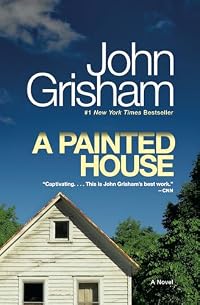
A Painted House
by John Grisham
On This Page
Description
#1 NEW YORK TIMES BESTSELLER • Until that September of 1952, Luke Chandler had never kept a secret or told a single lie. But in the long, hot summer of his seventh year, two groups of migrant workers — and two very dangerous men — came through the Arkansas Delta to work the Chandler cotton farm. And suddenly mysteries are flooding Luke’s world.A brutal murder leaves the town seething in gossip and suspicion. A beautiful young woman ignites forbidden passions. A fatherless baby is show more born ... and someone has begun furtively painting the bare clapboards of the Chandler farmhouse, slowly, painstakingly, bathing the run-down structure in gleaming white. And as young Luke watches the world around him, he unravels secrets that could shatter lives — and change his family and his town forever.... show less
Tags
Recommendations


Member Recommendations

Member Reviews
Pleasant enough, but it needs something else to offset the endless, grinding, back-breaking rural nostalgia. If it had been written 50 years earlier it would have been a wonderful starting point for a Rogers and Hammerstein musical.
Obviously, if you have a story with a child narrator set in the rural southern US, you are expecting poverty, prejudice, rape, murder, and miscarriages of justice. Or some kind of melodramatic climax, anyway. This book does have its moments, it's true, but they all seem to fizzle out rather: Nothing that happens in the story really has any serious consequences for the main characters. Life goes on, there'll be another church picnic next year, and the Cardinals will have another crack at winning the baseball show more competition. That's pretty much how real life works, but transferred to fiction it's rather dull. It's a bit strange to have something that looks as though it's meant to be a coming-of-age novel, but where the characters don't develop at all in the course of the story. Young Luke is just as worldly-wise at the beginning as he is at the end.
A child narrator automatically implies that the author has to cheat a bit to get the right mix of immature perception and adult hindsight, so that we believe it's really a child talking to us, but get a story that is interesting enough to retain the attention of an adult reader over a few hundred pages. Grisham evidently doesn't have the Harper Lee touch, and entirely fails to make Luke a plausible seven-year-old. Eleven or twelve he might just get away with, but even allowing for the fact that we're talking tough kids in the depths of the countryside, seven is just too young for the voice Luke talks to us in. show less
Obviously, if you have a story with a child narrator set in the rural southern US, you are expecting poverty, prejudice, rape, murder, and miscarriages of justice. Or some kind of melodramatic climax, anyway. This book does have its moments, it's true, but they all seem to fizzle out rather: Nothing that happens in the story really has any serious consequences for the main characters. Life goes on, there'll be another church picnic next year, and the Cardinals will have another crack at winning the baseball show more competition. That's pretty much how real life works, but transferred to fiction it's rather dull. It's a bit strange to have something that looks as though it's meant to be a coming-of-age novel, but where the characters don't develop at all in the course of the story. Young Luke is just as worldly-wise at the beginning as he is at the end.
A child narrator automatically implies that the author has to cheat a bit to get the right mix of immature perception and adult hindsight, so that we believe it's really a child talking to us, but get a story that is interesting enough to retain the attention of an adult reader over a few hundred pages. Grisham evidently doesn't have the Harper Lee touch, and entirely fails to make Luke a plausible seven-year-old. Eleven or twelve he might just get away with, but even allowing for the fact that we're talking tough kids in the depths of the countryside, seven is just too young for the voice Luke talks to us in. show less
I'm a big fan of Grisham and have read almost all of his works, but I
wasn't too excited about the three that he's written (so far) that move away
from his established territory of the legal thriller. Last month I read
"Bleachers." This week I finally got around to reading "A Painted House."
I bought it in paperback, which is unusual for me and a Grisham book. I
usually buy them hot off the press.
This one is a quiet tale, the story of a poor cotton farming family in
Arkansas in 1952. It is told from the perspective of a 7 year old boy, son
and grandson of the family. It's time to pick the cotton crop and everybody
works like dogs. The family hires some "hill people," a scruffy family
named Spruill, and manages to hire 10 Mexican illegals who show more came into town on
a cattle truck. It's late summer and hotter than Hell itself. One of the
hill people is a huge hulk of a man with a sour attitude and a chip the size
of a cinder block on his shoulder, and one of the Mexicans carries a
switchblade and isn't afraid to use it. When the coming autumn brings
unseasonal torrential rain, the entire crop is threatened, and with it,
their very way of life.
There's tension and tenderness in this book, and Grisham tells the story so
well I felt like I was there. This certainly wasn't his usual work, but it
was a very satisfying read, nonetheless. I hated to see it end. I'd give
it a 4. show less
wasn't too excited about the three that he's written (so far) that move away
from his established territory of the legal thriller. Last month I read
"Bleachers." This week I finally got around to reading "A Painted House."
I bought it in paperback, which is unusual for me and a Grisham book. I
usually buy them hot off the press.
This one is a quiet tale, the story of a poor cotton farming family in
Arkansas in 1952. It is told from the perspective of a 7 year old boy, son
and grandson of the family. It's time to pick the cotton crop and everybody
works like dogs. The family hires some "hill people," a scruffy family
named Spruill, and manages to hire 10 Mexican illegals who show more came into town on
a cattle truck. It's late summer and hotter than Hell itself. One of the
hill people is a huge hulk of a man with a sour attitude and a chip the size
of a cinder block on his shoulder, and one of the Mexicans carries a
switchblade and isn't afraid to use it. When the coming autumn brings
unseasonal torrential rain, the entire crop is threatened, and with it,
their very way of life.
There's tension and tenderness in this book, and Grisham tells the story so
well I felt like I was there. This certainly wasn't his usual work, but it
was a very satisfying read, nonetheless. I hated to see it end. I'd give
it a 4. show less
I think I would have liked this more in print, as the audio narrator had a couple of annoying vocal tics that distracted me. It's a novel about a 7 year old boy growing up in rural Arkansas on a cotton farm and the harvest season when Bad Things happen. The characters mostly seemed two-dimensional, and the endless descriptions of picking cotton got rather boring. That said, Grisham knows how to draft a compelling read in terms of plot and pacing and, despite some lags, that talent was evident here. I wish the audio book had a better narrator.
3 stars
3 stars
A heartfelt tale of life of an Arkansas cotton farming family, set in 1952. Grisham has spun an extraordinary tale and totally captivates the reader if describing listening to a Cardinals baseball game on the radio or one of the many surprising events that take place throughout the book. The pacing is brilliant and is told through the eyes of seven year old Luke Chandler.
This is a true departure from his legal thrillers. Nary an attorney in sight, no courts, no Mafia, no big sinister corporations - just the languorous heat of an Arkansas delta summer-fall, and a crop of cotton to get picked before the weather turns nasty and 6 months of hard back-breaking work are washed away. Luke, at age 7, is a marvelous narrator. The characters are so life-like. Grisham can't completely abandon murder and intrigue, but it is just a small part of the whole here. Our book club really enjoyed this book.
You won’t find any lawyers or courtrooms in John Grisham’s newest novel, A Painted House. No sireebob, this is a horse (or, house) of a different color.
It seems the attorney-turned-publishing commodity has reached the point in his career where the annual publication of an automatically-bestselling legal thriller is, perhaps, getting a bit old-hat. What we need here, folks, is something completely different to revive routine blood—something like, oh I dunno, a coming-of-age tale told by the seven-year-old son of an Arkansas cotton farmer; something without legal eagles; something with only sporadic thrills; something to show the world that even though Grisham writes airplane-ride fiction, he secretly pines to be accepted as a show more serious literary author.
It’s a risky move. Most members of the Rocket-Propelled Bestsellers Club (Tom Clancy, Stephen King, Sue Grafton, et al) rarely stray far from the well-cropped pastures of their established genres. Even when King goes legit (Different Seasons, Hearts in Atlantis), there remain shades of darkness and monsters. So, you’ve got to admire a fellow like Grisham who tosses the dice with a book like A Painted House. Will he disappoint long-time fans expecting more Southern-fried justice? Will he recruit readers who wouldn’t ordinarily pick up a paperback where the words “#1 BestsellerâÂ? dominate half the front cover? Will Clancy decide to jump in the fray by writing a bodice-ripping romance?
Only time (and a blitz of hype from GrishamâÂÂs publisher) will tell.
I should mention that IâÂÂve never read any of Mr. GrishamâÂÂs other books (not even on long airplane trips). IâÂÂm only familiar with his works by way of Hollywood (ranging from the horrid A Time to Kill to the excellent The Rainmaker). So, while I canâÂÂt tell you how A Painted House compares to The Brethren, IâÂÂm happy to report itâÂÂs a cotton-pickinâ good read on its own merits. It will never reach solid gold classic status like Harper LeeâÂÂs To Kill a Mockingbird, but it does bring to life a time, a place and a set of characters who burn bright in your mindâ¦at least until you turn the final page and move on to the next book waiting patiently on your bedside table.
A Painted House is the story of a single harvesting season in the autumn of 1952 when the Cardinals are trailing the Dodgers by five games (baseball, that easy nostalgia tool of writers, figures prominently). The narrator is pint-sized Luke Chandler, the only son of Jesse and Kathleen and grandson to Pappy and Gran. One other significant family member, LukeâÂÂs Uncle Ricky, is away on the front lines of the Korean WarâÂÂa constant fret-and-worry for the whole family. TheyâÂÂre a close, patriarchal family who enjoy the rewards of hard work followed by Sunday dinners and listening to Harry Caray announce ball games on nighttime radio.
From the start, I realized A Painted House has the down-home goodness of The Waltons and contains as many of that showâÂÂs gentle pleasures. It also has a fair share of flat-footed prose and corny sentiment. The characters have the depth of an RC Cola bottle (half-drunk, no less) and they move in ways weâÂÂve all seen before. But yet, gosh durn it, I found myself getting caught up in their simple life and its many predicaments.
The story opens as Pappy hires migrant workersâÂÂMexicans and âÂÂhill peopleâÂ?âÂÂto pick the crop on the struggling farm. No single event defines the plot. Instead, A Painted House has many rooms, a series of âÂÂlife bookmarksâÂ? for young Luke. The episodic nature of the novel is due to the fact it was first serialized in Oxford American, the bi-monthly magazine the author publishes. In the space of six weeks and 400 pages, Luke witnesses two murders, a childbirth, a tornado, a flood, his first nekkid girl and his first televised baseball game.
Land sakes! At thirty-seven, I realize IâÂÂve led a pretty dull life by comparison.
Grisham does cram a lot of âÂÂcoming-of-age-ismsâÂ? into this young boyâÂÂs life and the tone occasionally adopts a too-sophisticated veneer, but itâÂÂs all in the name of easy-to-read fiction. DonâÂÂt come expecting Great Literature on the order of that âÂÂotherâÂ? Oxford, Mississippi scribe, William Faulkner, and you wonâÂÂt be disappointed. On the other hand, if youâÂÂre thinking this is going to be just another annual Grisham event, you might be pleasantly surprisedâÂÂkind of like how you felt that moment you saw your first nekkid girl. show less
It seems the attorney-turned-publishing commodity has reached the point in his career where the annual publication of an automatically-bestselling legal thriller is, perhaps, getting a bit old-hat. What we need here, folks, is something completely different to revive routine blood—something like, oh I dunno, a coming-of-age tale told by the seven-year-old son of an Arkansas cotton farmer; something without legal eagles; something with only sporadic thrills; something to show the world that even though Grisham writes airplane-ride fiction, he secretly pines to be accepted as a show more serious literary author.
It’s a risky move. Most members of the Rocket-Propelled Bestsellers Club (Tom Clancy, Stephen King, Sue Grafton, et al) rarely stray far from the well-cropped pastures of their established genres. Even when King goes legit (Different Seasons, Hearts in Atlantis), there remain shades of darkness and monsters. So, you’ve got to admire a fellow like Grisham who tosses the dice with a book like A Painted House. Will he disappoint long-time fans expecting more Southern-fried justice? Will he recruit readers who wouldn’t ordinarily pick up a paperback where the words “#1 BestsellerâÂ? dominate half the front cover? Will Clancy decide to jump in the fray by writing a bodice-ripping romance?
Only time (and a blitz of hype from GrishamâÂÂs publisher) will tell.
I should mention that IâÂÂve never read any of Mr. GrishamâÂÂs other books (not even on long airplane trips). IâÂÂm only familiar with his works by way of Hollywood (ranging from the horrid A Time to Kill to the excellent The Rainmaker). So, while I canâÂÂt tell you how A Painted House compares to The Brethren, IâÂÂm happy to report itâÂÂs a cotton-pickinâ good read on its own merits. It will never reach solid gold classic status like Harper LeeâÂÂs To Kill a Mockingbird, but it does bring to life a time, a place and a set of characters who burn bright in your mindâ¦at least until you turn the final page and move on to the next book waiting patiently on your bedside table.
A Painted House is the story of a single harvesting season in the autumn of 1952 when the Cardinals are trailing the Dodgers by five games (baseball, that easy nostalgia tool of writers, figures prominently). The narrator is pint-sized Luke Chandler, the only son of Jesse and Kathleen and grandson to Pappy and Gran. One other significant family member, LukeâÂÂs Uncle Ricky, is away on the front lines of the Korean WarâÂÂa constant fret-and-worry for the whole family. TheyâÂÂre a close, patriarchal family who enjoy the rewards of hard work followed by Sunday dinners and listening to Harry Caray announce ball games on nighttime radio.
From the start, I realized A Painted House has the down-home goodness of The Waltons and contains as many of that showâÂÂs gentle pleasures. It also has a fair share of flat-footed prose and corny sentiment. The characters have the depth of an RC Cola bottle (half-drunk, no less) and they move in ways weâÂÂve all seen before. But yet, gosh durn it, I found myself getting caught up in their simple life and its many predicaments.
The story opens as Pappy hires migrant workersâÂÂMexicans and âÂÂhill peopleâÂ?âÂÂto pick the crop on the struggling farm. No single event defines the plot. Instead, A Painted House has many rooms, a series of âÂÂlife bookmarksâÂ? for young Luke. The episodic nature of the novel is due to the fact it was first serialized in Oxford American, the bi-monthly magazine the author publishes. In the space of six weeks and 400 pages, Luke witnesses two murders, a childbirth, a tornado, a flood, his first nekkid girl and his first televised baseball game.
Land sakes! At thirty-seven, I realize IâÂÂve led a pretty dull life by comparison.
Grisham does cram a lot of âÂÂcoming-of-age-ismsâÂ? into this young boyâÂÂs life and the tone occasionally adopts a too-sophisticated veneer, but itâÂÂs all in the name of easy-to-read fiction. DonâÂÂt come expecting Great Literature on the order of that âÂÂotherâÂ? Oxford, Mississippi scribe, William Faulkner, and you wonâÂÂt be disappointed. On the other hand, if youâÂÂre thinking this is going to be just another annual Grisham event, you might be pleasantly surprisedâÂÂkind of like how you felt that moment you saw your first nekkid girl. show less
What I liked most about this book is that it wasn't formula Grisham. I have enjoyed most of this "lawyer" books as a fun read...but this book has more depth than that and pleased me in another, entirely different, way.
Members
- Recently Added By
Lists

Read the book and saw the movie
1,170 works; 192 members

Favorite Coming of Age Novels.
164 works; 51 members
Best Family Stories
241 works; 22 members

child hero ~ adult novel
60 works; 12 members

Best Crime Fiction
262 works; 39 members

Best family sagas
244 works; 34 members

Books tagged favorites
390 works; 30 members

Rising water
19 works; 6 members

Books Read in 2007
324 works; 8 members

Five star books
1,755 works; 107 members
Main Character is aged 10-19
361 works; 6 members
Best Domestic Fiction
77 works; 6 members

Deena's Favorites--How Many have you read?
102 works; 3 members
Books About Murder
313 works; 7 members

Tagged Storms
31 works; 3 members

Which house?
423 works; 16 members

Coming of Age
33 works; 1 member

Down on the Farm
17 works; 6 members

Books About Boys
175 works; 15 members
Author Information

322+ Works 290,574 Members
John Grisham was born in Jonesboro, Arkansas on February 8, 1955. He received a bachelor's degree in accounting from Mississippi State University. He was admitted to the bar in Mississippi in 1981 after receiving a law degree from the University of Mississippi, specializing in criminal law. While a lawyer in private practice in Southaven, show more Mississippi, Grisham served as a Democrat in the Mississippi House of Representatives from 1983 until 1990. He left the law and politics to become a full-time author. His first novel, A Time to Kill, was published in 1989. His other novels include The Partner, The Street Lawyer, The Testament, The Brethren, The Summons, The King of Torts, Bleachers, The Last Juror, The Broker, Playing for Pizza, The Appeal, Calico Joe, The Racketeer, Gray Mountain, Rogue Lawyer, The Confession, The Litigators, The Whistler, Camino Island, The Rooster Bar, and the Theodore Boone series. Several of his novels were adapted into films including The Firm, The Pelican Brief, The Client, A Time to Kill, The Rainmaker, The Chamber, A Painted House, The Runaway Jury, and Skipping Christmas. (Bowker Author Biography) show less
Some Editions
Awards and Honors
Awards
Series
Belongs to Publisher Series
Work Relationships
Is contained in
Has the adaptation
Is abridged in
Common Knowledge
- Canonical title
- A Painted House
- Original title
- A Painted House
- Original publication date
- 2001
- People/Characters
- Luke Chandler; Eli Chandler; Miguel; Hank Spruill; Tally Spruill; Pearl Watson (show all 12); Ruth Chandler; Jesse Chandler; Trot Spruill; Leon Spruill; Libby Latcher; Ricky Chandler
- Important places
- Black Oak, Arkansas, USA
- Related movies
- Hallmark Hall of Fame: A Painted House (2003 | IMDb)
- Dedication
- For my parents, Weez and Big John,
with love and admiration - First words
- The hill people and the Mexicans arrived on the same day.
- Last words
- (Click to show. Warning: May contain spoilers.)Her eyes were closed, and a grin was slowly forming at the corners of her mouth.
- Original language
- English US
Classifications
Statistics
- Members
- 10,323
- Popularity
- 942
- Reviews
- 122
- Rating
- (3.55)
- Languages
- 20 — Catalan, Czech, Danish, Dutch, English, Finnish, French, German, Hebrew, Hungarian, Indonesian, Italian, Norwegian (Bokmål), Polish, Portuguese, Romanian, Russian, Spanish, Swedish, Turkish
- Media
- Paper, Audiobook, Ebook
- ISBNs
- 101
- ASINs
- 50