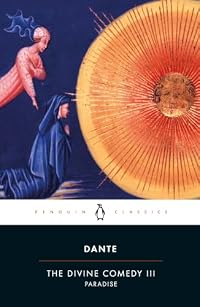
On This Page
Description
One of the greatest living Italian-to-English translators, Durling has at last completed his rendition of the third and final volume of Dante's masterful literary epic, The Divine Comedy. As with the two preceding volumes, Durling's precise and powerful translation of Paradiso appears alongside the original Italian text recounting Dante's journey through heaven with the beautiful Beatrice. The end of each canto contains thorough yet succinct notes by Durling and Ronald Martinez that acquaint show more the reader with Dante's medieval world and his reference points. Thus the volume will appeal to the general reader as well as lovers and students of Italian literature, language, and history. While English-language translations of the Commedia abound, the accuracy and lyrical verve of Durling's translations have earned him a place as one of the all time greats. With the completion of the set, the grandeur of his accomplishment will soon be widely known. show lessTags
Recommendations











Member Reviews
54. Paradiso by Dante Alighieri
translation and notes: Jean Hollander & Robert Hollander
published: 1320, translation 2007
format: 956-page Paperback, with original Italian, translation and notes
acquired: September 2019
read: Sep 1 – Nov 9
time reading: 53 hr 53 min, 3.4 min/page
rating: 5
locations: 😇
about the author: Florentine poet, c. 1265 – 1321
A very different feel to this than Inferno or Purgatorio. There is a lot less narrative, and especially a lot less personal narrative. The short entertaining personal biographies are replaced with long, idea heavy speeches on theological issues, with philosophical explorations and a close look at St. Thomas, who is somewhat personified by Beatrice. It's also oddly all a little impersonal. show more When Dante sees what is essentially God, his questions are on the physics of the place. But curiosity drives all and book ends by Dante essentially saying the wheels of his mind are still churning.
This is a kind of science fiction as Dante travels through space - to the moon, Mercury, Venus, the Sun, Mars, Jupiter and Saturn in that order. (Each is a reference to a virtue. They are, in order, faith, hope, love, prudence, fortitude, justice and temperance.) The sun is a highlight and includes a somewhat famous dance of the stars. Whereas Saturn is mostly silent, as a place of contemplation. Each is a higher level of heaven. From Saturn Beatrice takes Dante to the starry sphere, in a way, outer space, and then up the Jacob's ladder to a crystalline sphere and then finally to Empyrean, a place where the saved souls of heaven reside in a kind of rose and listen to heavenly music. Here angels travel from God to the souls, acting like bees, bringing the nectar of god's love to the rose of saved souls. But when Dante turns to ask Beatrice about this, this Beatrice, "my sweet beloved guide", who has become more beautiful with each stage of the book, to points were Dante cannot handle her beauty, he finds in her place in old man. Beatrice has completed her mission with him and taken her own place in the rose. Dante will complete his own mission with this St. Bernard.
A few of these cantos have been criticized down the ages as essentially non-poetic philosophy, and some as outright dull. The many references within references are so obscure that some took hundreds of years to decipher and some remain mysterious making this some work. (Although the Hollander notes did all the work for the reader and it was more than enough and well appreciated. I found it interesting that Hollander argues Paradise probably needed more refinement and Dante ran out of time.) But it has many more meaningful moments than dull ones. Dante's prayer to Beatrice and St. Bernard's prayer to Mary near the end standout as quite beautiful and elegantly constructed.
Purgatory was Dante's mastery of his will. Paradise is where he learns mastery of his intellect. The desire of god and knowledge combined to one, the truth inseparable, expressed in a variety of ways, including ones that are sexually charged: “for drawing near to its desire, so deeply is our intellect immersed that memory cannot follow after it." But Dante is on a serious mission. He is trying to reason out the contractions of free will and an all knowing god, obsessed with justice not found on earth, and the contradiction of Christ's crucifixion (using his predecessors as guides). When he writes "the glory of the vengeance for His wrath” - the reference to is to Christ's sacrifice, and to the justice of it! Dante's world explains that this crucifixion was the only possible way to resolve Adam's original sin.
As in all these books, Paradise is heavily political for Dante and his age. And there are many personal elements. His ancestor prophesizes his exile, telling him “you shall learn how salt is the taste of another man’s bread and how hard is the way, going down and then up another man’s stairs." The down and up the stairs a reference to hoping for better news of his exile and failing to find it. He mentions in backhanded way that he personally prays to Mary twice day. And he always wonders about his world. Looking down from space, he see “the little patch of earth that makes us here so fierce”, and late in the Paradise asks God to “look down upon our tempests here below”. Rapture is had, even if Dante can't capture it because (1) he wasn't able to take it all in, (2) he isn't able to remember all of what he experienced and (3) he isn't able to express what he remembers in words. But it left him thinking.
2020
https://www.librarything.com/topic/322920#7326521 show less
translation and notes: Jean Hollander & Robert Hollander
published: 1320, translation 2007
format: 956-page Paperback, with original Italian, translation and notes
acquired: September 2019
read: Sep 1 – Nov 9
time reading: 53 hr 53 min, 3.4 min/page
rating: 5
locations: 😇
about the author: Florentine poet, c. 1265 – 1321
A very different feel to this than Inferno or Purgatorio. There is a lot less narrative, and especially a lot less personal narrative. The short entertaining personal biographies are replaced with long, idea heavy speeches on theological issues, with philosophical explorations and a close look at St. Thomas, who is somewhat personified by Beatrice. It's also oddly all a little impersonal. show more When Dante sees what is essentially God, his questions are on the physics of the place. But curiosity drives all and book ends by Dante essentially saying the wheels of his mind are still churning.
This is a kind of science fiction as Dante travels through space - to the moon, Mercury, Venus, the Sun, Mars, Jupiter and Saturn in that order. (Each is a reference to a virtue. They are, in order, faith, hope, love, prudence, fortitude, justice and temperance.) The sun is a highlight and includes a somewhat famous dance of the stars. Whereas Saturn is mostly silent, as a place of contemplation. Each is a higher level of heaven. From Saturn Beatrice takes Dante to the starry sphere, in a way, outer space, and then up the Jacob's ladder to a crystalline sphere and then finally to Empyrean, a place where the saved souls of heaven reside in a kind of rose and listen to heavenly music. Here angels travel from God to the souls, acting like bees, bringing the nectar of god's love to the rose of saved souls. But when Dante turns to ask Beatrice about this, this Beatrice, "my sweet beloved guide", who has become more beautiful with each stage of the book, to points were Dante cannot handle her beauty, he finds in her place in old man. Beatrice has completed her mission with him and taken her own place in the rose. Dante will complete his own mission with this St. Bernard.
A few of these cantos have been criticized down the ages as essentially non-poetic philosophy, and some as outright dull. The many references within references are so obscure that some took hundreds of years to decipher and some remain mysterious making this some work. (Although the Hollander notes did all the work for the reader and it was more than enough and well appreciated. I found it interesting that Hollander argues Paradise probably needed more refinement and Dante ran out of time.) But it has many more meaningful moments than dull ones. Dante's prayer to Beatrice and St. Bernard's prayer to Mary near the end standout as quite beautiful and elegantly constructed.
Purgatory was Dante's mastery of his will. Paradise is where he learns mastery of his intellect. The desire of god and knowledge combined to one, the truth inseparable, expressed in a variety of ways, including ones that are sexually charged: “for drawing near to its desire, so deeply is our intellect immersed that memory cannot follow after it." But Dante is on a serious mission. He is trying to reason out the contractions of free will and an all knowing god, obsessed with justice not found on earth, and the contradiction of Christ's crucifixion (using his predecessors as guides). When he writes "the glory of the vengeance for His wrath” - the reference to is to Christ's sacrifice, and to the justice of it! Dante's world explains that this crucifixion was the only possible way to resolve Adam's original sin.
As in all these books, Paradise is heavily political for Dante and his age. And there are many personal elements. His ancestor prophesizes his exile, telling him “you shall learn how salt is the taste of another man’s bread and how hard is the way, going down and then up another man’s stairs." The down and up the stairs a reference to hoping for better news of his exile and failing to find it. He mentions in backhanded way that he personally prays to Mary twice day. And he always wonders about his world. Looking down from space, he see “the little patch of earth that makes us here so fierce”, and late in the Paradise asks God to “look down upon our tempests here below”. Rapture is had, even if Dante can't capture it because (1) he wasn't able to take it all in, (2) he isn't able to remember all of what he experienced and (3) he isn't able to express what he remembers in words. But it left him thinking.
But now my will and my desire, like wheels revolving
with an even motion, were turning with
the love that moves the sun and all the stars
2020
https://www.librarything.com/topic/322920#7326521 show less
This is my second time reading this, and I think that because I knew how it was structured I was able to enjoy it better this time. The otherworldly preoccupations of Dante do not match the typical ones of our worldly time. The flamelike souls he encounters assemble into elaborate patterns as if this fourteenth century poet knew about computer graphics, as a sort of extension of the very last section of Purgatorio where he describes the allegorical pageant in Eden. And through it all, Dante's inspiration for his journey, Beatrice, becomes more and more idealized until she ends up as little more than an enraptured smile in the realm of the Empyrean. This is rarefied fare for the modern reader raised upon realism and natural depictions in show more literature. This is the least prosaic sections of the epic poem, and it might help to think of it in specifically non-prose terms, as if it were a very long song lyric maybe, where our expectations of what makes for a satisfying experience is not tied in with the same kind of storytelling tradition.
Along with the allegory comes a large helping of Scholastic philosophy, of medieval orthodoxy, and ecclesiastical inside politics. If we pay attention to the people who are described here, we recall that this is being written at the tail end of the centuries of Crusades, when the temporal power of the Church was close to its highest point. This can be a problem for many readers, and not even only the unbelievers. It can be a hard read for someone who is not already interested in saints and emperors and bishops, patriarchs and religious warriors, who fill these cantos. It's worth noting the way these encounters affect the pilgrim Dante: he becomes increasingly bedazzled, literally losing his sight at one point while witnessing these souls who now shine in the firmament. He is as star-struck as any present-day fan of celebrity might be.
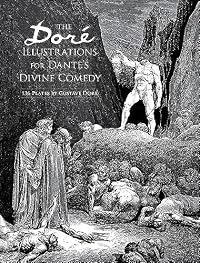
I feel the best way to read Paradiso is to do it while enjoying the paintings and illuminations it has inspired over the centuries since, by Doré and Blake and Dalí and anonymous illuminators. Some of these really help convey the feeling of rapture Dante wants to instill. show less
Along with the allegory comes a large helping of Scholastic philosophy, of medieval orthodoxy, and ecclesiastical inside politics. If we pay attention to the people who are described here, we recall that this is being written at the tail end of the centuries of Crusades, when the temporal power of the Church was close to its highest point. This can be a problem for many readers, and not even only the unbelievers. It can be a hard read for someone who is not already interested in saints and emperors and bishops, patriarchs and religious warriors, who fill these cantos. It's worth noting the way these encounters affect the pilgrim Dante: he becomes increasingly bedazzled, literally losing his sight at one point while witnessing these souls who now shine in the firmament. He is as star-struck as any present-day fan of celebrity might be.
I feel the best way to read Paradiso is to do it while enjoying the paintings and illuminations it has inspired over the centuries since, by Doré and Blake and Dalí and anonymous illuminators. Some of these really help convey the feeling of rapture Dante wants to instill. show less
It is bad that I enjoyed and got more out of Hell than I did Paradise? Maybe that says something about my character. However, I did read this shortly after my wife giving birth to our fourth child so that probably has something to do with it as well.
He who casts off from shore to fish for truth
without the necessary skill does not return the same
as he sets out, but worse, and all in vain.
I enjoyed this final installment of the Divine Comedy, but I have to confess that it was my least favorite of the trilogy. The translation was nice, though lacking in some of the character and charm of Pinsky's Inferno and Merwin's Purgatorio (I didn't read the Hollanders' translation of the first two books). I just wasn't as engrossed in Dante's journey to the Empyrean. This is probably simply a failing on my part—or at least a mark against my literary sensibilities.
While occasionally overwhelming and tedious, the notes were copious and often very helpful. It would be interesting to see another show more contemporary poet of the caliber of Pinsky or Merwin translate this final installment someday. show less
without the necessary skill does not return the same
as he sets out, but worse, and all in vain.
I enjoyed this final installment of the Divine Comedy, but I have to confess that it was my least favorite of the trilogy. The translation was nice, though lacking in some of the character and charm of Pinsky's Inferno and Merwin's Purgatorio (I didn't read the Hollanders' translation of the first two books). I just wasn't as engrossed in Dante's journey to the Empyrean. This is probably simply a failing on my part—or at least a mark against my literary sensibilities.
While occasionally overwhelming and tedious, the notes were copious and often very helpful. It would be interesting to see another show more contemporary poet of the caliber of Pinsky or Merwin translate this final installment someday. show less
It's not that the Paradiso is any less well written than the Inferno or the Purgatorio: it is just a lot less engaging. Rather than taking on people and personalities, Dante gets bogged down in the complexities of medieval Christian theology, and it makes for very slow going. Plus, it reintroduces Beatrice, and few literary 'romances' creep me out more than the one Dante writes for himself with Beatrice.
This part works beautifully as a counterpart to the Inferno -- rrrrrrright up until the part where he decides that calling something indescribable is a substitute for descriptions.
I mean, who does he think he is, Lovecraft?
I mean, who does he think he is, Lovecraft?
I rightly fumbled reading the last third of this book. Something to do with frame of mind maybe. Inferno and Purgatorio were much faster reads. That perhaps says something... while still on this earthly exile we are much more familiar with falling into the cycle of sin - repentance - penance over and again... so the concepts in Inferno/Purgatorio were perhaps more easily "grasped", more readily "accepted".
Getting to end of Paradiso was arduous to say the least.
But those last few cantos'?
Left me feeling exactly the way Dante did at the end.
Something there, something felt and grasped but not quite so, limited as we are...
I think this needs to be re-read again from the start. Yes.
Getting to end of Paradiso was arduous to say the least.
But those last few cantos'?
Left me feeling exactly the way Dante did at the end.
Something there, something felt and grasped but not quite so, limited as we are...
I think this needs to be re-read again from the start. Yes.
Members
- Recently Added By
Published Reviews
ThingScore 75
Review of Hollander translation
added by booksaplenty1949
Lists

Unread books
1,063 works; 87 members

Truly old classics
63 works; 6 members

Books Read in 2024
4,623 works; 126 members

Mustich's 1000 Books to Read Before You Die: A Life Changing List
1,001 works; 18 members

Novels/Poems/Short Stories/Anything Storytelling Related
112 works; 2 members

Books Read in 2015
3,299 works; 126 members

Harold Bloom - The Western Canon: B. The Aristocratic Age
231 works; 13 members

Books Featured on Gilmore Girls
307 works; 21 members

Audiobooks to read next
4 works; 1 member

Most Popular Penguins
70 works; 5 members

CCE 100 Great Books List
145 works; 8 members

Generation Joshua
115 works; 3 members

Italian Literature
556 works; 41 members

25 Books Every Christian Should Read
27 works; 4 members

Great Books Favorites
71 works; 6 members

Books You Read During High School (For School)
301 works; 52 members

To read
39 works; 1 member
Author Information

All Editions
Some Editions
Awards and Honors
Series

Belongs to Publisher Series
Wereldbibliotheek (130-131)
Work Relationships
Is contained in
Contains
Has the adaptation
Has as a student's study guide
Common Knowledge
- Canonical title
- Paradiso
- Original title
- Comedìa - Paradiso; Commedia
- Alternate titles
- Divina Commedia; La Divina Comedia di Dante
- Original publication date
- 1316; 1308x1321; 1992; 1962 (Dorothy L. Sayers & Barbara Reynolds translation) (Dorothy L. Sayers & Barbara Reynolds translation)
- People/Characters
- Dante Alighieri; Beatrice Portinari; Piccarda dei Donati; Constance; Justinian; Charles Martel (show all 26); Cunizza da Romano; Folco of Marseilles; Thomas Aquinas (Saint, Confessor, Doctor of the Church, 1225 to 1274); Eagle; Bernard of Clairvaux (Saint, Doctor of the Church, 1090 to 1153); Adam; Francis of Assisi (Saint, Giovanni di Pietro di Bernardone, 1181? to 1226); St. Dominic; Bonaventure (Saint, Doctor of the Church, Giovanni di Fidanza, 1221 to 1274); King Solomon; Cacciaguida; Peter Damian; St. Benedict; Peter the Apostle (Saint, Simon Peter, Cephas); St. James, the Apostle; St. John; The Virgin Mary; God; Angels; Lucifer
- Important places
- Heaven; Earth; Moon; Mercury; Venus; Sun (show all 15); Mars; Jupiter; Saturn; Fixed Stars; Primum Mobile; Empyrean; Mount Purgatory; Hell; Purgatory
- Important events
- 14th century; Middle Ages
- Epigraph
- "Ma or convien che mio seguir desista piu dietro a sua bellezza, poetando, come all'ultimo suo ciascuna artista."
Paradiso, xxx. 31-3
(Sayers & Reynolds translation, 1977 reprint) - Dedication*
- a Maria
- First words
- The glory of the One who moves all things permeaetes the universe and glows in one part more and in another less.
(La gloria di clui che tutto move per l'universo penetra, e risplende in una parte piu e meno altrove.)
It has been said that the joys of Heaven would be for most of us, in our present condition, an acquired taste.
Introduction (Sayers & Reynolds translation, 1977 reprint).
[Preface - Oxford edition] For the principles followed in the translation of the Paradiso, we refer the reader to the preface to our Inferno volume, and for the Italian text to the preface to our Purgatorio... (show all)i> volume.
THE STORY. Dante, who is still in the Garden of Eden, has just drunk from the river of Good Remembrance (Purg. xxxiii. 126-45). ...
The glory of Him who moves all things soe'er
Impenetrates the unive... (show all)rse, and bright
The splendour burns, more here and lesser there.
Canto I (Sayers & Reynolds translation, 1977 reprint).
[Introduction - Oxford edition] The first two cantiche of the Comedy are, for the most part, intuitively direct in their modes of representation, however these modes may be qualified; but this last cantica is far from ... (show all)being direct. - Last words
- (Click to show. Warning: May contain spoilers.)Here powers failed my high imagination:
/ But by now my desire and will were turned, /
Like a balanced wheel rotated evenly,
/ By the Love that moves the sun and the other stars.
(Click to show. Warning: May contain spoilers.)High phantasy lost power and here broke off;
Yet, as a wheel moves smoothly, free from jars,
My will and my desire were turned by love,
The love that moves the sun and the other stars. - Original language
- Italian
- Disambiguation notice
- Just book three Paradise / Paradiso in this work. No combined version or other volumes!
*Some information comes from Common Knowledge in other languages. Click "Edit" for more information.
Classifications
- Genres
- Poetry, Fiction and Literature
- DDC/MDS
- 851.1 — Literature & rhetoric Italian, Romanian & related literatures Italian poetry Early Italian; Age of Dante –1375
- LCC
- PQ4315.4 .C5 — Language and Literature French, Italian, Spanish and Portuguese literatures Italian literature Individual authors and works to 1400
- BISAC
Statistics
- Members
- 7,077
- Popularity
- 1,666
- Reviews
- 51
- Rating
- (3.99)
- Languages
- 21 — Catalan, Czech, Danish, Dutch, English, Estonian, Finnish, French, German, Greek, Hungarian, Italian, Korean, Multiple languages, Norwegian (Nynorsk), Serbian, Spanish, Swedish, Turkish, Portuguese (Portugal), Portuguese (Brazil)
- Media
- Paper, Audiobook, Ebook
- ISBNs
- 212
- UPCs
- 3
- ASINs
- 132