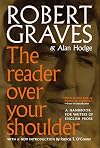
The Reader Over Your Shoulder: A Handbook for Writers of English Prose
by Robert Graves  , Alan Hodge
On This Page
Description
"The best book on writing ever published" (Patricia T. O'Conner, author of Woe Is I ). When Robert Graves and Alan Hodge decided to collaborate on this manual for writers, the world was in total upheaval. Graves had fled Majorca three years earlier at the start of the Spanish Civil War, and as they labored over their new project, they witnessed the fall of France and the evacuation of Allied forces at Dunkirk. Soon the horror of World War II would reach British soil as well, as the Luftwaffe show more began bombing London in an effort to destroy the resolve of the English people. Graves and Hodge believed that at a time when their whole world was falling apart, the survival of English prose sentences-of writing that was clear, concise, and intelligible-had become paramount if hope were going to outlive the onslaught. They came up with forty-one principles for writing, the majority devoted to clarity, the remainder to grace of expression. They studied the prose of a wide range of noted authors and leaders, finding much room for improvement. Successful communication could mean the difference between war and peace, life and death, and they were determined to contribute to its survival. The importance of good writing continues today, as obfuscation, propaganda, manipulative language, and sloppy standards are all too common-and this classic guide is just as useful and important as ever. Note: This edition restores the full, original 1943 text. "To see what really expert mavens can do in applying their rule-based expertise to clearing up bad prose, get hold of a copy of The Reader Over Your Shoulder. " -The Atlantic show lessTags
Recommendations























Member Reviews
On the cover of this reissue, the name Robert Graves appears in a much larger type size than that of co-author Alan Hodge. This is not just for the sake of marketing. The voice throughout this book is unmistakably that of Graves. Yet it was not false modesty on Graves’s part to credit Hodge as co-author (indeed, I’m not aware of Graves ever being accused of modesty, false or true). Hodge was twenty years younger than Graves, the two had recently collaborated on a social history of Britain after World War I, The Long Week-End, and Graves viewed him as a partner in this enterprise of expressing principles of good English prose and illustrating them with examples of the failure to respect them.
Graves and Hodge list twenty-five show more principles of clear statement and sixteen principles of graceful prose. According to the authors, they arrived at these by reading, at their normal pace, whatever came to hand. That included many of the leading literary figures of the time (Shaw, Pound, Eliot), government press releases, newspaper columns, and local church bulletins. Whenever they encountered difficulty in understanding, they sought to identify the reason for it. The second half of the book is devoted to excerpts from their reading. Numbers (for principles of clear statement) and letters (for those of graceful prose) set in superscript flag the violations. The reasoning used in citing these violations follows, listed under these numbers and letters. Thirdly, the authors present a “fair copy,” that is, their rewrite of how the author could have better expressed him or herself. Finally, a comment, in many cases exculpating the author, who perhaps had to write quickly and didn’t have the chance to edit what he or she wrote. At other times, they surmise, the writer’s official position forbade them saying what they really meant, which resulted in a muddle.
In general, they stress that not even the most careful of authors is free of committing these faults. Their inclusion of a passage of their own is proof of this.
Their attempts at fairness didn’t go so far as to prevent the comments from causing me to laugh out loud at times. One example, about J. Middleton Murry: “Mr. Murry has often apologized to his readers for the confusion of his thought, but ascribed it to the difficulty of conveying novel and important intuitions of spiritual truth. The confusion is due rather to the mystical ecstasy which overtakes him and blunts his critical sense of what he is writing.”
In many cases, these examples of faulty writing are found in texts that address the non-specialist reader. Many of the authors represented are known as poets or novelists. Mostly, the excerpts here are not from their novels, but from works of criticism or commentary on current affairs. There is one exception: the dissection of a passage of Hemingway’s Farewell to Arms is savagely memorable.
If you can’t find a used copy of the original edition of The Reader Over Your Shoulder, which appeared in 1943, then this, from 2017, is the edition to get, for it restores portions cut from the book in the reprintings in between (this has 615 pages, rather than the 290 erroneously given in the book description). Regrettably, this edition is marred by typos. I suspect they crept in when the book was reset for publication, but the only way of knowing for sure would be to compare side by side with the original. Especially irritating are the errors in the intricate system of cross-references between text excerpts and the principles cited.
The book includes an overview of the history of English prose. Some readers may be put off by the manner of presentation, which seems like a series of ex-cathedra pronouncements, but these are based on close-reading of the authors discussed and are worth savoring. For instance: “Anglo-Saxon was the language of the belly; Norman-French, that of the heart — the Normans had learned to have hearts since they had settled in France; Latin, that of the brain. English, as Chaucer used it, was a reconciliation of the functions of all these organs. But in Chaucer’s as in all the best English prose, the belly rules: English is a practical language.” Graves has his favorite periods, for instance, the “classical prose” of Dryden and Defoe, but his love of English as a living language keeps him from seeking to freeze the language in any period and display it in a museum. For that reason, it is beside the point to complain that one wouldn’t take Graves and Hodge either a model of writing style now, eighty years later. Style changes, but the principles endure. That seems to be the point of this book. show less
Graves and Hodge list twenty-five show more principles of clear statement and sixteen principles of graceful prose. According to the authors, they arrived at these by reading, at their normal pace, whatever came to hand. That included many of the leading literary figures of the time (Shaw, Pound, Eliot), government press releases, newspaper columns, and local church bulletins. Whenever they encountered difficulty in understanding, they sought to identify the reason for it. The second half of the book is devoted to excerpts from their reading. Numbers (for principles of clear statement) and letters (for those of graceful prose) set in superscript flag the violations. The reasoning used in citing these violations follows, listed under these numbers and letters. Thirdly, the authors present a “fair copy,” that is, their rewrite of how the author could have better expressed him or herself. Finally, a comment, in many cases exculpating the author, who perhaps had to write quickly and didn’t have the chance to edit what he or she wrote. At other times, they surmise, the writer’s official position forbade them saying what they really meant, which resulted in a muddle.
In general, they stress that not even the most careful of authors is free of committing these faults. Their inclusion of a passage of their own is proof of this.
Their attempts at fairness didn’t go so far as to prevent the comments from causing me to laugh out loud at times. One example, about J. Middleton Murry: “Mr. Murry has often apologized to his readers for the confusion of his thought, but ascribed it to the difficulty of conveying novel and important intuitions of spiritual truth. The confusion is due rather to the mystical ecstasy which overtakes him and blunts his critical sense of what he is writing.”
In many cases, these examples of faulty writing are found in texts that address the non-specialist reader. Many of the authors represented are known as poets or novelists. Mostly, the excerpts here are not from their novels, but from works of criticism or commentary on current affairs. There is one exception: the dissection of a passage of Hemingway’s Farewell to Arms is savagely memorable.
If you can’t find a used copy of the original edition of The Reader Over Your Shoulder, which appeared in 1943, then this, from 2017, is the edition to get, for it restores portions cut from the book in the reprintings in between (this has 615 pages, rather than the 290 erroneously given in the book description). Regrettably, this edition is marred by typos. I suspect they crept in when the book was reset for publication, but the only way of knowing for sure would be to compare side by side with the original. Especially irritating are the errors in the intricate system of cross-references between text excerpts and the principles cited.
The book includes an overview of the history of English prose. Some readers may be put off by the manner of presentation, which seems like a series of ex-cathedra pronouncements, but these are based on close-reading of the authors discussed and are worth savoring. For instance: “Anglo-Saxon was the language of the belly; Norman-French, that of the heart — the Normans had learned to have hearts since they had settled in France; Latin, that of the brain. English, as Chaucer used it, was a reconciliation of the functions of all these organs. But in Chaucer’s as in all the best English prose, the belly rules: English is a practical language.” Graves has his favorite periods, for instance, the “classical prose” of Dryden and Defoe, but his love of English as a living language keeps him from seeking to freeze the language in any period and display it in a museum. For that reason, it is beside the point to complain that one wouldn’t take Graves and Hodge either a model of writing style now, eighty years later. Style changes, but the principles endure. That seems to be the point of this book. show less
In late October 1939, Robert Graves wrote to Alan Hodge: “I have begun a new book, about English.” Graves and Hodge had recently completed a social history of the between-wars period called The Long Week-End. Now they embarked on this new project, “a handbook for writers of English Prose,” to be called The Reader Over Your Shoulder.
This is a hardcore book with a morsel of tersely written humor thrown in, and adequate piss-taking of the self to make any reader realise that, yes, this is the real shit, y’all. This book makes for a great companion to Strunk/White, not to mention the prose of Arthur Conan Doyle and Graham Greene – two of my favourite writers, of whom the latter gets a bashing.
The first parts of the book contain show more guidelines and principles on writing of English prose, with plenty of tips and critique concrete enough for any interest in language and the writing of prose to sate all, I believe. The last two thirds of the book are modern examples – mind you, from when the book was written, in England, in the middle of the Second World War – of how brilliant writers succumb to bad grammar, torpid use of doublets, far too complex sentences, and simply using words that are too hard to understand.
Even though the book is written with a fair amount of direct and indirect racism and sexism, it’s deeply meaningful, especially as one considers how much one gains per sentence in the book. In fairness, the last time I read advice this well written, I picked up what is broadly loved as The Book on technical writing. Reading this one is like listening to Glenn Gould playing piano; over all, and foremost, it’s technically brilliant, but deep in the mix, there’s style.
All in all, an excellent chop of English. I give it 4/5.
To finish, remember that self-insight is the best way to understand others. show less
This is a hardcore book with a morsel of tersely written humor thrown in, and adequate piss-taking of the self to make any reader realise that, yes, this is the real shit, y’all. This book makes for a great companion to Strunk/White, not to mention the prose of Arthur Conan Doyle and Graham Greene – two of my favourite writers, of whom the latter gets a bashing.
The first parts of the book contain show more guidelines and principles on writing of English prose, with plenty of tips and critique concrete enough for any interest in language and the writing of prose to sate all, I believe. The last two thirds of the book are modern examples – mind you, from when the book was written, in England, in the middle of the Second World War – of how brilliant writers succumb to bad grammar, torpid use of doublets, far too complex sentences, and simply using words that are too hard to understand.
Even though the book is written with a fair amount of direct and indirect racism and sexism, it’s deeply meaningful, especially as one considers how much one gains per sentence in the book. In fairness, the last time I read advice this well written, I picked up what is broadly loved as The Book on technical writing. Reading this one is like listening to Glenn Gould playing piano; over all, and foremost, it’s technically brilliant, but deep in the mix, there’s style.
All in all, an excellent chop of English. I give it 4/5.
To finish, remember that self-insight is the best way to understand others. show less
I love language books and books about words, and I love Robert Graves. However....after the first couple of chapters which present some interesting history of English and its qualities versus other languages, this book sinks into the most nit-picky uninteresting analysis of the use of prose that I have ever read. Just the opposite of the clarity you find in Strunk and White's The Elements of Style. From the other ratings this book has received, I may be in the minority here, but I certainly wanted to like this book. It had to work really really hard to arouse such a negative reaction in me. This one definitely goes on the giveaway list.
This book covers much the same territory as Strunk and White's Elements of Style, and I like it better. Each "principle of clear statement" is lavishly illustrated by bad prose, mostly from British non-fiction writers from the middle of the 20th century. Many of the examples include an explanation of how the writer got themselves into trouble and a re-write that corrects the problem. Graves and Hodge insist that you are writing for a reader whose understanding should be your most important goal, and show you how to keep that goal in mind.
An excellent guide to writing good English prose.
Ratings
Members
- Recently Added By
Published Reviews
ThingScore 75
The Reader Over Your Shoulder is a call for order. The authors have not troubled to diagnose the ills of the moribund; they have rather pointed out hints of the frightful disease in the superficially robust, and have chosen for their case-histories the athletes and champions. These case-histories, which they call 'Examinations and Fair Copies', occupy rather more than half the book and are the show more more stimulating part. The 200 pages which form a preface to them comprise a history of English language and a statement of the principles of good writing.
The first section might with profit be omitted. That kind of thing is still taught, I believe, between periods of'citizenship' and 'dietetics' at all but the most experimental schools. The chapters on the principles of good writing - clarity and grace - are worth close attention; much is stated as axiomatic which is, in fact, highly speculative. I found myself in frequent disagreement, but this is no place to open a controversy on jots and tittles. The reviewer does his duty by telling the reader why a book is likely to be of use to him. In this case few people can afford to disregard the authors' warnings, and the fact of its stirring the mind to consider questions too long disregarded is itself immensely valuable even where the solutions are dubious. show less
The first section might with profit be omitted. That kind of thing is still taught, I believe, between periods of'citizenship' and 'dietetics' at all but the most experimental schools. The chapters on the principles of good writing - clarity and grace - are worth close attention; much is stated as axiomatic which is, in fact, highly speculative. I found myself in frequent disagreement, but this is no place to open a controversy on jots and tittles. The reviewer does his duty by telling the reader why a book is likely to be of use to him. In this case few people can afford to disregard the authors' warnings, and the fact of its stirring the mind to consider questions too long disregarded is itself immensely valuable even where the solutions are dubious. show less
added by SnootyBaronet
Lists

Writing
10 works; 4 members

Books to Recommend to My Niece/Nephew (The late teenage years)
29 works; 3 members
Author Information

259+ Works 40,616 Members
Robert Graves (also known as Robert Ranke Graves) was born in 1895 in London and served in World War I. Goodbye to All That: an Autobiography (1929), was published at age thirty three, and gave a gritty portrait of his experiences in the trenches. Graves edited out much of the stark reality of the book when he revised it in 1957. Although his most show more popular works, I, Claudius (1934) and its sequel, Claudius the God and His Wife Messalina (1935), were produced for television by the BBC in 1976 and seen in America on Masterpiece Theater, he was also famous as a poet, producing more than 50 volumes of poetry. Graves was awarded the 1934 James Tait Black Memorial Prize for both I, Claudius and Claudius the God. Also a distinguished academic, Graves was a professor of English in Cairo, Egypt, in 1926, a poetry professor at Oxford in the 1960s, and a visiting lecturer at universities in England and the U.S. He wrote translations of Greek and Latin works, literary criticism, and nonfiction works on many other topics, including mythology and poetry. He lived most of his life in Majorca, Spain, and died after a protracted illness in 1985. (Bowker Author Biography) show less
Robert Graves has a Legacy Library. Legacy libraries are the personal libraries of famous readers, entered by LibraryThing members from the Legacy Libraries group.

8+ Works 890 Members
Awards and Honors
Notable Lists
Work Relationships
Is contained in
Common Knowledge
- Original publication date
- 1943
- Dedication
- To Jenny Nicholson
- First words
- INTRODUCTION This is the best book on writing ever published.
The most ancient European languages—those that have longest avoided infiltration by other languages—are the most complicated in their grammar and syntax. - Quotations
- English does not run on its own rails, like French, with a simply managed mechanism of knobs and levers, so that any army officer or provincial mayor can always, at a minute’s notice, glide into a graceful speech in celebra... (show all)tion of any local or national event, however unexpected. The fact is that English has altogether too many resources for the ordinary person, and nobody holds it against him if he speaks or writes badly.
- Last words
- (Click to show. Warning: May contain spoilers.)In the Fair Copy we have guessed at the heights and distances which the reader will want to be given; the correct ones are not to be found in the original.
Classifications
- Genres
- Reference, Literature Studies and Criticism, Nonfiction
- DDC/MDS
- 808.042 — Literature & rhetoric Literature, rhetoric & criticism Rhetoric and collections of literary texts from more than two literatures Rhetoric and anthologies Handbooks for writers English
- LCC
- PR751 .G7 — Language and Literature English English Literature Prose
- BISAC
Statistics
- Members
- 367
- Popularity
- 85,519
- Reviews
- 5
- Rating
- (4.03)
- Languages
- English
- Media
- Paper, Ebook
- ISBNs
- 6
- ASINs
- 15