On This Page
Description
Minke is a young Javanese student of great intelligence and ambition. Living equally among the colonists and colonized of 19th-century Java, he battles against the confines of colonial strictures. It is his love for Annelies that enables him to find the strength to embrace his world.Tags
Recommendations
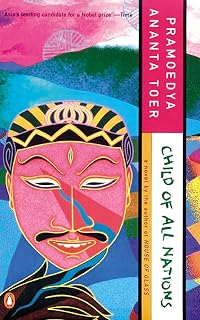













Member Recommendations
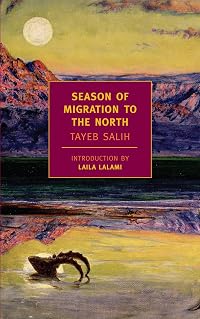
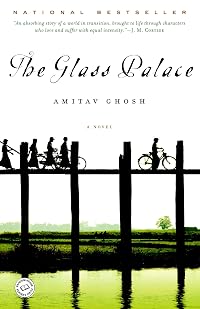
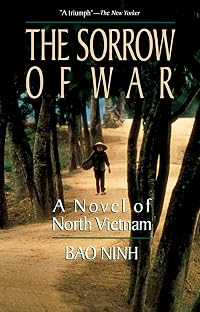
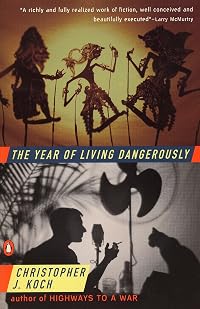
mercure Max Havelaar was an inspiration for Mincke; his nom de plume was based upon this influential book.

mercure Zelfde problematiek, maar met een ander perspectief. Toer bekijkt de ongelijkheid vanuit de Indonesische ervaring, Haasse vanuit de Nederlandse.

mercure Raden Kartini's letters are another classic that is refered to.


mercure A trilogy about a strong Indonesian woman

mercure Historical background
Member Reviews
Set in colonised Indonesia, we follow Minke as he navigates two worlds - his own home and culture and the new views and culture he is being exposed to (and starts to accept) at his Eurocentric school (where he is the only Native student) and his realisations after about how tenuous his position as one of the "acceptable" ones is.
Although the actual events of the story were just okay in my opinion, I really enjoyed the setting. There were some beautiful descriptions and I loved getting an insight into what the climate of the region was at the time. I enjoyed the inclusion of culture and the impacts of colonisation, which I feel was the strongest part of the book. I'm not sure if I will be diving into the next book or not but I'm glad show more that I read this one. show less
Although the actual events of the story were just okay in my opinion, I really enjoyed the setting. There were some beautiful descriptions and I loved getting an insight into what the climate of the region was at the time. I enjoyed the inclusion of culture and the impacts of colonisation, which I feel was the strongest part of the book. I'm not sure if I will be diving into the next book or not but I'm glad show more that I read this one. show less
This novel paints a vivid and often, indeed, melodramatic portrait of the evils of Dutch colonialism and institutionalized racism in Indonesia at the very end of the 19th century. It gave me insight into a time and a place that were largely unfamiliar. It is also a coming-of-age story, a political tale, and, less successfully, a love story. Originally created and recited orally while the author was imprisoned by the postcolonial government and denied access to writing materials, this novel is the first part of a quartet.
The story is told by Minke, who is about 16 when it begins and an aspiring writer. The descendent of Javanese nobles (although the reader doesn't know this as first), Minke is a Native, in the terminology of the time, show more below the Indos (Indo-Europeans, who are half Indonesian and half European), who in turn are below the Pures (or white Europeans, largely Dutch). Nonetheless, he has been allowed to attend an elite Dutch school where he is the only Native, and has been influenced by his teachers' emphasis on the ideals of European culture. The school is in Surabaya, which Wikipedia tells me is now Indonesia's second largest city, although it seems to be a pretty sleepy town in this novel; Minke boards with a couple there.
As the novel begins, Minke is taken by a friend to visit a house that lies out of town (and just down the road from a Chinese brothel). There lives a Nyai, or concubine, a Native woman who lives with a European man without being married, her beautiful daughter Annalies, and her son Robert. As Minke's friend hangs out with the son, Minke comes to know both Annalies and the mother, and they warmly encourage him to return, as Annalies has no other friends. The mother, who goes by Nyai, but asks Minke to call her Mama, is a remarkable woman. As the reader finds out later, she was sold by her parents to the Dutch man, and then taught herself reading, languages (including flawless Dutch), and business practices, and now runs the Dutch man's entire business enterprise.
As the tale progresses, the reader learns more about Nyai's and Minke's backgrounds, Minke meets some interesting but not fully developed characters who help in various ways, falls in love with Annalies, visits his parents, and becomes involved in a catastrophic series of events. These events, and the variety of other characters, serve to illustrate both the complexity and the horror of the colonial system.
I had mixed feelings about this book, and there were times when I almost gave up on it, largely because I just couldn't understand the relationship between Minke and Annalies. Minke is a smart, thoughtful, young man and Annalies, although ravishingly beautiful, seems painfully lacking in almost everything else; she is clearly psychologically disturbed and clings onto her vision of escape through being constantly with Minke (some of the weaker portions of the book are where the devoted European doctor tries to explain early psychology to Minke). The strongest parts of the novel are the development of Minke and the portrait of colonial Indonesia: the people, the landscape, the racism, the oppression, and the various kinds of resistance to the Dutch. By the end of the book, I enjoyed it enough to order the next volume in the quartet, which will follow Minke as he develops as a journalist. show less
The story is told by Minke, who is about 16 when it begins and an aspiring writer. The descendent of Javanese nobles (although the reader doesn't know this as first), Minke is a Native, in the terminology of the time, show more below the Indos (Indo-Europeans, who are half Indonesian and half European), who in turn are below the Pures (or white Europeans, largely Dutch). Nonetheless, he has been allowed to attend an elite Dutch school where he is the only Native, and has been influenced by his teachers' emphasis on the ideals of European culture. The school is in Surabaya, which Wikipedia tells me is now Indonesia's second largest city, although it seems to be a pretty sleepy town in this novel; Minke boards with a couple there.
As the novel begins, Minke is taken by a friend to visit a house that lies out of town (and just down the road from a Chinese brothel). There lives a Nyai, or concubine, a Native woman who lives with a European man without being married, her beautiful daughter Annalies, and her son Robert. As Minke's friend hangs out with the son, Minke comes to know both Annalies and the mother, and they warmly encourage him to return, as Annalies has no other friends. The mother, who goes by Nyai, but asks Minke to call her Mama, is a remarkable woman. As the reader finds out later, she was sold by her parents to the Dutch man, and then taught herself reading, languages (including flawless Dutch), and business practices, and now runs the Dutch man's entire business enterprise.
As the tale progresses, the reader learns more about Nyai's and Minke's backgrounds, Minke meets some interesting but not fully developed characters who help in various ways, falls in love with Annalies, visits his parents, and becomes involved in a catastrophic series of events. These events, and the variety of other characters, serve to illustrate both the complexity and the horror of the colonial system.
I had mixed feelings about this book, and there were times when I almost gave up on it, largely because I just couldn't understand the relationship between Minke and Annalies. Minke is a smart, thoughtful, young man and Annalies, although ravishingly beautiful, seems painfully lacking in almost everything else; she is clearly psychologically disturbed and clings onto her vision of escape through being constantly with Minke (some of the weaker portions of the book are where the devoted European doctor tries to explain early psychology to Minke). The strongest parts of the novel are the development of Minke and the portrait of colonial Indonesia: the people, the landscape, the racism, the oppression, and the various kinds of resistance to the Dutch. By the end of the book, I enjoyed it enough to order the next volume in the quartet, which will follow Minke as he develops as a journalist. show less
This is quite possibly the best novel I have ever read.
As a person of mixed Indonesian-Australian heritage, it was a particularly potent, and personally relevant read.
This book has taught me so much about Indonesia's fascinating past , whilst simultaneously providing an intriguing, emotionally charged story line. I found myself in tears a number of times.
I felt an instant connection to Minke's character, a truly brilliant and courageous young man.
Pramoedya's writing exhibits enormous talent, and a deep understanding of the World, both past and present.
I highly recommend this book to anybody with an interest in Indonesia.
I won't forget it for the rest of my life.
As a person of mixed Indonesian-Australian heritage, it was a particularly potent, and personally relevant read.
This book has taught me so much about Indonesia's fascinating past , whilst simultaneously providing an intriguing, emotionally charged story line. I found myself in tears a number of times.
I felt an instant connection to Minke's character, a truly brilliant and courageous young man.
Pramoedya's writing exhibits enormous talent, and a deep understanding of the World, both past and present.
I highly recommend this book to anybody with an interest in Indonesia.
I won't forget it for the rest of my life.
At the dawn of the twentieth century, traditional Javanese life and culture are no longer an option for the smart young aristocrat Minke. Javanese culture is too bellicose, superstitious, and too negative towards women compared to the promise of modernity offered by colonial society. However, the transition to modernity and the character of colonial society are full of inconsistencies, and everybody in Bumi Manusia/Earth of Mankind suffers the consequences. The social and legal segregation between the various racial communities is the one inconsistency that the book elaborates most about. Unfortunately, no analysis of the causes of this segregation is given.
Loosely based upon the life of Tirto Adhi Soerjo, Pak Pram has produced a heavy show more handed novel, written while he was himself incarcerated as a political prisoner by the post-colonial Indonesian government. You may ask yourself if the book is always a proper reflection of the times. E.g. I could not imagine that nobody would applaud when Minke finished his exams as the best student of his school, because he was a “native”. However, the story is written from Minke’s perspective, and given the story it is perfectly plausible that this was how he experienced the situation. Certain timelines also seem very short and some unimportant story lines simply disappear. Overall however I found it quite a strong novel. show less
Loosely based upon the life of Tirto Adhi Soerjo, Pak Pram has produced a heavy show more handed novel, written while he was himself incarcerated as a political prisoner by the post-colonial Indonesian government. You may ask yourself if the book is always a proper reflection of the times. E.g. I could not imagine that nobody would applaud when Minke finished his exams as the best student of his school, because he was a “native”. However, the story is written from Minke’s perspective, and given the story it is perfectly plausible that this was how he experienced the situation. Certain timelines also seem very short and some unimportant story lines simply disappear. Overall however I found it quite a strong novel. show less
The other book I got was Pramoedya Ananta Toer's This Earth of Mankind (translated from the Javanese Bumi Manusia). I selected this book because it had a Penguin imprint on it. Penguin books is what I associated P. G. Wodehouse, and Love in the Time of Cholera. Penguin has an India office (a couple actually), and when I was growing up you could be sure the books they published were either serious literature, vernacular or otherwise, or stiff Brit humor. Something good, most of the time.
I made a conscious effort not to look at the backcover and read the summary or read anything about the author. That was I wouldn't be prejudiced against or for it. I finished it this morning.
This Earth is set in 1898 Indonesia, colonized by the Dutch show more and tells the story of a young Javanese teenager, 18 year old Minke, who's a star student, attending a prestigious Dutch school, the only native there. He's challenged by his half-European, half-native (Indos they're called) friend to make friends with a concubine's daughter, and ends up falling in love with her. There's wonderful detail about Indonesian society, but it is an overtly political text.
And then there is Toer himself. He was a political prisoner imprisoned by Suharto's government for 14 years, and much of the book was told by Toer to his fellow prison mates orally. When he was finally released in 1973, he took a couple of years to write down this book as well as the stories of the other characters into a quartet. The books are called The Buru Quartet.
Once I read about Toer's political life as a dissident (I googled him up about three quarters of the way into the book), it was impossible to separate that knowledge from the content of his book, so it was always as if there was something larger than what was being said in those pages. Someone on Amazon said, I think people are giving it 4 and 5 stars because of sympathy - for Toer's life. I also took it to mean that some sympathy finds its ways because it's a colonial work, and by a native author.
To some extent, I agree, I think it's an astute observation. The book offers a view into native people's mindsets, but sometimes the passages and the conclusions they reach seem too treacly. I've noticed this tendency among Western readers to automatically reward a foreign work with good reviews, even if something of written with similar skill from your own culture wouldn't pass muster. Colonial guilt so to speak. One other book that exemplifies this is The Kite Runner. It's on the NYT bestseller list, but I couldn't stand the second half of that book, when all the characters are busy being so good to one another.
But even with all the drawbacks, I'm gonna give this one an A-, but only because I'm in a good mood. show less
I made a conscious effort not to look at the backcover and read the summary or read anything about the author. That was I wouldn't be prejudiced against or for it. I finished it this morning.
This Earth is set in 1898 Indonesia, colonized by the Dutch show more and tells the story of a young Javanese teenager, 18 year old Minke, who's a star student, attending a prestigious Dutch school, the only native there. He's challenged by his half-European, half-native (Indos they're called) friend to make friends with a concubine's daughter, and ends up falling in love with her. There's wonderful detail about Indonesian society, but it is an overtly political text.
And then there is Toer himself. He was a political prisoner imprisoned by Suharto's government for 14 years, and much of the book was told by Toer to his fellow prison mates orally. When he was finally released in 1973, he took a couple of years to write down this book as well as the stories of the other characters into a quartet. The books are called The Buru Quartet.
Once I read about Toer's political life as a dissident (I googled him up about three quarters of the way into the book), it was impossible to separate that knowledge from the content of his book, so it was always as if there was something larger than what was being said in those pages. Someone on Amazon said, I think people are giving it 4 and 5 stars because of sympathy - for Toer's life. I also took it to mean that some sympathy finds its ways because it's a colonial work, and by a native author.
To some extent, I agree, I think it's an astute observation. The book offers a view into native people's mindsets, but sometimes the passages and the conclusions they reach seem too treacly. I've noticed this tendency among Western readers to automatically reward a foreign work with good reviews, even if something of written with similar skill from your own culture wouldn't pass muster. Colonial guilt so to speak. One other book that exemplifies this is The Kite Runner. It's on the NYT bestseller list, but I couldn't stand the second half of that book, when all the characters are busy being so good to one another.
But even with all the drawbacks, I'm gonna give this one an A-, but only because I'm in a good mood. show less
5/5 A classic.
Wow, my country got some good classics.
Although, I gotta say that the romance plot is kinda soap opera-y but the rest of the aspects (the historical context, the narrative, etc.) is fantastic. If Indonesia had a Literature 101 class, this book better be in the curriculum.
I'll maybe read the rest of the tetralogy one day.
Wow, my country got some good classics.
Although, I gotta say that the romance plot is kinda soap opera-y but the rest of the aspects (the historical context, the narrative, etc.) is fantastic. If Indonesia had a Literature 101 class, this book better be in the curriculum.
I'll maybe read the rest of the tetralogy one day.
From one of the most influential authors of Southeast Asia, this book, first in a series, was written by Toer while he was a political prisoner in the island prison of Buru in the 1970s. It started as a verbal narration to his fellow inmates in 1973, and was written down only in 1975 after he was granted permission by the authorities. The book saw publication in 1980 through the efforts of his fellow former detainees, but was immediately banned by the Indonesian government.
The book is a compelling tale of love and colonialism. Set in the early 20th century, it is the story of Minke, a brilliant Javanese young man aspiring to be a writer, in the Dutch colony. His family being of local nobility and his talent enables him to become the show more only native student in the elite Dutch school in Java. He falls in love with Annelies, a mixed-blood daughter of an astute concubine of a prominent Dutch businessman and who now runs the vast enterprise. The strong-willed mother defies the stereotype of a concubine in this highly stratified society, she learns how to read, speak other languages, run a successful business, and shares Minke's progressive ideas. The family is ostracised by the community, and they are surrounded by intrigues. They pay dearly for their being themselves.
A thought-provoking novel that underlines the cycle of abuse and repression under Dutch colonial rule, and the struggle of natives against the injustice perpetuated by the distant but powerful government that prevailed in every aspect of theiir lives.
The theme is heavy and serious. Events in the novel turn for the worse, like a big drama unfolding. I felt, however, that in many instances, the language is a bit contrived, and the sequence of events which in normal life would happen over a stretch of time, felt shortened, compressed into narrow time periods. Perhaps it's got something to do with the fact that Toer wrote this from memory a few years after he made up the story. I also have a feeling that the translation was not very good, so the language didn't quite flow as I felt it should have. I also felt that the characters, sometimes, didn't seem real, they acted too much out of impulse.
At any rate, this book is still a highly recommended read. It's a book I've been wanting to read for years, only managing to get hold of a copy recently in a secondhand bookshop. The theme being what it is, and the development of the story, I think would make for a very interesting group read and discussion. show less
The book is a compelling tale of love and colonialism. Set in the early 20th century, it is the story of Minke, a brilliant Javanese young man aspiring to be a writer, in the Dutch colony. His family being of local nobility and his talent enables him to become the show more only native student in the elite Dutch school in Java. He falls in love with Annelies, a mixed-blood daughter of an astute concubine of a prominent Dutch businessman and who now runs the vast enterprise. The strong-willed mother defies the stereotype of a concubine in this highly stratified society, she learns how to read, speak other languages, run a successful business, and shares Minke's progressive ideas. The family is ostracised by the community, and they are surrounded by intrigues. They pay dearly for their being themselves.
A thought-provoking novel that underlines the cycle of abuse and repression under Dutch colonial rule, and the struggle of natives against the injustice perpetuated by the distant but powerful government that prevailed in every aspect of theiir lives.
The theme is heavy and serious. Events in the novel turn for the worse, like a big drama unfolding. I felt, however, that in many instances, the language is a bit contrived, and the sequence of events which in normal life would happen over a stretch of time, felt shortened, compressed into narrow time periods. Perhaps it's got something to do with the fact that Toer wrote this from memory a few years after he made up the story. I also have a feeling that the translation was not very good, so the language didn't quite flow as I felt it should have. I also felt that the characters, sometimes, didn't seem real, they acted too much out of impulse.
At any rate, this book is still a highly recommended read. It's a book I've been wanting to read for years, only managing to get hold of a copy recently in a secondhand bookshop. The theme being what it is, and the development of the story, I think would make for a very interesting group read and discussion. show less
Members
- Recently Added By
Lists

Books Read in 2023
5,638 works; 147 members

Writers at Risk
106 works; 17 members

Books written in uncommon languages
97 works; 8 members
Author Information

77+ Works 2,966 Members
One of Indonesia's most prominent authors, Toer spent most of his adult life in prison; his works have frequently been banned by the government. Toer's first novel, The Fugitive (1950), was written during his internment by the Dutch. Toer became a leading figure in the Marxist literary group Lekra and was again incarcerated after the 1965 show more overthrow of Sukarno, joining thousands of other left-wing artists on the prison island of Buru. The author of over 30 works of fiction and nonfiction, Toer is best known for his Buru tetralogy, which traces the birth of nationalism in Indonesia. Most of the work was composed as narration to fellow prisoners, then later recorded and published after Toer's release in 1979. Although the events of the tetralogy take place in the past, they must be understood in the context of his experiences at Buru. In 1988 Toer received the PEN Freedom-to-Write Award. (Bowker Author Biography) show less
Some Editions
Awards and Honors
Series

Belongs to Publisher Series
Gebara (26)
Common Knowledge
- Canonical title
- This Earth of Mankind
- Original title
- Bumi Manusia
- Original publication date
- 1980
- People/Characters
- Minke; Nyai Ontosoroh; Annelies Mellema; Robert Mellema; Herman Mellema; Robert Suurhof (show all 18); Darsam; Magda Peters; Jean Marais; Babah Ah Tjong; Sastrotomo; Maurits Mellema; Wilhelmina, Queen of the Netherlands; Maiko; Miriam de la Croix; Sarah de la Croix; Multatuli; Sicco Ernest Willem Roorda van Eysinga
- Important places
- Surabaya, Java, Indonesia; Wonokromo, Java, Indonesia; Soerabaja, Dutch East Indies; Indonesia
- Epigraph
- This narrow path has been trod many a time already, it's only that this time the journey is one to mark the way.
–P.A.T. - First words
- People called me Minke.
- Last words
- (Click to show. Warning: May contain spoilers.)"We fought back, child, Nyo, as well and honorably as possible."
- Original language*
- Indonesisch
*Some information comes from Common Knowledge in other languages. Click "Edit" for more information.
Classifications
- Genres
- Fiction and Literature, General Fiction, Historical Fiction
- DDC/MDS
- 899.22132 — Literature & rhetoric Literatures of other languages Literatures of non-Austronesian languages of Oceania, of Austronesian languages, of miscellaneous languages Malay and Austronesian languages Indonesian languages Indonesian (Bahasa Indonesia) Indonesian fiction 1900–2000
- LCC
- PL5089 .T8 .B8413 — Language and Literature Languages and literatures of Eastern Asia, Africa, Oceania Languages of Eastern Asia, Africa, Oceania Languages of Oceania Malayan (Indonesian) languages
- BISAC
Statistics
- Members
- 842
- Popularity
- 32,633
- Reviews
- 16
- Rating
- (4.08)
- Languages
- 12 — Dutch, English, French, German, Indonesian, Italian, Japanese, Malay, Norwegian (Bokmål), Spanish, Swedish, Thai
- Media
- Paper, Ebook
- ISBNs
- 32
- ASINs
- 5