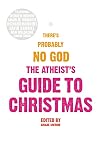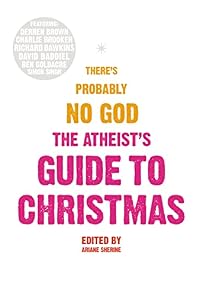
The Atheist's Guide to Christmas
by Robin Harvie (Editor), Stephanie Meyers (Editor)
On This Page
Description
42 atheist celebrities, comedians, scientists and writers give their funny and serious tips for enjoying the Christmas season. When the Atheist Bus Campaign was first launched, over £150,000, was raised in four days - enough to place the advert 'There's probably no God. Now stop worrying and enjoy your life' on 800 UK buses in January 2009. Now dozens of atheist writers, comedians and scientists are joining together to raise money for a very different cause. The Atheist's Guide to Christmas show more is a funny, thoughtful handbook all about enjoying Christmas, from 42 of the world's most entertaining atheists. It features everything from an atheist Christmas miracle to a guide to the best Christmas pop hits, and contributors include Richard Dawkins, Charlie Brooker, Derren Brown, Ben Goldacre, Jenny Colgan, David Baddiel, Simon Singh, AC Grayling, Brian Cox and Richard Herring. The full book advance and all royalties will go to the UK HIV charity Terrence Higgins Trust. show lessTags
Recommendations


Member Recommendations

by anonymous user
by anonymous user
Member Reviews
Summary: Just because you don't believe in Christ, doesn't mean you shouldn't have a very merry Christmas. That's the position taken by The Atheist's Guide to Christmas, a collection of forty-two* short pieces that is the outgrowth of the Atheist Bus Campaign, a project in which buses in the UK sported ads that read "There's probably no God. Now stop worrying and enjoy your life." (*Douglas Adams reference fully intentional.) The essays are divided into six sections: stories, science, how to, philosophy, arts, and events, and touch on everything from Christmas dinner to traditional Christmas hymns, the star of Bethlehem, the best use of Christmas decorations, what to get your favorite atheist for Christmas, and how to get into the show more holiday spirit even when you don't believe in the Holy Spirit. All in all, the essayists in this book take Paul Krassner's suggestion for the 11th Commandment: "Thou shalt not take thyself too goddamned seriously."
Review: The introduction to this book starts off brilliantly. Any book that starts with a Douglas Adams reference is likely to get high marks from me, I was laughing out loud by the second paragraph, and was fully ready to believe the editors when they promised funny, insightful, Christmas-themed essays that were "safe to leave around your grandmother."
And, for the most part, that's what they delivered. Large chunks of this book were really well done, and there were spots that I would go so far as to call brilliant. If I tried to type up every passage that made me laugh, we'd be here until Easter (or the spring equinox, take your pick.) For example, while I got a good chuckle out of Catie Wilkins's observation that "anyone who says it [the Christmas story] is the greatest story ever told clearly hasn't read Watchmen", Jennifer McCreight's suggestion that you buy the atheists on your gift list "grayscale crayons, to represent how atheists view a bleak world devoid of divine purpose and meaning" had me roaring with laughter. (Don't even get me started on the diagram illustrating the accessories that come with Atheist Barbie.)
And amidst all of the funny business, there were some really good insights about Christmas, and some - dare I say, inspirational - sections about celebrating the holiday with love, joy, goodwill towards men, and a sense of reverence towards something bigger than ourselves. I particularly liked Simon Singh's suggestion of using Christmas to celebrate not the birth of Christ, but the birth of the universe (hey, the Big Bang could have happened on 25 December, 13.7 billion BCE), by taking a minute to listen to white noise on the radio, which includes traces of cosmic radiation that's been around since the beginning. I also appreciated Mitch Benn's more tongue-in-cheek point that "if only practicing Christians can use the word "Christmas," then only Vikings can use the word "Thursday.""
Unfortunately, and somewhat obviously, being an atheist does not automatically make one a brilliant essayist. (If only.) There's a distinct sense that some of the contributers were picked for their (lack of) beliefs rather than their writing ability or comedic chops, and some of the essays lose the thread a little bit. They're in the minority, but a number of the essays read like extended arguments in favor atheism, which - to use a rather ironic metaphor - is a serious case of preaching to the choir. We're reading this book; we're already convinced. There's also a rather larger subsection of essays that touch on Christmas only glancingly, and a few not at all. They're not bad in and of themselves, but I wish the editors had stepped in with a little more direction: if I'm reading a book about Christmas, I actually want to be reading about Christmas, y'know?
The only other thing that bugged me about this book was that more than a few of the authors seemed to take great pleasure in slagging off on agnostics as being wishy-washy wafflers who are unable to make up their minds, when in fact, the scientific method that everyone is so fond of says that it's impossible to prove a negative (i.e. the non-existence of God) - hence the "probably" in the Atheist Bus Campaign slogan that was the jumping off point for this entire book. It's undoubtedly one of my personal hot-buttons, but I get tired of agnostics getting picked on just for daring to suspect that human beings might not yet have all the answers. 3.5 out of 5 stars.
Recommendation: Whether you're a hard-line atheist or a secular humanist, if your reaction to the "reason for the season" folks is to start talking about fourth century priests co-opting the druidic winter solstice celebrations in order to encourage converts, then you'll find something in The Atheist's Guide to Christmas to hold your interest, make you laugh, and help you have a very Merry Christmas indeed. show less
Review: The introduction to this book starts off brilliantly. Any book that starts with a Douglas Adams reference is likely to get high marks from me, I was laughing out loud by the second paragraph, and was fully ready to believe the editors when they promised funny, insightful, Christmas-themed essays that were "safe to leave around your grandmother."
And, for the most part, that's what they delivered. Large chunks of this book were really well done, and there were spots that I would go so far as to call brilliant. If I tried to type up every passage that made me laugh, we'd be here until Easter (or the spring equinox, take your pick.) For example, while I got a good chuckle out of Catie Wilkins's observation that "anyone who says it [the Christmas story] is the greatest story ever told clearly hasn't read Watchmen", Jennifer McCreight's suggestion that you buy the atheists on your gift list "grayscale crayons, to represent how atheists view a bleak world devoid of divine purpose and meaning" had me roaring with laughter. (Don't even get me started on the diagram illustrating the accessories that come with Atheist Barbie.)
And amidst all of the funny business, there were some really good insights about Christmas, and some - dare I say, inspirational - sections about celebrating the holiday with love, joy, goodwill towards men, and a sense of reverence towards something bigger than ourselves. I particularly liked Simon Singh's suggestion of using Christmas to celebrate not the birth of Christ, but the birth of the universe (hey, the Big Bang could have happened on 25 December, 13.7 billion BCE), by taking a minute to listen to white noise on the radio, which includes traces of cosmic radiation that's been around since the beginning. I also appreciated Mitch Benn's more tongue-in-cheek point that "if only practicing Christians can use the word "Christmas," then only Vikings can use the word "Thursday.""
Unfortunately, and somewhat obviously, being an atheist does not automatically make one a brilliant essayist. (If only.) There's a distinct sense that some of the contributers were picked for their (lack of) beliefs rather than their writing ability or comedic chops, and some of the essays lose the thread a little bit. They're in the minority, but a number of the essays read like extended arguments in favor atheism, which - to use a rather ironic metaphor - is a serious case of preaching to the choir. We're reading this book; we're already convinced. There's also a rather larger subsection of essays that touch on Christmas only glancingly, and a few not at all. They're not bad in and of themselves, but I wish the editors had stepped in with a little more direction: if I'm reading a book about Christmas, I actually want to be reading about Christmas, y'know?
The only other thing that bugged me about this book was that more than a few of the authors seemed to take great pleasure in slagging off on agnostics as being wishy-washy wafflers who are unable to make up their minds, when in fact, the scientific method that everyone is so fond of says that it's impossible to prove a negative (i.e. the non-existence of God) - hence the "probably" in the Atheist Bus Campaign slogan that was the jumping off point for this entire book. It's undoubtedly one of my personal hot-buttons, but I get tired of agnostics getting picked on just for daring to suspect that human beings might not yet have all the answers. 3.5 out of 5 stars.
Recommendation: Whether you're a hard-line atheist or a secular humanist, if your reaction to the "reason for the season" folks is to start talking about fourth century priests co-opting the druidic winter solstice celebrations in order to encourage converts, then you'll find something in The Atheist's Guide to Christmas to hold your interest, make you laugh, and help you have a very Merry Christmas indeed. show less
Who remembers the Atheist Bus Campaign? When I first heard about it, I couldn’t decide whether to be delighted or appalled. Atheism, in general, is not a movement or an organisation or in any way controlled. It’s about individuals choosing logic over dogma, and rejecting the idea of an overarching consciousness controlling the universe. To have a campaign about it seemed, to me, to go against the principles behind atheism. I eventually decided it was amusing and forgot about it.
Fast forward to Oct 2009 when Harper Collins sent me a copy of The Atheist’s Guide to Christmas to review. I had no idea they’d even made a book from the campaign.
It turns out that the campaign and the book were created by the British Humanist Society. show more Driving force Ariane Sherine has gathered 42 short stories and articles celebrating atheism, talking about life without religion, about the universe, space, humans and what we are.
It’s brilliant. Entertaining, moving, thought-provoking and elevating, there’s something in this collection for everyone.
It’s not a book about bashing the religious. It’s a book about Christmas for those of us who just do it for family, for friends, for companionship, without the underlying Christian message.
And it’s funny. The writers that editor Sherine has chosen have done a lovely job of bringing out the human in humanist, and reminding us about what it is that makes us who we are.
Like the meaning of Christmas, in The Real Christmas Story by Jenny Colgan:
Christmas, as a practicing Catholic child, was seen as a reward for lots and lots and lots of church.
Or sharing your birthday with Jesus, in A Child was Born on Christmas Day by Emery Emery:
Every birthday party I attended was clearly a day set aside specifically to celebrate one person’s most important life event…but as it turns out, Jesus was born of a virgin on December 25th and they deem it a miracle. How can any kid compete with that?
And I dare you to read Nick Doody’s excellent article, How to Understand Christmas: A Scientific Overview and not laugh:
Robins, as is well known, have an unusually high level of natural Yule – far higher than a mouse.
But it’s not all humour. For the scientifically inclined, there’s the wonderful Starry, Starry Night by Phil Platt, or one of my favourites, The Large Hadron Collider: A Scientific Creation Story by Brian Cox:
About 13.7 billion years ago, something interesting happened and our universe began.
There’s also a great How-To section; How to Have a Peaceful Pagan Christmas, I’m Dreaming of a Green Christmas and How to Decorate the Outside of Your House, and Not Have All Your Neighbours Hate You.
I thoroughly enjoyed reading this collection, and would recommend it as a great gift for the hard-to-buy-for person in your life. It’s a book for the thinker, the skeptic, the logical. A really wonderful experience. show less
Fast forward to Oct 2009 when Harper Collins sent me a copy of The Atheist’s Guide to Christmas to review. I had no idea they’d even made a book from the campaign.
It turns out that the campaign and the book were created by the British Humanist Society. show more Driving force Ariane Sherine has gathered 42 short stories and articles celebrating atheism, talking about life without religion, about the universe, space, humans and what we are.
It’s brilliant. Entertaining, moving, thought-provoking and elevating, there’s something in this collection for everyone.
It’s not a book about bashing the religious. It’s a book about Christmas for those of us who just do it for family, for friends, for companionship, without the underlying Christian message.
And it’s funny. The writers that editor Sherine has chosen have done a lovely job of bringing out the human in humanist, and reminding us about what it is that makes us who we are.
Like the meaning of Christmas, in The Real Christmas Story by Jenny Colgan:
Christmas, as a practicing Catholic child, was seen as a reward for lots and lots and lots of church.
Or sharing your birthday with Jesus, in A Child was Born on Christmas Day by Emery Emery:
Every birthday party I attended was clearly a day set aside specifically to celebrate one person’s most important life event…but as it turns out, Jesus was born of a virgin on December 25th and they deem it a miracle. How can any kid compete with that?
And I dare you to read Nick Doody’s excellent article, How to Understand Christmas: A Scientific Overview and not laugh:
Robins, as is well known, have an unusually high level of natural Yule – far higher than a mouse.
But it’s not all humour. For the scientifically inclined, there’s the wonderful Starry, Starry Night by Phil Platt, or one of my favourites, The Large Hadron Collider: A Scientific Creation Story by Brian Cox:
About 13.7 billion years ago, something interesting happened and our universe began.
There’s also a great How-To section; How to Have a Peaceful Pagan Christmas, I’m Dreaming of a Green Christmas and How to Decorate the Outside of Your House, and Not Have All Your Neighbours Hate You.
I thoroughly enjoyed reading this collection, and would recommend it as a great gift for the hard-to-buy-for person in your life. It’s a book for the thinker, the skeptic, the logical. A really wonderful experience. show less
Very smoothly written essays on the topic of Christmas and what it means to atheists or more accurately termed agnostics. These are humorous and satirical rather than critical of Christmas as annually celebrated by traditional Christians. Not a new book but still worth reading now. It's hard for a group of contributors to lambaste a god they don't believe exists or doubt can be proven so the essayists all stick to describing their own personal experiences. I like reading about atheism but it was a chapter by Simon Le Bon singer of Duran Duran that interested me enough to read the whole book. I know Andy McCluskey of OMD is an atheist and mostly likely so are John Lydon and Siouxsie Sioux. This book is a lighthearted and irreverent take show more on a seasonal holiday and therefore entertaining in a way critiques of religion are not. show less
It may now be as customary as carols, eggnog or nativity scenes. Odds are that each November and December there will a fracas over whether there is a "war on Christmas." No doubt, those who contend Christmas is under attack by liberals, secular humanists or what have you will say "we told you so" if and when they see The Atheist's Guide to Christmas on the bookshelves. Yet one of the things this compilation of essays demonstrates is that, like the members of non-Christian religions, atheists aren't out to eradicate Christmas.
Editors Robin Harvie and Stephanie Meyers break the essays into six broad categories dealing with Christmas and its celebration around the world. The 42 contributors (as Harvie and Meyers point out, 42 is the answer show more to the ultimate question of life, the universe and everything range from astronomer Phil Plait to science writer Simon Singh and Duran Duran singer Simon Le Bon to iconclast Paul Krassner and satirist Neal Pollack. And, of course, what compilation of writings by atheists would be complete without Richard Dawkins, the evolutionary biologist who has become one of the leaders of the so called new atheist movement?
Those who contend there is a concerted effort to "take Christ out of Christmas" may also see this as a trans-Atlantic salvo. Given American attitudes toward atheists (they are "less likely to be accepted, publicly and privately, than any others from a long list of ethnic, religious, and other minority groups") and the increasing secularization of the U.K. and Europe, it should come as no surprise that most of the contributors are British. Some were involved in, and many refer to, the Atheist Bus Campaign, which bought ads on London and other buses that said, "There’s probably no God. Now stop worrying and your life." In fact, those buses are the starting point for Dawkins' tongue-in-cheek "The Great Bus Mystery."
The range of the essays is equally as broad, from the philosophical to the arts to personal experiences. Many take a humorous approach, such as Jennifer McCreight's suggestions in "Gifts for the Godless" or Nick Doody's overview of the science of "Christmastology." Moreover, while most of the pieces leave no doubt the authors don't believe in God or the Christmas of the Bible, these aren't essays aimed at converting (so to speak) believers or claiming theists are idiots. For example, while Adam Rutherford explains why he thinks most scientists are atheists, he observes there are many good scientists who are religious and while he doesn't understand their viewpoint, he doesn't condemn them. Other contributors recognize some value in Christmas celebrations.
British singer/comedian Mitch Benn explains that rather than rejecting Christmas, it's fine for an atheist to celebrate it, even if that may seem a contradiction. "What it all comes down to is a question: what is Christmas?," he writes. "And the answer -- for all of us, believer or otherwise -- is that Christmas is whatever you want it to be." Likewise, he doesn't believe the word Christmas is exclusive territory. "It's fine. Go ahead. Say it," he says. "Christmas. There. That wasn't so bad, was it? Christmas. It's easy. Christmas."
In "How to Escape from Christmas," British journalist Andrew Mueller applies somewhat uncommon phrasing to express a view that may be more common than anti-atheists believe. Although Mueller doesn't believe in God or Christianity, he says he greatly admires what he sees as the core message of the religion's namesake: "try not to spend your brief time in this corporeal realm acting like a dickhead, and be mindful of the other chap's point of view if at all possible. There are worse historical figures for whom we could insist on throwing an annual planet-wide party. Like, for example. almost all of them.
Natalie Haynes expresses a similar view in "Rockin' Around the Christmas Tree."
Others in the book may not buy into the ritual or seek alternatives, such as the essays suggesting how to celebrate a green Christmas or as a pagan. Yet part of the strength of The Atheist's Guide to Christmas is that it gives voice to a variety of perspectives from a group decried and ignored in today's America. And one need not be an atheist or irreligious to find plenty to enjoy in it. In fact, if those most likely to view the book as an attack on Christmas would take the time to read it, they might learn that the contributors and their atheist brethren aren't Grinches with tiny black hearts who want to destroy Christmas for others. In fact, the royalites from the book are going to England's largest HIV charity.
Undoubtedly, though, the atheists will manage to irritate the war on Christmas set. After all, the atheists are not so doctrinaire as to insist that only those who believe can be allowed to enjoy Christmas.
(Originally posted at A Progressive on the Prairie.) show less
Editors Robin Harvie and Stephanie Meyers break the essays into six broad categories dealing with Christmas and its celebration around the world. The 42 contributors (as Harvie and Meyers point out, 42 is the answer show more to the ultimate question of life, the universe and everything range from astronomer Phil Plait to science writer Simon Singh and Duran Duran singer Simon Le Bon to iconclast Paul Krassner and satirist Neal Pollack. And, of course, what compilation of writings by atheists would be complete without Richard Dawkins, the evolutionary biologist who has become one of the leaders of the so called new atheist movement?
Those who contend there is a concerted effort to "take Christ out of Christmas" may also see this as a trans-Atlantic salvo. Given American attitudes toward atheists (they are "less likely to be accepted, publicly and privately, than any others from a long list of ethnic, religious, and other minority groups") and the increasing secularization of the U.K. and Europe, it should come as no surprise that most of the contributors are British. Some were involved in, and many refer to, the Atheist Bus Campaign, which bought ads on London and other buses that said, "There’s probably no God. Now stop worrying and your life." In fact, those buses are the starting point for Dawkins' tongue-in-cheek "The Great Bus Mystery."
The range of the essays is equally as broad, from the philosophical to the arts to personal experiences. Many take a humorous approach, such as Jennifer McCreight's suggestions in "Gifts for the Godless" or Nick Doody's overview of the science of "Christmastology." Moreover, while most of the pieces leave no doubt the authors don't believe in God or the Christmas of the Bible, these aren't essays aimed at converting (so to speak) believers or claiming theists are idiots. For example, while Adam Rutherford explains why he thinks most scientists are atheists, he observes there are many good scientists who are religious and while he doesn't understand their viewpoint, he doesn't condemn them. Other contributors recognize some value in Christmas celebrations.
British singer/comedian Mitch Benn explains that rather than rejecting Christmas, it's fine for an atheist to celebrate it, even if that may seem a contradiction. "What it all comes down to is a question: what is Christmas?," he writes. "And the answer -- for all of us, believer or otherwise -- is that Christmas is whatever you want it to be." Likewise, he doesn't believe the word Christmas is exclusive territory. "It's fine. Go ahead. Say it," he says. "Christmas. There. That wasn't so bad, was it? Christmas. It's easy. Christmas."
In "How to Escape from Christmas," British journalist Andrew Mueller applies somewhat uncommon phrasing to express a view that may be more common than anti-atheists believe. Although Mueller doesn't believe in God or Christianity, he says he greatly admires what he sees as the core message of the religion's namesake: "try not to spend your brief time in this corporeal realm acting like a dickhead, and be mindful of the other chap's point of view if at all possible. There are worse historical figures for whom we could insist on throwing an annual planet-wide party. Like, for example. almost all of them.
Natalie Haynes expresses a similar view in "Rockin' Around the Christmas Tree."
The values behind Christmas -- I mean the ones that should, in my view, underpin Christianity but so often seem to get lost -- are ones I think many non-Christians share. I'm not crazy about the baby, the shepherds, the kings, and the virgin birth, but loving one another, forgiveness, generosity? Most of us would agree that the world could do with a bit more of those.
Others in the book may not buy into the ritual or seek alternatives, such as the essays suggesting how to celebrate a green Christmas or as a pagan. Yet part of the strength of The Atheist's Guide to Christmas is that it gives voice to a variety of perspectives from a group decried and ignored in today's America. And one need not be an atheist or irreligious to find plenty to enjoy in it. In fact, if those most likely to view the book as an attack on Christmas would take the time to read it, they might learn that the contributors and their atheist brethren aren't Grinches with tiny black hearts who want to destroy Christmas for others. In fact, the royalites from the book are going to England's largest HIV charity.
Undoubtedly, though, the atheists will manage to irritate the war on Christmas set. After all, the atheists are not so doctrinaire as to insist that only those who believe can be allowed to enjoy Christmas.
(Originally posted at A Progressive on the Prairie.) show less
A collection of short essays by various (mainly British) atheists. It's highly eclectic, ranging from the humorously silly to the earnestly serious. Many of these pieces are specifically Christmas-themed, featuring personal anecdotes, or how-to holiday tips, or musings on what Christmas actually means for those who don't believe in Christ. Others deal with science or philosophy or atheist activism, touching on Christmas only tangentially, if at all. They're all very short, and the overall the collection feels pretty lightweight. I did find it pleasant, though, if only because reading it at this time of year gives me a happy, warm, you-are-not-alone feeling, along with a reassuring sense that, why, yes, it is okay to be an atheist at show more Christmastime, and it doesn't mean you're a dirty hypocrite if you happen to enjoy carols and eggnog.
And the profits for this book go to an AIDS-related charity in the UK, so I can even feel good about myself for buying it, as opposed to feeling guilty for adding yet another volume to the To-Read Pile. show less
And the profits for this book go to an AIDS-related charity in the UK, so I can even feel good about myself for buying it, as opposed to feeling guilty for adding yet another volume to the To-Read Pile. show less
This is a collection of essays by 42 contributors (because as anyone who has read/watched The Hitch-Hikers Guide To The Galaxy knows, 42 is the meaning of life), all of whom are atheists. The contributors are mainly British, and come from a range of different backgrounds and viewpoints – some of the contributors are Ed Byrne, Simon le Bon, Lucy Porter, Richard Herring, Brian Cox and Derren Brown. And what compilation of essays by atheists would be complete without a contribution by Richard Dawkins?!
As the title suggests, many of the essays are regarding Christmas – just because someone is an atheist doesn’t mean that they can’t enjoy Christmas; after all, most of the rituals associated with Christmas are derived from pagan show more rituals in the first place. Most of the essays – but not all of them – naturally also deal with the subject of atheism, but thankfully nobody here is trying to convert anyone to atheism, or encourage anyone to give up on their religion.
The contributions are divided into six categories – stories, science, how to, philosophy, arts and events. I’ll be honest and say that a couple of the science contributions seemed to be a collection of long words put together in an order that I struggled to make sense of, but for the most part this is a collection of enjoyable, thought provoking, and occasionally hilarious stories and anecdotes. ’God Trumps’ by Christina Martin, where she describes making her own Top Trumps card set, featuring various religions, made me burst out laughing, as did (on several occasions) ‘A Day In The Life of a Godless Magazine’ by Caspar Melville and Paul Sims. This particular essay, while fictional, contained snippets of various genuine letters sent to the New Humanist magazine – brilliantly funny.
Lucy Porter provides a list of recommended Christmas viewing/listening/reading, which can be enjoyed by the whole family, Derren Brown talks about how we should be kind to each other all year round rather than just at Christmas, and Simon le Bon describes how he gradually lost his faith – but how losing faith does not mean that he should or can not enjoy Church music or many of the rituals of a religious Christmas.
There is not enough room to mention each and every contribution, but my particular favourites are listed above. As with all collections, some contributions are better than others, but there are very few entries which I didn’t find some enjoyment in. I also don’t believe that this book is in any way offensive to people of any religion – as mentioned earlier, it isn’t an attempt to convert anyone – although some people are bound to be offended by it anyway.
Not only did I thoroughly enjoy this book, but I can see myself picking it up again in future years, to at least read some of my favourite entries. Definitely recommended. show less
As the title suggests, many of the essays are regarding Christmas – just because someone is an atheist doesn’t mean that they can’t enjoy Christmas; after all, most of the rituals associated with Christmas are derived from pagan show more rituals in the first place. Most of the essays – but not all of them – naturally also deal with the subject of atheism, but thankfully nobody here is trying to convert anyone to atheism, or encourage anyone to give up on their religion.
The contributions are divided into six categories – stories, science, how to, philosophy, arts and events. I’ll be honest and say that a couple of the science contributions seemed to be a collection of long words put together in an order that I struggled to make sense of, but for the most part this is a collection of enjoyable, thought provoking, and occasionally hilarious stories and anecdotes. ’God Trumps’ by Christina Martin, where she describes making her own Top Trumps card set, featuring various religions, made me burst out laughing, as did (on several occasions) ‘A Day In The Life of a Godless Magazine’ by Caspar Melville and Paul Sims. This particular essay, while fictional, contained snippets of various genuine letters sent to the New Humanist magazine – brilliantly funny.
Lucy Porter provides a list of recommended Christmas viewing/listening/reading, which can be enjoyed by the whole family, Derren Brown talks about how we should be kind to each other all year round rather than just at Christmas, and Simon le Bon describes how he gradually lost his faith – but how losing faith does not mean that he should or can not enjoy Church music or many of the rituals of a religious Christmas.
There is not enough room to mention each and every contribution, but my particular favourites are listed above. As with all collections, some contributions are better than others, but there are very few entries which I didn’t find some enjoyment in. I also don’t believe that this book is in any way offensive to people of any religion – as mentioned earlier, it isn’t an attempt to convert anyone – although some people are bound to be offended by it anyway.
Not only did I thoroughly enjoy this book, but I can see myself picking it up again in future years, to at least read some of my favourite entries. Definitely recommended. show less
I think it is very important that I give you a warning and some background before you get to my review of this book. I am not an Atheist, but I am also not an organized religion type of girl and I also grew up in a family that weren't very religious. My Father was raised Salvation Army and many of his relatives also follow the B'hai religion. My Mom was raised United but didn't attend church much growing up. The only time our family went to Church was for weddings, funerals and way too many bazaars to mention (my mom was a serious crafter). We were raised to respect others beliefs, to help others less fortunate than ourselves, and just to be kind generous people without being told we had to do it or God was going to be pissed off and show more send us toHell. I know my Dad believed in God, but was against organized religion of any kind. He was very vocal in saying that we all had the right to believe what we wanted, but it was wrong to force our opinions on others.
So I pretty much lived the way he lived. I believe in God, but honestly its more like Mulder, in that I want to believe rather than I actually do. Both of my Parents are dead, so it is very comforting to think that they are in Heaven watching over me, and quite frankly getting a laugh over all the trouble my kids give me (because they know I totally deserve it). I'm also a parent so I want there to be a Heaven so that when I die I can still watch over them (and probably lmao when their kids torture them). I also like to believe in a gentle God who obviously has a weird sense of humour, and who is totally ok with my views on him. A lot of my healthy skepticism about God comes from history, not to mention science. Look at all the wars that have happened in Gods name (or Allah, etc) -- and quite frankly if God approves of that, well than I would rather go to Hell than to Heaven (and laugh with the sinners like Billy Joel). Also, I have spent many a day at Sick Kids in Toronto and to seen so many innocent children suffering ,so it makes it hard to believe that a God could sit around and watch that happen. And finally I'm sort of pissed at him for taking my Dad away far too early, the world needs more men like my Dad and my kids never got the chance to meet him.
I am sorry if my opinions offend anyone, but they are my opinions and I think important to know before you read.
The Good Stuff
* Ed Byrne's essay is hilarious and has a wonderful point about having a moratorium on any holiday advertising before mid-November
* Catie Wilkins essay was wonderful, loved the fact that she sent a letter to both God and the Devil
* Many of the essays are very wise on the spirit of Christmas
* One of the essays mentions Buffy (David Baddiel and Arvind Ethan David)
* Absolutely fascinating essay on the star of Bethlehem
* Loved the conversation between and Adam Ruthorford and God in Adam's essay
* David Stubbs essay was hilaious and his comments about all the ands in the bible are right on the money
* Atheist Barbie - trust me - worth the price of the book
* Sian Berry's green suggestions are brilliant and not at all preachy
* Charlie Brookers essay on laughter is just plain wonderful
The Not so Good Stuff
* The essays from a science point of view are way over my head
* Some of the essays are a little boring
Favorite Quotes/Passages
"I find him in the bedroom with the lovely Nativity book his devout -and devoted-granny has sent him (even though he hasn't been baptized and thus is slightly damned and stuff), agruing with his friend Freya."
(Jenny Colgan)
"I appreciate all that my mother and my grandmother tried to do. They can't be held responsible for my failed childhood birthdays-they were up against eons of ritual and tradition. Still, if I'd been alive in the fourth century, I could have been sacrificed by pagans, so perhaps I should count my proverbial blessings and be happy that all I had to deal with was losing my birthday to a holiday. It could clearly have been much worse."
(Emery Emery)
"Keen scholars of Judaism (or readers of the beginning of this piece) will know that, as well as the whole pig issue, dairy products and meat products must be kept separate. So, for example, if you're eating a meat-based bolognaise sauce on pasta, you couldn't put cheese on it to make it, well, nice. Cheeseburgers are out too, because they are nice. Esentially the Jewish God hates the delicious." (Matt Kirshen)
"I've never believed in God, but I've never wanted to prevent anyone else from doing so" (Andrew Mueller)
What I Learned
* Atheist's are extremely accepting of all and really frickin funny
* Most Atheists love Christmas
* A lot about the Big Bang Theory and its written in an easy to read and understand way
Who should/shouldn't read
* This is NOT a book for those who are sensitive about religion in any way
* Perfect for those who have a dry sense of humour
* My family who will really enjoy and will lead to some interesting and hilarious conversations
* Dad you would have loved it -- Miss ya! (Tell Mom to stop laughing when Jesse gives me a hard time - I wasn't that bad!)
4.5 Dewey's
I received this from HarperPerennial in exchange for an honest review show less
So I pretty much lived the way he lived. I believe in God, but honestly its more like Mulder, in that I want to believe rather than I actually do. Both of my Parents are dead, so it is very comforting to think that they are in Heaven watching over me, and quite frankly getting a laugh over all the trouble my kids give me (because they know I totally deserve it). I'm also a parent so I want there to be a Heaven so that when I die I can still watch over them (and probably lmao when their kids torture them). I also like to believe in a gentle God who obviously has a weird sense of humour, and who is totally ok with my views on him. A lot of my healthy skepticism about God comes from history, not to mention science. Look at all the wars that have happened in Gods name (or Allah, etc) -- and quite frankly if God approves of that, well than I would rather go to Hell than to Heaven (and laugh with the sinners like Billy Joel). Also, I have spent many a day at Sick Kids in Toronto and to seen so many innocent children suffering ,so it makes it hard to believe that a God could sit around and watch that happen. And finally I'm sort of pissed at him for taking my Dad away far too early, the world needs more men like my Dad and my kids never got the chance to meet him.
I am sorry if my opinions offend anyone, but they are my opinions and I think important to know before you read.
The Good Stuff
* Ed Byrne's essay is hilarious and has a wonderful point about having a moratorium on any holiday advertising before mid-November
* Catie Wilkins essay was wonderful, loved the fact that she sent a letter to both God and the Devil
* Many of the essays are very wise on the spirit of Christmas
* One of the essays mentions Buffy (David Baddiel and Arvind Ethan David)
* Absolutely fascinating essay on the star of Bethlehem
* Loved the conversation between and Adam Ruthorford and God in Adam's essay
* David Stubbs essay was hilaious and his comments about all the ands in the bible are right on the money
* Atheist Barbie - trust me - worth the price of the book
* Sian Berry's green suggestions are brilliant and not at all preachy
* Charlie Brookers essay on laughter is just plain wonderful
The Not so Good Stuff
* The essays from a science point of view are way over my head
* Some of the essays are a little boring
Favorite Quotes/Passages
"I find him in the bedroom with the lovely Nativity book his devout -and devoted-granny has sent him (even though he hasn't been baptized and thus is slightly damned and stuff), agruing with his friend Freya."
(Jenny Colgan)
"I appreciate all that my mother and my grandmother tried to do. They can't be held responsible for my failed childhood birthdays-they were up against eons of ritual and tradition. Still, if I'd been alive in the fourth century, I could have been sacrificed by pagans, so perhaps I should count my proverbial blessings and be happy that all I had to deal with was losing my birthday to a holiday. It could clearly have been much worse."
(Emery Emery)
"Keen scholars of Judaism (or readers of the beginning of this piece) will know that, as well as the whole pig issue, dairy products and meat products must be kept separate. So, for example, if you're eating a meat-based bolognaise sauce on pasta, you couldn't put cheese on it to make it, well, nice. Cheeseburgers are out too, because they are nice. Esentially the Jewish God hates the delicious." (Matt Kirshen)
"I've never believed in God, but I've never wanted to prevent anyone else from doing so" (Andrew Mueller)
What I Learned
* Atheist's are extremely accepting of all and really frickin funny
* Most Atheists love Christmas
* A lot about the Big Bang Theory and its written in an easy to read and understand way
Who should/shouldn't read
* This is NOT a book for those who are sensitive about religion in any way
* Perfect for those who have a dry sense of humour
* My family who will really enjoy and will lead to some interesting and hilarious conversations
* Dad you would have loved it -- Miss ya! (Tell Mom to stop laughing when Jesse gives me a hard time - I wasn't that bad!)
4.5 Dewey's
I received this from HarperPerennial in exchange for an honest review show less
Members
- Recently Added By
Lists

Christmas Books
370 works; 40 members

Books Read in 2013
1,630 works; 51 members
Author Information

All Editions
Some Editions
Common Knowledge
Classifications
- Genres
- Nonfiction, Religion & Spirituality
- DDC/MDS
- 818.602080334 — Literature & rhetoric American literature in English American miscellaneous writings in English 21st Century
- LCC
- PN6231 .C36 .A84 — Language and Literature Literature (General) Literature (General) Collections of general literature Wit and humor
- BISAC
Statistics
- Members
- 375
- Popularity
- 83,261
- Reviews
- 17
- Rating
- (3.34)
- Languages
- English
- Media
- Paper, Ebook
- ISBNs
- 7
- ASINs
- 7