
Roughing It
by Mark Twain  , Jim Foster
On This Page
Description
Books such as The Adventures of Tom Sawyer and The Adventures of Huckleberry Finn have firmly established Mark Twain's reputation as one of the best-loved American humorists, but the author's non-fiction works are packed with as much laughter and keen insight as his popular novels. In the series of essays presented in the volume Roughing It, Twain recounts his years as a soldier, sailor, and speculator in the Wild West..
Tags
Recommendations

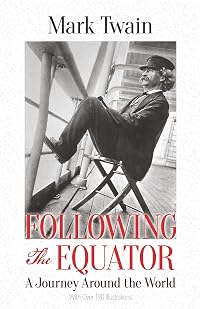


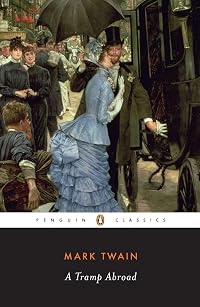



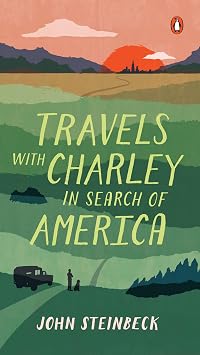
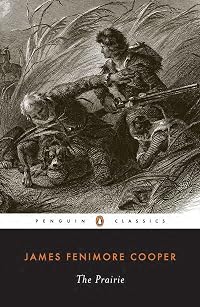

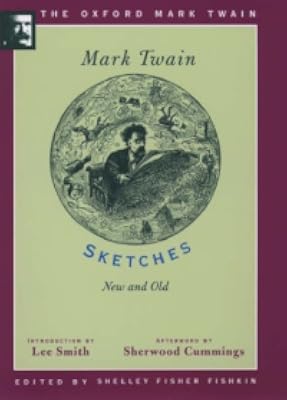
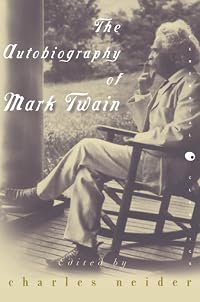














Member Recommendations


Member Reviews
I’ve been Roughing It and have to say, if laughter is the best medicine, Mark Twain has saved me visits to the local sawbones. He amuses himself and us with many tall tales, plus tales that sound tall but may be true, tales that sound true but may be tall, and others one hopes surely can be trusted. I wouldn’t lay money on which are which.
That said, among his talents is giving offense. The chapters on Brigham Young and the Church of Jesus Christ of Latter-day Saints will not be agreeable to Mormons. Blacks and Chinese aren’t often mentioned but when they appear are called names most of us reject. The Indians always come off poorly, some being described with terrible contempt, and even when they do something that favorably show more impresses Twain, well, it’s regarded as something akin to the mysteries of the animal kingdom.
The account is also rough on anyone believing that men of Twain’s time had better moral fiber than now. You’ll find plenty of stories here to refute the belief. The dishonesty of men assaying ore samples for gold or silver, and the scams conducted by mine speculators, were common examples. George Plimpton notes in his Intro to the Oxford edition that frontier sentiment held that “An honest judge is a son of a gun who will stay bought.” Must be a joke, one thinks, but then Twain calls policemen and politicians “the dust-licking pimps and slaves of the scum.” He’s not joking.
Christians will find Twain’s rude disposition toward their religion exercised as well, especially in his extended visit to missionary-altered Hawaii. He writes about how lucky it was for Hawaiians to be converted to a religion that would “make them permanently miserable by telling them how beautiful and how blissful a place heaven is, and how nearly impossible it is to get there…how dreary a place perdition is and what unnecessarily liberal facilities there are for going to it…what rapture it is to work all day long for fifty cents to buy food for next day with, as compared with fishing for pastime and lolling in the shade through eternal Summer, and eating of the bounty that nobody labored to provide but Nature.”
Roughing It teems with incidents, adventures, personalities, and opinions. Not each is gold. Still, someone’s reaction to this book may be a serviceable assay for how much you’ll enjoy liquoring up together at the local Wild West saloon. show less
That said, among his talents is giving offense. The chapters on Brigham Young and the Church of Jesus Christ of Latter-day Saints will not be agreeable to Mormons. Blacks and Chinese aren’t often mentioned but when they appear are called names most of us reject. The Indians always come off poorly, some being described with terrible contempt, and even when they do something that favorably show more impresses Twain, well, it’s regarded as something akin to the mysteries of the animal kingdom.
The account is also rough on anyone believing that men of Twain’s time had better moral fiber than now. You’ll find plenty of stories here to refute the belief. The dishonesty of men assaying ore samples for gold or silver, and the scams conducted by mine speculators, were common examples. George Plimpton notes in his Intro to the Oxford edition that frontier sentiment held that “An honest judge is a son of a gun who will stay bought.” Must be a joke, one thinks, but then Twain calls policemen and politicians “the dust-licking pimps and slaves of the scum.” He’s not joking.
Christians will find Twain’s rude disposition toward their religion exercised as well, especially in his extended visit to missionary-altered Hawaii. He writes about how lucky it was for Hawaiians to be converted to a religion that would “make them permanently miserable by telling them how beautiful and how blissful a place heaven is, and how nearly impossible it is to get there…how dreary a place perdition is and what unnecessarily liberal facilities there are for going to it…what rapture it is to work all day long for fifty cents to buy food for next day with, as compared with fishing for pastime and lolling in the shade through eternal Summer, and eating of the bounty that nobody labored to provide but Nature.”
Roughing It teems with incidents, adventures, personalities, and opinions. Not each is gold. Still, someone’s reaction to this book may be a serviceable assay for how much you’ll enjoy liquoring up together at the local Wild West saloon. show less
Extraordinarily vivid description of the west and his experiences. I wish my travel journal was as detailed or that I had as many stories to tell!
I enjoyed reading about places that I've been or lived, or that are familiar to me from his perspective during an earlier time.
I enjoyed reading about places that I've been or lived, or that are familiar to me from his perspective during an earlier time.
It was really weird reading this book with modern eyes. Twain was a product of his time in language, but not in thought. I had to keep reminding myself of this as I read some of his essays on "non-native" (not white) Americans. He wrote to an audience that was sure of Manifest Destiny. I was also keenly aware that he sometimes played with words so that they took on a meaning that became quite clear in his later work.
Some of the essays were tedious and a couple were downright malicious. But, as a travelogue, it was brilliant overall.
Some of the essays were tedious and a couple were downright malicious. But, as a travelogue, it was brilliant overall.
Originally published in 1872, Roughing It is most commonly presented as a two-volume travel adventure. Twain, ever the storyteller of exaggerated fact and humorous fiction, takes us on a epic journey across the country; an exercise that he called "variegated vagabondizing." This would seem to be a nonfiction, but you really cannot trust Twain with his stories of Slade, the Rocky Mountain desperado and the outrageous shootouts Twain supposedly witnessed. My personal eye roll story was when Twain and a companion rowed 12-15 miles to an island...in the middle of a storm. I am from an island ten miles out to sea and I can tell you it takes 70-75 minutes to go that far with an engine-powered boat in flat calm weather. My favorite moment was show more a Winnie-the-Pooh situation when Twain and his companions were thinking they are being stalked by a growing group of men when really it was their own footprints multiplying as they wandered around in circles. Did Milne get the idea from Twain? show less
A wonderful audiobook, a travelogue of the 1860s that was sometimes serious and sometimes had me laughing out loud. In addition to tall tales and humor, it included his eyewitness reports of an overland trip by stage coach, silver mining, the Gold Rush, and ancient Hawaii, plus a narrated history of the Mormons, and the sad, brutal oppression of the Chinese throughout California and the West. (A story I just read about in "Driven Out: The Forgotten War Against Chinese Americans" by Jean Pfaelzer.)
Warning to the modern reader -- there are tinges of racist talk, on occasion, that was typical of the times, such as "Injuns," and some dialog he passed on (not his) using the n-word -- to be excused, of course, as the tale was published in show more 1872.
I did notice that he decided to head west with his brother at the age of 26 just when the Civil War was breaking out. And thank goodness he did! Or he may not have lived to bless this world with his memorable characters, his humor, his genius!
Recommended! show less
Warning to the modern reader -- there are tinges of racist talk, on occasion, that was typical of the times, such as "Injuns," and some dialog he passed on (not his) using the n-word -- to be excused, of course, as the tale was published in show more 1872.
I did notice that he decided to head west with his brother at the age of 26 just when the Civil War was breaking out. And thank goodness he did! Or he may not have lived to bless this world with his memorable characters, his humor, his genius!
Recommended! show less
This book, published in 1872, is a fictional account based on Mark Twain’s real experiences traveling to the western US in the 1860s. He accompanied his brother, who was named Secretary of the Nevada Territory. It covers the protagonist’s travels in Nevada Territory, Utah Territory, California, and Hawaii. Adventures and misadventures abound – gold and silver mining, travel by stagecoach, interacting with the Mormons in Salt Lake City, obtaining various jobs including reporter, which leads to further opportunities. Twain’s writing is colloquial, lively, and engaging. He liberally employs humor and self-deprecation, especially regarding his failed “get rich quick” schemes. He tells a few tall tales along the way. This book show more was selected for my library’s reading program, related to the celebration of “Mark Twain Days.” Since I live in the area, I enjoyed the many descriptions of the local region as it existed in the past, including Lake Tahoe, Virginia City, Carson City, Dayton, and Mono Lake. The only downside is the depiction of native tribes (and several other groups), which includes racial prejudices that were fairly typical of the era. show less
There were a lot of interesting parts in here - descriptions of various areas of Nevada, of San Francisco, and of many areas of Hawaii (the Sandwich Islands); also a sketch of how Twain came to be a public speaker. There were also a lot of really annoying bits - mostly attempts to be funny, by exaggerating things and spending half-pages swearing the tales were true - the first part of the book, about the stagecoach journey, was mostly that, and I slogged though only because my family had been enjoying the later parts, about Nevada (while we were there). Once he starts telling true(ish) stories, it gets more interesting. His voice does differ a lot throughout - I'm pretty sure the book was cobbled together over time (at a couple points, show more he quotes from his journal of the time, framing it in later commentary). During the stagecoach journey, he keeps switching from "boy excited to be traveling for the first time" to "experienced traveler referencing other trips" and back again - it's disconcerting. And much later, in the Hawaii segment, he keeps telling the same story twice - once in pious horror at the behavior of the savage non-Christians, once cynically dissecting the behavior of the Christians and their treatment of the natives. Usually one right after the other, which, again, is disconcerting. There's a lot of good stories and descriptions in here, but it's a huge book and mostly I felt like I was slogging through it. Glad I read it, I'll never read it again. show less
Members
- Recently Added By
Published Reviews
ThingScore 100
Mark Twain helped to devise the personal style of American travel writing. Dry guidebook facts were not for him. He could not help turning everything he saw into literature when he trained his keen eye on foreign people and places. No matter what unusual customs he saw or monuments he climbed, he remained Mark Twain - a wised-up observer disguised as a wide-eyed innocent.
added by jlelliott
Lists

Read These Too
458 works; 9 members

Trinity College Booklist (1951): Class Ten, English Literature
358 works; 5 members

Libros Californianos: Hanna's List
23 works; 1 member

1964 College Preparatory Reading List
202 works; 8 members

NPR Readers Poll: 100 Favorite Funny Books
100 works; 5 members

American Realism
15 works; 1 member

A Good Read (Radio 4)
287 works; 1 member
Author Information

2,764+ Works 209,028 Members
Mark Twain was born Samuel L. Clemens in Florida, Missouri on November 30, 1835. He worked as a printer, and then became a steamboat pilot. He traveled throughout the West, writing humorous sketches for newspapers. In 1865, he wrote the short story, The Celebrated Jumping Frog of Calaveras County, which was very well received. He then began a show more career as a humorous travel writer and lecturer, publishing The Innocents Abroad in 1869, Roughing It in 1872, and, Gilded Age in 1873, which was co-authored with Charles Dudley Warner. His best-known works are The Adventures of Tom Sawyer, Mississippi Writing: Life on the Mississippi, and The Adventures of Huckleberry Finn. He died of a heart attack on April 21, 1910. (Bowker Author Biography) show less
Mark Twain has a Legacy Library. Legacy libraries are the personal libraries of famous readers, entered by LibraryThing members from the Legacy Libraries group.
15 Works 3,691 Members
Jim Foster, a native Texan now living in Salmon, Idaho, is a fulltime photographer/writer specializing in nature, the environment lifestyles, travel, and adventure travel. At this time Jim has a stock file of birds numbering well over 36,000 images. His photographic images have appeared in national and regional magazine, newspapers and books in show more this country, Great Britain and Europe. He maintains an extensive stock photo file and sells to publications as well as the advertising community. Jim is the author of Birding Trails Texas: Panhandle, Prairies and Pineywoods, and his PHOTO BOOK on CD is in its third printing and presents images of over 100 bird species with III images. show less
Some Editions
Awards and Honors
Series
Belongs to Publisher Series
The Works of Mark Twain (vol. 2)
Mark Twain, Gesammelte Werke (Band 2)
Work Relationships
Common Knowledge
- Canonical title
- Roughing It
- Original title
- Roughing It
- Alternate titles*
- Durch Dick und Dünn
- Original publication date
- 1872
- Important places*
- Nevada, USA; Stati Uniti d'America
- Related movies
- Roughing It (2002 | IMDb)
- Dedication
- TO
CALVIN H. HIGBIE,
Of California,
an Honest Man, a Genial Comrade, and a Steadfast Friend.
THIS BOOK IS INSCRIBED
By the Author,
In Memory of the Curious Time
When We Two
WERE MILLIONAIRES FO... (show all)R TEN DAYS. - First words
- This book is merely a personal narrative, and not a pretentious history
or a philosophical dissertation.
My brother had just been appointed Secretary of Nevada Territory - an office of such majesty that it concentrated in itself the duties and dignities of treasures, comptroller, secretary of state, and acting governor in the go... (show all)vernor's absence. - Last words
- (Click to show. Warning: May contain spoilers.)When a journalist maligns a citizen, or attacks
his good name on hearsay evidence, he deserves to be thrashed for it,
even if he is a "non-combatant" weakling; but a generous adversary would
at least allow such a lamb the use of his legs at such a time.--M. T. - Original language*
- Inglese
*Some information comes from Common Knowledge in other languages. Click "Edit" for more information.
Classifications
- Genres
- Biography & Memoir, Fiction and Literature
- DDC/MDS
- 818.403 — Literature & rhetoric American literature in English American miscellaneous writings in English Later 19th Century 1861-1900 Diaries, journals, notebooks, reminiscences
- LCC
- PS1318 .A1 — Language and Literature American literature American literature Individual authors 19th century
- BISAC
Statistics
- Members
- 3,646
- Popularity
- 4,449
- Reviews
- 42
- Rating
- (3.91)
- Languages
- 8 — Czech, English, Finnish, French, German, Italian, Norwegian, Spanish
- Media
- Paper, Audiobook, Ebook
- ISBNs
- 212
- UPCs
- 1
- ASINs
- 107
