On This Page
Description
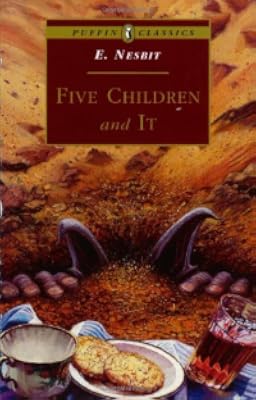
When four brothers and sisters discover a Psammead, or sand-fairy, in the gravel pit near the country house where they are staying, they have no way of knowing all the adventures its wish-granting will bring them.Tags
Recommendations
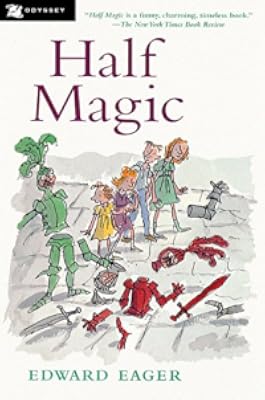
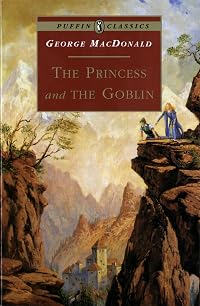
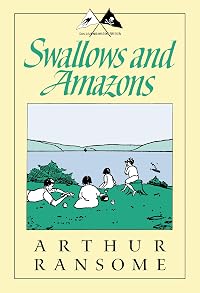
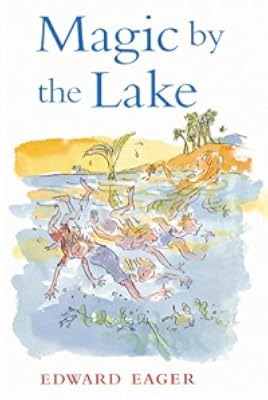
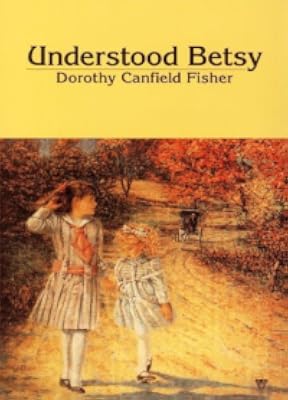
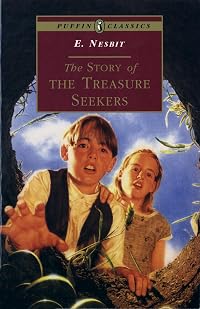
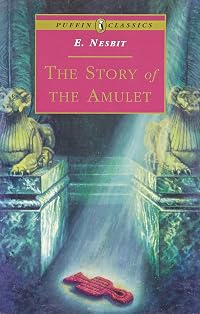
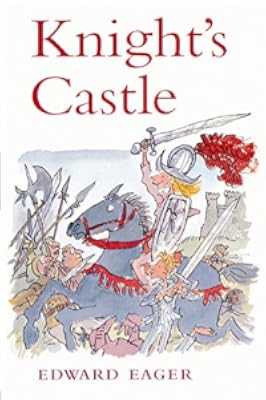
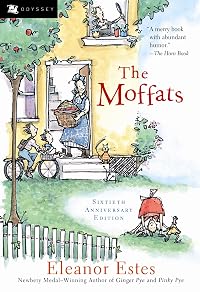

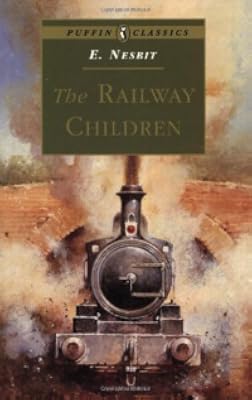
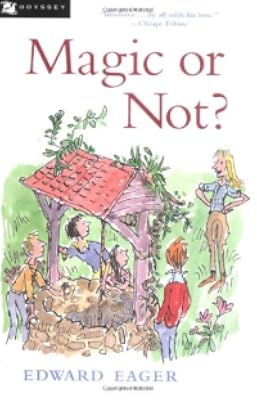
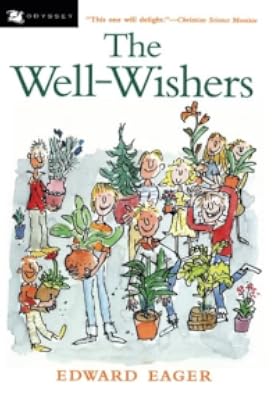






Member Recommendations
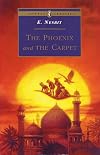
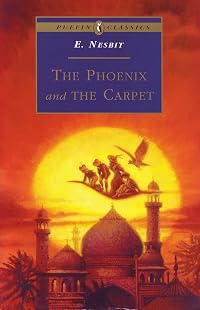
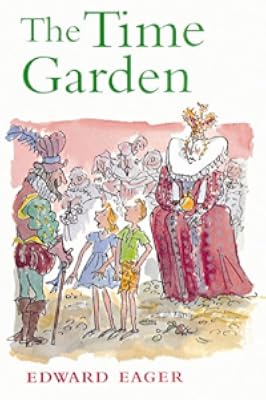
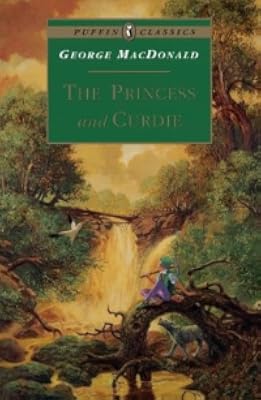
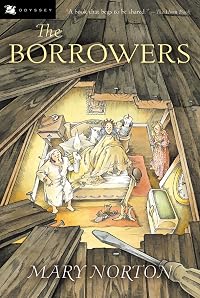
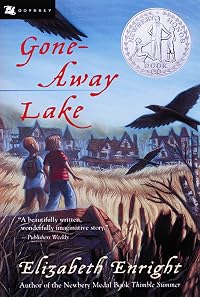
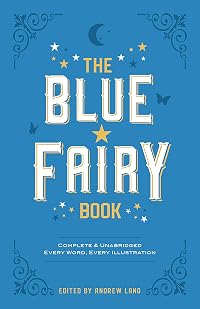
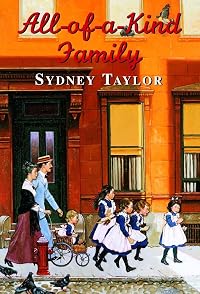
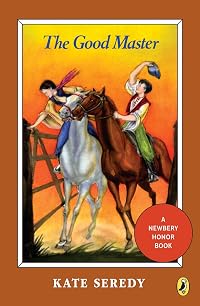
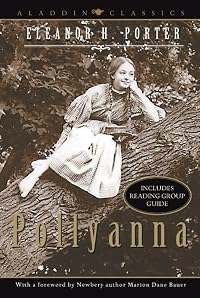
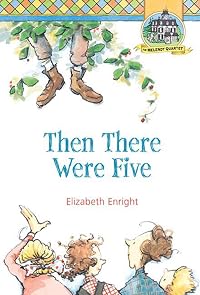
ed.pendragon Following Five Children and It, The Phoenix and the Carpet is the second in the so-called Psammead Trilogy, named after 'It', the sand-fairy.
60


by bookel

Member Reviews
I listened to this on audio, my first E. Nesbit book, and I was pleasantly surprised. Let's face it, children's fiction from more than a century ago often has aged badly, but this was not the case here at all! Nesbit writes in a timeless manner, full of wit and understanding of children's nature. His children are not too prim and proper. She captures their good heart, their childish way of reasoning and enjoying the world, their innocence and their mischievousness, making them very likable.
The story is episodic, with each chapter being about one of the wishes granted by the creature they find, and the plots are clever and amusing. Just an excellent children's book, perfectly readable today.
The story is episodic, with each chapter being about one of the wishes granted by the creature they find, and the plots are clever and amusing. Just an excellent children's book, perfectly readable today.
A fun and clever series of adventures for grade school kids, but it’s important to take them in the context of when they were published.
Five siblings (actually 4, because the fifth is too young to speak intelligibly) find a sand fairy, AKA a wish granter, and they harass it into giving the children one wish a day. Needless to say, these are children, and their half thought out wishes get them in trouble more often than not. It leads to that often used moral, "be careful what you wish for…"
But the children in this story step up to the challenge of fixing things after their wishes have gone wrong and, eventually, they learn from it.
Keep in mind, though, that this story were written in 1902. Written by Edith Nesbit, I'm happy to point show more out that even back then, a story could be written to pass the Bechdel test (my apparent reviewer theme for 2023), but it does not depict Indians well. They are literally described in the story as redskins, and the children dress up like redskins to the point where they paint their faces red. But this was 1902, and considering this, maybe you can give the lack of cultural sensitivity a pass. There are gypsies and carnival barkers too, and while the narrative alludes to these people as being dirty and poor schemers and connivers in a general sense, the Gypsies and carnival barkers in general don’t come across as inherently bad people. Nor do the Natives, for that matter.
There are also a few moments of the boys downplaying the importance of women or girls, but at least the girls don’t play into those stereotypes too heavily. So, in context, this was a fun read. If these kinds of sensitivities are bothersome, the reader can always skip over those chapters if they want, because each chapter is a new day and a new wish. show less
Five siblings (actually 4, because the fifth is too young to speak intelligibly) find a sand fairy, AKA a wish granter, and they harass it into giving the children one wish a day. Needless to say, these are children, and their half thought out wishes get them in trouble more often than not. It leads to that often used moral, "be careful what you wish for…"
But the children in this story step up to the challenge of fixing things after their wishes have gone wrong and, eventually, they learn from it.
Keep in mind, though, that this story were written in 1902. Written by Edith Nesbit, I'm happy to point show more out that even back then, a story could be written to pass the Bechdel test (my apparent reviewer theme for 2023), but it does not depict Indians well. They are literally described in the story as redskins, and the children dress up like redskins to the point where they paint their faces red. But this was 1902, and considering this, maybe you can give the lack of cultural sensitivity a pass. There are gypsies and carnival barkers too, and while the narrative alludes to these people as being dirty and poor schemers and connivers in a general sense, the Gypsies and carnival barkers in general don’t come across as inherently bad people. Nor do the Natives, for that matter.
There are also a few moments of the boys downplaying the importance of women or girls, but at least the girls don’t play into those stereotypes too heavily. So, in context, this was a fun read. If these kinds of sensitivities are bothersome, the reader can always skip over those chapters if they want, because each chapter is a new day and a new wish. show less
I wasn't actually expecting to like this book as much as I did. I wrongly presumed, since it was published over a hundred years ago, that it would be stuffy and rigid, or worse quaint and cute. The name E. Nesbit conjures images of very neat children in starched pinnies and hokey 1960s Disney adaptations. Anyway, I was wrong.
Nesbit has a large, quick and playful wit that is riddled throughout the story, with many humorous asides to the audience that absolutely must have inspired many of the children's writers who came after her, right into the modern day. The children often also act surprisingly like you would expect real children to act, and not at all like you would expect little Edwardians to behave. Well, obviously they do a bit, show more but still, it's all very enjoyable.
The only particularly bum note is the Red Indian chapter, which can't help but feel racist today. However, in its defence, when the wishes come true it is as the children would imagine it rather than true to life, so the fact that these Indians scalp people is just because that's what the children mistakenly believe, as they would in 1902 with their only knowledge coming from picture books.
One other possible weakness in the story is that despite there being five children, they do not have very defined personalities. Anthea is the most thoughtful, and Robert is the nastiest, but otherwise they are fairly interchangeable in each scene. It's also really weird that Nesbit refers to the children in plural as 'it' rather than 'they'. It just feels dehumanising. The reader might also get frustrated by how poorly every single one of their wishes turns out. Nesbit herself encourages the audience at one point to consider how you would have handled the situation better, because she knows that's exactly what you are doing each time. But it is a shame that they never get to have any fun throughout the entire book! It might have been nice to have had more of a finale, but I guess it wasn't that kind of story.
Anyway, it's an enjoyable, funny little fantasy adventure story for children and I would be interested to read more by E. Nesbit now that I know her writing style is so engaging. show less
Nesbit has a large, quick and playful wit that is riddled throughout the story, with many humorous asides to the audience that absolutely must have inspired many of the children's writers who came after her, right into the modern day. The children often also act surprisingly like you would expect real children to act, and not at all like you would expect little Edwardians to behave. Well, obviously they do a bit, show more but still, it's all very enjoyable.
The only particularly bum note is the Red Indian chapter, which can't help but feel racist today. However, in its defence, when the wishes come true it is as the children would imagine it rather than true to life, so the fact that these Indians scalp people is just because that's what the children mistakenly believe, as they would in 1902 with their only knowledge coming from picture books.
One other possible weakness in the story is that despite there being five children, they do not have very defined personalities. Anthea is the most thoughtful, and Robert is the nastiest, but otherwise they are fairly interchangeable in each scene. It's also really weird that Nesbit refers to the children in plural as 'it' rather than 'they'. It just feels dehumanising. The reader might also get frustrated by how poorly every single one of their wishes turns out. Nesbit herself encourages the audience at one point to consider how you would have handled the situation better, because she knows that's exactly what you are doing each time. But it is a shame that they never get to have any fun throughout the entire book! It might have been nice to have had more of a finale, but I guess it wasn't that kind of story.
Anyway, it's an enjoyable, funny little fantasy adventure story for children and I would be interested to read more by E. Nesbit now that I know her writing style is so engaging. show less
A classic children's story from 1902, about five children (or, really, four children and their baby brother) who encounter a slightly bad-tempered magical creature who can grant wishes at a rate of one a day, with the limitation that whatever is wished for inevitably disappears by sunset. Which turns out to be a good thing, as, of course, the kids keep accidentally wishing for entirely the wrong things, or wishing for things that seem like a good idea but turn out less than ideally. They end up missing dinner a lot.
This was a favorite of mine when I was young. Revisiting books you loved as a child is always a little worrying, as there's a real possibility of discovering that they're not as good as you thought they were, thus tinging show more your beloved childhood memories with disappointment. But I'm pleased to say that this is not one of those books. I found it utterly charming, and every bit as delightful as I did as a kid. I think back then, I was probably mostly taken with the cute fantasy story. Now, what I mostly appreciate is the humor, including a lot of extremely amusing authorial asides that clearly come from someone who remembers what it's like to be a child but also has an adult's perspective on kids. And both adult me and kid me can appreciate the way the book has a pleasant sort of quaintness to it, while at the same time being as breezily readable as any modern kid's story, although I'm sure the younger me wouldn't have thought of it in quite those terms. show less
This was a favorite of mine when I was young. Revisiting books you loved as a child is always a little worrying, as there's a real possibility of discovering that they're not as good as you thought they were, thus tinging show more your beloved childhood memories with disappointment. But I'm pleased to say that this is not one of those books. I found it utterly charming, and every bit as delightful as I did as a kid. I think back then, I was probably mostly taken with the cute fantasy story. Now, what I mostly appreciate is the humor, including a lot of extremely amusing authorial asides that clearly come from someone who remembers what it's like to be a child but also has an adult's perspective on kids. And both adult me and kid me can appreciate the way the book has a pleasant sort of quaintness to it, while at the same time being as breezily readable as any modern kid's story, although I'm sure the younger me wouldn't have thought of it in quite those terms. show less
This book almost works as a collection of linked short stories; each chapter is a self-contained adventure in which the five children make a single wish each day, and the wishes invariably have unforeseen consequences. Most of the stories were okay given the time in which they were written, but wow did it get inappropriate in the last couple of chapters with the portrayal of Indigenous people. Also. the girls had naughty-sounding-to-modern-ears nicknames (Panty for Anthea aka Panther, and Pussy for Jane), which would be awkward for modern-day storytimes. And I was not fond of Nesbit’s almost ostentatiously prescriptive grammar: she seemed to go out of her way to say things like « everyone ate its supper ». She would obviously not show more approve of the singular they… show less
A London family takes a modest house in the country for the summer, and the five children discover a sand fairy with the power to grant wishes.
Cyril, Anthea, Robert, and Jane, and their two-year-old brother whom they call the Lamb, also discover that wishes aren't always all they're cracked up to be. What could be more harmless than Jane's wish that they all be "as beautiful as the day"? How could wishing for untold wealth--in gold coins--go wrong? Yet over the course of the summer, the children find that more often than not they are figuring out how to get through to sunset, when the sand fairy's gifts go away.
This was a cherished favorite when I was a child, and it's still a lovely, wonderful book to read and reread. It ages very show more well; Nesbit's girls and boys are equally brave, clever, and loyal, with the impulsivity and unreliable judgment of real children.
Highly recommended. show less
Cyril, Anthea, Robert, and Jane, and their two-year-old brother whom they call the Lamb, also discover that wishes aren't always all they're cracked up to be. What could be more harmless than Jane's wish that they all be "as beautiful as the day"? How could wishing for untold wealth--in gold coins--go wrong? Yet over the course of the summer, the children find that more often than not they are figuring out how to get through to sunset, when the sand fairy's gifts go away.
This was a cherished favorite when I was a child, and it's still a lovely, wonderful book to read and reread. It ages very show more well; Nesbit's girls and boys are equally brave, clever, and loyal, with the impulsivity and unreliable judgment of real children.
Highly recommended. show less
Five children - Anthea, Cyril, Jane, Robert, and the baby, called Lamb - are taken to a summer house, and in the nearby gravel pit, they discover a Psammead, or sand-fairy, that grants wishes. Their wishes, of course, go wrong, one after the other, whether they are carefully thought-through or made impulsively. When they wish to be "as beautiful as the day," no one recognizes them and they are locked out of their house; when they wish for wings, they enjoy flight but get stuck at the top of a clock tower; when they wish for wealth, they are unable to spend their gold. Wishes for a besieged castle and for "Red Indians in England" likewise go awry.
The chapter "Scalps" is downright problematic and deeply uncomfortable, and the language is show more naturally somewhat old-fashioned throughout, as it was first published in 1902, but for those magic-loving readers willing to overlook the former and either put up with or enjoy the latter (the first-person omniscient narrator has a wryly humorous tone), this classic is still enjoyable, and certainly inspired many other beloved fantasy novels.
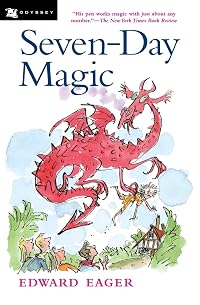
See also: Seven-Day Magic by Edward Eager
Quotes
Trying not to believe in things when in your heart you are almost sure they are true, is as bad for the temper as anything I know. (165)
"But it's true," said Jane.
"Of course it is, but it's not true enough for grown-up people to believe it," said Anthea. show less
The chapter "Scalps" is downright problematic and deeply uncomfortable, and the language is show more naturally somewhat old-fashioned throughout, as it was first published in 1902, but for those magic-loving readers willing to overlook the former and either put up with or enjoy the latter (the first-person omniscient narrator has a wryly humorous tone), this classic is still enjoyable, and certainly inspired many other beloved fantasy novels.
See also: Seven-Day Magic by Edward Eager
Quotes
Trying not to believe in things when in your heart you are almost sure they are true, is as bad for the temper as anything I know. (165)
"But it's true," said Jane.
"Of course it is, but it's not true enough for grown-up people to believe it," said Anthea. show less
Members
- Recently Added By
Lists

Favorite Childhood Books
1,651 works; 515 members

Best Fantasy Novels
821 works; 361 members

Best Children's Books You've Read
197 works; 75 members
1001 Children's Books You Must Read Before You Grow Up
774 works; 101 members

501 Must-Read Books
529 works; 72 members

Childhood Favorites
427 works; 24 members

Read the book and saw the movie
1,170 works; 193 members
Best of British Literature
226 works; 41 members

1900s (Decade, not century)
73 works; 17 members
Children's Fantasy
73 works; 10 members

Books Set in Great Britain
191 works; 13 members

Classics you know you should have read but probably haven't
421 works; 409 members

Best Family Stories
241 works; 22 members
Survey of Fantasy Classics
111 works; 23 members

20th Century Literature
1,161 works; 55 members
Satori Smiles Children's Book List
262 works; 7 members
Honey For a Child's Heart
1,152 works; 25 members

Female Author
1,234 works; 67 members
The Seven-League Shelf
57 works; 3 members
Ambleside Books
459 works; 18 members

Children's Classics Worth Reading
68 works; 9 members

Genre Benders: Comic Fantasy
97 works; 16 members
The 100 Best Fantasy Books of All Time
100 works; 15 members

Novels featuring siblings
133 works; 8 members
Books I Wish I’d Read as a Kid
32 works; 4 members

Blue Pyramid 1,276 Best Books of All Time
1,248 works; 32 members

CCE 1000 Good Books List
1,033 works; 12 members

4th Grade Books
312 works; 5 members

BingoDOG - Books With Mythical Creatures
57 works; 16 members

Out of Copyright
244 works; 14 members

Puffin Books 70th anniversary handbook recommendations
537 works; 10 members

Read Aloud Revival
108 works; 4 members

HMS: Make Your Child a Lover of Books, Ages 9 & up
111 works; 2 members

Books talked about in Pamela Dean's Tam Lin
74 works; 1 member

Books We Loved As Children
603 works; 253 members

Book Titles Mentioned In Newberry Medal And Honor Books
884 works; 3 members
Children's Literature 1900 - 1950 in order
413 works; 8 members

Before Austen Comes Aesop
318 works; 9 members

Ambleside Y2
33 works; 1 member

Books Read in 2014
2,344 works; 86 members

Boys, girls, flying, fantasy -- children's/young adult fiction
27 works; 2 members

Books Read in 2007
326 works; 8 members
Books mentioned in Fire and Hemlock by Diana Wynne Jones
33 works; 1 member

Unread books
1,063 works; 87 members
Overdue Podcast
808 works; 9 members

Books With Numbers in the Title
308 works; 13 members

Books Read in 2016
4,666 works; 199 members

Works Referenced in The League of Extraordinary Gentlemen
122 works; 6 members

University literature
145 works; 5 members

Michael Dirda's 100 Best Comic Novels
100 works; 1 member
Author Information

303+ Works 32,033 Members
E. Nesbit (1858-1924) wrote her first highly successful work for children, The Story of the Treasure Seekers, in 1899. Her many books for young readers, including The Magic City, Wet Magic, The Railway Children, Five Children and It, and The Enchanted Castle, gained her a popularity that has lasted for more than a century Peter Glassman is the show more owner of Books of Wonder, the New York City bookstore and publisher specializing in both new and old imaginative books for children show less
Some Editions
Awards and Honors
Notable Lists
Series

Belongs to Publisher Series
Puffin Story Books (128)
Virago Modern Classics (691)
Work Relationships
Is contained in
The Collected Young Readers Fiction of E. Nesbit—Volume 1: The Psammead Adventures: Five Children and It, The Phoenix and the Carpet & The Story of the Amulet by E. Nesbit
Has the (non-series) sequel
Has the adaptation
Inspired
Common Knowledge
- Canonical title
- Five Children and It
- Original publication date
- 1902
- People/Characters
- It; Robert; Anthea; Jane; Cyril; Hilary ('The Lamb') (show all 7); Martha
- Important places
- England, UK
- Related movies
- Five Children and It (2004 | IMDb)
- Dedication
- To John Bland.
My Lamb, you are so very small,
You have not learned to read at all.
Yet never a printed book withstands
The urgence of your dimpled hands.
So, though this book is for yourself,
Let mother kee... (show all)p it on the shelf
Till you can read. O days that pass,
That day will come too soon, alas! - First words
- The house was three miles from the station, but before the dusty hired fly had rattled along for five minutes the children began to put their heads out of the carriage window and to say, 'Aren't we nearly there?'
- Last words
- (Click to show. Warning: May contain spoilers.)It was in a—But I must say no more.
- Original language
- English
- Disambiguation notice
- This is the original book by E. Nesbit. Please do not combine with any adaptation.
Classifications
- Genres
- Fiction and Literature, Kids, Children's Books, Fantasy
- DDC/MDS
- 823.8 — Literature & rhetoric English & Old English literatures English fiction 1837-1899
- LCC
- PZ7 .N43777 .F — Language and Literature Fiction and juvenile belles lettres Fiction and juvenile belles lettres Juvenile belles lettres
- BISAC
Statistics
- Members
- 5,382
- Popularity
- 2,516
- Reviews
- 83
- Rating
- (3.88)
- Languages
- 14 — Chinese, Czech, Danish, English, French, German, Hungarian, Italian, Japanese, Latvian, Polish, Spanish, Swedish, Portuguese (Portugal)
- Media
- Paper, Audiobook, Ebook
- ISBNs
- 241
- UPCs
- 2
- ASINs
- 77