On This Page
Description
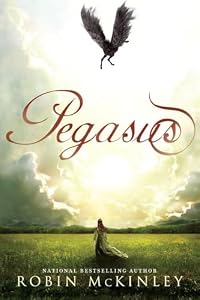
Because of a thousand-year-old alliance between humans and pegasi, Princess Sylvi is ceremonially bound to Ebon, her own pegasus, on her twelfth birthday, but the closeness of their bond becomes a threat to the status quo and possibly to the safety of their two nations.Tags
Recommendations





Member Recommendations
Member Reviews
No. Just no.
It had such a good premise: humans and pegasi co-existing, humans and pegasi being magically bonded, a fantasy story that didn't seem to be extremely sexist (though very heterosexual), no love story ... we could have had it aaaaaaaaaaaall.
But no. The first 50 pages is just back-story, smacked over your head. You thought Tolkien's prologue to LotR was bad? I ain't got nothing on this, I'm telling you that. It takes even longer than that before the plot starts, well, whatever plot there is, which isn't much.
Basically, Sylvi (human princess) is bonded to Ebon (pegasus prince) and they are special because they can actually speak telepathically to each other which no one else can. Instead they rely on schamans (pegasi) or show more magicians/speakers (humans) to translate between pegasus and human.
People are immediately pissed that they can speak to each other, because that's obviously bad. Why is it obviously bad? Because the plot demands it to be. The evil magician Fthoom (HOW DO YOU PRONOUNCE THAT!?) spends four years researching why it is bad, but what he finds and delivers as a game-changing speak in the last chapters is not something he could have possibly known when he first said it was bad. He just did because the story needed a bad guy.
THe same way it needed rules on how pegasi and humans could interact. They can't fly together, touch each other, speak to each other, blah blah blah for no reason. Ofc our heroine does this all the time and literally nothing bad happens. There just rules for the sake of rules.
The first part of the book is mostly told in flashbacks, even when we're dealing with events happening RIGHT NOW. You'll have situation A presented to you, skip to situation C and then have the character look back at situation B that just happened. WHY NOT JUST GIVE US ABC IN THAT ORDER!? WHY USE THIS NARRATIVE GRIP ALL THROUGHOUT THE FIRST 200 PAGES.
Ugh, it's just ... it doesn't feel edited, at all. Things pop up in the later half of the book that hasn't been introduced before but then they become a normal part of the plot, such as the telepathic link having trouble translating pegasi phrases to Sylvii. It should've been there the whole time.
Plus, there's no plot. It's bascially that Sylvii gets bonded and then goes on vacation to the pegasi land and then she comes home and Fthoom makes his speech. End of book. And oh, the ending wasn't even good, just a lame cliffhanger to force you to read the next book, which I can assure you I won't do because fuck no.
I can't remember the last time it took me this long to finish a book. I've read books twice this long in shorter time than this took me, 'cause I just couldn't be bothered with it. It had a great premise and could've been good, but whoever edited this seriously dropped the ball on this one. show less
It had such a good premise: humans and pegasi co-existing, humans and pegasi being magically bonded, a fantasy story that didn't seem to be extremely sexist (though very heterosexual), no love story ... we could have had it aaaaaaaaaaaall.
But no. The first 50 pages is just back-story, smacked over your head. You thought Tolkien's prologue to LotR was bad? I ain't got nothing on this, I'm telling you that. It takes even longer than that before the plot starts, well, whatever plot there is, which isn't much.
Basically, Sylvi (human princess) is bonded to Ebon (pegasus prince) and they are special because they can actually speak telepathically to each other which no one else can. Instead they rely on schamans (pegasi) or show more magicians/speakers (humans) to translate between pegasus and human.
People are immediately pissed that they can speak to each other, because that's obviously bad. Why is it obviously bad? Because the plot demands it to be. The evil magician Fthoom (HOW DO YOU PRONOUNCE THAT!?) spends four years researching why it is bad, but what he finds and delivers as a game-changing speak in the last chapters is not something he could have possibly known when he first said it was bad. He just did because the story needed a bad guy.
THe same way it needed rules on how pegasi and humans could interact. They can't fly together, touch each other, speak to each other, blah blah blah for no reason. Ofc our heroine does this all the time and literally nothing bad happens. There just rules for the sake of rules.
The first part of the book is mostly told in flashbacks, even when we're dealing with events happening RIGHT NOW. You'll have situation A presented to you, skip to situation C and then have the character look back at situation B that just happened. WHY NOT JUST GIVE US ABC IN THAT ORDER!? WHY USE THIS NARRATIVE GRIP ALL THROUGHOUT THE FIRST 200 PAGES.
Ugh, it's just ... it doesn't feel edited, at all. Things pop up in the later half of the book that hasn't been introduced before but then they become a normal part of the plot, such as the telepathic link having trouble translating pegasi phrases to Sylvii. It should've been there the whole time.
Plus, there's no plot. It's bascially that Sylvii gets bonded and then goes on vacation to the pegasi land and then she comes home and Fthoom makes his speech. End of book. And oh, the ending wasn't even good, just a lame cliffhanger to force you to read the next book, which I can assure you I won't do because fuck no.
I can't remember the last time it took me this long to finish a book. I've read books twice this long in shorter time than this took me, 'cause I just couldn't be bothered with it. It had a great premise and could've been good, but whoever edited this seriously dropped the ball on this one. show less
Sylvi is the youngest daughter of the king. On her twelfth birthday she is ritually "bound" to a pegasus, as all royalty are. But for her, the binding is not just a rote gesture--she can actually hear the pegasus in her head! Everyone is shocked that she and Ebon can communicate, and the very idea shakes the magicians' guild to the core. Sylvi tries to find a way to bring humans and pegasi together, even as rocs threaten the kingdom and the head magician threatens her bond with Ebon.
SO DISAPPOINTING. The writing is tangled and muddled. Suddenly we'll be three years in the future, but then it seems McKinley forgot to add some details, so we get a memory from a year ago, and then back to three years into the future, but then oh wait we show more forgot to add this other inconsequential anecdote so back two years, and so on and so forth. It reads like short story or a bare outline that got clumsily expanded. This might have made it difficult to keep the timeline straight except that absolutely nothing changes or develops over time. Sylvi spends the entire book thinking she should tell her parents she can communicate with pegasi. 400 pages without any resolution to that storyline. Sylvi and Ebon start flying together, and that storyline goes absolutely no where. Same for whether the magicians are mistranslating, or questions about the Alliance formation, or the magic grass the pegasi live on, or what Fthoom is up to. No development of any of this--just plot hooks introduced and left hanging. And speaking of Fthoom, this reminds me of why I literally dropped the book in disgust when I finished it. So for 400 pages no actual plot takes place. There's no sense of danger, no sense that anything is changing or developing. And then about ten pages from the end of the book, abruptly a roc attacks the kingdom and Sylvi's older brother goes to fight it. While he's gone, Fthoom declares that he's found an ancient document. It's the deathbed confession of a roc (the ancient enemy of pegasus and human alike) in which the roc declares that pegasi and humans can never be close, because they will never understand each other, and trying to understand each other will destroy them. Everyone at court freaks out and immediately the pegasi are forced to leave. But--why would anyone trust a roc's word? Even if the ancient document is real, and a roc really did say that an alliance between pegasi and humans would destroy both cultures--why believe them? It's in the rocs' best interest to drive their enemies apart, after all! OBVIOUSLY this is not true.
So. Basically. No development of anything (I still have no idea how this kingdom functions, what its economy is like, if it trades, if it has serfs or what), no plot until the last ten pages, and a nonsensical plot at that. There is no way I'm reading the rest of this series, because just reading this book actually made me angry at how badly it was written. show less
SO DISAPPOINTING. The writing is tangled and muddled. Suddenly we'll be three years in the future, but then it seems McKinley forgot to add some details, so we get a memory from a year ago, and then back to three years into the future, but then oh wait we show more forgot to add this other inconsequential anecdote so back two years, and so on and so forth. It reads like short story or a bare outline that got clumsily expanded. This might have made it difficult to keep the timeline straight except that absolutely nothing changes or develops over time. Sylvi spends the entire book thinking she should tell her parents she can communicate with pegasi. 400 pages without any resolution to that storyline. Sylvi and Ebon start flying together, and that storyline goes absolutely no where. Same for whether the magicians are mistranslating, or questions about the Alliance formation, or the magic grass the pegasi live on, or what Fthoom is up to. No development of any of this--just plot hooks introduced and left hanging. And speaking of Fthoom, this reminds me of why I literally dropped the book in disgust when I finished it. So for 400 pages no actual plot takes place. There's no sense of danger, no sense that anything is changing or developing. And then about ten pages from the end of the book, abruptly a roc attacks the kingdom and Sylvi's older brother goes to fight it. While he's gone, Fthoom declares that he's found an ancient document. It's the deathbed confession of a roc (the ancient enemy of pegasus and human alike) in which the roc declares that pegasi and humans can never be close, because they will never understand each other, and trying to understand each other will destroy them. Everyone at court freaks out and immediately the pegasi are forced to leave. But--why would anyone trust a roc's word? Even if the ancient document is real, and a roc really did say that an alliance between pegasi and humans would destroy both cultures--why believe them? It's in the rocs' best interest to drive their enemies apart, after all! OBVIOUSLY this is not true.
So. Basically. No development of anything (I still have no idea how this kingdom functions, what its economy is like, if it trades, if it has serfs or what), no plot until the last ten pages, and a nonsensical plot at that. There is no way I'm reading the rest of this series, because just reading this book actually made me angry at how badly it was written. show less
Oh, Robin McKinley, I do so love you and your fantasy worlds.
Where to begin? I’ve been a fan of McKinley since I read Spindle’s End. And Sunshine, but it would be a few years before I find out that the author I loved in middle school for Spindle’s End is the author I love for doing a different spin on vampires in Sunshine a few years later. She gives a different spin to stories and ideas, packing them with emotion and spirit.
She also tends to have a main character I want to have as my best friend; Sylvi is no different. The youngest of four, and the only daughter, Sylvi has played “catch-up” most of her life. She’s petite, and her brothers tend to treat her as either inconsequential or too seriously. She’s closest to her show more eldest brother, but as he is the heir his responsibilities grew to the point where he was no longer able to spend a lot of time with her.
Surprisingly, her parents give her a lot of latitude. They don’t try to force her to do anything she doesn’t want to (though there is the unspoken obligation that she will at least try it first before rejecting the idea) and they accept her unconventional relationship with her Pegasus, Ebon, without too much fuss. Almost all of the conflict comes in the form of Fthoom, the Head of the Magician’s Guild, who is strongly opposed to Sylvi. I found Sylvi’s father to be something of an idiot to not truly understand the sort of danger Fthoom represented; more than once he spoke out against the King and he was very, very open about his feelings in regards to Sylvi and Ebon’s relationship.
Pegasus isn’t a perfect novel; there are some flaws that might make others grind their teeth. There’s a lot of back and forth in the narrative, sometimes with very little warning before we go from a “current” conversation to a past memory. Or a jump to the future in the middle of a chapter. Sometimes when reading I would grow confused as to who is talking or what is going on and have to go back to the preceding pages to re-read. Additionally the book ends at an awkward moment, mostly because McKinley has already commented that it was becoming too long when she wrote it, and the “conclusion” would be a book by itself. Wahoo for more time spent in this world, but this part of the story ends on a heart-wrenching note.
This is also not an action-packed book; While none of McKinley’s books can truly claim to have action scenes, this is definitely a low key book even for her. A lot of the tension comes from rising courtly politics; of the worldly concerns nature, the “fight” that occurs near the end, and some of the past battles (discussed) are the only true action.
I wish we had the conclusion to what was happening. Sylvi has a guess, and I think I worked out what was really happening, at least partially based on the clues and obsessive re-reading, but I wish we knew now. Here’s hoping the second book comes out quickly, and the pain Sylvi feels is short-lived. show less
Where to begin? I’ve been a fan of McKinley since I read Spindle’s End. And Sunshine, but it would be a few years before I find out that the author I loved in middle school for Spindle’s End is the author I love for doing a different spin on vampires in Sunshine a few years later. She gives a different spin to stories and ideas, packing them with emotion and spirit.
She also tends to have a main character I want to have as my best friend; Sylvi is no different. The youngest of four, and the only daughter, Sylvi has played “catch-up” most of her life. She’s petite, and her brothers tend to treat her as either inconsequential or too seriously. She’s closest to her show more eldest brother, but as he is the heir his responsibilities grew to the point where he was no longer able to spend a lot of time with her.
Surprisingly, her parents give her a lot of latitude. They don’t try to force her to do anything she doesn’t want to (though there is the unspoken obligation that she will at least try it first before rejecting the idea) and they accept her unconventional relationship with her Pegasus, Ebon, without too much fuss. Almost all of the conflict comes in the form of Fthoom, the Head of the Magician’s Guild, who is strongly opposed to Sylvi. I found Sylvi’s father to be something of an idiot to not truly understand the sort of danger Fthoom represented; more than once he spoke out against the King and he was very, very open about his feelings in regards to Sylvi and Ebon’s relationship.
Pegasus isn’t a perfect novel; there are some flaws that might make others grind their teeth. There’s a lot of back and forth in the narrative, sometimes with very little warning before we go from a “current” conversation to a past memory. Or a jump to the future in the middle of a chapter. Sometimes when reading I would grow confused as to who is talking or what is going on and have to go back to the preceding pages to re-read. Additionally the book ends at an awkward moment, mostly because McKinley has already commented that it was becoming too long when she wrote it, and the “conclusion” would be a book by itself. Wahoo for more time spent in this world, but this part of the story ends on a heart-wrenching note.
This is also not an action-packed book; While none of McKinley’s books can truly claim to have action scenes, this is definitely a low key book even for her. A lot of the tension comes from rising courtly politics; of the worldly concerns nature, the “fight” that occurs near the end, and some of the past battles (discussed) are the only true action.
I wish we had the conclusion to what was happening. Sylvi has a guess, and I think I worked out what was really happening, at least partially based on the clues and obsessive re-reading, but I wish we knew now. Here’s hoping the second book comes out quickly, and the pain Sylvi feels is short-lived. show less
Do not read this book ... yet. Wait until the sequel is out (and possibly the conclusion to the trilogy if that's what it is. The ending is unbearable. Not in a Jim Butcher's Changes 'I'm being a smartarse' type of unbearable, but in a fully laden express train hurtling over the edge. Stop. Type of unbearable.
The preceding 318 pages are all absolutely adorable, joyful light-hearted wonderful prose about a very lucky princess and her almost sparkly Pegasus. The world building is immaculate and immense, the characters fly (literally), everything just gels as a wonderful reading experience. A gentle start rolls slowly on, as the princess grows from 'too small' to 15 and then 16, her responsibilities and abilities develop a pace, with Ebon show more her Pegasus ever at her side. There are flashbacks and jumps in time, but the progression is inveitable. However there are tensions too and a faction of the court magicians doesn't appear to appreciate the deep joy her friendship with Ebon brings to the whole Pegasus/human community. Slowly the tension mounts, dissipates while she visits Ebon's homeland, and returns again, building to head. When the book just stops. This is beyond annoying. All the time I was reading the final third I was thinking, ' there aren't that many pages left, this is going to be quite some dramatic finish and wrap-up, on no there are only a few pages left, how's she going to tidy everything up ... to ARGH she's just left it all in midair ARGH ARGH ARGH. Want more. Unfortunately the sequel isn't available 'until next year at the earliest.
The back-story is fairly simple, a band of warriors left an unhappy kingdom, climbed their way through some mountain passes and found themselves in a luscious plateau, which turned out to be inhabited by Pegasai of awe-inspiring grandeur, but little battle prowess. They were decimated by a variety of (undescribed) creatures. An Alliance was formed, protection for territory, and the two have co-existed happily together for the last 800 years, even if neither still quite understands the other. It isn't quite clear how the Pegasai exist without trade. They have clearly demarked artisan guilds but somehow all manage to get fed without even a barter economy let alone currency. They won't even trade with the humans, but give gifts because the humans find it polite to do so. This very alien mindset of the Pegasai is extremely well constructed, and clearly demonstrates the frailty of the Alliance. I would lie some physical descriptions of the creatures that are invading but I guess they aren't really necessary.
SO sublimely enjoyable, that I really urge you to wait until the sequel is available. show less
The preceding 318 pages are all absolutely adorable, joyful light-hearted wonderful prose about a very lucky princess and her almost sparkly Pegasus. The world building is immaculate and immense, the characters fly (literally), everything just gels as a wonderful reading experience. A gentle start rolls slowly on, as the princess grows from 'too small' to 15 and then 16, her responsibilities and abilities develop a pace, with Ebon show more her Pegasus ever at her side. There are flashbacks and jumps in time, but the progression is inveitable. However there are tensions too and a faction of the court magicians doesn't appear to appreciate the deep joy her friendship with Ebon brings to the whole Pegasus/human community. Slowly the tension mounts, dissipates while she visits Ebon's homeland, and returns again, building to head. When the book just stops. This is beyond annoying. All the time I was reading the final third I was thinking, ' there aren't that many pages left, this is going to be quite some dramatic finish and wrap-up, on no there are only a few pages left, how's she going to tidy everything up ... to ARGH she's just left it all in midair ARGH ARGH ARGH. Want more. Unfortunately the sequel isn't available 'until next year at the earliest.
The back-story is fairly simple, a band of warriors left an unhappy kingdom, climbed their way through some mountain passes and found themselves in a luscious plateau, which turned out to be inhabited by Pegasai of awe-inspiring grandeur, but little battle prowess. They were decimated by a variety of (undescribed) creatures. An Alliance was formed, protection for territory, and the two have co-existed happily together for the last 800 years, even if neither still quite understands the other. It isn't quite clear how the Pegasai exist without trade. They have clearly demarked artisan guilds but somehow all manage to get fed without even a barter economy let alone currency. They won't even trade with the humans, but give gifts because the humans find it polite to do so. This very alien mindset of the Pegasai is extremely well constructed, and clearly demonstrates the frailty of the Alliance. I would lie some physical descriptions of the creatures that are invading but I guess they aren't really necessary.
SO sublimely enjoyable, that I really urge you to wait until the sequel is available. show less
This is one of the most beautiful books I've read in years and will remain one of my favorites for many years to come--all that despite the awful, gut-wrenching, heart-breaking cliffhanger ending.
The prose is clear and lucid with its poetry, and the purity of the main character's responses--both in reaction to things that happen to her and to her relationships with her friends and family--spoke to me in a wholly unexpected way. Robin McKinley clearly remembers what it's like to be left alone in a strange land/country/experience for the first time, because it translates so well into Sylvi's panic and culture shock.
I love this book, and I absolutely don't know how I'm going to wait until the second one is released. It's NOT just the show more story of a girl and her magical creature, not at all. It's a story about growing up and becoming your own person. show less
The prose is clear and lucid with its poetry, and the purity of the main character's responses--both in reaction to things that happen to her and to her relationships with her friends and family--spoke to me in a wholly unexpected way. Robin McKinley clearly remembers what it's like to be left alone in a strange land/country/experience for the first time, because it translates so well into Sylvi's panic and culture shock.
I love this book, and I absolutely don't know how I'm going to wait until the second one is released. It's NOT just the show more story of a girl and her magical creature, not at all. It's a story about growing up and becoming your own person. show less
In Pegasus, Robin McKinley revisits the themes that mark her stories so consistently and yet never seem to get old in her skilful prose. This tale is set in the mythical kingdom of Balsinland, established when military commander Balsin came to "this sweet green land" and made an alliance with the pegasi to drive out the various dragon-like creatures (rocs, taralians, norindours, and the like) who were killing off the pegasi people. The pegasi are intelligent flying horses with quite a developed culture of their own. The humans feel clumsy and awkward beside these elegant creatures, and from the first the two races have struggled to communicate. Only human magicians can translate between them, and so it has been for thousands of years. show more
Until Sylvi. Fourth child of King Corone and Queen Eliona, the Lady Sylviianel is bonded to the fourth child of the pegasi king, according to the royal custom and treaty hailing back to the days of Balsin. But that is where custom ends with Sylvi and Ebon, the black pegasus prince. For the two can speak to one another in their minds, in a way completely unlike anything they've ever heard of in their peoples' history together. Naturally, the Magicians' Guild is upset by the change, as they lose the control they've wielded over human-pegasi relations for centuries.
And there are other elements of unrest; the rapacious animals that were beaten back by the humans in Balsin's day are regrouping, multiplying, testing the borders and strength of Corone's kingdom. At a time when unity is critical, the court and magicians are divided because of Sylvi's and Ebon's unique bond. But is it unique? Or is there a more sinister reason that humans and pegasi have never been able to communicate freely with one another?
As with all of McKinley's stories, I enjoyed the world-building, character development, and humor—all delivered in deft prose that never calls undue attention to itself. The one thing I disliked about this book was that it ends on a cliffhanger. Oh yes, it's one of those. You're reading along, enjoying yourself immensely, and you suddenly notice the thin amount of pages you have left. You begin to worry, because the plot just seems to be ramping up now and there's really no time for a decent resolution. And as you approach those final pages, you realize: there's more to the story, and it's not what you're holding in your hands. This was just the first part. And naturally, the second part hasn't been written yet. Instead, McKinley wrote something else (Shadows, or something) that looks far less interesting and worthwhile than the world you just came out of.
Books like this ought to come with warning labels.
The rest of McKinley's novels are stand-alones, which makes this even more unfair. If you're like me and enjoy reading full stories all at once rather than in installments haphazardly published at various times, wait for the next book to come out. We can only hope that one will wrap up the story; if not, wait for the series. I suppose it is a great compliment to the author that her readers are so eager for the next part of the story. But I'm still slightly bitter! show less
Until Sylvi. Fourth child of King Corone and Queen Eliona, the Lady Sylviianel is bonded to the fourth child of the pegasi king, according to the royal custom and treaty hailing back to the days of Balsin. But that is where custom ends with Sylvi and Ebon, the black pegasus prince. For the two can speak to one another in their minds, in a way completely unlike anything they've ever heard of in their peoples' history together. Naturally, the Magicians' Guild is upset by the change, as they lose the control they've wielded over human-pegasi relations for centuries.
And there are other elements of unrest; the rapacious animals that were beaten back by the humans in Balsin's day are regrouping, multiplying, testing the borders and strength of Corone's kingdom. At a time when unity is critical, the court and magicians are divided because of Sylvi's and Ebon's unique bond. But is it unique? Or is there a more sinister reason that humans and pegasi have never been able to communicate freely with one another?
As with all of McKinley's stories, I enjoyed the world-building, character development, and humor—all delivered in deft prose that never calls undue attention to itself. The one thing I disliked about this book was that it ends on a cliffhanger. Oh yes, it's one of those. You're reading along, enjoying yourself immensely, and you suddenly notice the thin amount of pages you have left. You begin to worry, because the plot just seems to be ramping up now and there's really no time for a decent resolution. And as you approach those final pages, you realize: there's more to the story, and it's not what you're holding in your hands. This was just the first part. And naturally, the second part hasn't been written yet. Instead, McKinley wrote something else (Shadows, or something) that looks far less interesting and worthwhile than the world you just came out of.
Books like this ought to come with warning labels.
The rest of McKinley's novels are stand-alones, which makes this even more unfair. If you're like me and enjoy reading full stories all at once rather than in installments haphazardly published at various times, wait for the next book to come out. We can only hope that one will wrap up the story; if not, wait for the series. I suppose it is a great compliment to the author that her readers are so eager for the next part of the story. But I'm still slightly bitter! show less
Note: This novel was received through the Early Reviewers program; most of those few flaws mentioned can probably be blamed on the ARC.
I have just finished McKinley's newest YA fantasy novel and it is maddening that I do not have its sequel in my hand, right now, this very minute. I want to know what happens next, gosh darn it, and that is only the first compliment I have to give.
McKinley is famous for writing solid fantasies with strong heroines and, often, intelligent twists on familiar fantasy ideas. Her pattern holds true here: Princess Sylviianel (Sylvi) is a bright, admirable, body- and headstrong young woman who, while occasionally a little repetitive (one of the few flaws of the book), is a warm and real character for the reader show more to connect with. In this novel, Sylvi is bonded -- as is tradition in her world and family -- to a pegasus called Ebon. Ebon is also a likable character, though perhaps at first a little too teenage boy in his manner (that's realism for you). The driving force behind the events of the novel (this isn't much of a spoiler, since it happens quite early in the novel, but beware just in case) is the fact that Sylvi and Ebon can "speak" to each other, something that has never happened before in the novel's world.
While the whole human-animal communication thing has happened in literature before, plenty of times, I like McKinley's take on it. The speech between the main characters is often lively, but does not allow the reader to forget that one of the speakers is a magical animal, the other human. Speech passages are peppered by the occasional untranslatable concept or word -- as often happens in communication between radically different languages and mindsets -- and McKinley is careful to point out the non-verbal communication differences as well. In addition, McKinley has quite deliberately highlighted the delicate details of the pegasi, including brilliant biological additions (like hollow bones and tiny wing-joint "hands") that help an independently functional society of flying ungulates make sense.
These little details add to the reality of the created world and the reader's enjoyment of the novel itself. The wonder of the book would have been vastly undercut had McKinley gone the easy route and turned her ethereal pegasi into anthropomorphized horses, but she studiously avoids doing so; thus, the reader is touched by a sense of the exotic and magical, just as the characters in the book are, when encountering the pegasi.
The world here is pleasantly rendered -- McKinley doesn't offer as much detail about the human land as she does about Rhiandomeer, the land of the pegasi, but that suits the progress of the novel. The mystery running just under the surface of the plot isn't terribly subtle for adults, but suits the target audience (tween and teen girls) well. This first volume, in fact, leads up to edge of the answer to that mystery, but then leaves us hanging before we get to any actual confirmation.
In fact, a lot of this novel is context and building and lead-up -- it is much more about Sylvi and Ebon growing up, about establishing their relationship and their place in the world, than it is about the larger plot thread within which their early friendship is blossoming. I suspect that the next volume will focus much more on the "action", though whether that will be an improvement is something of a question.
Basically, there isn't much that needs improvement here. In her typical style, McKinley has offered up a novel that, while not absolutely perfect, is absorbing, beautiful, thoughtful and full of wonder. One can't really ask for more, in a genre as crowded as fantasy, than charming characters, vivid settings, interesting plots, and an original spin on a familiar fantasy figure. Bottom line: this is good stuff. show less
I have just finished McKinley's newest YA fantasy novel and it is maddening that I do not have its sequel in my hand, right now, this very minute. I want to know what happens next, gosh darn it, and that is only the first compliment I have to give.
McKinley is famous for writing solid fantasies with strong heroines and, often, intelligent twists on familiar fantasy ideas. Her pattern holds true here: Princess Sylviianel (Sylvi) is a bright, admirable, body- and headstrong young woman who, while occasionally a little repetitive (one of the few flaws of the book), is a warm and real character for the reader show more to connect with. In this novel, Sylvi is bonded -- as is tradition in her world and family -- to a pegasus called Ebon. Ebon is also a likable character, though perhaps at first a little too teenage boy in his manner (that's realism for you). The driving force behind the events of the novel (this isn't much of a spoiler, since it happens quite early in the novel, but beware just in case) is the fact that Sylvi and Ebon can "speak" to each other, something that has never happened before in the novel's world.
While the whole human-animal communication thing has happened in literature before, plenty of times, I like McKinley's take on it. The speech between the main characters is often lively, but does not allow the reader to forget that one of the speakers is a magical animal, the other human. Speech passages are peppered by the occasional untranslatable concept or word -- as often happens in communication between radically different languages and mindsets -- and McKinley is careful to point out the non-verbal communication differences as well. In addition, McKinley has quite deliberately highlighted the delicate details of the pegasi, including brilliant biological additions (like hollow bones and tiny wing-joint "hands") that help an independently functional society of flying ungulates make sense.
These little details add to the reality of the created world and the reader's enjoyment of the novel itself. The wonder of the book would have been vastly undercut had McKinley gone the easy route and turned her ethereal pegasi into anthropomorphized horses, but she studiously avoids doing so; thus, the reader is touched by a sense of the exotic and magical, just as the characters in the book are, when encountering the pegasi.
The world here is pleasantly rendered -- McKinley doesn't offer as much detail about the human land as she does about Rhiandomeer, the land of the pegasi, but that suits the progress of the novel. The mystery running just under the surface of the plot isn't terribly subtle for adults, but suits the target audience (tween and teen girls) well. This first volume, in fact, leads up to edge of the answer to that mystery, but then leaves us hanging before we get to any actual confirmation.
In fact, a lot of this novel is context and building and lead-up -- it is much more about Sylvi and Ebon growing up, about establishing their relationship and their place in the world, than it is about the larger plot thread within which their early friendship is blossoming. I suspect that the next volume will focus much more on the "action", though whether that will be an improvement is something of a question.
Basically, there isn't much that needs improvement here. In her typical style, McKinley has offered up a novel that, while not absolutely perfect, is absorbing, beautiful, thoughtful and full of wonder. One can't really ask for more, in a genre as crowded as fantasy, than charming characters, vivid settings, interesting plots, and an original spin on a familiar fantasy figure. Bottom line: this is good stuff. show less
 This review was written for LibraryThing Early Reviewers.
Members
- Recently Added By
Lists

Best Fantasy Novels
821 works; 361 members

Female Protagonist
1,056 works; 56 members

Princess Tales
130 works; 4 members

Books Read in 2013
1,629 works; 51 members

Flying horses and unicorns -- children's/young adult fiction
26 works; 3 members

KayStJ's to-read list
1,616 works; 11 members

infjsarah's wishlist
408 works; 2 members

mom
729 works; 1 member

Books Read in 2022
5,164 works; 113 members
Talk Discussions
Past Discussions
Anyone read Pegasus by Robin McKinley? in Read YA Lit (May 2011)
Author Information

42+ Works 50,667 Members
Some Editions
Series

Common Knowledge
- Canonical title
- Pegasus
- Original title
- Pegasus
- Original publication date
- 2010-11-02
- People/Characters
- Princess Sylviianel (Sylvi); King Corone; Ebon; Lrrianay; Fthoom
- Important places
- Balsinland; Rhiandomeer
- First words
- Because she was a princess she had a pegasus.
- Last words
- (Click to show. Warning: May contain spoilers.)By the time Sylvi had cried herself out, she and her father were alone in the Little Hall, but for the footmen at the doors. Lrrianay and Ebon had gone.
Classifications
Statistics
- Members
- 1,261
- Popularity
- 19,308
- Reviews
- 109
- Rating
- (3.69)
- Languages
- English
- Media
- Paper, Audiobook, Ebook
- ISBNs
- 10
- ASINs
- 8
