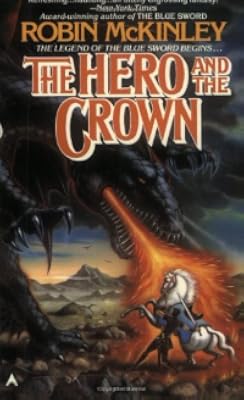
On This Page
Description
Aerin, with the guidance of the wizard Luthe and the help of the blue sword, wins the birthright due her as the daughter of the Damarian king and a witchwoman of the mysterious, demon-haunted North.Tags
Recommendations
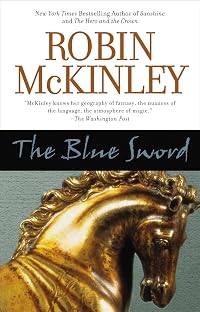
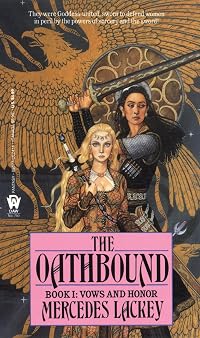
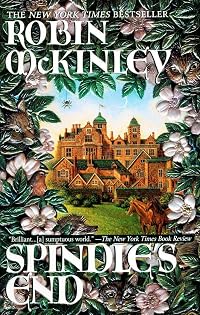
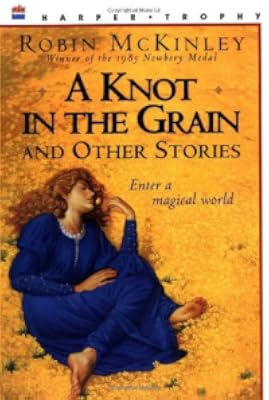
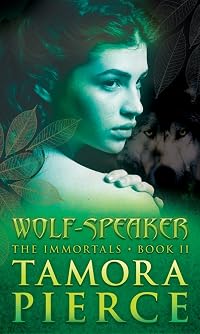

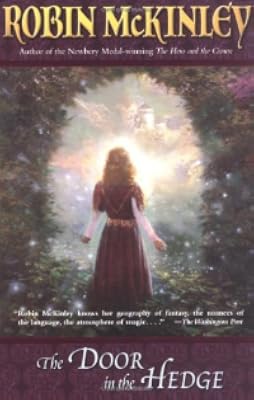
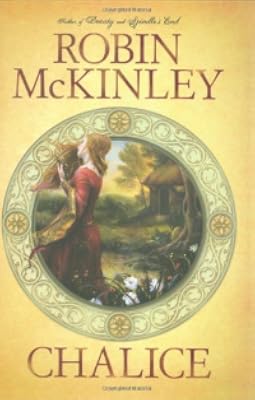
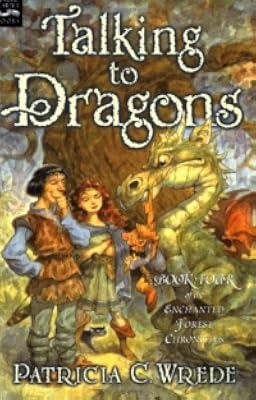
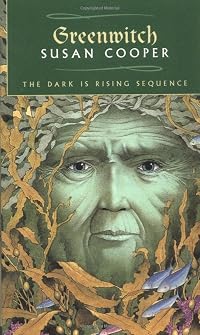
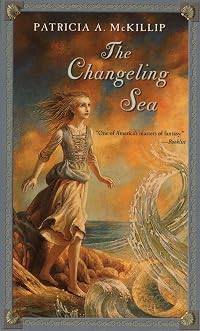
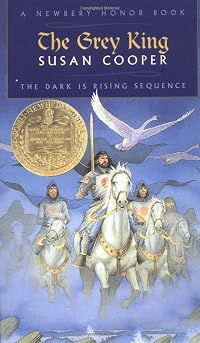
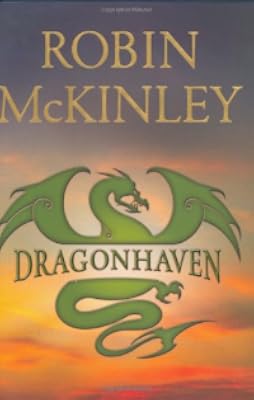
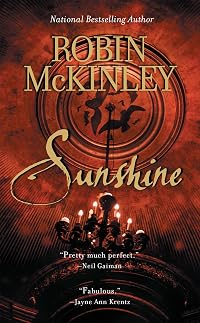
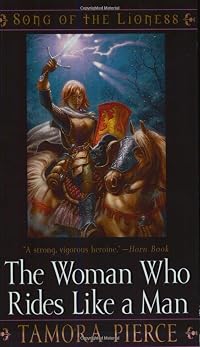
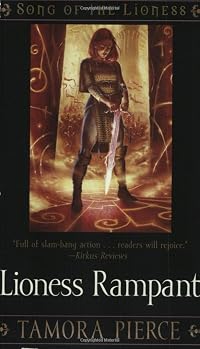

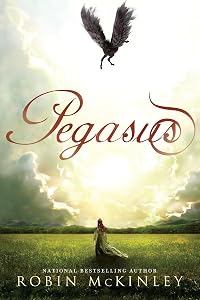
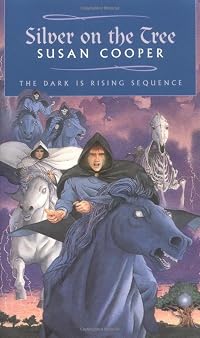
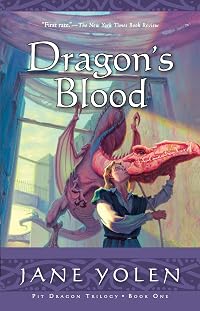
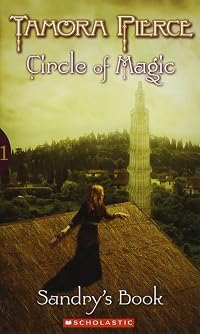



Member Recommendations
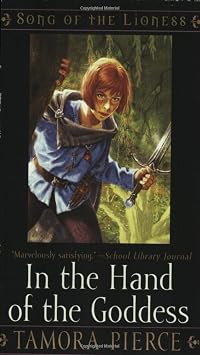
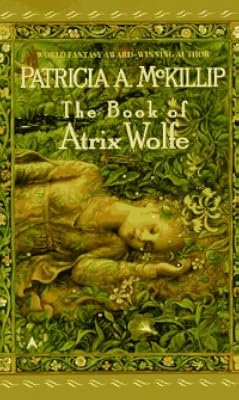
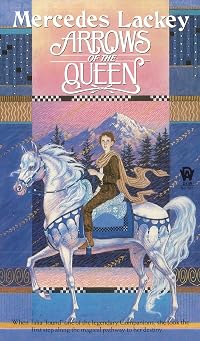
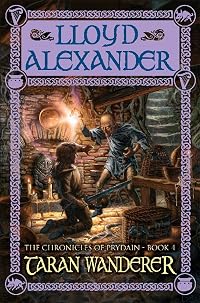
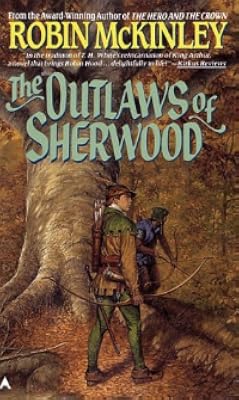
Aerrin99 Aerin and Katsa are both gifted women who struggle to find the line between respect and fear. Also, they kick butt.
141
Aerrin99 Outside of the author, both books also share a similar feel and feature an interesting and strongly-written female character struggling to deal with her given role.
40
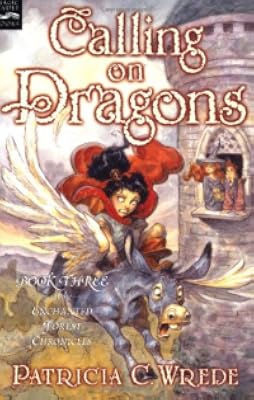
atimco Both stories are well written and feature an unconventional heroine who works hard in her chosen field of study and is instrumental in saving a kingdom.
20
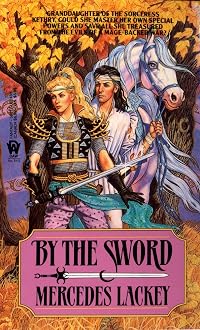
bibliovermis Very similar themes unite the stories and the romances in these books. Also read The Blue Sword.

Member Reviews
I have loved The Hero and the Crown since I first read it in junior high, and I was excited to teach it, but I recognize that it is an odd book. Aerin embraces her magical destiny and falls in love with the immortal Luthe-- but puts that love to sleep so "that she might love her country and her husband" (246). One of my students was excited at what she saw as the embrace of polyamory, but I don't think that's quite what's happening here. In addition, you get the really surreal stuff when Aerin goes to confront her evil uncle Agsded. This is the part of the book that's stuck with me the most since childhood. The tower Aerin climbs to confront Agsded is nearly infinite: "She had been climbing forever; she would be climbing forever. She show more would be a new god: the God That Climbs" (182). Then, when Aerin defeats Agsded, she falls almost as long and ends up in a strange place. What had been a tower in a wasteland is now rubble in the middle of a jungle. She sees people there, and is then jerked back to where she had been, the desolate plateau from which the tower had risen, and Luthe explains to her that she had traveled "a few hundred years" into the future until he pulled her back (200). Aerin then returns to her native land of Damar and defeats the remnants of the evil that threatens it before marrying Tor, the new king.
What's going on here? I have a friend who strongly reacts against Aerin's double marriage, and some of my students definitely considered the whole tower battle and journey into the future extremely weird. I think that looking at The Hero and the Crown's place in both the fantasy genre and the young adult genre helps provide an answer to this.
In her excellent monograph Rhetorics of Fantasy (2008), Farah Mendlesohn divides the fantasy genre up into a number of different approaches, based on the relative positions of the reader, the protagonist, and the fantastic. In the portal-quest fantasy, the protagonist "leaves her familiar surroundings and passes through a portal into an unknown place" (1): The Wizard of Oz, The Lion, the Witch, and the Wardrobe, Alice's Adventures in Wonderland, and Harry Potter and the Philosopher's Stone are all prototypical examples of the form. The immersive fantasy, however, "presents the fantastic without comment as the norm for both the protagonist and for the reader: we sit on the protagonist's shoulder and [...] we are not provided with an explanatory narrative" (xx), for "the point of view characters of an immersive fantasy must take for granted the fantastic elements with which they are surrounded" (xxi). Then there's the intrusion fantasy, where the fantastic breaks into a "normal" world (xxii). (Mendlesohn also has the liminal fantasy and the "irregulars," but those are less relevant to my purposes here.)
On first glance we might see The Hero and the Crown as an immersive fantasy: it takes place in a magical land, different from our own, from the beginning. However, as you dig into both it and Mendlesohn, you start to realize that's it's not so simple. (Genre never is, except when it gets, well, generic.) The novels bears traces of the intrusion fantasy as well. The threat to Damar is an external one; the dragons that Aerin battles throughout the novel might be in Damar, but they are not from it. They are magical creatures from beyond. Furthermore, the book is extremely reminiscent of the portal-quest fantasy, and we should note when using the term that though portal-quest fantasies depart from a real world, they do not have to depart from our real world. One of Mendlesohn's prototypical portal-quest fantasies is, after all, The Lord of the Rings, which starts itself in a magical land, the Shire, but she argues that Tolkien makes the Shire real so that it can frame an adventure into a fantastic land, that of the rest of Middle Earth (2, 31).
Something similar is happening in The Hero and the Crown. It incorporates many of the typical features of the portal-quest fantasy: quests (well, duh); an alliance of perspective between reader and protagonist, both of whom are naïve; portals that transition between places and times; exploration of an unknown land; a thinned land that requires restoration by the story's end; a connection between the king and the well-being of the land (when the right monarch is in place, the land itself is also right); and the existence of a moral universe (good and evil are objective qualities). The reason Aerin's journey to Luthe's land (where she also experiences some temporal dislocation) and Agsded's tower are so surreal is that McKinley has to mark them as fantasy worlds within the context of what seems to us a fantasy world. Aerin is used to the magics of Damar; she is not used to the magics of these other worlds that she has passed to.
Okay, but so what? Something we should always keep in mind when discussing genre, is that genres have not just features (characteristics) but projects (things they do). Mendlesohn mentions that "the classic portal tale is much more common in children's fantasy than in that ostensibly written for the adult market" (1) and she also says that portals "mark[ ] the transition between this world and another; from our time to another time; from youth to adulthood" (1, emphasis mine). So why is this the case? I think it's because of portal-quest fantasy's commitment to a moral universe: Mendlesohn says that "a quest is a process, in which the object sought may or may not be a mere token of rewards. The real reward is moral growth and/or admission into the kingdom, or redemption" (4). Young adult literature is often about teaching readers moral lessons, for better or for worse, and so the form of portal-quest fantasy is well-suited to it. The reader and the protagonist are positioned together, and so when the protagonist accomplishes moral growth, so too does the reader. Aerin accomplishes a lot of moral growth in The Hero and the Crown: she learns how to take responsibility for herself, learns how to channel her anger appropriately, learns how to set a long-term goal for herself and work toward it, learns how to coexist with those who dislike or resent her, learns how to bridge the gap between aristocracy and commoners, learns to like education and reading, learns how handle romantic and sexual feelings, and probably learns other things I'm forgetting.
So I think there's a couple things going on with the weird doubling effect at the end of the novel. Partially, there's a recognition that childhood remains when you pass into adulthood. Aerin may have crossed the portal from reality to fantasy, from childhood to adulthood, but childhood never goes away, you always carry both worlds within you, and so does Aerin.
Additionally, Aerin has to move from her immortal life back to her mortal one in order to implement the moral lessons she's learned-- because if the protagonist does not implement them, how can the reader? We're explicitly told that "it was her love for Luthe that made her recognize her love for Tor" (207). If fantasy worlds exists to teach the reader how to behave in the real world, we have that literalized in The Hero and the Crown, hence both worlds must persist. But unlike in Narnia or (to bring up another portal-quest fantasy) Susan Cooper's The Silver on the Tree, Aerin does not need to give up her fantasy life. In what surely is a fantasy (in the imagining-you-have-obtained-an-unobtainable-thing sense) she can have both lives. show less
What's going on here? I have a friend who strongly reacts against Aerin's double marriage, and some of my students definitely considered the whole tower battle and journey into the future extremely weird. I think that looking at The Hero and the Crown's place in both the fantasy genre and the young adult genre helps provide an answer to this.
In her excellent monograph Rhetorics of Fantasy (2008), Farah Mendlesohn divides the fantasy genre up into a number of different approaches, based on the relative positions of the reader, the protagonist, and the fantastic. In the portal-quest fantasy, the protagonist "leaves her familiar surroundings and passes through a portal into an unknown place" (1): The Wizard of Oz, The Lion, the Witch, and the Wardrobe, Alice's Adventures in Wonderland, and Harry Potter and the Philosopher's Stone are all prototypical examples of the form. The immersive fantasy, however, "presents the fantastic without comment as the norm for both the protagonist and for the reader: we sit on the protagonist's shoulder and [...] we are not provided with an explanatory narrative" (xx), for "the point of view characters of an immersive fantasy must take for granted the fantastic elements with which they are surrounded" (xxi). Then there's the intrusion fantasy, where the fantastic breaks into a "normal" world (xxii). (Mendlesohn also has the liminal fantasy and the "irregulars," but those are less relevant to my purposes here.)
On first glance we might see The Hero and the Crown as an immersive fantasy: it takes place in a magical land, different from our own, from the beginning. However, as you dig into both it and Mendlesohn, you start to realize that's it's not so simple. (Genre never is, except when it gets, well, generic.) The novels bears traces of the intrusion fantasy as well. The threat to Damar is an external one; the dragons that Aerin battles throughout the novel might be in Damar, but they are not from it. They are magical creatures from beyond. Furthermore, the book is extremely reminiscent of the portal-quest fantasy, and we should note when using the term that though portal-quest fantasies depart from a real world, they do not have to depart from our real world. One of Mendlesohn's prototypical portal-quest fantasies is, after all, The Lord of the Rings, which starts itself in a magical land, the Shire, but she argues that Tolkien makes the Shire real so that it can frame an adventure into a fantastic land, that of the rest of Middle Earth (2, 31).
Something similar is happening in The Hero and the Crown. It incorporates many of the typical features of the portal-quest fantasy: quests (well, duh); an alliance of perspective between reader and protagonist, both of whom are naïve; portals that transition between places and times; exploration of an unknown land; a thinned land that requires restoration by the story's end; a connection between the king and the well-being of the land (when the right monarch is in place, the land itself is also right); and the existence of a moral universe (good and evil are objective qualities). The reason Aerin's journey to Luthe's land (where she also experiences some temporal dislocation) and Agsded's tower are so surreal is that McKinley has to mark them as fantasy worlds within the context of what seems to us a fantasy world. Aerin is used to the magics of Damar; she is not used to the magics of these other worlds that she has passed to.
Okay, but so what? Something we should always keep in mind when discussing genre, is that genres have not just features (characteristics) but projects (things they do). Mendlesohn mentions that "the classic portal tale is much more common in children's fantasy than in that ostensibly written for the adult market" (1) and she also says that portals "mark[ ] the transition between this world and another; from our time to another time; from youth to adulthood" (1, emphasis mine). So why is this the case? I think it's because of portal-quest fantasy's commitment to a moral universe: Mendlesohn says that "a quest is a process, in which the object sought may or may not be a mere token of rewards. The real reward is moral growth and/or admission into the kingdom, or redemption" (4). Young adult literature is often about teaching readers moral lessons, for better or for worse, and so the form of portal-quest fantasy is well-suited to it. The reader and the protagonist are positioned together, and so when the protagonist accomplishes moral growth, so too does the reader. Aerin accomplishes a lot of moral growth in The Hero and the Crown: she learns how to take responsibility for herself, learns how to channel her anger appropriately, learns how to set a long-term goal for herself and work toward it, learns how to coexist with those who dislike or resent her, learns how to bridge the gap between aristocracy and commoners, learns to like education and reading, learns how handle romantic and sexual feelings, and probably learns other things I'm forgetting.
So I think there's a couple things going on with the weird doubling effect at the end of the novel. Partially, there's a recognition that childhood remains when you pass into adulthood. Aerin may have crossed the portal from reality to fantasy, from childhood to adulthood, but childhood never goes away, you always carry both worlds within you, and so does Aerin.
Additionally, Aerin has to move from her immortal life back to her mortal one in order to implement the moral lessons she's learned-- because if the protagonist does not implement them, how can the reader? We're explicitly told that "it was her love for Luthe that made her recognize her love for Tor" (207). If fantasy worlds exists to teach the reader how to behave in the real world, we have that literalized in The Hero and the Crown, hence both worlds must persist. But unlike in Narnia or (to bring up another portal-quest fantasy) Susan Cooper's The Silver on the Tree, Aerin does not need to give up her fantasy life. In what surely is a fantasy (in the imagining-you-have-obtained-an-unobtainable-thing sense) she can have both lives. show less
This review and others posted over at my blog.
Yo, where has this book been all my life? Oh, I know; on my shelves for at least 9 years! [x_x[] I waited far too long to read this book – though I suspect from the cracked spine and lipstick prints on the inside of the back cover (don’t ask, there’s no reasonable explanation) that Middle School Milliebot did read this book and Adult Millie has completely forgotten it. Regardless, it was fabulous!
If all YA books were written by McKinley, or in the spirit of this book, I’d actually be a fan of the genre! Originally written in 1984, The Hero and the Crown truly stands the test of time and is now my new standard for judging YA fantasy.
Aerin is a great character – determined, show more intelligent, caring, socially awkward and not impervious to bouts of self-doubt and definitely not above getting beat down. She’s by no means a special snowflake. Rather than be told about how amazing and special Aerin is, she proves she’s tough by actually being tough! She has to learn her lessons through hard work and determination and she develops her riding, swordplay, and herbalism skills by working relentlessly at them. She falls, many times, and continues to get up, though sometimes more slowly than others. Here’s a heroine who gets her ass handed to her in battle on more than one occasion, rather than just strolling onto the scene and defeating everyone effortlessly.
I also loved that while she’s generally viewed as an outcast at her father – the king’s – court, she’s not completely isolated. She has her loyal caretaker, Teka, her supportive cousin, Tor, and her trusty and intelligent steed, Talat. I just realized now that everyone’s name starts with T…anyway! Aerin’s relationship with her father is more awkward than strained – it’s clear he loves her, he’s just not sure what to do with her. But he doesn’t try to prevent her from adventuring off and slaying dragons.
I appreciated that Aerin falls somewhere in the middle of the ‘completely isolated and unloved heroine who must defeat all odds and save the day’ and ‘ultra-special sexy snowflake chosen one heroine who must save the day’ scale. She’s a true underdog who’s easy to root for.
The beginning of the book was slightly confusing for me though. There are several flashbacks to how Aerin trained Talat, ate some drug leaves and took a bad trip, and developed her fireproof salve. For a while, I didn’t understand that those scenes weren’t ‘the present.’ This wasn’t a major issue because I still loved everything I was reading, but just something I figured I’d point out.
There is a smidgen of romance in this book, so if that’s important to you in a YA novel, fear not! It might even be classified as a love triangle, though it’s not nearly as tropey as today’s fare. I don’t want to spoil anything, but rest assured, there’s no insta-love and Aerin doesn’t spend the majority of the book worrying over which man she’ll choose. I really appreciated how her two love interests were handled. There’s also implied sexual content, though it’s very light, so nothing to worry about if you don’t really care for sex in your romance or fantasy.
This is just an all-around fabulous book. I love the characters, I love Aerin’s journey, both plotwise and emotionally, and there are dragons and magic! This is a great take on the ‘hero’s quest’ trope and one I should have picked up much sooner. I have several of McKinley’s books on my shelves and I can’t wait to read them all!
I recommend this for:
+ Those of you looking for a YA that focuses on plot and character development, not love triangles
+ Fans of characters who actually earn their skills and fight for their place in the world
+ Anyone looking for a low-key fantasy that still has dragons and magical items of lore, but is light on the world building and magic system
+ Everyone – just read it, please show less
Yo, where has this book been all my life? Oh, I know; on my shelves for at least 9 years! [x_x[] I waited far too long to read this book – though I suspect from the cracked spine and lipstick prints on the inside of the back cover (don’t ask, there’s no reasonable explanation) that Middle School Milliebot did read this book and Adult Millie has completely forgotten it. Regardless, it was fabulous!
If all YA books were written by McKinley, or in the spirit of this book, I’d actually be a fan of the genre! Originally written in 1984, The Hero and the Crown truly stands the test of time and is now my new standard for judging YA fantasy.
Aerin is a great character – determined, show more intelligent, caring, socially awkward and not impervious to bouts of self-doubt and definitely not above getting beat down. She’s by no means a special snowflake. Rather than be told about how amazing and special Aerin is, she proves she’s tough by actually being tough! She has to learn her lessons through hard work and determination and she develops her riding, swordplay, and herbalism skills by working relentlessly at them. She falls, many times, and continues to get up, though sometimes more slowly than others. Here’s a heroine who gets her ass handed to her in battle on more than one occasion, rather than just strolling onto the scene and defeating everyone effortlessly.
I also loved that while she’s generally viewed as an outcast at her father – the king’s – court, she’s not completely isolated. She has her loyal caretaker, Teka, her supportive cousin, Tor, and her trusty and intelligent steed, Talat. I just realized now that everyone’s name starts with T…anyway! Aerin’s relationship with her father is more awkward than strained – it’s clear he loves her, he’s just not sure what to do with her. But he doesn’t try to prevent her from adventuring off and slaying dragons.
I appreciated that Aerin falls somewhere in the middle of the ‘completely isolated and unloved heroine who must defeat all odds and save the day’ and ‘ultra-special sexy snowflake chosen one heroine who must save the day’ scale. She’s a true underdog who’s easy to root for.
The beginning of the book was slightly confusing for me though. There are several flashbacks to how Aerin trained Talat, ate some drug leaves and took a bad trip, and developed her fireproof salve. For a while, I didn’t understand that those scenes weren’t ‘the present.’ This wasn’t a major issue because I still loved everything I was reading, but just something I figured I’d point out.
There is a smidgen of romance in this book, so if that’s important to you in a YA novel, fear not! It might even be classified as a love triangle, though it’s not nearly as tropey as today’s fare. I don’t want to spoil anything, but rest assured, there’s no insta-love and Aerin doesn’t spend the majority of the book worrying over which man she’ll choose. I really appreciated how her two love interests were handled. There’s also implied sexual content, though it’s very light, so nothing to worry about if you don’t really care for sex in your romance or fantasy.
This is just an all-around fabulous book. I love the characters, I love Aerin’s journey, both plotwise and emotionally, and there are dragons and magic! This is a great take on the ‘hero’s quest’ trope and one I should have picked up much sooner. I have several of McKinley’s books on my shelves and I can’t wait to read them all!
I recommend this for:
+ Those of you looking for a YA that focuses on plot and character development, not love triangles
+ Fans of characters who actually earn their skills and fight for their place in the world
+ Anyone looking for a low-key fantasy that still has dragons and magical items of lore, but is light on the world building and magic system
+ Everyone – just read it, please show less
Technically speaking, The Hero and the Crown is the second book published in the Damar series though events are sent many years prior to The Blue Sword. The hero of legend, Aerin Firehair, wasn't always a hero. Once she was the shy, awkward only child of the King of Damar. This is her story about her coming of age and how her legend was made.
The story is a classic hero's quest though it has some unusual elements in the second half. I absolutely loved Aerin's character, how real she feels and how hard she works to earn her place. Arein is an unsatisfactory princess - she isn't beautiful, her mother was a "witch" and she yearns to become a dragon slayer, which in this world an unglamorous job since dragons are seen as vermin and their show more slaying as no more than a chore. The more effort she goes to in order to prove herself to her father's court, the more she's underappreciated, never mind that all her accomplishments are quite valued by the common people she helps. She even uses methodical persistence to work out a scientific problem, with much success and was pretty cool because it's not something you see often in this kind of story. Seeing as this is a hero journey, Aerin continues her struggles until she's ultimately successful, proving herself beyond all doubt by saving the day in the end.
And now for the unusual stuff. Spoilers ahead.There is a fight that requires Aerin to travel back and forth in time. It was very confusing to read. I'm really glad one of the other characters explains it afterwards because it felt more like a dream sequence than an actual battle. Also interesting is how the author made depression a plot point. Discussing mental illness was virtually unheard of in any of the 80's fiction I read, especially not in a YA adventure story. It's handled quite well, both caused and cured by magic, yet shows the hero's resilience as she doggedly continues on her quest regardless. Highly unusual is that our hero ends up with two love interests, has relationships with both and yet this isn't a love triangle. Aerin understands that after she's become immortal, she can marry and live with her mortal lover and then join her immortal one later. Yet there is never any romantic angst. She makes her decisions level headed and when she feels like she's ready.
This story resonated with me due to all the hardships Aerin endures and over comes. I can see myself rereading this one in the future. I also greatly enjoy McKinley's prose. I need to check out some of her adult books in the future. show less
The story is a classic hero's quest though it has some unusual elements in the second half. I absolutely loved Aerin's character, how real she feels and how hard she works to earn her place. Arein is an unsatisfactory princess - she isn't beautiful, her mother was a "witch" and she yearns to become a dragon slayer, which in this world an unglamorous job since dragons are seen as vermin and their show more slaying as no more than a chore. The more effort she goes to in order to prove herself to her father's court, the more she's underappreciated, never mind that all her accomplishments are quite valued by the common people she helps. She even uses methodical persistence to work out a scientific problem, with much success and was pretty cool because it's not something you see often in this kind of story. Seeing as this is a hero journey, Aerin continues her struggles until she's ultimately successful, proving herself beyond all doubt by saving the day in the end.
And now for the unusual stuff. Spoilers ahead.
This story resonated with me due to all the hardships Aerin endures and over comes. I can see myself rereading this one in the future. I also greatly enjoy McKinley's prose. I need to check out some of her adult books in the future. show less
Classic fantasy tale, extremely well told. Aerin, with her all-too-human imperfections (and her wonderfully sarcastic wit), makes for a great narrator. The only child of a king, but removed from the line of succession because her parents' marriage was ruled morganatic, Aerin struggles to fit in with the rest of the ruling class. Her pursuit of a mysterious shield against dragonfire, though, brings her great acclaim ... and a quest against a more powerful foe than any dragon.
Highly enjoyable from first to last.
Highly enjoyable from first to last.
Aerin is the daughter of the king of Damar -- but by his second wife, a woman who was widely distrusted and whom many suspected of witchcraft. Aerin herself is looked down on by most of the royal court, even when she discovers a fireproofing ointment that enables her to slay dragons with less chance of personal injury. Dragons, after all, are vermin, and though they can be fierce, none of them grow much larger than a dog in Aerin's day. The Great Dragons are considered creatures of legend . . . until the day that one of them appears. Maur, the last of the Great Dragons, awoken by malicious Northern magic, returns to terrorize Damar -- and Aerin may be the only person who can face him. Even if she can defeat Maur, she will have to face show more greater and more dangerous challenges before she can take her rightful place in Damar.
This is probably my second-favorite McKinley book (after Beauty). Aerin is a great, complex character -- she consistently undervalues herself, but that doesn't stop her from attempting heroic action, not for the glory of it, but because it's a dirty job that someone has to do. The romance in the story, not to give too much away, is likewise complex. And, though the story is pretty tightly focused on Aerin, secondary characters (even the unlikeable ones) get their moments of poignance and character development. show less
This is probably my second-favorite McKinley book (after Beauty). Aerin is a great, complex character -- she consistently undervalues herself, but that doesn't stop her from attempting heroic action, not for the glory of it, but because it's a dirty job that someone has to do. The romance in the story, not to give too much away, is likewise complex. And, though the story is pretty tightly focused on Aerin, secondary characters (even the unlikeable ones) get their moments of poignance and character development. show less
First, this is not as good as the Blue Sword. The Blue Sword manages to both use and break stereotypes. This book is too much 80's wish fulfillment fantasy. I've read other books in this same genre that reads almost the same. But Robin McKinley does it best.
We have an ill-used Heroine. She is the only child of the king, but because she is female, she will not be queen. Of course, she prefers swordsmanship to embroidery lessons, riding horses over dancing, and generally, just completely different than her peers.
Note - this sentence contains spoilers. But, not much of spoilers since this book is fairly standard of this sort. Of course, she's treated badly, runs away, becomes friends with the forest, learns a bit of magic and defeats the show more bad guy, and life is good.
Its well written, characters are nuanced, the history of Damar is filled in, and I'm disappointed the origins of Damar is typical western type kingdom story, rather than something a bit less standard.
While this book does add a bit of history to the Blue Sword, its not essential reading. show less
We have an ill-used Heroine. She is the only child of the king, but because she is female, she will not be queen. Of course, she prefers swordsmanship to embroidery lessons, riding horses over dancing, and generally, just completely different than her peers.
Note - this sentence contains spoilers. But, not much of spoilers since this book is fairly standard of this sort. Of course, she's treated badly, runs away, becomes friends with the forest, learns a bit of magic and defeats the show more bad guy, and life is good.
Its well written, characters are nuanced, the history of Damar is filled in, and I'm disappointed the origins of Damar is typical western type kingdom story, rather than something a bit less standard.
While this book does add a bit of history to the Blue Sword, its not essential reading. show less
...still a winner 30 years on!
A timely re-release of a classic fantasy and winner of the 1985 Newbery Medal.
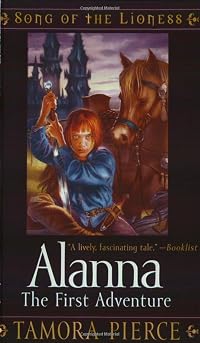
About the same time Tamora Pierce's Allana was being told for the first time, so was McKinley's story about Aerin, the princess who was different. Aerin carries the burden of negative public opinion, being seen as less than adequate. What do these two have in common? Both are strong female leads who fights the odds and win through. Both move forward at great personal cost against seemingly hopeless situations, armed only with sheer grit and determination, and a lot of tears shed in quiet places.
In this tale of discovering one's abilities, Aerin is the princess who didn't inherit the family magical gifts. So to many there's show more obviously some fault within her. In fact magic done anywhere near Aerin makes her feel decidedly queasy.
Of course the nasty types say that's because her mother was a witch who ensorcelled the King. The King does not say that.
Aerin seems clumsy, inarticulate and insecure. I love that she eats off common clay plates as they can be easily replaced when she inadvertently drops one. No fine breakable china for her.
She's only happy when she's out riding her father's retired warhorse or working out how to fight dragons. She will become Lady Aerin, 'Dragon killer,' and that too will bring its share of physical and emotional pain.
Thirty years on and The Hero and the Crown is still an engaging fantasy novel.
The careless petty malignancy of Aerin's cousins Perlith and Galanna still stings.
The hurt of not belonging, of being invisible is still powerful in its telling.
Over the year's I've reread Aerin's story several times and am never disappointed.
A NetGalley ARC show less
A timely re-release of a classic fantasy and winner of the 1985 Newbery Medal.
About the same time Tamora Pierce's Allana was being told for the first time, so was McKinley's story about Aerin, the princess who was different. Aerin carries the burden of negative public opinion, being seen as less than adequate. What do these two have in common? Both are strong female leads who fights the odds and win through. Both move forward at great personal cost against seemingly hopeless situations, armed only with sheer grit and determination, and a lot of tears shed in quiet places.
In this tale of discovering one's abilities, Aerin is the princess who didn't inherit the family magical gifts. So to many there's show more obviously some fault within her. In fact magic done anywhere near Aerin makes her feel decidedly queasy.
Of course the nasty types say that's because her mother was a witch who ensorcelled the King. The King does not say that.
Aerin seems clumsy, inarticulate and insecure. I love that she eats off common clay plates as they can be easily replaced when she inadvertently drops one. No fine breakable china for her.
She's only happy when she's out riding her father's retired warhorse or working out how to fight dragons. She will become Lady Aerin, 'Dragon killer,' and that too will bring its share of physical and emotional pain.
Thirty years on and The Hero and the Crown is still an engaging fantasy novel.
The careless petty malignancy of Aerin's cousins Perlith and Galanna still stings.
The hurt of not belonging, of being invisible is still powerful in its telling.
Over the year's I've reread Aerin's story several times and am never disappointed.
A NetGalley ARC show less
Members
- Recently Added By
Published Reviews
ThingScore 75
Miss McKinley, the author of ''The Blue Sword,'' a 1983 Newbery honor selection, has in this suspenseful prequel, which is the 1985 Newbery Award winner, created an utterly engrossing fantasy, replete with a fairly mature romantic subplot as well as adventure. She transports the reader into a beguiling realm of pseudomedieval pageantry and ritual where the supernatural is never far below the show more surface of the ordinary. For those who like fantasy fiction, as I do, ''The Hero and the Crown'' succeeds. show less
added by Aerrin99
Lists

Best Fantasy Novels
821 works; 361 members

Best Young Adult
413 works; 102 members

Best Newbery Medal Winners
97 works; 54 members

Favorite Childhood Books
1,651 works; 515 members

Female Protagonist
1,056 works; 57 members

NPRs your favorites: 100 Best Ever Teen Novels
237 works; 49 members
Books tagged favorites
390 works; 30 members
Female Author
1,234 works; 65 members

Fantasy novels with a female protagonist
76 works; 15 members

Here There Be Dragons
143 works; 23 members

Everything's Better With Princesses
33 works; 7 members

Books Read in 2023
5,638 works; 147 members

Princess Tales
130 works; 4 members

Carole's List
445 works; 13 members

Newbery Medal Winners - By Year
105 works; 7 members
Book Worlds We'd Like To Visit
322 works; 158 members
Books We Love to Reread
695 works; 298 members

Books Read in 2021
5,361 works; 114 members

Books Read in 2020
4,379 works; 123 members

Books Read in 2022
5,226 works; 115 members

Top-Rated Children's Books
87 works; 16 members

Books Read in 2017
4,249 works; 129 members

Best Feminist Science Fiction
188 works; 34 members

Literature About Women and Girls
426 works; 40 members
Honey For a Child's Heart
1,152 works; 25 members

Books We Loved As Children
610 works; 254 members
Author Information

42+ Works 50,667 Members
Some Editions
Awards and Honors
Awards
Distinctions
Notable Lists
Series

Belongs to Publisher Series
Heyne Science Fiction & Fantasy (06/4519)
Work Relationships
Is contained in
Has as a student's study guide
Common Knowledge
- Original title
- The Hero and the Crown
- Original publication date
- 1984
- People/Characters
- Aerin (Dragon-Killer); Tor (the Just); Luthe; Maur; Arlbeth; Teka (show all 8); Talat; Gonturan
- Important places
- Damar; The North
- Dedication
- To Terri
- First words
- She could not remember a time when she had not known the story; she had grown up knowing it.
- Last words
- (Click to show. Warning: May contain spoilers.)Perhaps the memory of the reek of Maur's despair made her a little forgetful too, for she began to think of the wide silver lake as a place she had visited only in dreams, and of the tall blond man she had once known as a creature of those dreams; for the not quite mortal part of her did sleep, that she might love her country and her husband.
- Original language
- English
Classifications
- Genres
- Fantasy, Fiction and Literature, Teen, Young Adult
- DDC/MDS
- 813.54 — Literature & rhetoric American literature in English American fiction in English 1900-1999 1945-1999
- LCC
- PZ7 .H — Language and Literature Fiction and juvenile belles lettres Fiction and juvenile belles lettres Juvenile belles lettres
- BISAC
Statistics
- Members
- 6,961
- Popularity
- 1,714
- Reviews
- 129
- Rating
- (4.21)
- Languages
- 6 — Czech, Danish, English, German, Norwegian, Swedish
- Media
- Paper, Audiobook, Ebook
- ISBNs
- 43
- ASINs
- 31