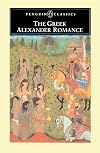
The Greek Alexander Romance
by Pseudo Calístenes
On This Page
Description
Mystery surrounds the parentage of Alexander, the prince born to Queen Olympias. Is his father Philip, King of Macedonia, or Nectanebo, the mysterious sorcerer who seduced the queen by trickery? One thing is certain: the boy is destined to conquer the known world. He grows up to fulfil this prophecy, building a mighty empire that spans from Greece and Italy to Africa and Asia. Begun soon after the real Alexander's death and expanded in the centuries that followed, The Greek Alexander Myth show more depicts the life and adventures of one of history's greatest heroes - taming the horse Bucephalus, meeting the Amazons and his quest to defeat the King of Persia. Including such elements of fantasy as Alexander's ascent to heaven borne by eagles, this literary masterpiece brilliantly evokes a lost age of heroism. show lessTags
Recommendations








Member Reviews
This Romance started off as a pretty straight historical document about the life and deeds of Alexander the Great, written shortly after his death.
It didn't stay that way long; as the story diffused through the known world it soon began to pick up more fantastical elements - then more - and more. Different versions are found in different regions (see the Introduction to this edition for a readable overview of these matters) with different elements included and excluded. The tone varies according to the perspective of each author and various inconsistencies and repetitions exist.
The editor/translator tackles this in the following way; first it's the Greek Alexander Romance he's translating - material not found in Greek manuscripts is show more excluded. Second - it's more fun to include as much as possible, so he conflates the manuscripts. Third, where incidents are retold in a different sequence in some manuscripts, the alternative versions are put in an appendix with notes in the text as to where each would have appeared.
All of that seems to work out pretty well for a general reader rather than a scholar and the translation seems fine, too.
The tale itself is told with gusto and is great fun; the various fantastical episodes put me in mind of the Thousand and One Nights and are the primary attraction: If you want a serious book, choose something else, because this one has sorcerors, oracles, giants, Amazons, Centaurs and even naked philosophers (the latter being most likely real) to name just a few and not the daftest things you will encounter.
On the other hand, if you want to read it precisely because it is full of preposterous adventures, as I did, you will not be disappointed! The episode with the flying women is a favourite of mine. show less
It didn't stay that way long; as the story diffused through the known world it soon began to pick up more fantastical elements - then more - and more. Different versions are found in different regions (see the Introduction to this edition for a readable overview of these matters) with different elements included and excluded. The tone varies according to the perspective of each author and various inconsistencies and repetitions exist.
The editor/translator tackles this in the following way; first it's the Greek Alexander Romance he's translating - material not found in Greek manuscripts is show more excluded. Second - it's more fun to include as much as possible, so he conflates the manuscripts. Third, where incidents are retold in a different sequence in some manuscripts, the alternative versions are put in an appendix with notes in the text as to where each would have appeared.
All of that seems to work out pretty well for a general reader rather than a scholar and the translation seems fine, too.
The tale itself is told with gusto and is great fun; the various fantastical episodes put me in mind of the Thousand and One Nights and are the primary attraction: If you want a serious book, choose something else, because this one has sorcerors, oracles, giants, Amazons, Centaurs and even naked philosophers (the latter being most likely real) to name just a few and not the daftest things you will encounter.
On the other hand, if you want to read it precisely because it is full of preposterous adventures, as I did, you will not be disappointed! The episode with the flying women is a favourite of mine. show less
As a story, this is Cecil B. DeMille to chant round the campfire. But as a document this is the East's take on the Great Macedonian. Either it's very reverent, or a not-so subtle put-down. But it was vastly more popular than Arrian or Curtius Rufus. To be read for completeness, but not to be loved.
The Legendary Adventures of Alexander the Great is the 13th book in the Penguin Epics collection. It is a translation by Richard Stoneman of a series of tales written in the centuries after Alexander's conquests. The Penguin Epics edition is a 104 page small book starting with mythology of Alexander's birth, outlining some of his interactions during his long period of conquest, and then a series of supernatural adventures.
The written style of Legendary Adventures makes for comfortable reading. The style and structure is simple. As this is a work built from a series of sources the translation makes for a smooth transition between the different phases. It is a technically well put together book.
However, the substance of the work and show more therefore of much of the original source really does not do Alexander the Great justice at all. It compares very poorly with the best military campaign book in the Penguin Epics series, The Sea, The Sea. As a descriptor of Alexander's conquests it is really quite poor. There is nothing at all of the action. There is nothing of real interest to an historian.
On the other hand, Legendary Adventures also falls very short in its efforts to be an interesting tale of a personality cult. The first chapter is retrospective propaganda designed to legitimise Alexander's conquest of Egypt. It is a really naive tale, lacking the persuasive credibility of the great propaganda in the ancient world.
The final full section is a silly depiction of Alexander's adventures towards and beyond the edge of the world. It is only of interest as a way of reinforcing the ancient world's fear of the wild. Peoples of ridiculous proportions and beasts attack Alexander. They are an illustration of the way the ancient world perceived the fabulous.
Alexander of Macedonia was of course the greatest conqueror in ancient European history. His story is unbelievable, the backwater of Maccedonia takes over the known world defeating the superpowers of the age including most famously Persia. The success against the odds would not be believable as fiction but as fact it is someting to marvel at. There are legendary adventures in Alexander's journey that overmatch everything in this work.
The Penguin Epics edition is mainly the story of Alexander and Darius writing to one another. This is ok just not especially interesting. The decline and defeat of Darius is a truly amazing phase in history but this work does not do much to tell the story. The sources just cannot have been very interesting. Alexander's story is one of the most important of the ancient world but this work does not ever really justify its presence in the outstanding Penguin Epics collection. show less
The written style of Legendary Adventures makes for comfortable reading. The style and structure is simple. As this is a work built from a series of sources the translation makes for a smooth transition between the different phases. It is a technically well put together book.
However, the substance of the work and show more therefore of much of the original source really does not do Alexander the Great justice at all. It compares very poorly with the best military campaign book in the Penguin Epics series, The Sea, The Sea. As a descriptor of Alexander's conquests it is really quite poor. There is nothing at all of the action. There is nothing of real interest to an historian.
On the other hand, Legendary Adventures also falls very short in its efforts to be an interesting tale of a personality cult. The first chapter is retrospective propaganda designed to legitimise Alexander's conquest of Egypt. It is a really naive tale, lacking the persuasive credibility of the great propaganda in the ancient world.
The final full section is a silly depiction of Alexander's adventures towards and beyond the edge of the world. It is only of interest as a way of reinforcing the ancient world's fear of the wild. Peoples of ridiculous proportions and beasts attack Alexander. They are an illustration of the way the ancient world perceived the fabulous.
Alexander of Macedonia was of course the greatest conqueror in ancient European history. His story is unbelievable, the backwater of Maccedonia takes over the known world defeating the superpowers of the age including most famously Persia. The success against the odds would not be believable as fiction but as fact it is someting to marvel at. There are legendary adventures in Alexander's journey that overmatch everything in this work.
The Penguin Epics edition is mainly the story of Alexander and Darius writing to one another. This is ok just not especially interesting. The decline and defeat of Darius is a truly amazing phase in history but this work does not do much to tell the story. The sources just cannot have been very interesting. Alexander's story is one of the most important of the ancient world but this work does not ever really justify its presence in the outstanding Penguin Epics collection. show less
This is, of course, a wonderful book. It's a pity they had to choose just one version, but they include some supplements from other versions.
A good laugh here and there
Este texto es un evidente refrito de fuentes anteriores, hay errores narrativos, geográficos e históricos y abundan las historias pintorescas, anécdotas mágicas e increíbles. Sin embargo, tomando ciertas precauciones, sigue siendo un relato entretenido del que incluso se pueden extraer conclusiones muy interesantes.
Aug 15, 2023Spanish
Members
- Recently Added By
Lists

100 Books to Read in a Lifetime (That Are Older Than 200 Years)
415 works; 175 members
Author Information
8 Works 400 Members
Some Editions
Series
Belongs to Publisher Series
Work Relationships
Is contained in
Common Knowledge
- Canonical title
- The Greek Alexander Romance
- Original title
- The Romance of Alexander the Great
- Alternate titles*
- Avonturen van Alexander de Grote : de Alexanderroman; De Alexanderroman
- Original publication date
- Derde eeuw (Grieks) (Grieks); 2000 (Nederlands) (Nederlands)
- People/Characters
- Alexander III the Great, 326-253 BC
- Important places
- Acarnania, Greece; Abdera, Thrace; Africa; Aigai, Macedonia; Alexandria, Babylon; Bucephala (Alexandria Bucephalous) (show all 87); Alexandria, Egypt; Alexandria Eschate; Nicaea (Alexandria Nicaea); Alexandria Troas; Antioch; Arabia; Argos; Alexandria Ariana; Armenia; Athens, Greece; Babylonia; Bactria; Ecbatana, Persia; Bebrykia, Bithynia; Boeotia, Greece; Bottiaea, Macedonia; Cadmea, Thebes, Greece; Canopus, Egypt; Cappadocia; Caria; Carthage; Cilicia; Corinth, Greece; Delphi, Greece; Egypt; Epirus; Stagira, Macedonia, Greece; Strangas River; Euphrates River; Pharos, Alexandria, Egypt; Phoenicia; Phrygia; Gaza; Greece; Hades; Hellespont; Heliopolis, Egypt; Hermopolis, Egypt; India; Isles of the Blessed; Ionia; Lacedemonia; Lybia; Lycia, Anatolia; Lydia; Caspian Gates; Macedonia; Matona; Media; Megara, Megaris, Greece; Memphis, Egypt; Mesopotamia; Mysia, Anatolia; Oceanus; Olynthus, Greece; Paphlagonia, Anatolia; Pamphylia, Anatolia; Pella, Macedonia; Pelusium, Egypt; Persia; Pisa, Tuscany, Italy; Plataea, Greece; Black Sea; Prasiaca, India; Chaeronea, Boeotia, Greece; Rakotis, Egypt; Sardis; Sicily, Italy; Syria; Susa; Tarsus, Cilicia; Thermodon River; Thessaly, Greece; Tigris River; Tyre, Phoenicia; Thrace; Tripolis, Phoenicia; Zakynthos, Greece; Italy; Scythia; Alejandría, Egipto
- Original language*
- Grieks
*Some information comes from Common Knowledge in other languages. Click "Edit" for more information.
Classifications
- Genre
- Fiction and Literature
- DDC/MDS
- 883.01 — Literature & rhetoric Classical & modern Greek literatures Classical Greek epic poetry and fiction Pseudo-Callisthenes
- LCC
- PA3946 .C3 .E5 — Language and Literature Greek language and literature. Latin language and literature Greek literature Individual authors
- BISAC
Statistics
- Members
- 385
- Popularity
- 80,945
- Reviews
- 7
- Rating
- (3.25)
- Languages
- 6 — Dutch, English, French, Greek (Ancient), Italian, Spanish
- Media
- Paper, Ebook
- ISBNs
- 18
- ASINs
- 5