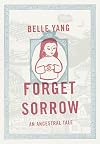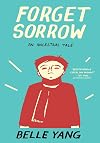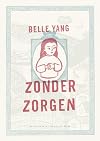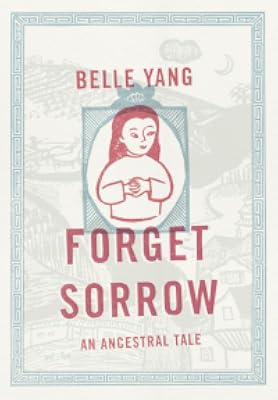
Forget Sorrow: An Ancestral Tale
by Belle Yang 
On This Page
Description
"When Belle Yang was forced to take refuge in her parents' home after an abusive boyfriend began stalking her, her father entertained her with stories of old China. The history she'd ignored while growing up became a source of comfort and inspiration, and narrowed the gap separating her--an independent, Chinese-American woman--from her Old World Chinese parents. In Forget Sorrow, Yang makes her debut into the graphic form with the story of her father's family, reunited under the House of show more Yang in Manchuria during the Second World War and struggling--both together and individually--to weather poverty, famine, and, later, Communist oppression. The parallels between Belle Yang's journey of self-discovery and the lives and choices of her grandfather, his brothers, and their father (the Patriarch) speak powerfully of the conflicts between generations--and of possibilities for reconciliation" -- from publisher's web site. show lessTags
Recommendations


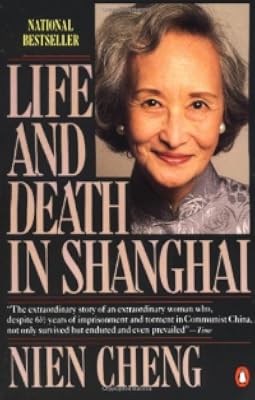


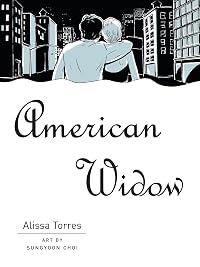
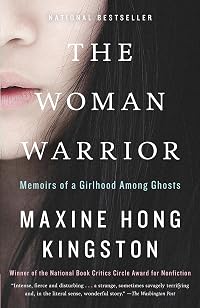
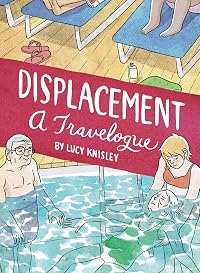
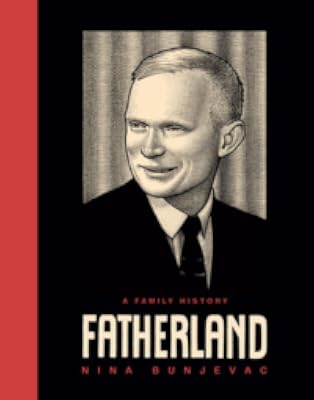
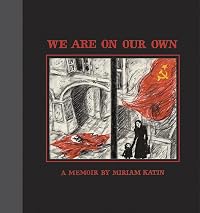
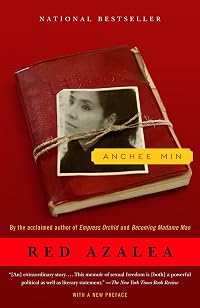
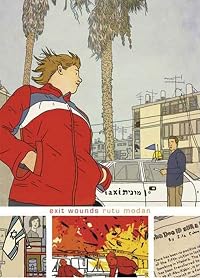
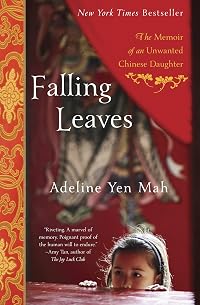
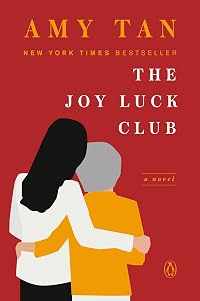
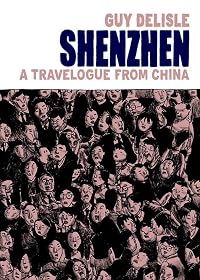
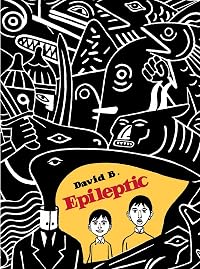



Member Recommendations
Member Reviews
Having just finished Wild Swans, I thought this graphic novel/memoir would be a good complement. It is also a 20th century Chinese family story that ends up with the protagonist emigrating, this time not to the UK but to the US. In contrast to Wild Swans, apart from the external misery of 20th century Chinese history, there is a large internal misery caused by sibling rivalry and unhappy extended families. This petty and mean infighting over resources is a clear advocate for nuclear families. One beneficial side effect of the Chinese one-child policy is to dismantle the Confucian sibling hierarchy.
While the author's father's life in China is well-developed, the time he spent in Taiwan, Japan and the US is only given cursory treatment. show more Given the troubles the father survived in China, I found the meek response to the stalker issue in the US surprising. The tough laws in the US should have cut those abuses short effectively. As it is, the symmetry of a family terrorized by kin or near-kin in China and the US does not point to forgetting sorrow. show less
While the author's father's life in China is well-developed, the time he spent in Taiwan, Japan and the US is only given cursory treatment. show more Given the troubles the father survived in China, I found the meek response to the stalker issue in the US surprising. The tough laws in the US should have cut those abuses short effectively. As it is, the symmetry of a family terrorized by kin or near-kin in China and the US does not point to forgetting sorrow. show less
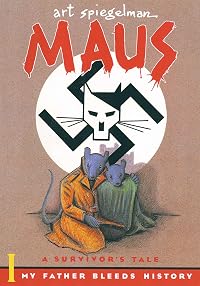
I feel honored to have been given an advanced copy of Forget Sorrow, as it will surely be placed among the greats of the graphic memoir subgenre. Like Maus, Persepolis, Fun Home, and Epileptic, it uses sequential art as a perfect medium for presenting an autobiographical narrative. Bell Yang's background in calligraphy is evident in her elegant line art, evoking both Classic Chinese drawings and traditional cartooning.
The book is about the expectations and assumptions that parents have for their children and those that kids have for their parents. Belle Yang (here referred to by her Chinese name Xuan) moves back with her parents after cutting ties with her abusive boyfriend, chillingly portrayed as a mouthless giant. As she receives show more both criticism and compassion from her father, he tells her the story of his youth and their ancestral home back in China. His grandfather was a landowner before the Communists took over, a patriarch to four sons and their families. He would eventually lose his land and position of authority and see both betrayal and boundless devotion from his sons.
The memoir also tells of Xuan and her father and how they meet half-way in their differences. Their compromises show the importance of coming to terms with the mistakes you have made that have hurt yourself and others, and being willing to forgive others and yourself. The book also perfectly demonstrates the powers of familial love and finding your own self-worth. show less
The book is about the expectations and assumptions that parents have for their children and those that kids have for their parents. Belle Yang (here referred to by her Chinese name Xuan) moves back with her parents after cutting ties with her abusive boyfriend, chillingly portrayed as a mouthless giant. As she receives show more both criticism and compassion from her father, he tells her the story of his youth and their ancestral home back in China. His grandfather was a landowner before the Communists took over, a patriarch to four sons and their families. He would eventually lose his land and position of authority and see both betrayal and boundless devotion from his sons.
The memoir also tells of Xuan and her father and how they meet half-way in their differences. Their compromises show the importance of coming to terms with the mistakes you have made that have hurt yourself and others, and being willing to forgive others and yourself. The book also perfectly demonstrates the powers of familial love and finding your own self-worth. show less
 This review was written for LibraryThing Early Reviewers.
With a lilting voice and a strongly etched fairy tale hand, writer/artist Yang weaves a riveting true-life tale of ancestral jealousies and familial woes from her father's recollections of growing up in China. Her book begins with Yang in her 20s, recently graduated from college but unable to get herself out into the world, wounded by self-doubt and bad memories of an ex-boyfriend turned stalker. Back living with her immigrant parents in Carmel, Calif., Yang listens to her father's stories about his grandfather, a man of wealth and stature whose many feuding sons left the family dismally ill-prepared for the winds of change that WWII and Mao's revolution sent violently whipping through the land. Betrayal and infighting pockmark these show more stories of woe, though they're buttressed with an appreciation of an uncle's Buddhist disavowal of material possessions or desires. Yang's story, which balances her own struggles with those of her ancestors without clumsily trying to equate them, echoes both with the tragic darkness of King Lear and the clean austerity of classical Chinese poetry. show less
Belle Yang flees an abusive boyfriend turned violent stalker and returns to the home of her traditional Chinese parents. There she begins to heal herself and find her own voice by recording her father's ancestral tales, which involve sibling conflicts and the rise of communism.
I am fond of the graphic novel/memoir genre, and Yang works will with the form. I was a little slow getting into this, but as the two intertwined stories progress, I became deeply engrossed. The characters come through the simple artwork full of life and vigor. I found myself fascinated by the subtle way Yang evoked culture and shared the intersecting family dynamics that can create conflict. No one is vilified; no one is idolized. People are a complicated mix. show more Reading this memoir, I felt a sense of familiarity with the family as whole, and compassion for every single family member. This is subtly moving book that I would certainly recommend to others. show less
I am fond of the graphic novel/memoir genre, and Yang works will with the form. I was a little slow getting into this, but as the two intertwined stories progress, I became deeply engrossed. The characters come through the simple artwork full of life and vigor. I found myself fascinated by the subtle way Yang evoked culture and shared the intersecting family dynamics that can create conflict. No one is vilified; no one is idolized. People are a complicated mix. show more Reading this memoir, I felt a sense of familiarity with the family as whole, and compassion for every single family member. This is subtly moving book that I would certainly recommend to others. show less
This review was written for LibraryThing Early Reviewers.Children’s book illustrator and author Belle Yang makes her adult graphic novel debut with a deeply moving tale that is the result of her taking refuge with her parents in the wake of a stalking ex-boyfriend threatening her. Capitalizing on the time spent with her father, she teases stories out of him that depict how previous generations of the family living in China were impacted by Mao and the Communist Revolution; about the family’s clashes and dynamics; and intensely personal reflections on a love for family unseen since his arrival in the United States.
Living with her parents in an exile imposed by a violent stalker, Belle Yang learns of her ancestral history from her father. From the simple beginnings as generational farmers in China to successful land-owners, to their various fates during the Communist takeover, it's an epic tale of distraction designed to help Belle forget the life that has been stolen by her stalker. She manages to draw her life in the present, her father's life as a child and visions of enlightenment as they may have been imagined by her distant relatives.
The majority of this family tale is engaging and fascinating as one watches a family fortune made to ensure the comfort of generations only to watch said generations jockey for position and push apart the show more security for their own gains while forgetting that forces from the outside will pull indiscriminately at anything and everything. Juxtaposing this against Belle's own inability to leave her father's house and it becomes an interesting study in the parental line between protection and the feeling of imprisonment. Unfortunately, Belle's work towards the later portion of the work loses the early intimate and detailed feel as her father no longer had access or was willing to tell certain stories. To make up for this, Belle flips back and forth between present and past with increasing frequency, but these jumps are often without warning and should have been done either in a slightly different frame or drawing style to clearly denote the changeover.
Belle clearly has a talent for this medium, it just would have been better if the latter part of her story had not felt so rushed and full of missing parts. The first half is fantastic. show less
The majority of this family tale is engaging and fascinating as one watches a family fortune made to ensure the comfort of generations only to watch said generations jockey for position and push apart the show more security for their own gains while forgetting that forces from the outside will pull indiscriminately at anything and everything. Juxtaposing this against Belle's own inability to leave her father's house and it becomes an interesting study in the parental line between protection and the feeling of imprisonment. Unfortunately, Belle's work towards the later portion of the work loses the early intimate and detailed feel as her father no longer had access or was willing to tell certain stories. To make up for this, Belle flips back and forth between present and past with increasing frequency, but these jumps are often without warning and should have been done either in a slightly different frame or drawing style to clearly denote the changeover.
Belle clearly has a talent for this medium, it just would have been better if the latter part of her story had not felt so rushed and full of missing parts. The first half is fantastic. show less
This review was written for LibraryThing Early Reviewers.This ARC was rife with text misaligned with speech bubbles and a few misspelled or just wrong words but that was not enough to distract the reader from the outstanding story of a Chinese family.
Xuan (translated as Forget Sorrow) is the only daughter of Chinese parents who had immigrated from Taiwan. Her father was originally from China, a son of the oldest of four sons of a Manchurian landowner. After a bad relationship with an abusive boyfriend, Xuan went to China to study traditional painting, travel, and meet her grandparents. After the Tiananmen Massacre she returned to the U.S.
As a teenager she was scornful and embarrassed of her parents' old-fashioned ways and accented English. In order to try and mend her relationship with her show more father after her experiences in China, she listens to stories about his father, three uncles, and grandfather.
Xuan's ancestors had settled in Manchuria in the early 19th century and eight generations later lived by collecting rent from farmers on their land. When young, her father lived with his family in an enclosure that also sheltered his grandparents and his uncles' families. Through these stories we learn about the complicated politics of this extended family and how they tried to exist in the middle of invasions, wars, revolutions, and famines.
By learning about her ancestry and the history of China's tumultuous past, she made peace with her parents and herself. This graphic novel was part of this journey as she shares her family's history with us.
To a Western eye, the story seems choppy and fragmented and we must fill in the story as best as we can. But we learn quite a bit about how a family struggles to exist in the rough and difficult times. The black and white art is simple but the characters stand out and are distinctive.
I read Pearl S. Buck's books when I was in high school and her haunting stories of China really affected me. Forget Sorrow brought back these stories back to me. show less
Xuan (translated as Forget Sorrow) is the only daughter of Chinese parents who had immigrated from Taiwan. Her father was originally from China, a son of the oldest of four sons of a Manchurian landowner. After a bad relationship with an abusive boyfriend, Xuan went to China to study traditional painting, travel, and meet her grandparents. After the Tiananmen Massacre she returned to the U.S.
As a teenager she was scornful and embarrassed of her parents' old-fashioned ways and accented English. In order to try and mend her relationship with her show more father after her experiences in China, she listens to stories about his father, three uncles, and grandfather.
Xuan's ancestors had settled in Manchuria in the early 19th century and eight generations later lived by collecting rent from farmers on their land. When young, her father lived with his family in an enclosure that also sheltered his grandparents and his uncles' families. Through these stories we learn about the complicated politics of this extended family and how they tried to exist in the middle of invasions, wars, revolutions, and famines.
By learning about her ancestry and the history of China's tumultuous past, she made peace with her parents and herself. This graphic novel was part of this journey as she shares her family's history with us.
To a Western eye, the story seems choppy and fragmented and we must fill in the story as best as we can. But we learn quite a bit about how a family struggles to exist in the rough and difficult times. The black and white art is simple but the characters stand out and are distinctive.
I read Pearl S. Buck's books when I was in high school and her haunting stories of China really affected me. Forget Sorrow brought back these stories back to me. show less
This review was written for LibraryThing Early Reviewers.Members
- Recently Added By
Published Reviews
(The link is to a reprint at Red Room)
Coming afresh to graphic novels from making illustrated books for adults and children, Yang writes and draws the Chinese soul, capturing its phraseologies and philosophies. Her varied brushstrokes, from bold to dry, tap into a long tradition of ‘simplicity' in Chinese art and notably the acute observations of everday life by master cartoonist Feng Zikai show more (1898-1975). show less
Coming afresh to graphic novels from making illustrated books for adults and children, Yang writes and draws the Chinese soul, capturing its phraseologies and philosophies. Her varied brushstrokes, from bold to dry, tap into a long tradition of ‘simplicity' in Chinese art and notably the acute observations of everday life by master cartoonist Feng Zikai show more (1898-1975). show less
added by elenchus
Lists

Graphic Memoirs by Women
175 works; 6 members
Author Information

12+ Works 639 Members
Belle Yang is a LibraryThing Author, an author who lists their personal library on LibraryThing.
Awards and Honors
Distinctions
Common Knowledge
- Original publication date
- 2010
- People/Characters
- Belle Yang (Xuan); Baba Yang (Zu-Wu); Second Aunt; Grandfather Yang; Huai-Lian Yang (Third Uncle); Huai-Chao Yang (Eldest Brother) (show all 8); Yong-Quin (Grandmother Yang); Huai-Zheng (Fourth Uncle)
- Important places
- Carmel, California, USA; Beijing, China; Shantuozi, China
- Dedication
- To doctors Allen B Radner and Dawn Mudge, for saving my life.
- First words
- I was born in 1960 on Taiwan. . .
. . . the island of my father's exile. - Last words
- (Click to show. Warning: May contain spoilers.)He said I've grown strong.
Classifications
Statistics
- Members
- 170
- Popularity
- 193,140
- Reviews
- 21
- Rating
- (3.64)
- Languages
- Dutch, English, French, Portuguese
- Media
- Paper, Ebook
- ISBNs
- 6
- ASINs
- 1