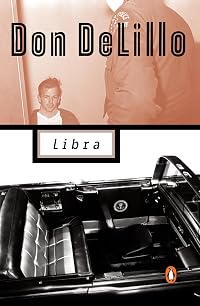
Libra
by Don DeLillo
On This Page
Description
In this powerful, eerily convincing fictional speculation on the assassination of John F. Kennedy, Don DeLillo chronicles Lee Harvey Oswald's odyssey from troubled teenager to a man of precarious stability who imagines himself an agent of history. When "history" presents itself in the form of two disgruntled CIA operatives who decide that an unsuccessful attempt on the life of the president will galvanize the nation against communism, the scales are irrevocably tipped. A gripping, masterful show more blend of fact and fiction, alive with meticulously portrayed characters both real and created, Libra is a grave, haunting, and brilliant examination of an event that has become an indelible part of the American psyche. show lessTags
Recommendations



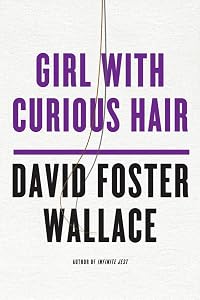
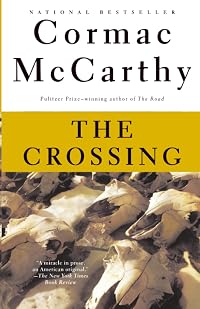
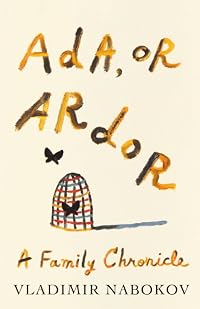
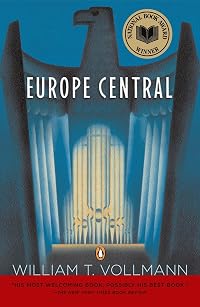
Member Recommendations

daveowen78 A bit nutty and certainly from the conspiracy theory end of the spectrum. I am not sure how credible the author is. Never the less very interesting, and indeed fairly frightening if there is even a shred of truth to this government cover up take on the JFK assassination.
Member Reviews
DeLillo's flawed masterpiece about the assassination of President Kennedy. This is superb recreation of the most seminal event in recent American history and I only say flawed because his attention to the host of minor or peripheral characters, i.e. the co-conspirators lacked the power and artistry of his depiction of Harvey Lee Oswald and Jack Ruby. The opening page is a mind blowing example of DeLillo at his best a third person narrator with complete access to the character. And when it comes to orchestrating a large public event, no one comes close to DeLillo. He does this in the opening of Underworld, in the Angel Esmeralda and The Falling Man and here, the assassination is just extraordinarily brilliant writing shifting between a show more global omniscience and the physical plane. Breathtaking. Also the dialogue parts with Oswald and Ruby are as good as it gets, he just doesn't invest the same energy in the Cubans, FBI and mobsters. Still what a tremendous book show less
See the truth and know it, if you can.
It's easy to see why David Foster Wallace - or, indeed, anybody - likes Don DeLillo: his dense, lingually contorted novels leave a stronghold on one's mind beyond the fact. In my case, I seldom remember the plots, but I can remember certain scenes or feelings invoked, mainly as few authors have managed both in the same way before.
It's less about the contents and more about a general sentiment.
Workmen carried lanterns along adjacent tracks. He kept a watch for sewer rats. A tenth of a second was all it took to see a thing complete. Then the express stations, the creaky brakes, people bunched like refugees. They came wagging through the doors, banged against the rubber edges, inched their way in,show more
were quickly pinned, looking out past the nearest heads into that practiced oblivion.
As the book states, this is about the Kennedy assassination. Oswald was a Libra. Does he buy into the whole Oswald-did-it-thing? Does anybody care?
There is political intrigue here. Language snakes around as a man hits the person he's romantically entangled with, which turned me into near-vomit; one of the fores of DeLillo's strengths are how he can describe dramatic detail with few words and yet, together with the use of idiomatic expressions in dialogue, refrain from sounding tart or obtuse.
She saw him from a distance even when he was hitting her. He was never fully there.
Yes yes yes yes. God is alive and well in Texas.
Paragraphs turn into short stories at times:
“I’ll tell you a good sign,” Lee said. “I order the handgun in January, I order the rifle in March. Both guns arrive the same day. My wife would say it’s fate.” “What did you tell her about tonight?” “She thinks I’m at typing class. I dropped out of typing class two weeks ago. I got fired from my job last Saturday was my last day.”
“I have the primitive fear,” Ferrie said. “All my fears are primitive. It’s the limbic system of the brain. I’ve got a million years of terror stored up in there.” He wore a crushed sun hat, the expressive brows like clown paint over his eyes. He handed Wayne the rifle. They watched him walk to the lopsided dock and climb into the skiff.
All in all, I really got into this book around the 350-page mark. Was it worth it? Yes. show less
I'm rating this novel with 4 stars, in spite of the fact that I didn't really enjoy reading it very much. This is a fictional account of events leading up to and including the assassination of President John F. Kennedy in Dallas, Texas, on November 22, 1963. If you didn't live through that time, or if you only know the barest outline of what happened and who was involved, this could be an outstanding literary adventure for you. I appreciated it, without loving it, and I believe that is almost entirely due to the fact that I was once so completely immersed in reading about the Kennedy assassination that I simply cannot distance myself from the history and let the fiction carry me away. This is post-modern stuff, and I soon realized that show more DeLillo was doing something quite remarkable with his multiple characters and points of view. I think the novel is a masterpiece of imagination, as DeLillo put himself (and me, very often) directly and brilliantly into the heads of Lee Harvey Oswald, his mother, his wife, and many of his associates. He made it clear in an author's note that he "made no attempt to furnish factual answers to any questions raised by the assassination". And by changing the perspective from one character to another throughout, DeLillo also made it difficult to come to any conclusions about what "really" was happening. Any given character only knew--or told-- part of the story, and many of them were thoroughly unreliable narrators. Nevertheless, it's hard not to come away from Libra with a strong impression that in this version of events, Oswald himself didn't believe he fired the shot that killed Kennedy. It's fascinating stuff, but it didn't need fictionalization for me to find it so. Having said that, though, I'm a bit disappointed that I couldn't have read this unquestionably fine piece of work without knowing a blessed thing about the historical events it is based on. I'm pretty sure I would have loved it in that case.
Review written December 2016 show less
Review written December 2016 show less
I unintentionally finished this days before the 50th anniversary of JFK's death, which made the whole thing even more enjoyable, if that's the right word. Aside from a bit of the good ole American prose (and its general fear of syntax more complex than subject-verb-object), and brief moments of postmodern angst (can we know anything???), this is an excellent, excellent book. It's easy to read but doesn't ignore the possibility that writing may (I'd go as far as 'should') be noticeable. But most importantly, it's very, very smart.
What is an historical novel* meant to do? One character in 'Libra' suggests that history just is the sum total of what we don't know--presumably what we do know being either 'present' or, perhaps, knowing show more history makes it less likely to have unpleasant effects: if I know x has a history of beating his girlfriends, I'd warn my friend against dating him. Another character suggests that Oswald, who thinks that he wants to enter history, really wants *out* of history: he doesn't want to be a concrete thing, he wants to be a symbol. And of course he has become just that.
Most of us know nothing about LHO except the image of him being shot, and despite this ignorance, we also feel that he's the image of America's shift (massive generalization alert) from confidence to neurosis. What we know, in this case at least, is just the symbol. But the symbol is not 'in' history; symbols float free of history. So yes, LHO wanted to get out of history, and he did. He's known. But only as a symbol. What we don't know is the real history.
And that's what the historical novel, and narrative art more generally, offers us: some way to understand the messiness of 'history', to burrow under the symbols and decontextualized factoids. Art suggests and plays with what we don't know--here, LHO's personality, wishes and dreams on the one hand, and a possible conspiracy on the other. In other words, the historical novel and conspiracy theories do much the same thing: they try to contextualize symbols, to ground them in history, in the things we don't know. Libra achieves the almost impossible: it confers dignity on LHO and his family by paying attention to history.
Conspiracy theories, on the other hand, dignify nobody, except perhaps the theorist in her own eyes. That's not to say that the urge to produce conspiracy theories is blameworthy. They're attempts to understand and get behind the symbols, just like DeLillo's novel. And the novel itself makes it hard to see what difference there might be between art and theory (aside from intelligence and style). I'm sure there is one, but how can I describe it? Right now, I just don't know.
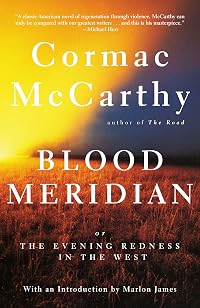
*: McCarthy's 'Blood Meridian' was published in 1985, three years before 'Libra'... and both feature a villainous, pederastic man who suffers from Alopecia universalis. Conspiracy? show less
What is an historical novel* meant to do? One character in 'Libra' suggests that history just is the sum total of what we don't know--presumably what we do know being either 'present' or, perhaps, knowing show more history makes it less likely to have unpleasant effects: if I know x has a history of beating his girlfriends, I'd warn my friend against dating him. Another character suggests that Oswald, who thinks that he wants to enter history, really wants *out* of history: he doesn't want to be a concrete thing, he wants to be a symbol. And of course he has become just that.
Most of us know nothing about LHO except the image of him being shot, and despite this ignorance, we also feel that he's the image of America's shift (massive generalization alert) from confidence to neurosis. What we know, in this case at least, is just the symbol. But the symbol is not 'in' history; symbols float free of history. So yes, LHO wanted to get out of history, and he did. He's known. But only as a symbol. What we don't know is the real history.
And that's what the historical novel, and narrative art more generally, offers us: some way to understand the messiness of 'history', to burrow under the symbols and decontextualized factoids. Art suggests and plays with what we don't know--here, LHO's personality, wishes and dreams on the one hand, and a possible conspiracy on the other. In other words, the historical novel and conspiracy theories do much the same thing: they try to contextualize symbols, to ground them in history, in the things we don't know. Libra achieves the almost impossible: it confers dignity on LHO and his family by paying attention to history.
Conspiracy theories, on the other hand, dignify nobody, except perhaps the theorist in her own eyes. That's not to say that the urge to produce conspiracy theories is blameworthy. They're attempts to understand and get behind the symbols, just like DeLillo's novel. And the novel itself makes it hard to see what difference there might be between art and theory (aside from intelligence and style). I'm sure there is one, but how can I describe it? Right now, I just don't know.
*: McCarthy's 'Blood Meridian' was published in 1985, three years before 'Libra'... and both feature a villainous, pederastic man who suffers from Alopecia universalis. Conspiracy? show less
After reading three of Don DeLillo's novels, I'm still not sure what to think of him. Libra is the story of Lee Harvey Oswald and the Kennedy assassination. Since there continues to be uncertainty about these events and as DeLillo in no way presents Libra to be historically accurate, I would classify it as alternate history rather than historical fiction. While I don' t view myself as a big fan of alternate history, I have found I like it when it is done well as I tend to like almost anything when done well. For instance, Phillip Roth's A Plot Against America comes to mind.
Libra is certainly done well in my opinion. With so many questions and theories about these events, DeLillo's approach removes the bonds of everything else that has show more been written and allows the reader to imagine events in a way that feels unencumbered, which you would not think possible with events that are so well known. Certainly the story seems to stay within the bounds of what is known, but leaves individual motivations, individual actions and various interactions unstated and unclear enough to allow the reader to pursue numerous possible angles. And yet, in the end we are left with the possibility that one character, Osward, has less control over the actual events than we might have supposed but more control than we realized over how history would perceive those events. I will give DeLillo this much credit: he makes me think. show less
Libra is certainly done well in my opinion. With so many questions and theories about these events, DeLillo's approach removes the bonds of everything else that has show more been written and allows the reader to imagine events in a way that feels unencumbered, which you would not think possible with events that are so well known. Certainly the story seems to stay within the bounds of what is known, but leaves individual motivations, individual actions and various interactions unstated and unclear enough to allow the reader to pursue numerous possible angles. And yet, in the end we are left with the possibility that one character, Osward, has less control over the actual events than we might have supposed but more control than we realized over how history would perceive those events. I will give DeLillo this much credit: he makes me think. show less
Delillo is always a difficult author to get a perfect handle on, but goddamn this was a rip-tide of a book. Reads like an incantation of an assassination, with an eerie fatalistic pulse pumping through the latter half. Frustrating and opaque, as always, at times, but still unnervingly convincing. And shi-it, what a first-rate nightmare.
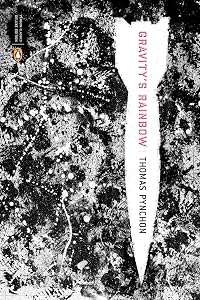
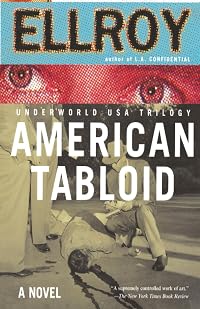
Felt like I tore through this with the inability to put it down for more than a few minutes before wanting to get back to it. An engaging re-telling of a well worn tale, located somewhere between Ellroy's American Tabloid and Pynchon's Crying of Lot 49. Like bubble gum with vitamins and antioxidants; healthy but with a whopping good time attached. Riding along on narrative momentum with occasional rest stops of brilliant social analysis.
Libra was on my "to read" list for a long time.
So happy to have finally experienced it.
Libra was on my "to read" list for a long time.
So happy to have finally experienced it.
Members
- Recently Added By
Lists

1001 Books You Must Read Before You Die
1,448 works; 1,133 members

Larry McCaffery's 20th Century Greatest Hits: 100 English-Language Books
103 works; 12 members
Novels from The Guardian's Great American Novelist Tournament
148 works; 24 members

Great American Novels
158 works; 40 members

1980s
356 works; 22 members

Unread books
1,063 works; 86 members

National Book Award Finalists - Fiction
377 works; 12 members

Books set in Moscow
16 works; 1 member

A Good Read (Radio 4)
287 works; 1 member
Harold Bloom - The Western Canon: D. The Chaotic Age
833 works; 24 members

living room bookshelf
150 works; 1 member

Books for Birute
39 works; 1 member

Books for Dustin
19 works; 1 member

Don DeLillo books
19 works; 1 member
Author Information

54+ Works 49,028 Members
Don DeLillo was born in the Bronx, New York on November 20, 1936. He received a bachelor's degree in communication arts from Fordham University in 1958. After graduation, he was a copywriter for an advertising company and wrote short stories on the side. His first story, The River Jordan, was published two years later in Epoch, the literary show more magazine of Cornell University. His first novel, Americana, was published in 1971. His other works include Ratner's Star, The Names, Libra, Underworld, The Body Artist, Cosmopolis, Falling Man, Point Omega, and The Angel Esmeralda, a collection of short stories. He won several awards including the National Book Award for fiction in 1985 for White Noise, the PEN/Faulkner Award in 1992 for Mao II, the PEN/Saul Bellow Award for Achievement in American Fiction in 2010, and the inaugural Library of Congress Prize for American Fiction in 2013. (Bowker Author Biography) show less
Awards and Honors
Awards
Distinctions
Series
Belongs to Publisher Series
Work Relationships
Common Knowledge
- Canonical title*
- Vaaka
- Original title
- Libra
- Original publication date
- 1988
- People/Characters
- Lee Harvey Oswald; John F. Kennedy; David Ferrie; Guy Banister; Marina Oswald; Ruth Paine (show all 8); Win Everett; Nicholas Branch
- Important places
- Dallas, Texas, USA; New Orleans, Louisiana, USA
- Important events
- Assassination of John F. Kennedy
- Dedication
- To the boys at 607: Tony, Dick and Ron
- First words
- This was the year he rode the subway to the ends of the city, two hundred miles of track.
- Last words
- (Click to show. Warning: May contain spoilers.)It belonged to her now, and to history.
*Some information comes from Common Knowledge in other languages. Click "Edit" for more information.
Classifications
Statistics
- Members
- 4,133
- Popularity
- 3,738
- Reviews
- 45
- Rating
- (3.88)
- Languages
- 12 — Danish, Dutch, English, Finnish, French, German, Italian, Polish, Portuguese, Spanish, Swedish, Turkish
- Media
- Paper, Audiobook, Ebook
- ISBNs
- 61
- ASINs
- 22