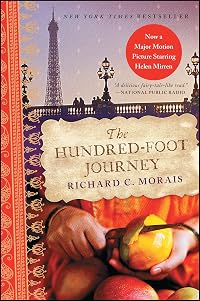
The Hundred-Foot Journey
by Richard C. Morais
On This Page
Description
"That skinny Indian teenager has that mysterious something that comes along once a generation. He is one of those rare chefs who is simply born. He is an artist."And so begins the rise of Hassan Haji, the unlikely gourmand who recounts his life's journey in this charming novel. Lively and brimming with the colors, flavors, and scents of the kitchen, The Hundred-Foot Journey is a succulent treat about family, nationality, and the mysteries of good taste.
Born above his grandfather's modest show more restaurant in Mumbai, Hassan first experienced life through intoxicating whiffs of spicy fish curry, trips to the local markets, and gourmet outings with his mother. But when tragedy pushes the family out of India, they console themselves by eating their way around the world, eventually settling in Lumière, a small village in the French Alps. The boisterous Haji family takes Lumière by storm. They open an inexpensive Indian café opposite an esteemed French restaurant—that of the famous chef Madame Mallory—and infuse the sleepy town with the spices of India, transforming the lives of its eccentric villagers and infuriating their celebrated neighbor. Only after Madame Mallory wages culinary war with the immigrant family does she finally agree to mentor young Hassan, leading him to Paris, the launch of his own restaurant, and a slew of new adventures.
The Hundred-Foot Journey is about how the hundred-foot distance between a new Indian kitchen and a traditional French one can represent the gulf between different cultures and desires. A testament to the inevitability of destiny, this is a fable for the ages—charming, endearing, and compulsively readable.
. show less
Tags
Recommendations




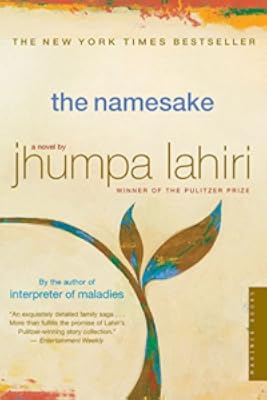

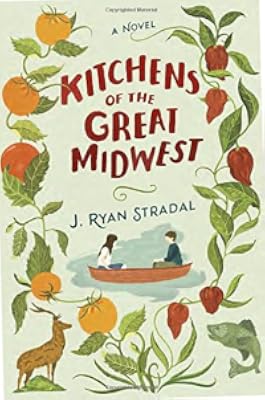
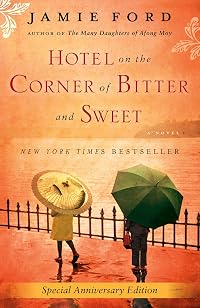


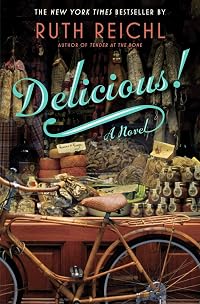






















Member Recommendations
Member Reviews
This was beautifully written with rich, make-me-hungry descriptions. The characters are well-rounded and well-drawn, and the relationships between them are complex.
I found myself enjoying the Mumbai chapters more than the ones in Europe, I think because in addition to the lush setting, the family had such a vibrancy. This got lost in the London section (quite understandably–the whole family was reeling from loss), and I think it never fully returned. Neither Lumiere nor Paris has the wealth of place or of people that Mumbai does though Lumiere is beautiful, and full of interesting characters.
I also regret that the food turns entirely French once Hassan gets to France. Perhaps this is because I infinitely prefer Indian food to French show more food (and though I prefer a somewhat calm, quiet dining atmosphere, I know plenty of people, especially Asians, who feel more at home in a boisterous party atmosphere).
I enjoy Hassan’s success, but I find myself wondering why it is that he must leave his culture behind–at least professionally–to achieve it. show less
I found myself enjoying the Mumbai chapters more than the ones in Europe, I think because in addition to the lush setting, the family had such a vibrancy. This got lost in the London section (quite understandably–the whole family was reeling from loss), and I think it never fully returned. Neither Lumiere nor Paris has the wealth of place or of people that Mumbai does though Lumiere is beautiful, and full of interesting characters.
I also regret that the food turns entirely French once Hassan gets to France. Perhaps this is because I infinitely prefer Indian food to French show more food (and though I prefer a somewhat calm, quiet dining atmosphere, I know plenty of people, especially Asians, who feel more at home in a boisterous party atmosphere).
I enjoy Hassan’s success, but I find myself wondering why it is that he must leave his culture behind–at least professionally–to achieve it. show less
Hassan Hajji arrives by circuitous means from Mumbai via London to the French Alps town of Lumiere when his extended family's car breaks down. Patriarch Abbas Hajji decides this is as good a place as any to settle and open a restaurant dedicated to Indian food. Mme Mallory, chef of the haute cuisine Michelin two star restaurant directly across the street is none too happy with this boisterous crowd encroaching on a town she literally rules. One would imagine the book with its impending conflict is all but written at this point.
The author's descriptions -- particularly of location, food and cooking -- are stunning. Any reader, especially of the foodie kind, will be booking a reservation at their favorite eatery in response. Those who show more have seen the movie will note that some serious changes from the second half of the book. One suspects the producers wanted more romance and more Dame Helen Mirren. The movie tie sit all up in a nice little conclusion.
The book seeks to explore the demands on haute cuisine chefs, which our hero Hassan eventually becomes. This is a serious look at the powers of critics, the ever tightening profit margins, economics demanding more 'branding' and even a hint of the soon to come emphasis on local and 'simple' cooking. Maxims didn't go out of business for no reason. The business of fine dining is ever changing. Even in France, where many consider fine dining begins and ends.
This second half emphasis on the economics and politics of fine dining might be jarring for those more caught up in the relationships of the first half. Once Hassan moves to Paris, there is little mention of either his father or his mentor, Mme Mallory. There are great reads about restaurants and food industry (Michael Ruhlman, Anthony Bourdain, Bill Buford, and Garielle Hamilton immediately come to mind.) If you enjoy books like those, I suspect you will truly enjoy this book as well. If you come after having seen the movie, not so much.
In this homage to French cuisine, the greatest journey isn't from Mumbai to Lumiere, or even from a small town to the heights of Michelin stardom, but in Hassan's first few steps across the way to snatch at his dreams and destiny. show less
The author's descriptions -- particularly of location, food and cooking -- are stunning. Any reader, especially of the foodie kind, will be booking a reservation at their favorite eatery in response. Those who show more have seen the movie will note that some serious changes from the second half of the book. One suspects the producers wanted more romance and more Dame Helen Mirren. The movie tie sit all up in a nice little conclusion.
The book seeks to explore the demands on haute cuisine chefs, which our hero Hassan eventually becomes. This is a serious look at the powers of critics, the ever tightening profit margins, economics demanding more 'branding' and even a hint of the soon to come emphasis on local and 'simple' cooking. Maxims didn't go out of business for no reason. The business of fine dining is ever changing. Even in France, where many consider fine dining begins and ends.
This second half emphasis on the economics and politics of fine dining might be jarring for those more caught up in the relationships of the first half. Once Hassan moves to Paris, there is little mention of either his father or his mentor, Mme Mallory. There are great reads about restaurants and food industry (Michael Ruhlman, Anthony Bourdain, Bill Buford, and Garielle Hamilton immediately come to mind.) If you enjoy books like those, I suspect you will truly enjoy this book as well. If you come after having seen the movie, not so much.
In this homage to French cuisine, the greatest journey isn't from Mumbai to Lumiere, or even from a small town to the heights of Michelin stardom, but in Hassan's first few steps across the way to snatch at his dreams and destiny. show less
Get ready to crave Indian food, and French cooking - this novel is as much a paean to wonderful recipes and the sensory pleasures of preparing/eating delicious meals, as it is the story of Hassan Haji. Hassan is born into a hard-working, "pull yourself up by your bootstraps" kind of Muslim Indian family who do accumulate the trappings of economic success, until the troubles begin between the competing religious groups. His family is driven out -after a tragic attack and house fire- and go for a brief sojourn to London, living close by relatives and trying to make sense of their drastically changed world. When relations sour between the extended family, Hassan's larger than life father, Abbas, insists on packing everyone up and doing a show more restaurant/food tour of Europe. One exhausting day, their car breaks down in the beautiful little French town of Lumiere, and as fate would have it, in front of a dilapidated estate. Of course Hassan's father, persuaded by his travel weary children, purchases the estate and their Lumiere years begin -the longest section of the book. And as the Haji family settle into small town French life, they do battle with their proud, completely French neighbor, Madame Gertrude Mallory, a renowned chef of a beautiful restaurant: Le Saule Pleureur, in the bottom floor of her estate. The author's descriptions of her ferocious anger against the noise, the effrontery of the Haji family,not only for imposing themselves on her neighborhood, but opening an Indian restaurant right across from hers! Quel scandale! Yet the plot's threads continues to weave a very different story than readers might expect. Told with humor, and the unmistakably sincere voice of Hassan, we readers fall under the Haji spell: wandering grandma Ammi, grumbling Auntie, loud and impetuous Abbas, and Haji's siblings. But it is Haji's journey - his love interests, his decision to leave his family, and his desire to become a world famous chef- that captivate until the very last page. A book for adults - sexual encounters are described, adult struggles are the focus of the last section, "Paris", but a treat for anyone ready for a multi-cultural bildungsroman of the 21st century. show less
I love food. I love books. And books about food? Well, butter my buns and call me biscuit, or in the case of this book, slather me with creme fraiche and call me a croissant. OK, so the colloquialism doesn't translate from deep south to French food but the sentiment behind it definitely still stands. This is a delightful feast of a book.
Hassan Haji's earliest memory is of the smells wafting upstairs to his cot from the restaurant his family ran in India. Is it any wonder then that food and cooking would be in his blood? His early childhood was filled with a raucous family and food. But after the death of his well-respected grandfather, an out of control mob attacked and burned the restaurant, killing Hassan's mother in the process and show more so the family fled. Spending two years in London, Hassan seemed poised to become another disaffected youth until the family is once again driven onward, this time to Europe, leading a peripatetic life. And then a car breaks down, depositing the Haji family in the small French town of Lumiere, where Hassan's life starts back down the path for which he was born: to become a world class chef.
Across the street from the noisy and vibrant Haji family restaurant, located on the ground floor of a gracious mansion, is a quiet, stately two-star French restaurant and its crusty owner, Madame Mallory. Declaring war on the Hajis, Mallory tries everything under the sun to get the better of Abbas Haji, Hassan's father. She is completely stricken when she discovers that Hassan, now the head chef in his family's restaurant despite his youth, has the raw talent that she herself lacks and so she ramps up her campaign to drive the outsiders out. But a near tragedy changes her mind and she offers to teach Hassan to cook traditional French food, grooming him to become what she could not, a rising star in the French culinary world.
Taking place from Bombay to London to Paris, the sights and sounds of food and cooking permeate every aspect of the novel. I salivated my way through much of it although I freely admit that I like Indian food a whole lot more than I like French food so I was a bit disappointed that Hassan didn't create a fusion of sorts between the comfort food of his childhood and the elegant French food of his chosen adult life. Morais has managed to capture the essence of the culinary profession, the life in kitchens, and the professional worries that are all part and parcel of a chef's life.
The novel is fiction but it reads like a memoir. Certain of the characters like Madame Mallory and Abbas Haji are larger than life, utterly colorful and thoroughly entertaining. The section on London addresses the issue of immigrants better than the later section set in France although there are still moments where racism realistically rears its ugly head. Hassan's character is singularly focused so much of the narrative follows him from kitchen to kitchen, losing a bit of the larger than life quirkiness that defined the Haji family and then life at Madame Mallory's. This was a novel full of joy, contentment, and destiny fulfilled. Hassan found his calling, devoted his life to it, and made the most of his amazing talent, richly rewarded with friends and accolades alike. His early life and family determined his path for him, both personally and in the kitchen, and he embraced his role.
The writing here is descriptive and frequently mouth-watering. I only wish there had been more detail, a more complete description of the people so instrumental in Hassan's life in the second half of the book. Overall, this is a book that will appeal to food afficionados, anyone who enjoys reading about the making of a chef, and those who search out books with a hint of the exotic and the vibrant. Morais was a friend of the late Ismail Merchant and this could easily be a Merchant Ivory film, lush and decadent, just as it is written. show less
Hassan Haji's earliest memory is of the smells wafting upstairs to his cot from the restaurant his family ran in India. Is it any wonder then that food and cooking would be in his blood? His early childhood was filled with a raucous family and food. But after the death of his well-respected grandfather, an out of control mob attacked and burned the restaurant, killing Hassan's mother in the process and show more so the family fled. Spending two years in London, Hassan seemed poised to become another disaffected youth until the family is once again driven onward, this time to Europe, leading a peripatetic life. And then a car breaks down, depositing the Haji family in the small French town of Lumiere, where Hassan's life starts back down the path for which he was born: to become a world class chef.
Across the street from the noisy and vibrant Haji family restaurant, located on the ground floor of a gracious mansion, is a quiet, stately two-star French restaurant and its crusty owner, Madame Mallory. Declaring war on the Hajis, Mallory tries everything under the sun to get the better of Abbas Haji, Hassan's father. She is completely stricken when she discovers that Hassan, now the head chef in his family's restaurant despite his youth, has the raw talent that she herself lacks and so she ramps up her campaign to drive the outsiders out. But a near tragedy changes her mind and she offers to teach Hassan to cook traditional French food, grooming him to become what she could not, a rising star in the French culinary world.
Taking place from Bombay to London to Paris, the sights and sounds of food and cooking permeate every aspect of the novel. I salivated my way through much of it although I freely admit that I like Indian food a whole lot more than I like French food so I was a bit disappointed that Hassan didn't create a fusion of sorts between the comfort food of his childhood and the elegant French food of his chosen adult life. Morais has managed to capture the essence of the culinary profession, the life in kitchens, and the professional worries that are all part and parcel of a chef's life.
The novel is fiction but it reads like a memoir. Certain of the characters like Madame Mallory and Abbas Haji are larger than life, utterly colorful and thoroughly entertaining. The section on London addresses the issue of immigrants better than the later section set in France although there are still moments where racism realistically rears its ugly head. Hassan's character is singularly focused so much of the narrative follows him from kitchen to kitchen, losing a bit of the larger than life quirkiness that defined the Haji family and then life at Madame Mallory's. This was a novel full of joy, contentment, and destiny fulfilled. Hassan found his calling, devoted his life to it, and made the most of his amazing talent, richly rewarded with friends and accolades alike. His early life and family determined his path for him, both personally and in the kitchen, and he embraced his role.
The writing here is descriptive and frequently mouth-watering. I only wish there had been more detail, a more complete description of the people so instrumental in Hassan's life in the second half of the book. Overall, this is a book that will appeal to food afficionados, anyone who enjoys reading about the making of a chef, and those who search out books with a hint of the exotic and the vibrant. Morais was a friend of the late Ismail Merchant and this could easily be a Merchant Ivory film, lush and decadent, just as it is written. show less
Let me preface by saying I saw the movie version before reading the book. I know; I know.
Let me continue by noting that the movie is the PG tangent of the book. They are very, very different - and I like the movie better, likely due to the aforementioned fact that I saw it first. It captures a magic only hinted at in the book.
Richard Morais writes well, and engages the reader; I can almost smell the food he describes. The problem is, I got more than a noseful of a lot of stuff in the book that I didn't need or want. I honestly felt terrible that I had recommended the book for book club - and in my birthday month, no less. The only up-side was having Indian food for our book-club dinner!
I had no idea the level of language in the book - show more or that there would be sex scenes. I'm sure they are tame compared to what else is out there (50 Shades, anyone? - and no, I haven't read that, nor will I) - but I felt the language and steamy content were absolutely unnecessary. And really? Hassan falls in love (lust) with his cousin? Sorry ... that was ridiculous imho.
I can't tell you how many times I nearly stopped reading the book; if I'd bought a hard-copy version rather than Kindle, I would have made a special trip to Half-Price Books just to get it off my hands. Not my favorite, nor recommended. show less
Let me continue by noting that the movie is the PG tangent of the book. They are very, very different - and I like the movie better, likely due to the aforementioned fact that I saw it first. It captures a magic only hinted at in the book.
Richard Morais writes well, and engages the reader; I can almost smell the food he describes. The problem is, I got more than a noseful of a lot of stuff in the book that I didn't need or want. I honestly felt terrible that I had recommended the book for book club - and in my birthday month, no less. The only up-side was having Indian food for our book-club dinner!
I had no idea the level of language in the book - show more or that there would be sex scenes. I'm sure they are tame compared to what else is out there (50 Shades, anyone? - and no, I haven't read that, nor will I) - but I felt the language and steamy content were absolutely unnecessary. And really? Hassan falls in love (lust) with his cousin? Sorry ... that was ridiculous imho.
I can't tell you how many times I nearly stopped reading the book; if I'd bought a hard-copy version rather than Kindle, I would have made a special trip to Half-Price Books just to get it off my hands. Not my favorite, nor recommended. show less
The book was lovely in writing and so descriptive that I could smell and taste the words, but it didn't stay with me like a true 4-look-book does.
The story of Hassan and his family is beautifully painted by Morais from their time in Bombay to their eventual settling in France. The haute cuisine is a character in and of itself, making this a truly amazing journey.
On Bombay:
From the shantytown rose the pungent smells of charcoal fires and rotting garbage, and the hazy air itself was thick with the roar of roosters and bleating goats and the slap-thud of washing beaten on cement slabs. Here, children and adults shat in the streets.
On Harrod's Food Hall in Paris:
The Food Hall smelled of roasting guinea fowl and sour pickles. Under a show more ceiling suitable for a mosque, we found a football pitch devoted entirely to food and engaged in a din of worldly commerce. Around us: Victorian nymphs in clamshells, ceramic boars, a purple-tiled peacock, An oyster bar stood beside handing slabs of plastic meat, while the grounds were covered in a seemingly endless line of marble-and-glass counters. One entire counter, I recall, was filled with nothing but bacon -- "Smoked Streaky," "Oyster-Back," and "Suffolk Sweet Cure."
This beauty continues throughout the book, as Hassan meets the antagonist-turned-benefactor of the story: Madame Gertrude Mallory. A truly unlikable character, Madame Mallory's range of emotion, thoughts, experiences, and (finally) completely winsome charm is as full-bodied as a fine red wine. She surrounds herself with a variety of characters with whom the reader becomes attached, including Hassan's first lady-love, Margaret.
The journey continues as Hassan becomes famous in his own right, surpassing even his famous teacher. The delight of bringing forth cuisine morphs into the struggles of being in business. Like his father before him, Hassan grows to learn that passion always has a price.
There are so many layers to this book, it is impossible to list them here. Highly recommended. show less
The story of Hassan and his family is beautifully painted by Morais from their time in Bombay to their eventual settling in France. The haute cuisine is a character in and of itself, making this a truly amazing journey.
On Bombay:
From the shantytown rose the pungent smells of charcoal fires and rotting garbage, and the hazy air itself was thick with the roar of roosters and bleating goats and the slap-thud of washing beaten on cement slabs. Here, children and adults shat in the streets.
On Harrod's Food Hall in Paris:
The Food Hall smelled of roasting guinea fowl and sour pickles. Under a show more ceiling suitable for a mosque, we found a football pitch devoted entirely to food and engaged in a din of worldly commerce. Around us: Victorian nymphs in clamshells, ceramic boars, a purple-tiled peacock, An oyster bar stood beside handing slabs of plastic meat, while the grounds were covered in a seemingly endless line of marble-and-glass counters. One entire counter, I recall, was filled with nothing but bacon -- "Smoked Streaky," "Oyster-Back," and "Suffolk Sweet Cure."
This beauty continues throughout the book, as Hassan meets the antagonist-turned-benefactor of the story: Madame Gertrude Mallory. A truly unlikable character, Madame Mallory's range of emotion, thoughts, experiences, and (finally) completely winsome charm is as full-bodied as a fine red wine. She surrounds herself with a variety of characters with whom the reader becomes attached, including Hassan's first lady-love, Margaret.
The journey continues as Hassan becomes famous in his own right, surpassing even his famous teacher. The delight of bringing forth cuisine morphs into the struggles of being in business. Like his father before him, Hassan grows to learn that passion always has a price.
There are so many layers to this book, it is impossible to list them here. Highly recommended. show less
Pleasant enough and saturated with food, but all the bumps seemed external to the protagonist, whatever the impact on him. He just plows ahead and even the changes in direction and implied sacrifices are more events than development. Good food descriptions but any passion leaves the book when Hassan leaves Lumière.
Members
- Recently Added By
Lists

Books Read in 2016
4,666 works; 199 members
Books Read in 2015
3,299 works; 129 members

Books read in 2015
213 works; 5 members

Books Read in 2021
5,361 works; 113 members

A Smorgasbord of Culinary Fiction
221 works; 94 members

Books read in 2014
66 works; 1 member
Author Information

7 Works 1,752 Members
Richard C. Morais is the editor of Penta, a Barron's website and quarterly magazine. An American raised in Switzerland, Morais has lived most of his life overseas, returning to the United States in 2003. He is the author of The Hundred-Foot Journey, which is a New York Times Bestseller. He also wrote Buddhaland Brooklyn. (Bowker Author Biography)
Common Knowledge
- Canonical title
- The Hundred-Foot Journey
- Original publication date
- 2008
- People/Characters
- Hassan Haji; Madame Mallory
- Related movies
- The Hundred-Foot Journey (2014 | IMDb)
- Dedication
- For Katy and Susan
- First words
- I, Hassan Haji, was born, the second of six children, above my grandfather's restaurant on the Napean Sea Road in what was then called West Bombay, two decades before the great city was renamed Mumbai.
- Last words
- (Click to show. Warning: May contain spoilers.)In that hungry space. Of generations ago.
Classifications
Statistics
- Members
- 1,408
- Popularity
- 16,819
- Reviews
- 66
- Rating
- (3.46)
- Languages
- 13 — Danish, Dutch, English, Finnish, French, German, Italian, Norwegian (Bokmål), Norwegian, Portuguese, Romanian, Spanish, Swedish
- Media
- Paper, Audiobook, Ebook
- ISBNs
- 58
- ASINs
- 13