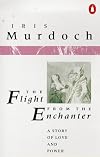
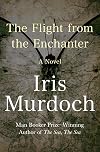
The Flight from the Enchanter
by Iris Murdoch 
On This Page
Description
An enigmatic publisher's sway on a circle of friends drives each to confront their most dangerous obsessionsBusinessman Mischa Fox has wealth, charisma, and an uncanny ability to influence those around him. When he moves to buy a small feminist magazine in London called the Artemis, Mischa becomes entangled in the lives of the Artemis's editor, Hunter, his sister, Rosa, and her boarder, Annette, as well as their circle of friends.As Mischa instigates a series of ominous events that will show more change their lives, Murdoch's masterful prose brings these rich charactersand their darkly humorous troublesto vivid life. show lessTags
Recommendations



















Member Reviews
It's been said that you never get to know a writer by reading his or her books. What they show you isn't their self but their literary persona, the voice and authorial character that they've created for the page. It sometimes feels that Iris Murdoch took this one step further: her characters seem entirely artificial but feel nonetheless real. I don't know how far I'd go to defend this theory, but it'd suit a writer who buries her themes and meanings far deeper than most writers do. If escape, independence, and harmful attachments are recurring themes in "The Flight From the Enchanter", don't expect its characters to point you toward them. They're too busy with their own problems to think in those terms. This is an Iris Murdoch novel, so show more I can't say that it's always a lot of fun to read, but it is impressive. It takes a writer of absolutely phenomenal skill to pull off this sort of slight-of-hand, and Murdoch seems to do it without breaking a sweat.
I actually enjoyed "The Flight From the Enchanter" more than most of the other Murdoch novels I've read. There's something direct about it that I enjoyed. While its characters are, at some level, obvious literary creations, they still come off as more real than they do in Murdoch's more ornate novels -- such as "The Sea, the Sea" -- which sometimes seem to verge on camp. As for the enchanter of the title, an obvious candidate for the role pops up, but the thing about this one is that all of its characters seem stuck in some way or another. They're besotted with somebody, or dependent on another, or have just given up inside. Some manage to make a fresh start at the end of the novel while others don't, and this, more than any of the plot machinations, is what I think really interests the author here. What keeps us going? Can we ever break free of our situations, or of ourselves? These are all great questions, and she deals with them expertly here. More importantly, perhaps, she offers some very good answers by the time the novel's done. As might be expected, this one isn't easy going, but it's still recommended. show less
I actually enjoyed "The Flight From the Enchanter" more than most of the other Murdoch novels I've read. There's something direct about it that I enjoyed. While its characters are, at some level, obvious literary creations, they still come off as more real than they do in Murdoch's more ornate novels -- such as "The Sea, the Sea" -- which sometimes seem to verge on camp. As for the enchanter of the title, an obvious candidate for the role pops up, but the thing about this one is that all of its characters seem stuck in some way or another. They're besotted with somebody, or dependent on another, or have just given up inside. Some manage to make a fresh start at the end of the novel while others don't, and this, more than any of the plot machinations, is what I think really interests the author here. What keeps us going? Can we ever break free of our situations, or of ourselves? These are all great questions, and she deals with them expertly here. More importantly, perhaps, she offers some very good answers by the time the novel's done. As might be expected, this one isn't easy going, but it's still recommended. show less
Murdoch's second novel masquerades as a straightforward bit of fifties English social satire, with an odd assortment of characters whose strategies for hiding from the unpleasant realities of life are somehow starting to unravel. And it comes with the kind of farcical set-pieces that belong to that sort of story: the disastrous party, the guest hidden in a cupboard when someone else turns up unexpectedly, the frustrated suicide attempt, the shareholders' meeting turned into a riot by a group of elderly Suffragettes, the quango whose male, civil-service minded managers are routed in a subtle administrative coup d'état plotted by the clever young women they brought into the organisation to do the typing...
But this is Iris Murdoch, even show more if it's very early Iris Murdoch, so we know there has to be something else going on. The title is one obvious clue - the enigmatic, charismatic press baron Mischa Fox, mysteriously connected to so many of the characters, seems to exert his influence more as a magus than as a businessman, and his slimy sidekick Calvin Blick is also more sorcerer's apprentice than henchman. And there's that puzzling dedication to Elias Canetti. Could it be that there's a (twisted) parallel being made to Die Blendung/Auto-da-fé? Admittedly, the only character whose little world survives the book unscathed is the scholar Peter Saward in his book-cave, but the story of Rainborough and his manipulative ex-typist, Miss Casement, definitely has a Canetti flavour to it, as does that (with the genders reversed) of Rosa and the Lusiewicz brothers.
And then there's that gloriously silly opening chapter, a parody of the opening of Vanity Fair, which seems to promise us that Annette will become a subversive, scheming Becky Sharp, but then turns round and shows us her impulsive playfulness as a mere regression to childhood. And much more: you could probably get two or three essays out of the character names alone. A very complicated book, with a lot of not-quite-hidden depths that don't for the moment detract from the entertaining comedy (with a couple of background patches of real tragedy) going on in the foreground. show less
But this is Iris Murdoch, even show more if it's very early Iris Murdoch, so we know there has to be something else going on. The title is one obvious clue - the enigmatic, charismatic press baron Mischa Fox, mysteriously connected to so many of the characters, seems to exert his influence more as a magus than as a businessman, and his slimy sidekick Calvin Blick is also more sorcerer's apprentice than henchman. And there's that puzzling dedication to Elias Canetti. Could it be that there's a (twisted) parallel being made to Die Blendung/Auto-da-fé? Admittedly, the only character whose little world survives the book unscathed is the scholar Peter Saward in his book-cave, but the story of Rainborough and his manipulative ex-typist, Miss Casement, definitely has a Canetti flavour to it, as does that (with the genders reversed) of Rosa and the Lusiewicz brothers.
And then there's that gloriously silly opening chapter, a parody of the opening of Vanity Fair, which seems to promise us that Annette will become a subversive, scheming Becky Sharp, but then turns round and shows us her impulsive playfulness as a mere regression to childhood. And much more: you could probably get two or three essays out of the character names alone. A very complicated book, with a lot of not-quite-hidden depths that don't for the moment detract from the entertaining comedy (with a couple of background patches of real tragedy) going on in the foreground. show less
It's a somewhat odd book, more like a rotating gallery of characters and their relationships than a proper "story"--although stuff happens galore, lots of it bizarre, comical, and terrible. The "enchanter" of the title is less of a physical presence than a mental oppressor to his many hapless victims--although why or how they came to be that is never clearly spelled out. Female characters are all put upon by men in various ways, with the exception of the troop of ancient suffragettes who show up cavalry-like at one point to save a faltering feminist magazine from falling into the hands of a declared misogynist.
Published in 1956 and set in England, this book tells several simultaneous intersecting stories. It contains a large cast of characters. A primary connecting character, Misha Fox, remains enigmatically in the background but retains a larger-than-life influence over the other storylines. Annette is a young woman who decides to leave school to start experiencing life. Hunter runs a small independent press that produces a magazine, which Fox wants to buy. Hunter’s sister, Rosa, is also involved in the business and tries to keep the sale from happening. She is (reluctantly) involved in a complicated relationship with two brothers, Jan and Stefan. There are many other characters that float in and out of the narrative. It reads as a show more pastiche of different people living in proximity to each other. I found it reasonably entertaining but disjointed. There is no overarching story arc. Themes include migration and emerging independent roles for women. I have read other novels by Iris Murdoch that I enjoyed more than this one. show less
It is interesting to hear what A.N. Wilson has to say about this book and the time it was written.
The novel has a dedication to Elias Canetti who Wilson maintains was of "immense importance...as a representative of what she wanted to do with her life: her intellectual and literary career."
Canetti was a cruel man who treated Murdoch with violence during sex - "incidents which often took place with his (Canetti's wife, Veza) in the next room (Veza was required to bring in trays of coffee afterwards)". He was mentally sadistic to Murdoch as well, and "openly mocked IM to their mutual friends".
And so one can see how Mischa Fox (Mister Fox perhaps), the Svengali to all the indecisive characters in this book, is likely to represent the spell show more that Canetti exercised over her.
Her novels, and "The Flight From the Enchanter (1955) is her second, "are often haunted by the spectre of a Magician, a Lord of Power who exercises spiritual or erotic dominion over the weaker characters in the book."
Quotes: A.N. Wilson, "Iris Murdoch as I Knew Her", (London 2003), pp.86-89 show less
The novel has a dedication to Elias Canetti who Wilson maintains was of "immense importance...as a representative of what she wanted to do with her life: her intellectual and literary career."
Canetti was a cruel man who treated Murdoch with violence during sex - "incidents which often took place with his (Canetti's wife, Veza) in the next room (Veza was required to bring in trays of coffee afterwards)". He was mentally sadistic to Murdoch as well, and "openly mocked IM to their mutual friends".
And so one can see how Mischa Fox (Mister Fox perhaps), the Svengali to all the indecisive characters in this book, is likely to represent the spell show more that Canetti exercised over her.
Her novels, and "The Flight From the Enchanter (1955) is her second, "are often haunted by the spectre of a Magician, a Lord of Power who exercises spiritual or erotic dominion over the weaker characters in the book."
Quotes: A.N. Wilson, "Iris Murdoch as I Knew Her", (London 2003), pp.86-89 show less
The Flight from the Enchanter by Iris Murdoch. This was her second book, but it was my first introduction to my number-one writing hero, which made me long to also write about love and power and goodness and beauty and what makes up a human being. Suddenly, at the age of twenty, I wanted to say great things, like Murdoch, who, being a professor of philosophy, has a far greater claim to be able to write such things than I will ever have. However, if we can’t be inspired by the great exemplars, what hope is there?
Once I’d put down Enchanter, I went in search of all her other books, and then lay in constant wait for her to write the next, which she did, for years, every 18 or so months. Only her very last book, written while in the show more grip of Alzheimer’s, is not among my very favourite reads to this day. Enchanter isn’t her best book, for me that is The Sea The Sea, but it was the first I read. I loved Iris Murdoch from that moment on, and reading her made me think more deeply, write more avidly and dream great dreams. show less
Once I’d put down Enchanter, I went in search of all her other books, and then lay in constant wait for her to write the next, which she did, for years, every 18 or so months. Only her very last book, written while in the show more grip of Alzheimer’s, is not among my very favourite reads to this day. Enchanter isn’t her best book, for me that is The Sea The Sea, but it was the first I read. I loved Iris Murdoch from that moment on, and reading her made me think more deeply, write more avidly and dream great dreams. show less
Published in 1956 and set in England, this book tells several simultaneous intersecting stories. It contains a large cast of characters. A primary connecting character, Misha Fox, remains enigmatically in the background but retains a larger-than-life influence over the other storylines. Annette is a young woman who decides to leave school to start experiencing life. Hunter runs a small independent press that produces a magazine, which Fox wants to buy. Hunter’s sister, Rosa, is also involved in the business and tries to keep the sale from happening. She is (reluctantly) involved in a complicated relationship with two brothers, Jan and Stefan. There are many other characters that float in and out of the narrative. It reads as a show more pastiche of different people living in proximity to each other. I found it reasonably entertaining but disjointed. There is no overarching story arc. Themes include migration and emerging independent roles for women. I have read other novels by Iris Murdoch that I enjoyed more than this one. show less
Members
- Recently Added By
Lists

Books Read in 2019
4,052 works; 110 members
Author Information

100+ Works 29,311 Members
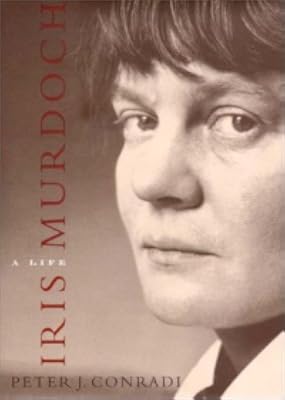
Iris Murdoch was one of the twentieth century's most prominent novelists, winner of the Booker Prize for The Sea. She died in 1999. (Publisher Provided) Iris Murdoch was born in Dublin, Ireland on July 15, 1919. She was educated at Badminton School in Bristol and Oxford University, where she read classics, ancient history, and philosophy. After show more several government jobs, she returned to academic life, studying philosophy at Newnham College, Cambridge. In 1948, she became a fellow and tutor at St. Anne's College, Oxford. She also taught at the Royal College of Art in London. A professional philosopher, she began writing novels as a hobby, but quickly established herself as a genuine literary talent. She wrote over 25 novels during her lifetime including Under the Net, A Severed Head, The Unicorn, and Of the Nice and the Good. She won several awards including the James Tait Black Memorial Prize for The Black Prince in 1973 and the Booker Prize for The Sea, The Sea in 1978. She died on February 8, 1999 at the age of 79. (Bowker Author Biography) show less
Iris Murdoch has a Legacy Library. Legacy libraries are the personal libraries of famous readers, entered by LibraryThing members from the Legacy Libraries group.
Some Editions
Series
Belongs to Publisher Series
Work Relationships
Common Knowledge
- Canonical title*
- Vlucht voor de tovenaar
- Original title
- The Flight from the Enchanter
- Alternate titles*
- L'incantatore
- Original publication date
- 1956
- People/Characters
- Mischa Fox; Calvin Blick; Rosa Keepe; Annette Cockeyne; Hunter Keepe
- Dedication
- To Elias Canneti
- First words
- It was about three o'clock on a Friday afternoon when Annette decided to leave school.
- Last words
- (Click to show. Warning: May contain spoilers.)He turned the pages. 'And here is the cathedral...'
- Blurbers
- Connolly, Cyril
- Original language*
- Engels
*Some information comes from Common Knowledge in other languages. Click "Edit" for more information.
Classifications
Statistics
- Members
- 555
- Popularity
- 53,534
- Reviews
- 16
- Rating
- (3.44)
- Languages
- 6 — Dutch, English, French, German, Italian, Russian
- Media
- Paper, Audiobook, Ebook
- ISBNs
- 19
- ASINs
- 19