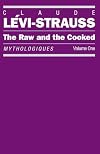
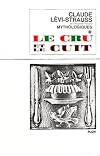
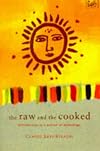
The Raw and the Cooked: Introduction to a Science of Mythology: I
by Claude Lévi-Strauss
Introduction to a Science of Mythology (1)
On This Page
Description
This book, 'Le Cru et le Cuit' by Claude Lévi-Strauss, explores the use of empirical categories such as raw and cooked, fresh and rotten, wet and burned, as conceptual tools to develop abstract notions and propositions. The author employs myths from indigenous societies, particularly the Bororo of central Brazil, as a means to demonstrate a logic of sensible qualities and to trace its methods and laws. The work aims to validate the existence of a systematic structure within mythological show more narratives by analyzing them in their cultural and historical contexts. Intended for an academic audience, the book seeks to bridge the empirical and systematic aspects of mythology, offering insights into how myths from various societies can reveal broader truths about human thought and culture. show lessTags
Recommendations











Member Reviews
The four volumes of Mythologiques are the sort of thing the term "tour-de-force" was meant for. Levi-Strauss is a magician. While he's working, you follow wherever he leads your attention, and every step seems plausible; by the end you have seen such a display of synthesis that you really *want* to be persuaded. Simply explicating, as he does, what is for most the wholly unfamiliar territory of native American mythology, from Patagonia to Alaska, would be accomplishment enough. But as he unpacks, he also enacts a complex account of how human culture works. One myth leads on to another, stories invert and turn inside-out like silk scarves becoming doves: heroes seduce, tricksters get fooled themselves, animals get their spots or lose show more their voices, and all the while each of several basic categories of human existence (male/female, sky/earth, clothes/nudity, and yes, raw/cooked) is shuffled, explicated and blended into a new tertium quid. Even when the innevitable delayed response of "hey, wait a minute..." eventually catches up with you, there lingers a sense of privilege and awe. Some may find the content of Levi-Strauss' message ultimately reductionist or ultimately empty; but his *style* alone will make you think about the human mind in a whole new way. show less
Controversy surrounds the translations. Sybil Wolfram has joked, paraphrasing Lévi-Strauss, that the editing process had miraculously succeeded in “turning the cooked into the raw”.
Reflects the lifelong exploration of C L-S into the relations between the “sensible” and the “intelligible” – from raw sensory perception, which is an especially rich experience in oral cultures, to abstract intellectual Aristotelianisms.
C L-S writes with literary and naturalist allusions, from the encompassed conditions of the "field", lighting up what would otherwise be a dry academic exercise.
Reflects the lifelong exploration of C L-S into the relations between the “sensible” and the “intelligible” – from raw sensory perception, which is an especially rich experience in oral cultures, to abstract intellectual Aristotelianisms.
C L-S writes with literary and naturalist allusions, from the encompassed conditions of the "field", lighting up what would otherwise be a dry academic exercise.
Ratings
Members
- Recently Added By
Lists

Filosofía - Clásicos
217 works; 1 member

Books in the Bibliography of Humans: A Monstrous History by Surekha Davies
346 works; 1 member
Author Information

148+ Works 9,285 Members
Claude Levi-Strauss, a French anthropologist, was the founder of structural anthropology. This theoretical position assumes that there are structural propensities in the human mind that lead unconsciously toward categorization of physical and social objects, hence such book titles as The Raw and the Cooked (1964) and such expositions of his work show more by others as The Unconscious in Culture and Elementary Structures Reconsidered. According to Levi-Strauss, the models of society that scholars create are often dual in nature:status-contract (Maine): Gemeinschaft-Gesellschaft (Tonnies); mechanical-organic solidarity (Durkheim); folk-urban (Redfield); universalism-particularism (Parsons); and local-cosmopolitan (Merton). Levi-Strauss's writings---some of which have been described by Clifford Geertz as "theoretical treatises set out as travelogues"---have been enormously influential throughout the scholarly world. George Steiner has described him, along with Freud (see also Vol. 5) and Marx (see also Vol. 4), as one of the major architects of the thought of our times. Levi-Strauss died October 30, 2009. (Bowker Author Biography) show less
Some Editions
Awards and Honors
Series

Common Knowledge
- Canonical title
- The Raw and the Cooked: Introduction to a Science of Mythology: I
- Original title
- Le Cru et le Cuit
- Alternate titles
- The Raw and the Cooked: Introduction to a Science of Mythology: I
- Original publication date
- 1964
- Original language
- French
Classifications
- Genres
- Anthropology, Nonfiction, Religion & Spirituality, Philosophy
- DDC/MDS
- 299.8 — Religion Other religions Shintoism/Taoism/Other Mythologies Of South American Origin
- LCC
- F2519.3 .R3 .L4813 — Local History of the United States, Canada and Latin America Latin America. Spanish America South America Brazil
- BISAC
Statistics
- Members
- 556
- Popularity
- 53,044
- Reviews
- 2
- Rating
- (3.48)
- Languages
- 8 — Czech, English, French, German, Italian, Polish, Portuguese, Spanish
- Media
- Paper, Audiobook, Ebook
- ISBNs
- 26
- ASINs
- 20