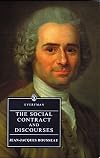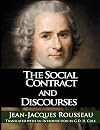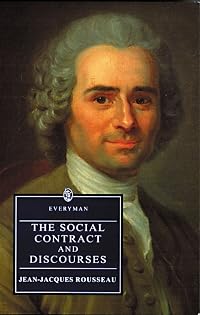
The Social Contract and Discourses
by Jean-Jacques Rousseau
On This Page
Description
(Book Jacket Status: Jacketed) Two works in one volume Jean-Jacques Rousseau was the first, and the most eloquent and versatile, of that extraordinary line of radical modern thinkers who aimed their disenchantment at the very roots of the human social order and thereby forever reshaped the way we deal with one another. Of Rousseau's many contributions to the tradition he inaugurated, the one for which he is most revered and that makes these pages glow with conviction is his passionate show more indignation about anything that trammels individual freedom. This revised edition of G. D. H. Cole's celebrated translation includes an appendix of sections from the first manuscript draft of The Social Contract and the passage in Rousseau's novel Emile in which he summarizes its argument, along with Cole's original preface, which has itself become a classic. Translated by G. D. H. ColeRevised and augmented by J. H. Brumfitt and John C. Hall show lessTags
Recommendations






































Member Reviews
Part of my world view, but not all of it. Worth the time.
Ratings
Members
- Recently Added By
Lists

Maybe This Year? Books to Look Forward To
412 works; 9 members

Works Cited in The Life and Death of Democracy by John Keane
278 works; 1 member

LT picks: Blue Books
197 works; 39 members
Author Information

Jean Jacques Rousseau was a Swiss philosopher and political theorist who lived much of his life in France. Many reference books describe him as French, but he generally added "Citizen of Geneva" whenever he signed his name. He presented his theory of education in Emile (1762), a novel, the first book to link the educational process to a scientific show more understanding of children; Rousseau is thus regarded as the precursor, if not the founder, of child psychology. "The greatest good is not authority, but liberty," he wrote, and in The Social Contract (1762) Rousseau moved from a study of the individual to an analysis of the relationship of the individual to the state: "The art of politics consists of making each citizen extremely dependent upon the polis in order to free him from dependence upon other citizens." This doctrine of sovereignty, the absolute supremacy of the state over its members, has led many to accuse Rousseau of opening the doors to despotism, collectivism, and totalitarianism. Others say that this is the opposite of Rousseau's intent, that the surrender of rights is only apparent, and that in the end individuals retain the rights that they appear to have given up. In effect, these Rousseau supporters say, the social contract is designed to secure or to restore to individuals in the state of civilization the equivalent of the rights they enjoyed in the state of nature. Rousseau was a passionate man who lived in passionate times, and he still stirs passion in those who write about him today. (Bowker Author Biography) show less
Some Editions
Awards and Honors
Notable Lists
Series
Belongs to Publisher Series
Work Relationships
Common Knowledge
- Alternate titles
- The social contract and other essays
- Quotations
- For it is by no means a light undertaking to distinguish properly between what is original and what is artificial in the actual nature of man, or to form a true idea of a state which no longer exists, perhaps never did exist,... (show all) and probably never will exist; and of which it is, nevertheless, necessary to have true ideas, in order to form a proper judgment of our present state.
Classifications
- Genres
- Philosophy, Politics and Government, Nonfiction, General Nonfiction
- DDC/MDS
- 320.01 — Society, government, & culture Political science Types of Government Political Science Philosophy and Theory
- LCC
- JC179 .R7 — Political Science Political theory Political theory. The state. Theories of the state Modern state
- BISAC
Statistics
- Members
- 993
- Popularity
- 26,427
- Reviews
- 1
- Rating
- (3.76)
- Languages
- English, Italian, Spanish
- Media
- Paper, Ebook
- ISBNs
- 20
- ASINs
- 25