On This Page
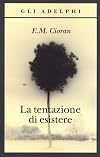
Description
This collection of eleven essays originally appeared in France thirty years ago and created a literary whirlwind on the Left Bank. Cioran writes incisively about Western civilizations, the writer, the novel, mystics, apostles, and philosophers. The Temptation to Exist first introduced this brilliant European thinker twenty years ago to American readers, in a superb translation by Richard Howard. This literary mystique around Cioran continues to grow, and The Temptation to Exist has become an show more underground classic. In this work Cioran writes about Western civilizations, the writer, the novel, about mystics, apostles, philosophers. For those to whom the very word philosophy brings visions of arduous reading, be assured: Cioran is crystal-clear, his style quotable and aphoristic. "A sort of final philosopher of the Western world. His statements have the compression of poetry and the audacity of cosmic clowning"--The Washington Post show lessTags
Recommendations







Member Reviews
When this eleven-essay collection was first released in France, it caused a literary frenzy on the Left Bank. Cioran writes sharply about writers, novels, mystics, apostles, philosophers, and Western civilizations. Twenty years ago, Richard Howard's excellent translation of this remarkable European thinker's work, The Temptation to Exist, first introduced it to American readers. The book has subsequently turned into an underground classic, and the literary aura around Cioran has only deepened.
Cioran is a typical modern-day exponent of the metaphysical futility school. It is possible to argue that the titles of the first two articles in The Temptation to Exist, "Thinking Against Oneself" and "On a Winded Civilization," perfectly capture show more the tone and perspective of the entire collection as well as Cioran's body of work. Here, as elsewhere, Cioran presents a series of intensely personal observations on a variety of instructive subjects, including the collapse of Western civilization, the place of the intellectual in modern society, the end of the novel, the benefits of tyranny, the future of utopia, and other related subjects.
Cioran's persuasiveness stems from more than just the content of his argument; his style and epigrammatic tautness are just as, if not more, significant. His much-publicized efforts to master the French language have yielded a style that combines an almost Olympian coldness and intellectuality with an almost hysterical impression of passion. It is fundamentally a teenage style, like so much about Cioran: conceited, confessional, and theatrical, but full of vitality none the less. One of his most blatant rhetorical allusions to Nietzsche is the royal we, which he frequently employs to lend his work an air of authority. Cioran is also highly quotable if one ignores context and misses small details like meaning. Reading these essays is nonetheless engaging and demands the reader's thoughtful attention. show less
Cioran is a typical modern-day exponent of the metaphysical futility school. It is possible to argue that the titles of the first two articles in The Temptation to Exist, "Thinking Against Oneself" and "On a Winded Civilization," perfectly capture show more the tone and perspective of the entire collection as well as Cioran's body of work. Here, as elsewhere, Cioran presents a series of intensely personal observations on a variety of instructive subjects, including the collapse of Western civilization, the place of the intellectual in modern society, the end of the novel, the benefits of tyranny, the future of utopia, and other related subjects.
Cioran's persuasiveness stems from more than just the content of his argument; his style and epigrammatic tautness are just as, if not more, significant. His much-publicized efforts to master the French language have yielded a style that combines an almost Olympian coldness and intellectuality with an almost hysterical impression of passion. It is fundamentally a teenage style, like so much about Cioran: conceited, confessional, and theatrical, but full of vitality none the less. One of his most blatant rhetorical allusions to Nietzsche is the royal we, which he frequently employs to lend his work an air of authority. Cioran is also highly quotable if one ignores context and misses small details like meaning. Reading these essays is nonetheless engaging and demands the reader's thoughtful attention. show less
This a group of essays that could stand alone. I took one main idea from them: Man's knowledge of his history clutters his thinking.
Although Cioran is considered a disciple of Nietzsche (which is obviously true), his work reminded me equally of Hannah Arendt due to his interest in thinking. The difference is that Cioran doesn't mind thinking about the void, whereas Arendt has more practical interests like avoiding genocide and Totalitarianism.
Although Cioran is considered a disciple of Nietzsche (which is obviously true), his work reminded me equally of Hannah Arendt due to his interest in thinking. The difference is that Cioran doesn't mind thinking about the void, whereas Arendt has more practical interests like avoiding genocide and Totalitarianism.
Cioran upholds dilettantism, lucidity, and sensibility [119].
Resigned to vertigo, futility, alien, the imperatives of confusion.
Rebellion - illusions: disgust, ambiguity, bewilderment.
The best poets -- Shakespeare, Holderlin -- bypassed Christianity. [157]
The mind perceives only what it already knows. [160]
Suave qui peut [8]; points de repere [134]; ipseity of a language....[127]
Destiny - looks at Spain, Russia, Romania.
Advantages of Exile - looks at poets.
Blind Alleys - looks at writers.
Rages and Resignations - a career of words.
"Dealing with the Mystics" - compares to Tears of the Saints, biographical.
Etc. And a big big cheer for the translation from the French.
Resigned to vertigo, futility, alien, the imperatives of confusion.
Rebellion - illusions: disgust, ambiguity, bewilderment.
The best poets -- Shakespeare, Holderlin -- bypassed Christianity. [157]
The mind perceives only what it already knows. [160]
Suave qui peut [8]; points de repere [134]; ipseity of a language....[127]
Destiny - looks at Spain, Russia, Romania.
Advantages of Exile - looks at poets.
Blind Alleys - looks at writers.
Rages and Resignations - a career of words.
"Dealing with the Mystics" - compares to Tears of the Saints, biographical.
Etc. And a big big cheer for the translation from the French.
Ce l'ho col nostro secolo per averci soggiogati fino al punto di ossessionarci anche quando ce ne distacchiamo. (24)
Al capezzale di questa Europa, non so quale voce mi avverte: "Ecco dove tutto ha fine, anche la civiltà".
(46)
Che cosa aspettarsi da una genuflessione durata venti secoli? Ora che siamo finalmente in piedi, la vertigine ci vince: schiavi emancipati invano, ribelli dei quali il demonio si vergogna o si burla.
(85)
Il confessionale: violazione di coscienze perpetrata in nome del cielo. E cosa dire di quell'altra violazione che è l'analisi psicologica!
(94)
Non esiste il tempo, c'è soltanto questa paura che si svolge e si camuffa in istanti...
(110)
...dato che la nostra logica ha mutato volto, abbiamo imparato a fare a meno show more delle evidenze. Da qui la nostra passione per il vago, l'evanescenza del nostro incedere, del nostro scetticismo: i nostri dubbi non si definiscono più in rapporto alle nostre certezze, ma in rapporto ad altri dubbi più consistenti...
(121)
...disertori del verbo, non aspiriamo più che al regno dell'indifferenziato, all'oscurità e all'ebbrezza che precedettero l'irrompere della luca, all'estasi ininterrotta nel grembo di quella opacità originaria,
(168)
Il fatto è che la filosofia lungi dall'eliminare l'inessenziale, lo fa proprio e vi si compiace: tutti gli sforzi che dispiega non tendono forse ad impedirci di percepire la duplice nullità della parola e del mondo?
(172) show less
Al capezzale di questa Europa, non so quale voce mi avverte: "Ecco dove tutto ha fine, anche la civiltà".
(46)
Che cosa aspettarsi da una genuflessione durata venti secoli? Ora che siamo finalmente in piedi, la vertigine ci vince: schiavi emancipati invano, ribelli dei quali il demonio si vergogna o si burla.
(85)
Il confessionale: violazione di coscienze perpetrata in nome del cielo. E cosa dire di quell'altra violazione che è l'analisi psicologica!
(94)
Non esiste il tempo, c'è soltanto questa paura che si svolge e si camuffa in istanti...
(110)
...dato che la nostra logica ha mutato volto, abbiamo imparato a fare a meno show more delle evidenze. Da qui la nostra passione per il vago, l'evanescenza del nostro incedere, del nostro scetticismo: i nostri dubbi non si definiscono più in rapporto alle nostre certezze, ma in rapporto ad altri dubbi più consistenti...
(121)
...disertori del verbo, non aspiriamo più che al regno dell'indifferenziato, all'oscurità e all'ebbrezza che precedettero l'irrompere della luca, all'estasi ininterrotta nel grembo di quella opacità originaria,
(168)
Il fatto è che la filosofia lungi dall'eliminare l'inessenziale, lo fa proprio e vi si compiace: tutti gli sforzi che dispiega non tendono forse ad impedirci di percepire la duplice nullità della parola e del mondo?
(172) show less
Jun 20, 2023Italian
"Breek je niet overmatig het hoofd als je een wezenlijke ervaring wilt ondergaan, of je los wil maken van de schijn. Willekeurig wie kan een betoog afsteken over God, of zich een metafysisch vernisje aanmeten. Je leest een boekje, maakt een praatje, hebt verder niets om handen en klaar is kees. Niets banaler dan de valse rusteloosheid, want alles kan worden geleerd, zelfs verontrusting. Toch bestaan er ook echte rustelozen, rustelozen van nature. Je herkent ze aan de manier waarop ze op woorden reageren. Hebben ze leren inzien dat woorden ontoereikend zijn...?" (E.M. Cioran - pag.203).
Als een rusteloze ziel, voor zover dit voor agnost Cioran een optie is,....tot eenit het oogpunt van agnost Cioran voor dit woord enige genade bestaat, show more kan de auteur van deze verbijsterende State of the Union van de menselijke soort zeker bestempeld worden...Ik verviel als lezer van het ene uitgesproken gevoel in het andere; vooreerst uitte zich bij mij een gevoel van woede, gevolgd door een tomeloze verbijstering over zo'n mate aan illusieloosheid die de auteur perfect weet te beargumenteren, en tenslotte overviel mij zelfs een zekere empathie omdat hij een geslaagde juxtapositie tussen een intellectueel verdedigd nihilisme in zijn religieuze essays en een bevlogen vitalistische en existentialistische drive in zijn briljante essays over vooral de Franse literatuur wist in de verf te zetten (cfr. "Stijl als avontuur" - pag. 137-144). Deze essays handelen tevens over de interactie tussen taal, stijlfiguren en tijdsgewricht, en het hoofdstuk "De roman voorbij" fileert de motivatie waaruit veel hedendaagse literatuur ontstaat en geeft een inkijk waarom diezelfde motivatie nu eens en voorgoed ontmaskerd dient te worden (pag. 149-166). Uitkomst wordt geboden door deze gedachtenlijn op een hoger plan te tillen naar een vreemdsoortige symbiose die een mengeling inhoudt tussen de geschriften van Friedrich Nietzsche en de pantheïstische mystiek van Meister Eckhart. Dit maakt ons ook de achterflap van het boek duidelijk.
Zoals ook de bezorger van dit boek, die vreemdgenoeg zijn essay niet ondertekent, beargumenteert, rest er in het denken en in de hoop van Cioran misschien nog een niche in het totale 'niets', misschien wel best verwant aan het negatieve Godssjabloon van de misschien voor velen illustere Pseudo-Dyonisius, de areopagiet.
Maar U merkt het wellicht aan mijn hoofdlettergebruik van het woord God, dat de lezer van dit boek weigert zich zoals Cioran te vermeien in een ondraaglijke illusieloosheid, daarvoor is de schreeuw van Levinas' 'het gelaat van de Ander' te groot... Dat deze Roemeense filosoof een teruggetrokken bestaan leidde, kan slechts als logische consequentie bestempeld worden van zijn 'Weltanschauung', die onvermijdelijk tot een totale maatschappelijke resignatie moest leiden.
Wat Cioran's denken juist zo toegankelijk maakt in tegenstelling tot veel andere cerebrale filosofie is zijn duidelijke taal. Zijn argumentatie blijft wonderwel toegankelijk voor iedereen met een serieuze belangstelling voor geestesaangelegeheden, zonder dat het zich verliest in een obscuur filosofisch jargon. Het is bovendien banaal te denken dat een toevlucht nemen tot een gesofisticeerd woordenapparaat de envergure van een filosofisch geschrift bij definitie zou vergroten, dat kan natuurlijk..., maar Ciorans woordgebruik excelleert gewoon door de kracht van zijn essentie. Ook dit is belangrijk en kan hem voor velen, die minder geschoold zijn in filosofie, zijn themata helpen ontsluiten.
Ook het essay 'Een volk van eenzelvigen' is genadeloos, ja zelfs ronduit verontrustend..., alles geschreven in controversiële maximes over het lot der Joden, bijna twintig eeuwen na hun eerste diaspora....
Dit boek biedt U ronduit verbluffende passages, steeds razend intelligent neergeschreven met zowel de arendsblik van een verworpen bedelaar als die van een absolute heerser, maar de nihilistische ondertoon van dit geschrift moet je kunnen duiden in je gevoelswereld, zoniet....laat Cioran maar aan je voorbijgaan.
En tenslotte..., toen ik de twee laatste zinnen las waarop dit boek dissonerend afsloot, dacht ik, in een nietsomtrekkende beweging, dat,.... misschien, ergens,...'There is more between heaven and earth than your philosophy can dream of, Horatio...', maar dat wist de grote bard uit Stratford ook al, lang voor vele psychologiserende stijlfiguren in de literatuur hun intrede deden en haar wisten te domineren en domesticeren.…. show less
Als een rusteloze ziel, voor zover dit voor agnost Cioran een optie is,....tot eenit het oogpunt van agnost Cioran voor dit woord enige genade bestaat, show more kan de auteur van deze verbijsterende State of the Union van de menselijke soort zeker bestempeld worden...Ik verviel als lezer van het ene uitgesproken gevoel in het andere; vooreerst uitte zich bij mij een gevoel van woede, gevolgd door een tomeloze verbijstering over zo'n mate aan illusieloosheid die de auteur perfect weet te beargumenteren, en tenslotte overviel mij zelfs een zekere empathie omdat hij een geslaagde juxtapositie tussen een intellectueel verdedigd nihilisme in zijn religieuze essays en een bevlogen vitalistische en existentialistische drive in zijn briljante essays over vooral de Franse literatuur wist in de verf te zetten (cfr. "Stijl als avontuur" - pag. 137-144). Deze essays handelen tevens over de interactie tussen taal, stijlfiguren en tijdsgewricht, en het hoofdstuk "De roman voorbij" fileert de motivatie waaruit veel hedendaagse literatuur ontstaat en geeft een inkijk waarom diezelfde motivatie nu eens en voorgoed ontmaskerd dient te worden (pag. 149-166). Uitkomst wordt geboden door deze gedachtenlijn op een hoger plan te tillen naar een vreemdsoortige symbiose die een mengeling inhoudt tussen de geschriften van Friedrich Nietzsche en de pantheïstische mystiek van Meister Eckhart. Dit maakt ons ook de achterflap van het boek duidelijk.
Zoals ook de bezorger van dit boek, die vreemdgenoeg zijn essay niet ondertekent, beargumenteert, rest er in het denken en in de hoop van Cioran misschien nog een niche in het totale 'niets', misschien wel best verwant aan het negatieve Godssjabloon van de misschien voor velen illustere Pseudo-Dyonisius, de areopagiet.
Maar U merkt het wellicht aan mijn hoofdlettergebruik van het woord God, dat de lezer van dit boek weigert zich zoals Cioran te vermeien in een ondraaglijke illusieloosheid, daarvoor is de schreeuw van Levinas' 'het gelaat van de Ander' te groot... Dat deze Roemeense filosoof een teruggetrokken bestaan leidde, kan slechts als logische consequentie bestempeld worden van zijn 'Weltanschauung', die onvermijdelijk tot een totale maatschappelijke resignatie moest leiden.
Wat Cioran's denken juist zo toegankelijk maakt in tegenstelling tot veel andere cerebrale filosofie is zijn duidelijke taal. Zijn argumentatie blijft wonderwel toegankelijk voor iedereen met een serieuze belangstelling voor geestesaangelegeheden, zonder dat het zich verliest in een obscuur filosofisch jargon. Het is bovendien banaal te denken dat een toevlucht nemen tot een gesofisticeerd woordenapparaat de envergure van een filosofisch geschrift bij definitie zou vergroten, dat kan natuurlijk..., maar Ciorans woordgebruik excelleert gewoon door de kracht van zijn essentie. Ook dit is belangrijk en kan hem voor velen, die minder geschoold zijn in filosofie, zijn themata helpen ontsluiten.
Ook het essay 'Een volk van eenzelvigen' is genadeloos, ja zelfs ronduit verontrustend..., alles geschreven in controversiële maximes over het lot der Joden, bijna twintig eeuwen na hun eerste diaspora....
Dit boek biedt U ronduit verbluffende passages, steeds razend intelligent neergeschreven met zowel de arendsblik van een verworpen bedelaar als die van een absolute heerser, maar de nihilistische ondertoon van dit geschrift moet je kunnen duiden in je gevoelswereld, zoniet....laat Cioran maar aan je voorbijgaan.
En tenslotte..., toen ik de twee laatste zinnen las waarop dit boek dissonerend afsloot, dacht ik, in een nietsomtrekkende beweging, dat,.... misschien, ergens,...'There is more between heaven and earth than your philosophy can dream of, Horatio...', maar dat wist de grote bard uit Stratford ook al, lang voor vele psychologiserende stijlfiguren in de literatuur hun intrede deden en haar wisten te domineren en domesticeren.…. show less
Librería 6. Estante 5
Dec 18, 2019Spanish
Members
- Recently Added By
Lists

Filosofía - Clásicos
217 works; 1 member

Philip Ward's Lifetime Reading Plan
592 works; 22 members
Author Information

Some Editions
Awards and Honors
Series

Belongs to Publisher Series
Common Knowledge
- Canonical title*
- Le tentation d'exister
- Original title
- Le tentation d'exister
- Original publication date
- 1956
- Original language*
- Français
*Some information comes from Common Knowledge in other languages. Click "Edit" for more information.
Classifications
- Genres
- Philosophy, Nonfiction
- DDC/MDS
- 084.1 — Computer science, information & general works Anthologies and Quotations General collections in French, Occitan, Catalan French-Language
- LCC
- AC25 .C513 — General Works Collections. Series. Collected works Collections. Series. Collected works Collections of monographs, essays, etc. Other languages
- BISAC
Statistics
- Members
- 669
- Popularity
- 43,031
- Reviews
- 7
- Rating
- (3.98)
- Languages
- 12 — Dutch, English, French, German, Greek, Hungarian, Italian, Polish, Portuguese, Romanian, Spanish, Turkish
- Media
- Paper, Ebook
- ISBNs
- 32
- ASINs
- 10