
Elizabeth Royte
Author of Garbage Land: On the Secret Trail of Trash
About the Author
Elizabeth Royte has written for the New York Times Magazine, Harper's, National Geographic, Outside, Smithsonian, and the New Yorker. She is the author of Garbage Land and The Tapir's Morning Bath.
Image credit: Elizabeth Royte
Works by Elizabeth Royte
The Tapir's Morning Bath: Solving the Mysteries of the Tropical Rain Forest (2001) 104 copies, 6 reviews
Money Bags 1 copy
Fracking the Amish 1 copy
Associated Works
Tagged
Common Knowledge
- Birthdate
- 20th Century
- Gender
- female
- Nationality
- USA
- Associated Place (for map)
- USA
Members
Reviews
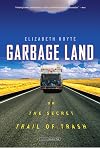
I grew up watching eco-conscious shows like 3-2-1 Contact and I've always had the recycling bug. When our city recycling program stopped taking glass last year, it was like a knife in the liver. It almost kills me to put glass in the garbage bin. I've always bought grocery items in glass jars specifically because they were not plastic and wouldn't end up in the ocean, killing off sea birds and marine life. I'm the type of person who gives my house guests a tour of where the recycling bins show more are and am not above helicoptering over my mother to make sure she's playing by the house rules. So when Garbage Land popped up in my Recommendations, I knew it would find its way on to my library hold list.
Royte is one committed lady. She logged and documented her trash, recycling and composting for nearly a year. She visited landfills, recycling plants, composting plants, sewage treatment plants and sanitation garages as well as participated in eco fairs and industry conventions. She learned a lot about where our wastes go and it's impressive, informative and surprising.
Do you recycle? Why do you recycle? Does it make you feel better about the consumer culture we live in? Do you know where your recycled items actually, finally end up? It might not be where you think. It might not even be as beneficial as you imagined. And in the grand scheme of it all, it might not make that much of an impact.
Most of all, Ryote gave me more food for thought - bigger fish to fry, so to speak. And I feel better about the glass going into my garbage bin - mostly. show less
Royte is one committed lady. She logged and documented her trash, recycling and composting for nearly a year. She visited landfills, recycling plants, composting plants, sewage treatment plants and sanitation garages as well as participated in eco fairs and industry conventions. She learned a lot about where our wastes go and it's impressive, informative and surprising.
Do you recycle? Why do you recycle? Does it make you feel better about the consumer culture we live in? Do you know where your recycled items actually, finally end up? It might not be where you think. It might not even be as beneficial as you imagined. And in the grand scheme of it all, it might not make that much of an impact.
Most of all, Ryote gave me more food for thought - bigger fish to fry, so to speak. And I feel better about the glass going into my garbage bin - mostly. show less
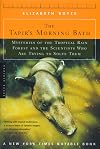
The book is all about an island in Panama that is devoted to research. Only bona fide scientists are allowed on the island and they have to submit their projects and book space months in advance. There is additionally a team of local support workers to cook, clean and carry out the necessities that enable the scientists to devote themselves to their research rather than housekeeping. Which is, in fact, their downfall.
One scientist is measuring rainfall and water in many places on the island show more as part of general earth-warming-up studies. He notices that the water in a particular pond on the island is steady all day, but rises abruptly in the morning and recedes almost as abruptly later but not quite to the level it was before. He spends a good deal of time on this problem and designs many experiments in order to find out why this happens. Months later, he has still not resolved the problem.
The author, chatting to the kitchen boys, discovers that a certain large lady tapir ambles along to the pool in the mornings then dives in, does a shit and ambles out again. Changing water levels! But how on earth would a scientist with all his powers of observation concentrated on his instruments ever even imagine something as straightforward as that?
This is a thoroughly enjoyable book - Royte gets close enough to the scientists to speak of both their research and stories, but the story of the tapir is what makes the book a five-star. All those scientists can't see further than their own.... hehehe show less
One scientist is measuring rainfall and water in many places on the island show more as part of general earth-warming-up studies. He notices that the water in a particular pond on the island is steady all day, but rises abruptly in the morning and recedes almost as abruptly later but not quite to the level it was before. He spends a good deal of time on this problem and designs many experiments in order to find out why this happens. Months later, he has still not resolved the problem.
This is a thoroughly enjoyable book - Royte gets close enough to the scientists to speak of both their research and stories, but the story of the tapir is what makes the book a five-star. All those scientists can't see further than their own.... hehehe show less
It's rare for me to finish a book and carry it straightaway to my computer to order all the books in its bibliography, but in this case, that's exactly what I did. It's one of those books that helps one to understand that everything one knows about, oh, say, recycling is completely and utterly wrong. All y'all should read this one, and then tell your friends about it. Meanwhile, I'm shopping for a composting toilet.

Guaranteed to make you think about the way you consume and discard. Royte weaves her research well with her own story of examning her trash and trying to follow its journey once it leaves her curb. She ran into a lot of dead ends (visiting landfills is apparently not as easy as just driving in the gate), and discovered over and over that there are no simple answers for how to eliminate our trash responsibly. Also, no matter how close we come to Zero Waste, municipal trash only accounts for show more 2% of the waste produced--the vast, vast majority of it is produced by industry, in the process of manufacturing the goods we buy.
Garbage Land is well written and entertaining. It has already sparked several discussions in my house about how to handle our trash, of which there are sure to be more. show less
Garbage Land is well written and entertaining. It has already sparked several discussions in my house about how to handle our trash, of which there are sure to be more. show less
Lists
Awards

You May Also Like


Associated Authors
Statistics
- Works
- 7
- Also by
- 4
- Members
- 1,046
- Popularity
- #24,627
- Rating
- 3.8
- Reviews
- 44
- ISBNs
- 17
- Languages
- 2