
Gilbert White (1720–1793)
Author of The Natural History of Selborne
About the Author
Image credit: Wikipedia
Works by Gilbert White
Gilbert White's year : passages from The garden kalendar & The naturalist's journal (1979) 17 copies
Gilbert White NATURAL HISTORY & ANTIQUITIES OF SELBOURNE Folio Society 1997 [Hardcover] unknown (1997) 4 copies
Die Erkundung von Selborne durch Reverend Gilbert White: Eine illustrierte Naturgeschichte (Die Andere Bibliothek, Band 437) (2021) 2 copies
The Gilbert White Museum Edition of the Natural History of Selborne.illustrated By Frederick Marns. (1978) 1 copy
A Nature Calendar 1 copy
Everyman's library. Science 1 copy
The natural history of Selborne, arranged for young persons [by G. Ellis]. 1833 [Hardcover] (2013) 1 copy
Garden kalendar, 1751-1771: Reproduced in facsimile from the manuscript in the British Library (1975) 1 copy
Selections from White's Natural History of Selborne — Author — 1 copy
Future of Arid Lands 1 copy
GILBERT WHITE'S SELBORNE 1 copy
Tagged
Common Knowledge
- Birthdate
- 1720-07-18
- Date of death
- 1793-06-26
- Gender
- male
- Education
- Holy Ghost School, Basingstoke
University of Oxford (Oriel College) - Occupations
- cleric
naturalist
ornithologist - Short biography
- The review of the original publication of 'Natural history and antiquities of Selborne' in 'The topographer, for the year 1789, vol. i', p. 40, notes: "The author, the Rev. Gilbert White, is Senior Fellow of Oriel College, in Oxford, elder brother of Mr. White, the well-known Bookseller of Fleet-street; both sons, (as I am informed) of a Barrister, who, if so, was brother of the Rev. Gilbert White, Vicar of Selborne, (who died 1728) son of Sir Samson White, of Oxford, Knight. Mr. White resides upon an estate of his own in this parish".
- Nationality
- UK
- Birthplace
- Selborne, Hampshire, England, UK
- Places of residence
- Selborne, Hampshire, England, UK
- Place of death
- Selborne, Hampshire, England, UK
- Associated Place (for map)
- Selborne, Hampshire, England, UK
Members
Discussions
OT Gilbert White in Folio Society Devotees (September 2025)
Reviews

Being part of the world doesn't only come from the news.
My favorite read of 2024, Timothy; or, Notes of an Abject Reptile by Verlyn Klinkenborg, introduced me to this classic. I've spent the last few days listening, a section or two per day, to 18th century Gilbert White's gentle, soothing voice.
Well, no, it wasn't White's voice, but I can't imagine that the man himself could have narrated his own letters with any more conviction, curiosity, and calm pleasantness than did Peter Yearsley at show more Librivox.*
Yearsley even read White's Latin additions. That was a treat as I've never had the opportunity to hear Latin spoken. Yearsley then translated it into English with a "Reader's Note." How kind!
In my 1977 Penguin paperback (I sometimes listened, I sometimes read, the paperback has a map, besides) there was an introduction by the inimitable Richard Mabey. Yet another perfect addition to the circle of White's hodgepodge of twenty first century friends. Klinkenborg, Yearsley, Mabey, and me!
White observed all variety of living things in his native Selborne, recorded the weather, bird migrations, villagers observations, and also posed many scientific questions with his pure delighted curiosity. Meanwhile as he tended to his little world, the wider world of man was ever spinning its politics, its chaos, its commerce, its crimes, and even a maniacal revolution.
But here was one man for decades recorded the weather, closely observed living things like crickets, swallows, eels, and turnip crops, and in doing so created for the first time what is now the modern naturalist.
As I listened, I was reminded of long New Mexico car trips as a kid. My parents in the front seat, me and my brothers in the back seat, mellowed by Mom and Dad's soft voices discussing mundane windshield observations, things that we kids only half-heard.
We understood the meaning, though, it was "these small things are important to us."
Highly recommend if you, contrary to the news, need to remember the importance of small, good things.
*https://librivox.org/the-natural-history-of-selborne-by-gilbert-white/ show less
My favorite read of 2024, Timothy; or, Notes of an Abject Reptile by Verlyn Klinkenborg, introduced me to this classic. I've spent the last few days listening, a section or two per day, to 18th century Gilbert White's gentle, soothing voice.
Well, no, it wasn't White's voice, but I can't imagine that the man himself could have narrated his own letters with any more conviction, curiosity, and calm pleasantness than did Peter Yearsley at show more Librivox.*
Yearsley even read White's Latin additions. That was a treat as I've never had the opportunity to hear Latin spoken. Yearsley then translated it into English with a "Reader's Note." How kind!
In my 1977 Penguin paperback (I sometimes listened, I sometimes read, the paperback has a map, besides) there was an introduction by the inimitable Richard Mabey. Yet another perfect addition to the circle of White's hodgepodge of twenty first century friends. Klinkenborg, Yearsley, Mabey, and me!
White observed all variety of living things in his native Selborne, recorded the weather, bird migrations, villagers observations, and also posed many scientific questions with his pure delighted curiosity. Meanwhile as he tended to his little world, the wider world of man was ever spinning its politics, its chaos, its commerce, its crimes, and even a maniacal revolution.
But here was one man for decades recorded the weather, closely observed living things like crickets, swallows, eels, and turnip crops, and in doing so created for the first time what is now the modern naturalist.
As I listened, I was reminded of long New Mexico car trips as a kid. My parents in the front seat, me and my brothers in the back seat, mellowed by Mom and Dad's soft voices discussing mundane windshield observations, things that we kids only half-heard.
We understood the meaning, though, it was "these small things are important to us."
Highly recommend if you, contrary to the news, need to remember the importance of small, good things.
*https://librivox.org/the-natural-history-of-selborne-by-gilbert-white/ show less
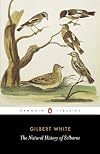
This book is available in several different editions, but whichever one you choose, this classic of natural history is well worth a read. The curate-naturalist Gilbert White was a brilliant observer of the natural world around him – with birds being his major focus of interest.
White’s observational skills show that he must have had enormous patience. There were no binoculars then, of course. (Close observation of the features of birds was then – unfortunately - usually done after they show more had been shot!) He also became an expert on bird sounds and behaviour. In fact, he used sound to become the first to recognise that there are three separate but similar species of warblers: Chiffchaffs, Willow Warblers and Wood Warblers. He was also the first to identify the harvest mouse as a species.
White was keen to watch the lives and behaviour of creatures in the wild: he was quite dismissive of those who just sat at a desk and drew up classifications of species without actually studying those species in their natural habitat.
He made errors, of course. One was in understandably going along with the then widely-accepted but mistaken classification of Swifts as “hirundines”. But his most famous error was that, although he was well aware that migration took place, he was obsessed with the possibility that SOME Swallows, House Martins etc hibernated in Britain instead of migrating south. He returns to this time and again in his book.
Charles Darwin was a great admirer of White. He read the book when young, and, in his autobiography, Darwin wrote that: “I remember wondering why every gentleman did not become an ornithologist.” Later, Darwin even made a “pilgrimage” to Selborne.
Darwin was impressed with White in relation to bird behaviour and also in relation to earthworms. White, like Darwin later, argued that earthworms were vital for soil fertility. White wrote that: “A good monography of worms would afford much entertainment and information…” A hundred years later Darwin provided such a work with his last book.
Like Humboldt, White enjoyed the beauty of nature, as well as studying it. It’s clear that Swifts, Swallows, House Martins and Sand Martins are favourites of his. I’ll end with his description of how Swifts “dash round the steeples and churches, squeaking as they go in a very clamorous manner…” A wonderful sight indeed!
PS: Just two minor quibbles with the Penguin Classics edition. Firstly, I was constantly turning to the back of the book to look at the editor’s notes: it would have been better if they were at the foot of each page. Secondly, there is no index – which makes dipping into the book to look at specific topics difficult. show less
White’s observational skills show that he must have had enormous patience. There were no binoculars then, of course. (Close observation of the features of birds was then – unfortunately - usually done after they show more had been shot!) He also became an expert on bird sounds and behaviour. In fact, he used sound to become the first to recognise that there are three separate but similar species of warblers: Chiffchaffs, Willow Warblers and Wood Warblers. He was also the first to identify the harvest mouse as a species.
White was keen to watch the lives and behaviour of creatures in the wild: he was quite dismissive of those who just sat at a desk and drew up classifications of species without actually studying those species in their natural habitat.
He made errors, of course. One was in understandably going along with the then widely-accepted but mistaken classification of Swifts as “hirundines”. But his most famous error was that, although he was well aware that migration took place, he was obsessed with the possibility that SOME Swallows, House Martins etc hibernated in Britain instead of migrating south. He returns to this time and again in his book.
Charles Darwin was a great admirer of White. He read the book when young, and, in his autobiography, Darwin wrote that: “I remember wondering why every gentleman did not become an ornithologist.” Later, Darwin even made a “pilgrimage” to Selborne.
Darwin was impressed with White in relation to bird behaviour and also in relation to earthworms. White, like Darwin later, argued that earthworms were vital for soil fertility. White wrote that: “A good monography of worms would afford much entertainment and information…” A hundred years later Darwin provided such a work with his last book.
Like Humboldt, White enjoyed the beauty of nature, as well as studying it. It’s clear that Swifts, Swallows, House Martins and Sand Martins are favourites of his. I’ll end with his description of how Swifts “dash round the steeples and churches, squeaking as they go in a very clamorous manner…” A wonderful sight indeed!
PS: Just two minor quibbles with the Penguin Classics edition. Firstly, I was constantly turning to the back of the book to look at the editor’s notes: it would have been better if they were at the foot of each page. Secondly, there is no index – which makes dipping into the book to look at specific topics difficult. show less

Fascinating book - not so much for the natural history as for the look at the history of science. The word "fossil", for instance, clearly didn't mean to White what it means today - he talks about determining the type of a piece of fossil wood by seeing how it burns. In another spot, he's talking about fossil shells found in various places, and mentions particularly one which seemed made of the stone of the quarry in which it was found - in other words, a fossil in modern terms. Which means show more all the others weren't... There are also things which point up how much we take for granted - what's known, as basic axioms familiar to any child, that White simply didn't know. He seriously considers - not accepts as fact, but considers as a real possibility - that swallows might hibernate underwater in England. He very properly deduces, from them appearing on an occasional early warm day and then disappearing again if the weather goes back to cold, that they must hibernate rather than migrate; but it's a reasonable proposition, to him, that they might do so underwater, since no one has so far found exactly where or how they hibernate. Now, to us, that sounds silly - birds can't breathe underwater - but with the knowledge of the natural world held by this intelligent, observant, perceptive, educated man it was a reasonable possibility. It's a fascinating glimpse into a world that's very difficult to envision nowadays. I'm very glad I read the book, and I want to compare it to some books I have about the history of science - not written at the time, but more modern reviews of the development of modern understanding.
The illustrations by Nash are sweet, but it's annoying that when White specifically describes a drawing he did, it's not included. I suppose the drawings have gotten lost in the intervening years. Also, I spent quite a bit of time wincing over the casual killing of wildlife, and some comments on how a bit of woodland would be far more "useful" if all the "inducements to sporting life" (like game birds and deer) were removed, so workers wouldn't be distracted by wanting to go kill them. It really was a different view of the world. The most avid of hunters, or collectors, these days would be more restrained in their take than White and the people around him. show less
The illustrations by Nash are sweet, but it's annoying that when White specifically describes a drawing he did, it's not included. I suppose the drawings have gotten lost in the intervening years. Also, I spent quite a bit of time wincing over the casual killing of wildlife, and some comments on how a bit of woodland would be far more "useful" if all the "inducements to sporting life" (like game birds and deer) were removed, so workers wouldn't be distracted by wanting to go kill them. It really was a different view of the world. The most avid of hunters, or collectors, these days would be more restrained in their take than White and the people around him. show less
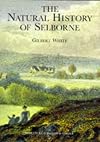
Gilbert White's classic, best in an illustrated edition like Century (1988), can be read like the Bible, a few paragraphs a day to muse on. Or one sentence: "The language of birds is very ancient and like other ancient modes of speech, very elliptical; little is said, but much is meant and understood."
I read White's Selbourne, and mused on it so, while traveling in Dorset and writing my Birdtalk (2003). GW takes you into another world, the world where quotidian life--the appearance of show more migratory birds, the Tortoise Timothy in the root garden--was prized, not avoided by iphones and fast transport and vague urgencies.
White is the Thoreau of England, a solitary observer of the first rank. But unlike Thoreau the cantankerous Romantic recluse and tax-refuser, White was a sociable minister, an Eighteenth-Century man. Both Thoreau and White write with inimitable precision and joy at discovery. Both were transcendental, White in the traditionsl Christian manner. The Solomon of Canticles revived in Selbourne and at Walden show less
I read White's Selbourne, and mused on it so, while traveling in Dorset and writing my Birdtalk (2003). GW takes you into another world, the world where quotidian life--the appearance of show more migratory birds, the Tortoise Timothy in the root garden--was prized, not avoided by iphones and fast transport and vague urgencies.
White is the Thoreau of England, a solitary observer of the first rank. But unlike Thoreau the cantankerous Romantic recluse and tax-refuser, White was a sociable minister, an Eighteenth-Century man. Both Thoreau and White write with inimitable precision and joy at discovery. Both were transcendental, White in the traditionsl Christian manner. The Solomon of Canticles revived in Selbourne and at Walden show less
Lists
Awards


You May Also Like


Associated Authors
Statistics
- Works
- 41
- Members
- 1,473
- Popularity
- #17,439
- Rating
- 3.9
- Reviews
- 15
- ISBNs
- 92
- Languages
- 3
- Favorited
- 2