
Henri Alain-Fournier (1886–1914)
Author of Le Grand Meaulnes
About the Author
Alain-Fournier was born Henri Alban Fournier, on October 3, 1886, in La Chapelle-d'Angillon, France. His untimely death in action during World War I came just before his twenty-eighth birthday, barely one year after the publication of his first and only novel, the minor classic, Le Grand Meaulnes. show more Published in English translation in 1928 as The Wanderer, and in a new translation in 1959 as The Lost Domain, this single testament to Fournier's artistic promise influenced writers between the World Wars and still inspires admiration. Suffused with elements of symbolism and surrealism, Le Grand Meaulnes recreates with dreamlike richness the lost "land without a name" of Alain-Fournier's happy childhood in the French countryside. Alain-Fournier's novel was the result of a series of disappointments. He was haunted for years by an obsession for a beautiful blonde woman whom he barely knew. He failed to pass the entrance examination to the prestigious Ecole Normale and a licence examination in English. While in a stormy relationship with a new love in 1910, Le Grand Meaulnes began to take form. In the summer of 1913 Le Grand Meaulnes was serialized in La Nouvelle Revue Francaise, edited by Jacques Riviere, Alain-Fournier's life-long friend and brother-in-law. Le Grand Meaulnes was published in book form in October 1913, nearly winning the Goncourt Prize. Called up to serve with his former regiment at the outbreak of World War I, Alain-Fournier was killed on September 22, 1914, in battle near Vaux-les-Palameix, France. His body was not recovered. (Bowker Author Biography) show less
Disambiguation Notice:
(fre) Ne pas confondre l'auteur français avec le sportif canadien Fournier (Alain)
Do not confuse with the Canadian Alain Fournier (note the lack of hyphen)
Works by Henri Alain-Fournier
Correspondance de Charles Péguy et Alain-Fournier, Paysages d'une amitié par Yves Rey-Herme (1990) — Author — 2 copies
Cararea pierduta 1 copy
Der grosse Kamerad 1 copy
DET UNDERBARA ÄVENTYRET 1 copy
Cărarea Pierdută 1 copy
Kouzelné dobrodružství 1 copy
Associated Works
Het neusje van de zalm een feestelijke bloemlezing uit Querido's 'vlaggetjesreeks' (1986) — Contributor — 7 copies
Tagged
Common Knowledge
- Canonical name
- Alain-Fournier, Henri
- Legal name
- Fournier, Henri-Alban
- Other names
- Fournier, Alain
- Birthdate
- 1886-10-03
- Date of death
- 1914-09-22
- Gender
- male
- Education
- merchant marine school
Lycée Lakanal - Occupations
- literary critic
soldier - Organizations
- French Army
- Relationships
- Riviere, Jacques (brother-in-law)
Rivière, Isabelle (sister) - Cause of death
- Fait de guerre (WW1)
- Nationality
- France
- Birthplace
- La Chapelle-d'Angillon, Cher, France
- Places of residence
- Paris, France
- Place of death
- Vaux-lès-Palameix, Meuse, France
- Burial location
- Saint-Remy-la-Calonne, Meuse, France
- Map Location
- France
- Disambiguation notice
- Do not confuse with the Canadian Alain Fournier (note the lack of hyphen)
- Associated Place (for map)
- France
Members
Discussions
Q2 2022 Group Read – Le Grand Meaulnes by Alain-Fournier in Geeks who love the Classics (July 2022)
Le Grand Meaulnes in Literary Centennials (August 2013)
Reviews

In his introduction, Anthony Costello says that Alain-Fournier's poems were rejected for publication during his lifetime as they were considered juvenile and unfashionably romantic and sentimental. As most of them were written in a period when the poet was between eighteen and nineteen years old, the juvenile tag was an easy label to fix onto him, however either I'm unnaturally juvenile (being in my fifties) or, as I feel is more correct, Alain-Fournier showed a maturity beyond his years.
As show more for romantic and sentimental, those aren't insults in my vocabulary, and Alain-Fournier's poetry is steeped in these qualities, with an aching nostalgia remarkable in one so young. That he should have died in the first month of WWI at the age of twenty-seven makes the nostalgic quality of his poems that much more poignant.
The poems are bathed in sunlight, amid flower-strewn fields and gardens, or infused with dusky, moonlit rain, gently playing against bedroom windows. There is love, unrequited and dreamed of, childhood scenes remembered with fondness and joy, and the are intimations of war, loss and grief. There are tragically few poems, but enough and of sufficient quality to know that the Great War wasted the potential of yet another young writer whose great promise was only partially realised.
The Notes on Translation by Anthony Costello, telling briefly of his relationship with co-translator, Anita Marsh, is touching and affectively in keeping with the tone of Alain-Fournier's poetry. His suggestion in the introduction to read the poems while listening to Claude Debussy's Prélude à l'aprés-midi d'un faune was well made, as it forms the perfect accompaniment to Alain-Fournier's verse.
This edition gives all the poems first in English translation, then in the original French, so it's possible for the English speaker to get the feel of Alain-Fournier's rhyme and metre even if (like myself) the translation is required for the meaning.
I'm definitely inspired to track down a copy of Alain-Fournier's prose work, The Lost Estate, or Le Grand Meaulnes. show less
As show more for romantic and sentimental, those aren't insults in my vocabulary, and Alain-Fournier's poetry is steeped in these qualities, with an aching nostalgia remarkable in one so young. That he should have died in the first month of WWI at the age of twenty-seven makes the nostalgic quality of his poems that much more poignant.
The poems are bathed in sunlight, amid flower-strewn fields and gardens, or infused with dusky, moonlit rain, gently playing against bedroom windows. There is love, unrequited and dreamed of, childhood scenes remembered with fondness and joy, and the are intimations of war, loss and grief. There are tragically few poems, but enough and of sufficient quality to know that the Great War wasted the potential of yet another young writer whose great promise was only partially realised.
The Notes on Translation by Anthony Costello, telling briefly of his relationship with co-translator, Anita Marsh, is touching and affectively in keeping with the tone of Alain-Fournier's poetry. His suggestion in the introduction to read the poems while listening to Claude Debussy's Prélude à l'aprés-midi d'un faune was well made, as it forms the perfect accompaniment to Alain-Fournier's verse.
This edition gives all the poems first in English translation, then in the original French, so it's possible for the English speaker to get the feel of Alain-Fournier's rhyme and metre even if (like myself) the translation is required for the meaning.
I'm definitely inspired to track down a copy of Alain-Fournier's prose work, The Lost Estate, or Le Grand Meaulnes. show less
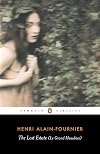
Henri-Alban Fournier, writing under the pseudonym Alain-Fournier, penned only one novel, but it was a work that would secure his place in the pantheon of French literature. "Le Grand Meaulnes," published in 1913 and often translated as "The Lost Estate," is a haunting and evocative tale of adolescence, love, and the elusive nature of memory.
François Seurel, the quiet and perceptive son of a rural French schoolmaster, tells the tale. The introduction of a new, gregarious student, Augustin show more Meaulnes, who is soon dubbed "Le Grand Meaulnes" (The Great Meaulnes) by his peers, permanently changes his peaceful life. Meaulnes is mysterious and daring, with a captivating personality that both captivates and terrifies the more sober François.
The novel's turning point is when Meaulnes, while traveling on a whim, discovers a mysterious, run-down estate where an odd and enchanted costume party is taking place. He meets the stunning and ethereal Yvonne de Galais there, amid the celebrations, and he falls madly in love with her in that brief instant. Meaulnes will spend the remainder of the book frantically attempting to rediscover the "lost estate," which, with its aura of enchantment and diminished grandeur, becomes a symbol of a perfect, almost dreamlike happiness.
The story is a gripping combination of fairy tale elements and realism; however one that is rooted in a concrete reality thanks to the realistic portrayal of the French countryside's rustic simplicity. Nonetheless, the novel is given a sense of the fantastical by the main scene at the enigmatic fête, complete with children in costume and an atmosphere of unearthly revelry. The book's timeless appeal stems from this duality, which illustrates how young imagination can elevate the commonplace to the extraordinary.
Fundamentally, "The Lost Estate" is a profound reflection on what adolescence is all about. It captures exactly the strong feelings, the passionate friendships, and the desire for adventure that characterize this developmental stage. The universal search for a lost paradise—a period of unadulterated potential that can never be fully reclaimed—is powerfully symbolized by Meaulnes's quest for the lost estate and his romanticized love for Yvonne. show less
François Seurel, the quiet and perceptive son of a rural French schoolmaster, tells the tale. The introduction of a new, gregarious student, Augustin show more Meaulnes, who is soon dubbed "Le Grand Meaulnes" (The Great Meaulnes) by his peers, permanently changes his peaceful life. Meaulnes is mysterious and daring, with a captivating personality that both captivates and terrifies the more sober François.
The novel's turning point is when Meaulnes, while traveling on a whim, discovers a mysterious, run-down estate where an odd and enchanted costume party is taking place. He meets the stunning and ethereal Yvonne de Galais there, amid the celebrations, and he falls madly in love with her in that brief instant. Meaulnes will spend the remainder of the book frantically attempting to rediscover the "lost estate," which, with its aura of enchantment and diminished grandeur, becomes a symbol of a perfect, almost dreamlike happiness.
The story is a gripping combination of fairy tale elements and realism; however one that is rooted in a concrete reality thanks to the realistic portrayal of the French countryside's rustic simplicity. Nonetheless, the novel is given a sense of the fantastical by the main scene at the enigmatic fête, complete with children in costume and an atmosphere of unearthly revelry. The book's timeless appeal stems from this duality, which illustrates how young imagination can elevate the commonplace to the extraordinary.
Fundamentally, "The Lost Estate" is a profound reflection on what adolescence is all about. It captures exactly the strong feelings, the passionate friendships, and the desire for adventure that characterize this developmental stage. The universal search for a lost paradise—a period of unadulterated potential that can never be fully reclaimed—is powerfully symbolized by Meaulnes's quest for the lost estate and his romanticized love for Yvonne. show less
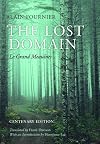
Started strong, but went out with a whimper. Elegiac, romantic (decidedly not in the Harlequin / Mills & Boon way, but in the capital-R Romanticism way), Proustian (published the same year as Remembrance of Things Past) in its nostalgic descriptions of the memories, times, and landscapes of the narrator's youth. Fifteen-year-old François recalls a slightly older boy, Augustin Meaulnes (pronounced like "moan"), who disturbs the equilibrium of the local school and small community. Le grand show more Meaulnes, as the other boys dub him, borrows a horse and carriage, gets lost on the road, and finds himself in a strange, dreamy "domain" (a manor house) where a wedding is about to take place. There he sees an enchanting girl, and falls instantly and irretrievably in love, but she wanders off sighing "It's no use... we are just children." He fumbles his way back home again, but is not able to figure out where this out-of-the-way place is or how to get back, to find the girl again. He becomes gloomily, drearily obsessed with finding her, and François wants to help. But Augustin hies himself to Paris where the girl purportedly makes occasional visits, and pines. There is a muddle of classmates, townsfolk, and the thwarted groom of the wedding that never came off after all. Everyone is at cross-purposes; lovers are redirected, reunited, weep, desert one another, die, reappear... it's all very melodramatic and I won't offer any spoilers. The thing is, after all this drama, I kept expecting some kind of dark secret to finally emerge, something big and terrible - a murder, an illicit gay passion, something that would explode and explain the mess. But it never does. Even the death is not particularly tragic - more bathos than pathos.
Alain-Fournier has written this tale to wallow in (and maybe exorcise?) his own sad adolescent crush, and couches it in quite sweet and lovely memories of his schoolboy years in places he clearly loved deeply. The saddest part of this whole story is his own: killed within weeks of the outbreak of La Grande Guerre at Verdun at the age of twenty-eight. Very much a period piece, and very much subject to your own literary tastes. But kind of fun, if you like this sort of thing - I often do, but this one petered out and left a vague disappointment in its wake. show less
Alain-Fournier has written this tale to wallow in (and maybe exorcise?) his own sad adolescent crush, and couches it in quite sweet and lovely memories of his schoolboy years in places he clearly loved deeply. The saddest part of this whole story is his own: killed within weeks of the outbreak of La Grande Guerre at Verdun at the age of twenty-eight. Very much a period piece, and very much subject to your own literary tastes. But kind of fun, if you like this sort of thing - I often do, but this one petered out and left a vague disappointment in its wake. show less

I was really enjoying the feel of this book until the last twenty-or-so pages, when Alain-Fournier gathered together the strands he'd carefully laid in the preceding 180 pages and wove a cloth of infinitely finer emotional texture. Despite the revelation of "The Secret" having a certain melodramatic inevitability about it, the intensity of feeling is breathtakingly honest.
The tone of adolescent gaucheness is entirely in keeping with both the characters and the author, and what could have show more been an early example of a YA potboiler is raised to the level of genuine literature. The first section of Meaulnes at the wedding fête had a surrealistic air, the middle section a kind of fevered languor, the final section melancholic tragedy, all of it overlaid with a shimmering golden light. Instantly a favourite! show less
The tone of adolescent gaucheness is entirely in keeping with both the characters and the author, and what could have show more been an early example of a YA potboiler is raised to the level of genuine literature. The first section of Meaulnes at the wedding fête had a surrealistic air, the middle section a kind of fevered languor, the final section melancholic tragedy, all of it overlaid with a shimmering golden light. Instantly a favourite! show less
Lists
Books About Boys (1)
French Books (1)
Take Four Books (1)
Awards


You May Also Like


Associated Authors
Statistics
- Works
- 28
- Also by
- 3
- Members
- 3,999
- Popularity
- #6,310
- Rating
- 3.8
- Reviews
- 87
- ISBNs
- 275
- Languages
- 17
- Favorited
- 8


