

Daniel Odier
Author of The Job: Interviews with William S. Burroughs
About the Author
Daniel Odier is a teacher of Kashmiri Tantra and a Chan Master from the Chao-chou lineage. He is the author of Tantric Quest: An Encounter with Absolute Love and many other books, including Yoga Spandakarika: The Sacred Texts at the Heart of Tantra. He lives in Switzerland.
Image credit: Daniel Odier
Series
Works by Daniel Odier
The Royal Path of Shakti: The Erotic and Magical Techniques of Kaula Tantra (2022) 7 copies, 1 review
Essais sur les mystiques orientales (Collection "Spiritualites vivantes") (French Edition) (1984) 6 copies, 1 review
Job, The 2 copies
Posvátnost sexuality 1 copy
Associated Works
Freeing the Body, Freeing the Mind: Writings on the Connections between Yoga and Buddhism (2010) — Contributor — 36 copies, 1 review
Tagged
Common Knowledge
- Legal name
- Odier, Daniel
- Other names
- Ch'an Master Ming Qing
Delacorta - Birthdate
- 1945-05-17
- Gender
- male
- Occupations
- screenwriter
music critic
novelist
poet
teacher - Organizations
- Tantra/Chan Center, Paris, France
University of California
Spanda school of Saivism - Relationships
- Rinpoche, Kalu (teacher)
- Short biography
- Daniel Robert Odier (born in 1945 in Geneva), also known by his pseudonym Delacorta, is a Swiss author and screenwriter. Praised by Anaïs Nin as "an outstanding writer and a dazzling poet," he is also a prolific writer on Eastern religious traditions, especially Tantra.
- Nationality
- Switzerland
- Birthplace
- Geneva, Geneva, Switzerland
- Places of residence
- Geneva, Switzerland
California, USA
Paris, France - Map Location
- Switzerland
Members
Reviews

***SPOILERS AND VULGAR LANGUAGE FOLLOW***
A pornographic, Lolita fantasy with a thin incredible plot relying on magical coincidence and characters functioning solely as wish-fulfillment automatons, garnished with trivial lip service paid to obsession with opera, "Diva" falls way short of being a proper thriller or thrilling. It's still remarkable as a specimen of what passed (passes?) for sexy entertainment à la française--that "sophisticated" French shit, dontcha know.
Alba and Gorodish show more are the unlikely and yet so common fantasy couple--a 40 year old con man and his 13 year old groomie. Alba is divinely beautiful, infernally sexy, and in love with her "mentor", like, totally. She is also convinced she is a woman and wishes Gorodish would fuck her already--but he resists, waiting for her to become legally of age--the law is a bitch, but thankfully in France he only has to wait until she matures into a positively haggard 14 year old. Therefore they only cuddle naked and kiss in bed. This, clearly, proves he is NOT a dirty paedo but a romantic gentleman any 13 year old girl could wish for. Or that a 13 year old girl's father could wish for her. In a further attempt to sanitize the excremental, we learn Alba's father handed her over to Gorodish with approval and enthusiasm. His reasons and state of knowledge of the situation are kept vague but it seems the man believes Gorodish is giving Alba a valuable education in Indian dance... among, possibly, other things. At any rate, the dad is a huge Gorodish fan and performs favours for him.
Alba and Gorodish cross paths with Jules the 20-something bike messenger and opera enthusiast whose passion baulks not from stalking of and stealing from the object of his affections. The object is African American opera singer Cynthia Hawkins. She is the greatest operatic star of the moment or all epochs, the titular diva--grand, expensive, absolutely remote to the point of forbidding every recording and dissemination of her performances (another ludicrously improbable feature of the plot, mais passons). All that jazz notwithstanding, she'll end up smitten and in bed with her fan, the 20-something bike messenger. Well, of course she will--who else could it have been, the pizza boy?
As if that weren't enough, Jules was also a great success with a black prostitute whom he fucks pretending she is Cynthia (he makes her put on a dress he's stolen from the diva), and indulges in some soul kissing with Alba. Wow, that Jules. Almost as swoony as the paedo.
Sad to say, I can see myself loving this crap at Alba's age--my generation, to say nothing of those before, came "pre-groomed" to such stories. But here's the thing with essential skeeziness--it persists. Glamour eventually falls off the turd, even when it's called l'étron. show less
A pornographic, Lolita fantasy with a thin incredible plot relying on magical coincidence and characters functioning solely as wish-fulfillment automatons, garnished with trivial lip service paid to obsession with opera, "Diva" falls way short of being a proper thriller or thrilling. It's still remarkable as a specimen of what passed (passes?) for sexy entertainment à la française--that "sophisticated" French shit, dontcha know.
Alba and Gorodish show more are the unlikely and yet so common fantasy couple--a 40 year old con man and his 13 year old groomie. Alba is divinely beautiful, infernally sexy, and in love with her "mentor", like, totally. She is also convinced she is a woman and wishes Gorodish would fuck her already--but he resists, waiting for her to become legally of age--the law is a bitch, but thankfully in France he only has to wait until she matures into a positively haggard 14 year old. Therefore they only cuddle naked and kiss in bed. This, clearly, proves he is NOT a dirty paedo but a romantic gentleman any 13 year old girl could wish for. Or that a 13 year old girl's father could wish for her. In a further attempt to sanitize the excremental, we learn Alba's father handed her over to Gorodish with approval and enthusiasm. His reasons and state of knowledge of the situation are kept vague but it seems the man believes Gorodish is giving Alba a valuable education in Indian dance... among, possibly, other things. At any rate, the dad is a huge Gorodish fan and performs favours for him.
Alba and Gorodish cross paths with Jules the 20-something bike messenger and opera enthusiast whose passion baulks not from stalking of and stealing from the object of his affections. The object is African American opera singer Cynthia Hawkins. She is the greatest operatic star of the moment or all epochs, the titular diva--grand, expensive, absolutely remote to the point of forbidding every recording and dissemination of her performances (another ludicrously improbable feature of the plot, mais passons). All that jazz notwithstanding, she'll end up smitten and in bed with her fan, the 20-something bike messenger. Well, of course she will--who else could it have been, the pizza boy?
As if that weren't enough, Jules was also a great success with a black prostitute whom he fucks pretending she is Cynthia (he makes her put on a dress he's stolen from the diva), and indulges in some soul kissing with Alba. Wow, that Jules. Almost as swoony as the paedo.
Sad to say, I can see myself loving this crap at Alba's age--my generation, to say nothing of those before, came "pre-groomed" to such stories. But here's the thing with essential skeeziness--it persists. Glamour eventually falls off the turd, even when it's called l'étron. show less
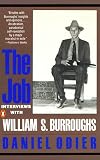
Do you have trouble understanding William S. Burroughs? That’s not exactly your fault. A lot of his writings throw you into a labyrinth of sewers without a life jacket or a set of instructions. You may be able to grasp ahold of whatever chunks of garbage float by, but those will dissolve soon after being touched. If you are perceptive enough, you will know somewhere in the back of your mind that there is something being said, however. It just isn’t obvious. So it might be helpful if you show more have some sort of roadmap or outline to make all the filthy mess a little more comprehensible. That is where The Job comes in.
The Job is mostly a collection of interviews Burroughs did with Daniel Odier, a Swiss author and teacher of tantric yoga. The interviews are blended in with essays, short stories, and pieces of experimental writing in a way that is true to Burroughs’ desire to explode the traditional forms of writing. The lines of demarcation between the passages aren’t clearly marked so the writing drifts from one passage to the next like globs in a lava lamp. Burroughs’ himself said this book is intended to read the way you might experience a documentary film. The form reflects the function since a big part of Burroughs’ theories is that boundaries of any kind are soft and mutable; any kind of rigid structuring is arbitrary, resulting from a sick desire to control and dominate the nature of reality.
Topics covered include the usual things Burroughs always discusses. The nature of narcotics usage and addiction to opiates fill up one section. If you think he intends to glamorize morphine or heroin use, you’ve missed the point. Burroughs would be the first to tell you to stay as far away from heroin as you possibly can. Having said that, he also advocates for addicts by claiming they are essentially harmless people who interfere with nobody else as long as they have access to their drugs. Given the hallucinatory nature of his writings, it’s interesting that he doesn’t like LSD.
He also explains the cut up method and the dream machine for about the thousandth time. Fortunately he doesn’t dwell on these for too long since they have been explained in depth in so many other places. Other topics covered are the biological function and meaning of viruses, ancient Mayan society, and the relationship between matriarchy, family, nations, and control. As he sees it, matriarchies are inherently authoritarian since families are dominated by mothers and nations are essentially extensions of the family unit. His belief is that control and domination can be eliminated by destroying the family which will inevitably makes nations an impossibility. Reproduction should be asexual and children should be given over to the state to prevent parents from passing their neuroses down to their children.
You might be tempted to say that Burroughs’ misogyny is rooted in his relations with his parents, but that is a little too easy. It is true that he had an overbearing mother and an effeminate father, but he is said to have had a warm and loving relationship with them. Familial conflicts were minimal. He was also deeply attached to the family’s nanny who introduced him to witchcraft at a young age and biographers have say that he used to have temper tantrums when she wasn’t around to watch over him . The source of Burroughs’ misogyny is a mystery that can’t easily be traced back to the places you would ordinarily think to look such as childhood trauma or poor family relations. But of course, this is William S. Burroughs and his program is that of chaos magic. He immerses you in a cyclone of filth then leaves you alone to see what is left after the storm has passed. It’s not about making sense in the conventional meaning of that term.
The big ideas in The Job relate to the connection between sound and image, and the language virus as a mechanism of control. Regarding sound and image, Burroughs claims that how we interpret what we see is dominated by what we hear. Sound is a dominant force and shapes vision and imagery without our conscious consent. He gives the example of a film clip showing people in a city running to catch a bus. By removing the accompanying soundtrack and replacing it with a recording of machine gun fire, the viewer will see the running crowd in an entirely different light, one in which they are running for their lives.
Any film maker will tell you this is a truism, but Burroughs’ extends this idea into the realm of experimental art with his tape recorder experiments. Peoples’ perceptions of reality and time can be altered by using his cut up method to randomly splice sound and image recordings together. But Burroughs doesn’t stop with film studio experimentation. He advocates taking the technology into the streets by hiding tape players on body under a trench coat and walking along crowded city streets while they play. The tapes should have the sounds of riots. The idea is that the sound of riots can override the reality of what people see and cause them to act as if a riot is really happening. Any skeptic would deny the possibility of this working and the ethics of carrying out such an experiment are dubious. Still, it makes you wonder what would happen if you tried it. More importantly, the undertone of humor in this should not be ignored. Burroughs may be pulling your leg, but then again maybe not. He probably would say that disregarding the illusions of linear time and causality make magic possible. Or is that theory just the drugs speaking? Iny any case, he draws out attention to the way that media channels like film, TV, and radio are designed to manipulate our perceptions and behavior while conditioning us for obedience.
His concept of obedience is lifted directly from Scientology in what is dubbed the Reactive Mind or RM as he calls it throughout the text. The RM is the impulsive, motivational center of our mind. It reacts in response to external stimuli, but it is fractured and rendered ineffective through contradictions accumulated during childhood. The contradictions are encoded in the RM with language and as long as these contradictions remain fossilized in the RM, the individual is limited in their potential for self-determination. Therefore, erasing the language codes in the RM will liberate the person, making them less vulnerable to control from outside forces.
This brings us back to Burroughs’ concept of the language virus. His theory of language is heavily influenced by the linguist Alfred Korzybski who is considered to be a founding father in the branches of semantics and semiotics. Korzybski articulated the arbitrary connection between signs and what they signify. There is nothing in the nature of a cat to determine that the signifier “cat” is an accurate representation of the signified animal. But a drawing of a cat bears a closer resemblance to the authentic nature of a cat than the word we use to described it.
Since language, sound, and image can be so easily manipulated to control human perceptions and behavior, Burroughs’ solution is to disconnect language from any signified images. Burroughs suggests liberation by utilizing either a pictorial language in which images without connections to sounds are used to communicate or else a scripted language that doesn’t signify visual images can be used as well. He demonstrates the latter in an experimental writing piece that makes it impossible to attach an images to the written words he uses. You could argue that this kind of abstract writing doesn’t communicate anything at all though, making the purpose of language ineffective, maybe even making communcation impossible. Enter Jacques Derrida. The ultimate goal is to think solely in images without any words attached to them. Burroughs belives we should evolve to replace spoken and written language with telepathy. This could be the next step in evolution, something that won’t take place until we leave the planet. It’s kind of like a sea animal evolving into a land animal by losing its fins and scales and evolving into gorwing lungs and limbs to adapt to its new environment.
Another linguistic concept of Burroughs involves the elimination of binary opposition which he says limits the human capacity for interpreting reality. Pairs like hot/cold or tall/short foreclose the possibilities for any kind of nuanced understanding. But he completely ignores the use of other words and concepts we use to describe temperature like freezing, burning, warm, cool and so on. Also concepts of tall and short can vary depending on who you are considering. Being five feet in height would be tall for a three year old, but if that individual is still five feet at the age of forty he would be considered short by American standards. So the meaning of tall and short is nuanced and dependent on context. I would say that eliminating pairs of binary opposites would further limit our ability to express concepts rather than heighten our awareness of nuances since it would provide less language to work with.
He also wants to eliminate the pairings of the definite and indefinite articles “the/a” and use only the indefinite article “a”. But he doesn’t recognize that those articles each represent different categories of specificity and generality. “A book is good to read” has a different meaning than “the book is good to read”, the former referring to any one unspecified book out of all books in existence while the latter refers to one specific book, the title of which was presumably given in a previous sentence. Thus eliminating the definite article “the” would greatly reduce our ability for nuanced discussion rather than liberating us from semantic restrictions. Burroughs also doesn’t appear to know that many languages, especially Slavic languages, don’t contain any articles at all so unless he wants to argue that people who speak Slavic languages are dominated less than people who speak Latin or Germanic languages, or even Arabic or Albanian, he doesn’t have much to go on here. Russian was the language of the Soviet Union, so drawing a direct connection between the semantics and syntax of a language and the degree of individual liberties possessed by the speakers of the language isn’t a connection that can be made.
Burroughs’ knowledge of linguistics was superficial, but we aren’t talking about ontology here; we are talking about literary theory combined with fictional world building and in the context of his science-fiction novels it clarifies some of what he is trying to accomplish, or at least it indicates why some of his writings are deliberately meant to perplex you.
The universe Burroughs’ creates is one that is deterministic. Humans have no free will as we are motivated internally by genes, hormones, and unconscious drives. We are pushed and pulled through life by reacting to external stimuli in our surrounding environments and the ones who have the most control over our environments have the most control over us. And their motivations don’t take our welfare into consideration. Humans, as biological agents, have very little free will and very little chance of escaping from the prisons of our lives. If we decimate all systems of linearity, logic, and mechanization then we might have a chance to build on whatever shapes emerge from the ruins. But probably not. Burroughs doesn’t think it’s likely, but we might as well try. There is nothing better to do. You have to wonder how much of his philosophy is meant to convey the truth as he sees it and how much is just the result of being unable to control a drug addiction or alter his sexual orientation. I have long wondered if William Burroughs was a solipsist.
The Job is important for anyone who wants to understand Burroughs. All of the ideas contained in this book are theoretical frameworks for his fiction which can be disorienting and sometimes hard to follow. He says the same things here that he says in all his other books; he’s just laying it all out in plain language so you can grasp ahold of the concepts more readily. It is a good strategy to read his biography, read his fiction, and then read The Job. After that, go back and re-read his fiction. It will be easier to see how it all fits together and when you come to the parts that are incomprehensible, just remember that incomprehensibility is a part of what he is trying to express. Don’t forget to look for hidden messages though. Sometimes there are signals submerged in all the noise. Sometimes those signals emerge in part or in whole.
In conclusion, The Job is a key text for those who are serious about studying William S. Burroughs. It is like a Rosetta Stone that unlocks the meaning of all his other fiction. His explicitly stated literary theories and philosophical worldview are supplemented with short stories and essays nested within the interviews. This succeeds in clarifying some his more obscure ideas. And if you don’t agree with some of it, or any of it, don’t despair since his ideas are all about world building in the realms of science-fiction and surrealism. That may be a cop out when it comes to defending a system of unjustifiable beliefs, but it functions well when you want to interpret the more evasive aspects of his literature. You have to understand it before you can accept or dismiss it. If you don’t make the effort to interpret it, you can’t contribute much of any value in a discussion on what its value is. Besides, being the stubborn individualist that William S. Burroughs was, you can conclude that he probably didn’t want you to agree with a lot of it anyways. His philosophy can be seen as a defensive measure against the riff raff of humanity so if it was easy to understand and easy to agree with, it wouldn’t be strong enough to serve its purpose.
As clearly articulated as the ideas in The Job are, I only have one major complaint. If you’ve heard William S. Burroughs speak, you know that he was avuncular and authoritative in his mannerisms. You might have found it hard to disagree with him when in his presence. When these interviews are written out in text, his unique form of magnetism is partially lost and the words lose the kind of gravity they carry when he speaks. Therefore, it may be more convincing to listen to him explaining his ideas rather than reading them in this book. But whatever works best for you is what works.
Now if only I can get my head around the idea of an author whose intention it was to eradicate language... show less
The Job is mostly a collection of interviews Burroughs did with Daniel Odier, a Swiss author and teacher of tantric yoga. The interviews are blended in with essays, short stories, and pieces of experimental writing in a way that is true to Burroughs’ desire to explode the traditional forms of writing. The lines of demarcation between the passages aren’t clearly marked so the writing drifts from one passage to the next like globs in a lava lamp. Burroughs’ himself said this book is intended to read the way you might experience a documentary film. The form reflects the function since a big part of Burroughs’ theories is that boundaries of any kind are soft and mutable; any kind of rigid structuring is arbitrary, resulting from a sick desire to control and dominate the nature of reality.
Topics covered include the usual things Burroughs always discusses. The nature of narcotics usage and addiction to opiates fill up one section. If you think he intends to glamorize morphine or heroin use, you’ve missed the point. Burroughs would be the first to tell you to stay as far away from heroin as you possibly can. Having said that, he also advocates for addicts by claiming they are essentially harmless people who interfere with nobody else as long as they have access to their drugs. Given the hallucinatory nature of his writings, it’s interesting that he doesn’t like LSD.
He also explains the cut up method and the dream machine for about the thousandth time. Fortunately he doesn’t dwell on these for too long since they have been explained in depth in so many other places. Other topics covered are the biological function and meaning of viruses, ancient Mayan society, and the relationship between matriarchy, family, nations, and control. As he sees it, matriarchies are inherently authoritarian since families are dominated by mothers and nations are essentially extensions of the family unit. His belief is that control and domination can be eliminated by destroying the family which will inevitably makes nations an impossibility. Reproduction should be asexual and children should be given over to the state to prevent parents from passing their neuroses down to their children.
You might be tempted to say that Burroughs’ misogyny is rooted in his relations with his parents, but that is a little too easy. It is true that he had an overbearing mother and an effeminate father, but he is said to have had a warm and loving relationship with them. Familial conflicts were minimal. He was also deeply attached to the family’s nanny who introduced him to witchcraft at a young age and biographers have say that he used to have temper tantrums when she wasn’t around to watch over him . The source of Burroughs’ misogyny is a mystery that can’t easily be traced back to the places you would ordinarily think to look such as childhood trauma or poor family relations. But of course, this is William S. Burroughs and his program is that of chaos magic. He immerses you in a cyclone of filth then leaves you alone to see what is left after the storm has passed. It’s not about making sense in the conventional meaning of that term.
The big ideas in The Job relate to the connection between sound and image, and the language virus as a mechanism of control. Regarding sound and image, Burroughs claims that how we interpret what we see is dominated by what we hear. Sound is a dominant force and shapes vision and imagery without our conscious consent. He gives the example of a film clip showing people in a city running to catch a bus. By removing the accompanying soundtrack and replacing it with a recording of machine gun fire, the viewer will see the running crowd in an entirely different light, one in which they are running for their lives.
Any film maker will tell you this is a truism, but Burroughs’ extends this idea into the realm of experimental art with his tape recorder experiments. Peoples’ perceptions of reality and time can be altered by using his cut up method to randomly splice sound and image recordings together. But Burroughs doesn’t stop with film studio experimentation. He advocates taking the technology into the streets by hiding tape players on body under a trench coat and walking along crowded city streets while they play. The tapes should have the sounds of riots. The idea is that the sound of riots can override the reality of what people see and cause them to act as if a riot is really happening. Any skeptic would deny the possibility of this working and the ethics of carrying out such an experiment are dubious. Still, it makes you wonder what would happen if you tried it. More importantly, the undertone of humor in this should not be ignored. Burroughs may be pulling your leg, but then again maybe not. He probably would say that disregarding the illusions of linear time and causality make magic possible. Or is that theory just the drugs speaking? Iny any case, he draws out attention to the way that media channels like film, TV, and radio are designed to manipulate our perceptions and behavior while conditioning us for obedience.
His concept of obedience is lifted directly from Scientology in what is dubbed the Reactive Mind or RM as he calls it throughout the text. The RM is the impulsive, motivational center of our mind. It reacts in response to external stimuli, but it is fractured and rendered ineffective through contradictions accumulated during childhood. The contradictions are encoded in the RM with language and as long as these contradictions remain fossilized in the RM, the individual is limited in their potential for self-determination. Therefore, erasing the language codes in the RM will liberate the person, making them less vulnerable to control from outside forces.
This brings us back to Burroughs’ concept of the language virus. His theory of language is heavily influenced by the linguist Alfred Korzybski who is considered to be a founding father in the branches of semantics and semiotics. Korzybski articulated the arbitrary connection between signs and what they signify. There is nothing in the nature of a cat to determine that the signifier “cat” is an accurate representation of the signified animal. But a drawing of a cat bears a closer resemblance to the authentic nature of a cat than the word we use to described it.
Since language, sound, and image can be so easily manipulated to control human perceptions and behavior, Burroughs’ solution is to disconnect language from any signified images. Burroughs suggests liberation by utilizing either a pictorial language in which images without connections to sounds are used to communicate or else a scripted language that doesn’t signify visual images can be used as well. He demonstrates the latter in an experimental writing piece that makes it impossible to attach an images to the written words he uses. You could argue that this kind of abstract writing doesn’t communicate anything at all though, making the purpose of language ineffective, maybe even making communcation impossible. Enter Jacques Derrida. The ultimate goal is to think solely in images without any words attached to them. Burroughs belives we should evolve to replace spoken and written language with telepathy. This could be the next step in evolution, something that won’t take place until we leave the planet. It’s kind of like a sea animal evolving into a land animal by losing its fins and scales and evolving into gorwing lungs and limbs to adapt to its new environment.
Another linguistic concept of Burroughs involves the elimination of binary opposition which he says limits the human capacity for interpreting reality. Pairs like hot/cold or tall/short foreclose the possibilities for any kind of nuanced understanding. But he completely ignores the use of other words and concepts we use to describe temperature like freezing, burning, warm, cool and so on. Also concepts of tall and short can vary depending on who you are considering. Being five feet in height would be tall for a three year old, but if that individual is still five feet at the age of forty he would be considered short by American standards. So the meaning of tall and short is nuanced and dependent on context. I would say that eliminating pairs of binary opposites would further limit our ability to express concepts rather than heighten our awareness of nuances since it would provide less language to work with.
He also wants to eliminate the pairings of the definite and indefinite articles “the/a” and use only the indefinite article “a”. But he doesn’t recognize that those articles each represent different categories of specificity and generality. “A book is good to read” has a different meaning than “the book is good to read”, the former referring to any one unspecified book out of all books in existence while the latter refers to one specific book, the title of which was presumably given in a previous sentence. Thus eliminating the definite article “the” would greatly reduce our ability for nuanced discussion rather than liberating us from semantic restrictions. Burroughs also doesn’t appear to know that many languages, especially Slavic languages, don’t contain any articles at all so unless he wants to argue that people who speak Slavic languages are dominated less than people who speak Latin or Germanic languages, or even Arabic or Albanian, he doesn’t have much to go on here. Russian was the language of the Soviet Union, so drawing a direct connection between the semantics and syntax of a language and the degree of individual liberties possessed by the speakers of the language isn’t a connection that can be made.
Burroughs’ knowledge of linguistics was superficial, but we aren’t talking about ontology here; we are talking about literary theory combined with fictional world building and in the context of his science-fiction novels it clarifies some of what he is trying to accomplish, or at least it indicates why some of his writings are deliberately meant to perplex you.
The universe Burroughs’ creates is one that is deterministic. Humans have no free will as we are motivated internally by genes, hormones, and unconscious drives. We are pushed and pulled through life by reacting to external stimuli in our surrounding environments and the ones who have the most control over our environments have the most control over us. And their motivations don’t take our welfare into consideration. Humans, as biological agents, have very little free will and very little chance of escaping from the prisons of our lives. If we decimate all systems of linearity, logic, and mechanization then we might have a chance to build on whatever shapes emerge from the ruins. But probably not. Burroughs doesn’t think it’s likely, but we might as well try. There is nothing better to do. You have to wonder how much of his philosophy is meant to convey the truth as he sees it and how much is just the result of being unable to control a drug addiction or alter his sexual orientation. I have long wondered if William Burroughs was a solipsist.
The Job is important for anyone who wants to understand Burroughs. All of the ideas contained in this book are theoretical frameworks for his fiction which can be disorienting and sometimes hard to follow. He says the same things here that he says in all his other books; he’s just laying it all out in plain language so you can grasp ahold of the concepts more readily. It is a good strategy to read his biography, read his fiction, and then read The Job. After that, go back and re-read his fiction. It will be easier to see how it all fits together and when you come to the parts that are incomprehensible, just remember that incomprehensibility is a part of what he is trying to express. Don’t forget to look for hidden messages though. Sometimes there are signals submerged in all the noise. Sometimes those signals emerge in part or in whole.
In conclusion, The Job is a key text for those who are serious about studying William S. Burroughs. It is like a Rosetta Stone that unlocks the meaning of all his other fiction. His explicitly stated literary theories and philosophical worldview are supplemented with short stories and essays nested within the interviews. This succeeds in clarifying some his more obscure ideas. And if you don’t agree with some of it, or any of it, don’t despair since his ideas are all about world building in the realms of science-fiction and surrealism. That may be a cop out when it comes to defending a system of unjustifiable beliefs, but it functions well when you want to interpret the more evasive aspects of his literature. You have to understand it before you can accept or dismiss it. If you don’t make the effort to interpret it, you can’t contribute much of any value in a discussion on what its value is. Besides, being the stubborn individualist that William S. Burroughs was, you can conclude that he probably didn’t want you to agree with a lot of it anyways. His philosophy can be seen as a defensive measure against the riff raff of humanity so if it was easy to understand and easy to agree with, it wouldn’t be strong enough to serve its purpose.
As clearly articulated as the ideas in The Job are, I only have one major complaint. If you’ve heard William S. Burroughs speak, you know that he was avuncular and authoritative in his mannerisms. You might have found it hard to disagree with him when in his presence. When these interviews are written out in text, his unique form of magnetism is partially lost and the words lose the kind of gravity they carry when he speaks. Therefore, it may be more convincing to listen to him explaining his ideas rather than reading them in this book. But whatever works best for you is what works.
Now if only I can get my head around the idea of an author whose intention it was to eradicate language... show less
A lot of people (even some who were personally acquainted with WSB, and should know better) feel that Burroughs was just being ironic when he talked about guns, Scientology, etc., or that his professed interest in those subjects was a metaphor for something else. (What, exactly?) Presumably they don't know that Burroughs's obsession with Scientology drove away his boyfriend Ian Sommerville, or that the Naked Lunch author was deadly serious about gun ownership and the individual's right to show more self-defense.
Not that there isn't legitimate cause for confusion, especially since WSB's biographers rarely underscore the fact that some of his opinions changed over time. It has become de rigueur to portray him as an eccentric genius whose positions were etched in stone, but this excessive deference is just silly...especially since Burroughs himself said, "I think anybody incapable of changing his mind is crazy." For the record, he did recant on Scientology (see My Education: A Book of Dreams), and admitted that apomorphine had not been a miracle cure for his junk habit (Last Words: The Final Journals of William S. Burroughs).
You may be wondering how any of this is relevant to The Job, Daniel Odier's book-length interview session with Burroughs. The point is that these interviews represent WSB at a specific moment in time--the late '60s/early '70s--and should not be interpreted as the expression of a monolithic, unchanging philosophy. In one breath he says something that makes sense ("You see, the whole concept of a nation depends on the hostility of another nation on the other side of a line"); in the next he's peddling utter crap (riots can be started with tape recordings). For the layman this will prove frustrating, but The Job contains enough valid observations to make it worth a read for Burroughs aficionados.
Just how valid, and eerily prescient, could his observations be? Try this one on for size: "Any serious attempt to enforce (state and federal drug laws in the U.S.) would entail a computerized invasion of privacy, a total police terror, a police machine that would pull the entire population into its orbit of violators, police, custody, courts, defense, probation and parole. Just tell the machine to enforce all laws by whatever means and the machine will sweep us to the disaster of a computerized police state." show less
Not that there isn't legitimate cause for confusion, especially since WSB's biographers rarely underscore the fact that some of his opinions changed over time. It has become de rigueur to portray him as an eccentric genius whose positions were etched in stone, but this excessive deference is just silly...especially since Burroughs himself said, "I think anybody incapable of changing his mind is crazy." For the record, he did recant on Scientology (see My Education: A Book of Dreams), and admitted that apomorphine had not been a miracle cure for his junk habit (Last Words: The Final Journals of William S. Burroughs).
You may be wondering how any of this is relevant to The Job, Daniel Odier's book-length interview session with Burroughs. The point is that these interviews represent WSB at a specific moment in time--the late '60s/early '70s--and should not be interpreted as the expression of a monolithic, unchanging philosophy. In one breath he says something that makes sense ("You see, the whole concept of a nation depends on the hostility of another nation on the other side of a line"); in the next he's peddling utter crap (riots can be started with tape recordings). For the layman this will prove frustrating, but The Job contains enough valid observations to make it worth a read for Burroughs aficionados.
Just how valid, and eerily prescient, could his observations be? Try this one on for size: "Any serious attempt to enforce (state and federal drug laws in the U.S.) would entail a computerized invasion of privacy, a total police terror, a police machine that would pull the entire population into its orbit of violators, police, custody, courts, defense, probation and parole. Just tell the machine to enforce all laws by whatever means and the machine will sweep us to the disaster of a computerized police state." show less
This is, for me, the peak of Burroughs' articulation of his philosophy. All of the incredible ideas that he'd put into his novels that may've seemed a bit unclear b/c of the fantasticness of their presentation are presented here in a straight discursive form. Here's a sample of some classic Burroughs from page 75:
"Q: Any comments on the assassination of Robert Kennedy?
"A: It seems likely that the assassination was arranged by the far right, and that the arrangers are now taking this show more opportunity to pass anti-gun laws, and disarm the nation for the fascist takeover. That will certainly occur, if America is involved in a war with China. As to how such assassinations are arranged, there are very definite techniques for doing this. Assassins often hear voices telling them to kill. Are these voices necessarily imaginary? Directional mikes can project voices. Top secret research on lasers is concerned with sending thoughts."
As usual, Burroughs mixes fairly astute political observation (Bobby Kennedy probably was killed thru ultra-right machinations upset by his anti-mafia & pro-civil rights activities) w/ a projective sense of where technologies might be heading (making people hear voices is something discussed at greater lengths in later bks - such as "Paranoid Women Collect Their Thoughts"). As for "anti-gun laws"? Well I'm not really w/ Burroughs on this one AND we didn't got to war w/ China. "Fascist takeover"? Sometimes I think that w/ the assassinations of JFK, MLK, Robert Kennedy, & Malcolm X - & the placement of Johnson in office as the president the succession of Texas & southern presidents since (exemplified by the Reagan/Bush era of the last 28 yrs) that the South got their revenge for losing the Civil War & that that's been a form of fascist takeover.
At any rate, if you're interested in Burroughs as a social critic & a philosopher, read this bk above any others. This is a great compliment to the novels. show less
"Q: Any comments on the assassination of Robert Kennedy?
"A: It seems likely that the assassination was arranged by the far right, and that the arrangers are now taking this show more opportunity to pass anti-gun laws, and disarm the nation for the fascist takeover. That will certainly occur, if America is involved in a war with China. As to how such assassinations are arranged, there are very definite techniques for doing this. Assassins often hear voices telling them to kill. Are these voices necessarily imaginary? Directional mikes can project voices. Top secret research on lasers is concerned with sending thoughts."
As usual, Burroughs mixes fairly astute political observation (Bobby Kennedy probably was killed thru ultra-right machinations upset by his anti-mafia & pro-civil rights activities) w/ a projective sense of where technologies might be heading (making people hear voices is something discussed at greater lengths in later bks - such as "Paranoid Women Collect Their Thoughts"). As for "anti-gun laws"? Well I'm not really w/ Burroughs on this one AND we didn't got to war w/ China. "Fascist takeover"? Sometimes I think that w/ the assassinations of JFK, MLK, Robert Kennedy, & Malcolm X - & the placement of Johnson in office as the president the succession of Texas & southern presidents since (exemplified by the Reagan/Bush era of the last 28 yrs) that the South got their revenge for losing the Civil War & that that's been a form of fascist takeover.
At any rate, if you're interested in Burroughs as a social critic & a philosopher, read this bk above any others. This is a great compliment to the novels. show less
Lists
Awards


You May Also Like


Associated Authors
Statistics
- Works
- 53
- Also by
- 2
- Members
- 1,538
- Popularity
- #16,740
- Rating
- 3.7
- Reviews
- 35
- ISBNs
- 139
- Languages
- 8
- Favorited
- 5
