
Jerzy Kosiński (1933–1991)
Author of The Painted Bird
About the Author
Jerzy Kosinski was born in Lodz, Poland on June 8, 1933. In 1939, he was separated from his family when the Nazi's invaded Poland and he wandered through villages for six years, surviving by his wits. In shock, he remained mute from the age of nine to fourteen. He was finally reunited with his show more family. He moved to the United States in 1957. His first novel, The Painted Bird, was published in 1965 and received France's Prix du Meilleur Livre Etranger. His second novel, Steps, won the National Book Award in 1969. His other novels included Being There, The Devil Tree, Cockpit, and Blind Date. Blind Date tells the story of the Manson killings, which is where he would have been if he had not been stuck in JFK Airport dealing with improperly tagged luggage. He committed suicide on May 3, 1991 at the age of 57. (Bowker Author Biography) show less
Image credit: Jerzy Kosinski, Miami Book Fair International, 1985, by "MDCArchives" (Wikimedia Commons)
Works by Jerzy Kosiński
Schritte – Grausame Skizzen: Roman 2 copies
Literatura na świecie 1989/2 2 copies
SIGNED Jerzy Kosinski BLIND DATE 1977 Houghton Mifflin, Boston First Edition [Hardcover] unknown 2 copies
Stefnumót við óvissuna 1 copy
Kosinski Jerzy 1 copy
O pássaro pintado 1 copy
Associated Works
Tagged
Common Knowledge
- Canonical name
- Kosiński, Jerzy
- Legal name
- Kosiński, Jerzy Nikodem
- Other names
- Novak, Joseph
Lewinkopf, Józef (birth name) - Birthdate
- 1933-06-14
- Date of death
- 1991-05-03
- Gender
- male
- Education
- University of Lodz (MA)
Columbia University (Ph.D., 1965) - Occupations
- novelist
short story writer - Awards and honors
- First Amendment Award, American Civil Libertries Union (1977)
Best Screenplay Award, Writers Guild of America (1979)
Achievement Award, Polonia Media Perspectives (1980)
Award in Literature, National Institute of Arts and Letters and American Academy of Arts and Letters (1970)
B'rith Shalom Humanitarian Freedom Award (1974)
Best Screenplay of the Year, British Academy of Film and Television Arts (1981) (show all 11)
Honorary Doctorate (Humane Letters, Albion College, 1988)
Honorary Doctorate (Humane Letters, State University of New York, Potsdam, 1989)
Honorary Doctorate (Hebrew Letters, Spertus College of Judaica, Chicago)
President of the American Chapter of P.E.N. (1973-75)
American Academy of Arts and Letters Academy Award (Literature ∙ 1970) - Cause of death
- suicide
- Nationality
- Poland (birth)
USA (naturalized 1965) - Birthplace
- Łódź, Poland
- Places of residence
- New York, New York, USA
- Place of death
- New York, New York, USA
- Map Location
- USA
Members
Reviews

A blank slate enters the world, and the world responds.
An afternoon's quick read, this is the story of a simple-minded man, named Chance, who had spent his life up until the story's opening in two places only: in a secluded garden as the gardener, and in front of a TV set. All he knows about the world are those two things plus a few interactions with a cook he calls "black Louise." He wasn't mistreated but he had an extremely isolated life. The TV, while giving him a sense of familiarity, is show more familiarity but without his cognitive ability to understand it.
Once out in the real world, no longer secluded (hidden by his "benefactor"), he describes his physical interactions with others in this strange way, a way no doubt formed by years of television watching,
"When one was addressed and viewed by others, one was safe. Whatever one did would then be interpreted by the others in the same that one interpreted what they did. They would never know more about one than one knew about them."
I'm not telling you much about the story because if you don't know it, or haven't seen the movie, then even telling you a little is a spoiler. The story is too simple, like the protagonist Chance himself.. It is a satire on how by giving simple answers to all manner of questions in the only way he knows how--in information about gardening or general comments about TV--people he meets project onto him their own interpretations, usually in agreement with their own existing opinions and expectations.
In fact, I think readers will do the same. The movie itself did that with its ending, an ending that is not in the book. At the end, I too have my own thoughts about the meaning of this book. I think about the author's life as Jew, camouflaged as a Christian in Poland during WW II, and how that experience might have been an influence on this work. But what is Kosiński saying?
That's the absolute beauty of it. There are many answers to that simple question, and your answer would depend on your existing opinions and world view. It's one of those books that I will continue to gently ponder for a while.
For sure, I'll be continuing to ponder the title. show less
An afternoon's quick read, this is the story of a simple-minded man, named Chance, who had spent his life up until the story's opening in two places only: in a secluded garden as the gardener, and in front of a TV set. All he knows about the world are those two things plus a few interactions with a cook he calls "black Louise." He wasn't mistreated but he had an extremely isolated life. The TV, while giving him a sense of familiarity, is show more familiarity but without his cognitive ability to understand it.
Once out in the real world, no longer secluded (hidden by his "benefactor"), he describes his physical interactions with others in this strange way, a way no doubt formed by years of television watching,
"When one was addressed and viewed by others, one was safe. Whatever one did would then be interpreted by the others in the same that one interpreted what they did. They would never know more about one than one knew about them."
I'm not telling you much about the story because if you don't know it, or haven't seen the movie, then even telling you a little is a spoiler. The story is too simple, like the protagonist Chance himself.. It is a satire on how by giving simple answers to all manner of questions in the only way he knows how--in information about gardening or general comments about TV--people he meets project onto him their own interpretations, usually in agreement with their own existing opinions and expectations.
In fact, I think readers will do the same. The movie itself did that with its ending, an ending that is not in the book. At the end, I too have my own thoughts about the meaning of this book. I think about the author's life as Jew, camouflaged as a Christian in Poland during WW II, and how that experience might have been an influence on this work. But what is Kosiński saying?
That's the absolute beauty of it. There are many answers to that simple question, and your answer would depend on your existing opinions and world view. It's one of those books that I will continue to gently ponder for a while.
For sure, I'll be continuing to ponder the title. show less

An unnamed six-year-old Jewish boy is sent to a remote village by his parents in hopes of saving him from the oncoming Holocaust. The elderly woman with whom he initially lives passes away, and for the next six years, the boy wanders through an unnamed East European company (assumed to be Poland) going from place to place seeking refuge. Prejudiced against him by his dark hair and eyes, the peasants assume he is a Jewish or Gypsy bastard and subject him to horrible abuse and violence driven show more by superstition and racism. Crushed between the armies of the Germans and Russians, the populace at large is driven to ever greater depravity and violence, with the boy as a wide-eyed observer.
When the book was published in 1965, it met with initial acclaim, but soon became embroiled in controversy. It was accused of being anti-Polish and banned in Poland. In addition, the author was accused of initially passing the novel off as autobiographical when it is fiction, and there were numerous claims of plagiarism. Others, however, saw it as an interesting allegory for the brutality of war off the battlefield.
Although I was able to appreciate the novel as an interesting fable set during World War II, I struggled with the unrelenting brutality, both physical and sexual. I would caution potential readers to be prepared for animal abuse, child abuse, sexual abuse, and torture. Although I am glad to have read it, it's not one that I will revisit. show less
When the book was published in 1965, it met with initial acclaim, but soon became embroiled in controversy. It was accused of being anti-Polish and banned in Poland. In addition, the author was accused of initially passing the novel off as autobiographical when it is fiction, and there were numerous claims of plagiarism. Others, however, saw it as an interesting allegory for the brutality of war off the battlefield.
Although I was able to appreciate the novel as an interesting fable set during World War II, I struggled with the unrelenting brutality, both physical and sexual. I would caution potential readers to be prepared for animal abuse, child abuse, sexual abuse, and torture. Although I am glad to have read it, it's not one that I will revisit. show less

Was Jerzy Kosinski the Twentieth Century's Marquis de Sade? Albeit a far less sexually explicit, but no less sadistic de Sade?
Reading Steps certainly makes me wonder -- and that's a compliment to Kosinsky's skills at creating discomfort in his readers, at least his readers with "typical" moral sensibilities.
Who is this twisted first person narrator guiding us through this sordid collection of demented anecdotes and mostly vile (when they're not violent) vignettes, in Steps?
"I'd be show more embarassed to say I've actually ... you know, it's a weird sensation having it in one's mouth. It's as if the entire body of the man, everything, had suddenly shrunk into this one thing. And then it grows and fills the mouth. It becomes forceful, but at the same time remains frail and vulnerable. It could choke me -- or I might bite it off. And as it grows, it is I who give it life; my breathing sustains it, and it uncoils like an enormous tongue."
Did this, whatever this -- Steps -- is, truly win the National Book Award for fiction in 1969? Yes. Is it truly darker than his debut, controversial classic, the allegedly autobiographical novel (or pure fiction, depending on whom you believe), The Painted Bird, that painted quite the icky horrific portrait of Kosinsky's childhood, assuming it's true? No. Steps is even more absurdly darker than its more famous predecessor, The Painted Bird.
Steps is not a novel per se, but at 146 pages I wouldn't call it a novella, either. Short story collection? Not by a long shot. Then what is it?
Steps is loosely connected, piecemealed, malevolent, merciless episodes following the (s)exploits of one twisted (and normally I wouldn't say "twisted" twice in the same review, but that's how twisted the narrator of Steps is) and wicked man, hell bent on punishing his persecutors (whether they've indeed persecuted him or not) and even doing so when it means tricking the persecutor's children into swallowing fishhook-embedded balls of bread dough whole, so that they'll suffer excruciatingly slow and maybe die agonizing deaths days later ....
God forgive me for enjoying Steps! Am I (are you, who likewise enjoy it) twisted yourself? Twisted like de Sade? Like Kosinsky? Like the narrator of Steps? And if you say neither de Sade or Kosinsky were "twisted" then that only proves how twisted you are.
Kosinsky seemed to delight in torturing his readers, and not just the defenseless children of his fictions. By attempting to evoke in his readers pleasure out of witnessing the pain of his characters -- not solely limited to children -- he was essentially attempting to transform the "typical" author-reader relationship into a self-styled relationship that was probably a connection better suited for their local dominatrix, rather than the pages of a wonderfully warped and weird Jerzy Kosinki book.
Steps skewers cultures that are so easily amused and entertained by atrocities: gang rapes, beheadings, untold degradations of women, and exploitations of the mentally ill and developmentally disabled. Shouldn't the sick and perverted scenarios of Steps shock its readers into enough moral outrage that they'd put the damn book down? Depends who's reading perhaps. But that we wouldn't put his damned book down Kosinsky was counting on.
By the book's end, after there's been no anticipated payoff for the reader, no revenge for the evils inflicted on so many innocents, no justice, no resolutions, no epiphanies or rewards, no nothing except increased violence and brutality; the nihilist, Mr. Mephisto himself -- Jerzy Kosinsky -- seems to indict us for having finished Steps, indicted us who read even as we winced at what we read in Steps, in its abominably exquisite hodge-podge of horror and debasement. Indicted us like we're culpable merely for reading the nightmarish crimes of the sociopathic narrator, proclaimed us guilty as charged for being entertained by evil or, for atheists, by the complete absence of good. Damn if Kosinski doesn't get us good, at least those who cringe their way, cruel page after cruel and gruesome page, to the last sentence and its destitute image.
Step
by
step
down
a
harrowing
stair-
case,
Steps
d
e
s
c
e
n
d
s.
Not an always comfortable or pleasant Sunday stroll through Central Park with the children, Steps. Though forty-four years removed from first publication, these disturbing Steps of Jerzy Kosinski's are steps still worth taking, even if they lead to Hell. show less
Reading Steps certainly makes me wonder -- and that's a compliment to Kosinsky's skills at creating discomfort in his readers, at least his readers with "typical" moral sensibilities.
Who is this twisted first person narrator guiding us through this sordid collection of demented anecdotes and mostly vile (when they're not violent) vignettes, in Steps?
"I'd be show more embarassed to say I've actually ... you know, it's a weird sensation having it in one's mouth. It's as if the entire body of the man, everything, had suddenly shrunk into this one thing. And then it grows and fills the mouth. It becomes forceful, but at the same time remains frail and vulnerable. It could choke me -- or I might bite it off. And as it grows, it is I who give it life; my breathing sustains it, and it uncoils like an enormous tongue."
Did this, whatever this -- Steps -- is, truly win the National Book Award for fiction in 1969? Yes. Is it truly darker than his debut, controversial classic, the allegedly autobiographical novel (or pure fiction, depending on whom you believe), The Painted Bird, that painted quite the icky horrific portrait of Kosinsky's childhood, assuming it's true? No. Steps is even more absurdly darker than its more famous predecessor, The Painted Bird.
Steps is not a novel per se, but at 146 pages I wouldn't call it a novella, either. Short story collection? Not by a long shot. Then what is it?
Steps is loosely connected, piecemealed, malevolent, merciless episodes following the (s)exploits of one twisted (and normally I wouldn't say "twisted" twice in the same review, but that's how twisted the narrator of Steps is) and wicked man, hell bent on punishing his persecutors (whether they've indeed persecuted him or not) and even doing so when it means tricking the persecutor's children into swallowing fishhook-embedded balls of bread dough whole, so that they'll suffer excruciatingly slow and maybe die agonizing deaths days later ....
God forgive me for enjoying Steps! Am I (are you, who likewise enjoy it) twisted yourself? Twisted like de Sade? Like Kosinsky? Like the narrator of Steps? And if you say neither de Sade or Kosinsky were "twisted" then that only proves how twisted you are.
Kosinsky seemed to delight in torturing his readers, and not just the defenseless children of his fictions. By attempting to evoke in his readers pleasure out of witnessing the pain of his characters -- not solely limited to children -- he was essentially attempting to transform the "typical" author-reader relationship into a self-styled relationship that was probably a connection better suited for their local dominatrix, rather than the pages of a wonderfully warped and weird Jerzy Kosinki book.
Steps skewers cultures that are so easily amused and entertained by atrocities: gang rapes, beheadings, untold degradations of women, and exploitations of the mentally ill and developmentally disabled. Shouldn't the sick and perverted scenarios of Steps shock its readers into enough moral outrage that they'd put the damn book down? Depends who's reading perhaps. But that we wouldn't put his damned book down Kosinsky was counting on.
By the book's end, after there's been no anticipated payoff for the reader, no revenge for the evils inflicted on so many innocents, no justice, no resolutions, no epiphanies or rewards, no nothing except increased violence and brutality; the nihilist, Mr. Mephisto himself -- Jerzy Kosinsky -- seems to indict us for having finished Steps, indicted us who read even as we winced at what we read in Steps, in its abominably exquisite hodge-podge of horror and debasement. Indicted us like we're culpable merely for reading the nightmarish crimes of the sociopathic narrator, proclaimed us guilty as charged for being entertained by evil or, for atheists, by the complete absence of good. Damn if Kosinski doesn't get us good, at least those who cringe their way, cruel page after cruel and gruesome page, to the last sentence and its destitute image.
Step
by
step
down
a
harrowing
stair-
case,
Steps
d
e
s
c
e
n
d
s.
Not an always comfortable or pleasant Sunday stroll through Central Park with the children, Steps. Though forty-four years removed from first publication, these disturbing Steps of Jerzy Kosinski's are steps still worth taking, even if they lead to Hell. show less
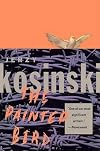
I wanted to start this by saying that this book had 'ruined' me for all future holocaust fiction. But that isn't true. To call Kosinski's novel 'The Painted Bird' "holocaust fiction/literature" is reductive and even trivializing to the point of insult to both the novel and the subject matter, like saying Pynchon's 'Gravity's Rainbow' was a world war II book or that kafka was simply writing german literature, broad statements that really say nothing and achieve nothing in being put to paper show more or label.
This novel was, still is actually (it will stay with me forever I feel and no, I don't think that's being too heavy-handed in this case) a long form narrative treatise about the ever-presence of human suffering and the basest most abhorrent aspects of the human soul and character. This ever-presence and overabundance of suffering and pain is matched by the complete and utter absence of not only god, but of order, reason, logic, certainly justice and anything equivalent to fairness or equality, with only the less than occasional moments of air in the form of human kindness in the dank and suffocating confined spaces of human life from the most claustrophobic and isolated villages to the post war industrial cities where though humanity tries, it still can't fully fathom itself let alone its surrounding world, and in failing, chooses to look away and cast off those who remind them of this somber realization.
Kosinski has given us a novel so dense in symbolic power that it can very easily be read as a parable. But in doing so I think half of the message is lost. The book needs to be seen as both a testament about a very real historical moment but as also a engraved reminder, a grim harbinger and death pale reflection of where humanity has gone and where it could very easily go again. The fact that the holocaust is a keystone element here speaks volumes, no more so than in the fact that the actual ethnicity of the nameless child is (though hinted at greatly, especially towards the end) never quite fully revealed, Jew or Gypsy. The horrific atrocities that the child goes through and the effects that these tortures have on his soul and psyche, his continuing revelations about human nature and what he, as a categorically sane individual lost in a sinking cauldron of madness, speaks to all people, everywhere. The holocaust, the time and the place of it, are the circles and symbols written into the sand and dirt. Kosinski conjures from this a story that speaks and reverberates to the music of agony and revelation.
After saying all that it might be surprising that I note that some of the language in the book is off. Meaning that some of Kosinski's word choices and techniques regarding metaphor and imagery come off as clunky, overly book like and even old fashioned and trying too hard. But this adds too, if you can believe it. This can so easily be read as one writers attempts to conceptualize the incomprehensible. Not just the holocaust, not just god's absence and the presence of evil and good intertwined. It's EVERYTHING. Kosinski appears to use his words to create a base, a rock solid foundation of understanding that will allow him to explore this world with safety, with a measure of hope and even faith.
But Kosinksi fails. And as he does the novel's power soars. Truly this is a book that takes something from the reader. It cuts into your mind and into your heart and rends your innocence and other things that there aren't words or terms for, those certain intangibles in all of our minds that we may or may not know or possibly, for some, take for granted. The lack that is felt afterwards though, upon finishing the book, is something sublime, something transcendent. show less
This novel was, still is actually (it will stay with me forever I feel and no, I don't think that's being too heavy-handed in this case) a long form narrative treatise about the ever-presence of human suffering and the basest most abhorrent aspects of the human soul and character. This ever-presence and overabundance of suffering and pain is matched by the complete and utter absence of not only god, but of order, reason, logic, certainly justice and anything equivalent to fairness or equality, with only the less than occasional moments of air in the form of human kindness in the dank and suffocating confined spaces of human life from the most claustrophobic and isolated villages to the post war industrial cities where though humanity tries, it still can't fully fathom itself let alone its surrounding world, and in failing, chooses to look away and cast off those who remind them of this somber realization.
Kosinski has given us a novel so dense in symbolic power that it can very easily be read as a parable. But in doing so I think half of the message is lost. The book needs to be seen as both a testament about a very real historical moment but as also a engraved reminder, a grim harbinger and death pale reflection of where humanity has gone and where it could very easily go again. The fact that the holocaust is a keystone element here speaks volumes, no more so than in the fact that the actual ethnicity of the nameless child is (though hinted at greatly, especially towards the end) never quite fully revealed, Jew or Gypsy. The horrific atrocities that the child goes through and the effects that these tortures have on his soul and psyche, his continuing revelations about human nature and what he, as a categorically sane individual lost in a sinking cauldron of madness, speaks to all people, everywhere. The holocaust, the time and the place of it, are the circles and symbols written into the sand and dirt. Kosinski conjures from this a story that speaks and reverberates to the music of agony and revelation.
After saying all that it might be surprising that I note that some of the language in the book is off. Meaning that some of Kosinski's word choices and techniques regarding metaphor and imagery come off as clunky, overly book like and even old fashioned and trying too hard. But this adds too, if you can believe it. This can so easily be read as one writers attempts to conceptualize the incomprehensible. Not just the holocaust, not just god's absence and the presence of evil and good intertwined. It's EVERYTHING. Kosinski appears to use his words to create a base, a rock solid foundation of understanding that will allow him to explore this world with safety, with a measure of hope and even faith.
But Kosinksi fails. And as he does the novel's power soars. Truly this is a book that takes something from the reader. It cuts into your mind and into your heart and rends your innocence and other things that there aren't words or terms for, those certain intangibles in all of our minds that we may or may not know or possibly, for some, take for granted. The lack that is felt afterwards though, upon finishing the book, is something sublime, something transcendent. show less
Lists
Gen X Library (1)
satirical (1)
Jewish Books (1)
1970s (1)
A Novel Cure (1)
Best Satire (1)
Best War Stories (1)
Awards


You May Also Like


Associated Authors
Statistics
- Works
- 32
- Also by
- 7
- Members
- 8,832
- Popularity
- #2,711
- Rating
- 3.7
- Reviews
- 189
- ISBNs
- 316
- Languages
- 20
- Favorited
- 20
