
Christiane Dorion
Author of How the World Works: A Hands-On Guide to Our Amazing Planet (Explore the Earth)
About the Author
Series
Works by Christiane Dorion
How the World Works: A Hands-On Guide to Our Amazing Planet (Explore the Earth) (2010) 102 copies, 6 reviews
Invented by Animals: Meet the creatures who inspired our everyday technology (Designed by Nature) (2021) 75 copies, 1 review
How Plants and Trees Work: A Hands-On Guide to the Natural World (Explore the Earth) (2016) 26 copies
Built by Animals: Meet the creatures who inspire our homes and cities (Designed by Nature) (2022) 17 copies, 2 reviews
Tagged
Common Knowledge
There is no Common Knowledge data for this author yet. You can help.
Members
Reviews
Built by Animals: Meet the creatures who inspire our homes and cities (Designed by Nature) by Christiane Dorion
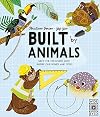
An excellent illustrated book for the 7-12 years age group who wants to see the extent of the ingenuity present in nature.
The book covers a wide variety of animal and even plants, revealing how each of them has some skills related to architecture, engineering, materials, conservations of resources, and so on. All these skills are much needed by humans and by an educated study of these animal habits and habitats, we can hopefully understand their approach and even incorporate a few in our show more lifestyle. The range of animals is vast, right from desert animals to underwater creatures to even tiny insects.
The book is 80 pages long, and each of these pages (except for a few) contains details on one specific animal/plant and a few of its important habits that we humans could learn. The content is organised into sections such as construction, materials, shapes, and so on. I liked how the content was presented from the first person perspective of the relevant animal, and in case of plants, the voice was that of an animal closely associated with that plant. This created a beautiful connect and also helped incorporate a touch of humour to the narration.
The accompanying illustrations are fabulous and show not just the animal/plant but also a detailed view of their relevant habits. Every page is completely in colour, and I am sure the physical copy would be outstanding to look at.
At the end of the book, there is a special section called “Award ceremony” where children can match the animals with a special award that they deserve for their innovative qualities. This was fun and nice way of reinforcing the learnings of the book.
Humankind has always considered itself the smartest of the species. This book shows that animals can be way smarter than us and we still have a long way to go in making the maximum use of available natural resources while causing minimal destruction to the environment.
The only complaint I have is that the text is a little cramped up. I think this is because there is a lot of content per page. Though the text is definitely easy to understand for the target age group and is sectioned into logical paragraphs, it still looks a bit cluttered on the digital copy. This might not be an issue in the physical copy.
Recommended not just to every little animal lover but to anyone who wants to see the wonders of nature. Hopefully, we learn a little humility as well by reading about these amazing animals. This would be a wonderful addition to homes, schools and libraries.
4.25 stars.
My thanks to Quarto Publishing Group – Wide Eyed Editions and NetGalley for the DRC of “Built by Animals”. This review is voluntary and contains my honest opinion about the book.
***********************
Join me on the Facebook group, Readers Forever!, for more reviews, book-related discussions and fun. show less
The book covers a wide variety of animal and even plants, revealing how each of them has some skills related to architecture, engineering, materials, conservations of resources, and so on. All these skills are much needed by humans and by an educated study of these animal habits and habitats, we can hopefully understand their approach and even incorporate a few in our show more lifestyle. The range of animals is vast, right from desert animals to underwater creatures to even tiny insects.
The book is 80 pages long, and each of these pages (except for a few) contains details on one specific animal/plant and a few of its important habits that we humans could learn. The content is organised into sections such as construction, materials, shapes, and so on. I liked how the content was presented from the first person perspective of the relevant animal, and in case of plants, the voice was that of an animal closely associated with that plant. This created a beautiful connect and also helped incorporate a touch of humour to the narration.
The accompanying illustrations are fabulous and show not just the animal/plant but also a detailed view of their relevant habits. Every page is completely in colour, and I am sure the physical copy would be outstanding to look at.
At the end of the book, there is a special section called “Award ceremony” where children can match the animals with a special award that they deserve for their innovative qualities. This was fun and nice way of reinforcing the learnings of the book.
Humankind has always considered itself the smartest of the species. This book shows that animals can be way smarter than us and we still have a long way to go in making the maximum use of available natural resources while causing minimal destruction to the environment.
The only complaint I have is that the text is a little cramped up. I think this is because there is a lot of content per page. Though the text is definitely easy to understand for the target age group and is sectioned into logical paragraphs, it still looks a bit cluttered on the digital copy. This might not be an issue in the physical copy.
Recommended not just to every little animal lover but to anyone who wants to see the wonders of nature. Hopefully, we learn a little humility as well by reading about these amazing animals. This would be a wonderful addition to homes, schools and libraries.
4.25 stars.
My thanks to Quarto Publishing Group – Wide Eyed Editions and NetGalley for the DRC of “Built by Animals”. This review is voluntary and contains my honest opinion about the book.
***********************
Join me on the Facebook group, Readers Forever!, for more reviews, book-related discussions and fun. show less
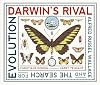
This is created by Candlewick Studio, so it's more of a browsing or coffee-table type book than something you'd recommend for research.
It's a beautifully illustrated overview of the life of Alfred Russel Wallace. He was born to a poor but educated family and, despite a brief stint as a teacher, had little formal education. As a young man he decided to explore the world and his interest in nature and traveled to South America, funding his trip by collecting specimens. Wallace discovered many show more specimens unknown to Western science and traveled across South America and parts of Asia. He persevered through shipwrecks and despite financial instability and his observation of natural history gradually brought him to the attention of Charles Darwin.
Correspondence between the two, as well as Royal scientific associations, ended in both of them coming up with the theory of evolution roughly at the same time. And yet, it is Darwin's name we remember and not Wallace's. At the time the theory was published, Wallace was abroad in the Malay Archipelago. It was his letter suggesting the theory that encouraged Darwin to complete and publish his own research, recognizing both men. However, Wallace was also a humble and diffident man and was pleased that Darwin agreed with his own conclusions and found his writing skills better than his own.
Wallace returned to England at the age of 39 and, despite continued recognition in the scientific community, struggled to support himself and eventually his family. However, he received many awards and was a famous scientist in his day, living to the age of 90.
This is not an in-depth exploration of the theory of evolution or even of Wallace's life. It's an overview, showing highlights from his work, with Tennant's digital illustrations giving a feel of the countries he visited and the creatures he found, rather than detailed scientific drawings. The colors are primarily green and earth-colors, showing broad landscapes. There are brief mentions of the local inhabitants, and Wallace's attitude towards them, as well as some acknowledgement that the "discoveries" made were new only to Western science. The layout of the book is oversized, 11"x13" and there is a brief glossary and a few sources in the back.
Verdict: This is more of a gift for a budding scientist than something a library would normally purchase. I enjoyed reading it, but I love stories of early scientists and naturalists and I realize this is a somewhat niche interest. Still, if you do have a strong reader who is interested in this time period, they may enjoy this volume and it is a lovely book. I hope to interest some readers in my library in perusing its pages.
ISBN: 9781536209327; Published March 2020 by Candlewick Studio; Review copy provided by publisher; Donated to the library show less
It's a beautifully illustrated overview of the life of Alfred Russel Wallace. He was born to a poor but educated family and, despite a brief stint as a teacher, had little formal education. As a young man he decided to explore the world and his interest in nature and traveled to South America, funding his trip by collecting specimens. Wallace discovered many show more specimens unknown to Western science and traveled across South America and parts of Asia. He persevered through shipwrecks and despite financial instability and his observation of natural history gradually brought him to the attention of Charles Darwin.
Correspondence between the two, as well as Royal scientific associations, ended in both of them coming up with the theory of evolution roughly at the same time. And yet, it is Darwin's name we remember and not Wallace's. At the time the theory was published, Wallace was abroad in the Malay Archipelago. It was his letter suggesting the theory that encouraged Darwin to complete and publish his own research, recognizing both men. However, Wallace was also a humble and diffident man and was pleased that Darwin agreed with his own conclusions and found his writing skills better than his own.
Wallace returned to England at the age of 39 and, despite continued recognition in the scientific community, struggled to support himself and eventually his family. However, he received many awards and was a famous scientist in his day, living to the age of 90.
This is not an in-depth exploration of the theory of evolution or even of Wallace's life. It's an overview, showing highlights from his work, with Tennant's digital illustrations giving a feel of the countries he visited and the creatures he found, rather than detailed scientific drawings. The colors are primarily green and earth-colors, showing broad landscapes. There are brief mentions of the local inhabitants, and Wallace's attitude towards them, as well as some acknowledgement that the "discoveries" made were new only to Western science. The layout of the book is oversized, 11"x13" and there is a brief glossary and a few sources in the back.
Verdict: This is more of a gift for a budding scientist than something a library would normally purchase. I enjoyed reading it, but I love stories of early scientists and naturalists and I realize this is a somewhat niche interest. Still, if you do have a strong reader who is interested in this time period, they may enjoy this volume and it is a lovely book. I hope to interest some readers in my library in perusing its pages.
ISBN: 9781536209327; Published March 2020 by Candlewick Studio; Review copy provided by publisher; Donated to the library show less
Really nice book, lovely embossed cover, large format with excellent illustrations, some covering both pages. Good subject; Alfred Russel Wallace should get more attention as he is just as interesting as Charles Darwin. However, the editors at Candlewick were napping, and they don't know what some words mean. In particular, the "relentless" efforts to put out the fire aboard Wallace's ship were anything but; maybe the author and editors confused "relentless" with "futile"? Oh well.
I am glad this was written. I always love learning about the secondary characters, the less-famous events, etc. For example the spread about the Rio Negro wants me to learn more about that alternative to the Amazon, just as this is about an alternative to Darwin. After all, the most famous is almost never the only....
However, I am not keen on the design. It's oversize, for no reason that I can tell. The art isn't much of an improvement on the sepia pictures which, I assume, were inspiration. show more In fact, I wish more primary photos and documents and paintings were shown in picture-book non-fiction. Kids need to learn the value of primary research at some point anyway, why not give them a clue when they're young?
Not to say this is for little kids. I'm guessing age 10 might be the youngest to appreciate it independently?
I hope someone else does something better for children sooner rather than later. Meanwhile, as this is not a bad book, and is very important, I do recommend it to all educators and their children/students. show less
However, I am not keen on the design. It's oversize, for no reason that I can tell. The art isn't much of an improvement on the sepia pictures which, I assume, were inspiration. show more In fact, I wish more primary photos and documents and paintings were shown in picture-book non-fiction. Kids need to learn the value of primary research at some point anyway, why not give them a clue when they're young?
Not to say this is for little kids. I'm guessing age 10 might be the youngest to appreciate it independently?
I hope someone else does something better for children sooner rather than later. Meanwhile, as this is not a bad book, and is very important, I do recommend it to all educators and their children/students. show less
Lists
Youth: Zoology (1)
Awards


You May Also Like


Associated Authors
Statistics
- Works
- 22
- Members
- 445
- Popularity
- #55,081
- Rating
- 4.3
- Reviews
- 17
- ISBNs
- 68
- Languages
- 8