
Uwem Akpan
Author of Say You're One of Them
About the Author
Uwem Akpan (1971) is a Nigerian Jesuit priest and the author of Say You¿re One of Them (2008), a collection of five stories (each set in a different African country) published by Little, Brown & Company. It was picked by the Oprah Winfrey Book Club on September 17, 2009. He was born in the show more southern Nigerian village of Ikot Akpan Eda; his parents were teachers. He and his three brothers grew up speaking both English and Annang. He joined the Jesuit order at 19 in 1990 and became a priest in 2003; he later earned an M.F.A. degree in creative writing at the University of Michigan. He has also studied theology at Creighton University. (Bowker Author Biography) show less
Works by Uwem Akpan
Associated Works
Jambula Tree and other stories: The Caine Prize for African Writing 8th Annual Collection (2008) — Contributor — 15 copies
Tagged
Common Knowledge
- Birthdate
- 1970-05-19
- Gender
- male
- Education
- University of Michigan
Creighton University
Gonzaga University - Occupations
- Jesuit priest
writer - Organizations
- Society of Jesus
- Nationality
- Nigeria
- Birthplace
- Ikot Akpan Eda, Nigeria
- Places of residence
- Nigeria
USA - Associated Place (for map)
- Ikot Akpan Eda, Nigeria
Members
Reviews
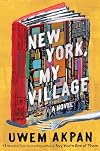
Ekong Udousoro is attempting to curate stories about the Biafra War. He winds up landing a fellowship to work alongside an American publisher in Manhattan where he attends meetings and works amongst others reviewing possible future contracts.
New York, My Village seamlessly shifts between Ekong’s life in the present day to accounts of the war from his collection of stories and from his friends and family. It'd be nice to say that there were no similarities to be drawn between past and show more present but that simply isn't the case. We watch rampant racism happening amongst the well educated colleagues at the publishing house, which is the one place you would expect such a topic to be a non-issue. If racism is happening between members of a higher academic standing, what does that mean for every other place one has to go throughout their daily life.
Between the strong fluent prose and the metaphors woven through the story there is so much to gain from reading this book. Uwem Akpan has managed to write a book that you want to read, even while it's making you uncomfortable, and its a book that stays with you a makes you think, hopefully inspiring the reader to outrage and action to help society evolve past the hateful and wrong attitudes of too many of its members.
I cannot recommend this book enough. There is some potential for this book to go far and make a splash in our literary world and our hearts given enough people pick it up. It will certainly be worth your time.
Thank you to netgalley and publisher for an advance e-copy for my honest review. All opinions expressed here are my genuine reactions to reading this book. show less
New York, My Village seamlessly shifts between Ekong’s life in the present day to accounts of the war from his collection of stories and from his friends and family. It'd be nice to say that there were no similarities to be drawn between past and show more present but that simply isn't the case. We watch rampant racism happening amongst the well educated colleagues at the publishing house, which is the one place you would expect such a topic to be a non-issue. If racism is happening between members of a higher academic standing, what does that mean for every other place one has to go throughout their daily life.
Between the strong fluent prose and the metaphors woven through the story there is so much to gain from reading this book. Uwem Akpan has managed to write a book that you want to read, even while it's making you uncomfortable, and its a book that stays with you a makes you think, hopefully inspiring the reader to outrage and action to help society evolve past the hateful and wrong attitudes of too many of its members.
I cannot recommend this book enough. There is some potential for this book to go far and make a splash in our literary world and our hearts given enough people pick it up. It will certainly be worth your time.
Thank you to netgalley and publisher for an advance e-copy for my honest review. All opinions expressed here are my genuine reactions to reading this book. show less

Although I don't often read short stories, the spine of this book caught my eye, and I'm glad it did. Uwem Akpan is a Jesuit priest from Nigeria who was educated in Kenya and the US. He says he wanted to write "a book about how children are faring in these endless conflicts in Africa. The world is not looking. I think fiction allows us to sit for a while with people we would rather not meet...I want their voices heard, their faces seen" (from an interview in The New Yorker quoted in the show more after matter). The result is a collection of five stories narrated by children who are trying to make sense of a violent world without the help of adults and often at the mercy of them.
In An Ex-mas Feast Jigana is waiting in a leaky shanty in Kenya for his twelve-year-old sister, Maisha, to return. She is a prostitute and the only reliable income for the family. Sniffing glue to stave off the pangs of hunger, Jigana argues with his parents that he would rather give up going to school than have Maisha move to a brothel to earn the school fees.
Fattening for Gabon is the story of ten-year-old Kotchikpa and his five-year-old sister Yewa. They are being raised by their uncle because their parents have aids. In an attempt to increase his fortunes, Uncle Fofo trades his wards for a motorcycle that he can use to illegally ferry more people across the Benin-Nigeria border. He is instructed to teach the children certain things in preparation for their journey to Gabon.
In What Language is That? a younger sibling talks about the relationship between two little girls who live across the street from one another in Ethiopia. They are best friends until sectarian violence breaks out, and their parents forbid them to speak to one another.
In Luxurious Hearses sixteen-year-old Jubril boards a bus of refugees bound for southern Nigeria. Ethnic cleansing has swept through the north, and despite considering himself a conservative Muslim, one who has willingly submitted to Sharia law, he is targeted by his friends for having Christian relatives. The bus is a microcosm of society as a whole and conflict between religions, genders roles, politics, civilian/military, and age consumes the passengers.
The last story, My Parents' Bedroom is the shortest but most devastating. Nine-year-old Monique is from a blended family. Her mother is Tutsi and her father is Hutu. One night she is told to watch her younger brother and to not open the door for anyone.
Despite their horrific nature, each story contains a moment of grace: an act of kindness that, although unable to mitigate the present, offers a glimmer of hope for the future. Sometimes a child can be saved, sometimes a person of one religion will protect a person of another religion, sometimes an adult is a safe person. But not often. And there are always consequences.
These stories are well-written and, with the exception of Luxurious Hearses which drags a bit, page-turners. I can't say I enjoyed reading this collection, but I am glad I read it. show less
In An Ex-mas Feast Jigana is waiting in a leaky shanty in Kenya for his twelve-year-old sister, Maisha, to return. She is a prostitute and the only reliable income for the family. Sniffing glue to stave off the pangs of hunger, Jigana argues with his parents that he would rather give up going to school than have Maisha move to a brothel to earn the school fees.
Fattening for Gabon is the story of ten-year-old Kotchikpa and his five-year-old sister Yewa. They are being raised by their uncle because their parents have aids. In an attempt to increase his fortunes, Uncle Fofo trades his wards for a motorcycle that he can use to illegally ferry more people across the Benin-Nigeria border. He is instructed to teach the children certain things in preparation for their journey to Gabon.
In What Language is That? a younger sibling talks about the relationship between two little girls who live across the street from one another in Ethiopia. They are best friends until sectarian violence breaks out, and their parents forbid them to speak to one another.
In Luxurious Hearses sixteen-year-old Jubril boards a bus of refugees bound for southern Nigeria. Ethnic cleansing has swept through the north, and despite considering himself a conservative Muslim, one who has willingly submitted to Sharia law, he is targeted by his friends for having Christian relatives. The bus is a microcosm of society as a whole and conflict between religions, genders roles, politics, civilian/military, and age consumes the passengers.
The last story, My Parents' Bedroom is the shortest but most devastating. Nine-year-old Monique is from a blended family. Her mother is Tutsi and her father is Hutu. One night she is told to watch her younger brother and to not open the door for anyone.
Despite their horrific nature, each story contains a moment of grace: an act of kindness that, although unable to mitigate the present, offers a glimmer of hope for the future. Sometimes a child can be saved, sometimes a person of one religion will protect a person of another religion, sometimes an adult is a safe person. But not often. And there are always consequences.
These stories are well-written and, with the exception of Luxurious Hearses which drags a bit, page-turners. I can't say I enjoyed reading this collection, but I am glad I read it. show less
Each one of these stories is a dagger through the heart. The stories in this collection are all seen through the eyes of children, and each story illuminates in gripping and heartbreaking detail and intensity the violence, strife and economic struggles to be found throughout Africa. Each story takes place in a different country, and through the eyes of the child protagonists, we are taken into the heart of poverty, child slavery and cold-blooded inter-tribal and inter-religion slaughter. The show more writing is stunning, bringing each character and each tragic situation fully alive in all its inhuman, but also human, intensity. This is a very rough book, but, I think, an essential one. Highest possible rating. show less
If you are looking for a book that will restore your faith in humanity and your hope for a brighter future for mankind, this is not the book you are looking for. The stories in this collection show kids in horrible situations, victims of the various evils their communities create for them, including extreme poverty, child trafficking, sexual molestation, murder, and genocidal violence. While the stories are fiction, they are based on real life, and bring to life several horrible events in show more recent African history that are often reduced to less unpleasant, safer narratives in news reports and history books. Kids all over the world are subjected to similar evils, so not only do these stories make the horrific conditions in parts of Africa disturbingly real, but they also show what kids closer to home are going through, from their own perspectives. Reading this book may not inspire readers to like humanity more, but it may lead to some rather fruitful discussions about what we are doing to ourselves and how we can make things better. show less
Lists
Awards


You May Also Like


Associated Authors
Statistics
- Works
- 4
- Also by
- 2
- Members
- 2,550
- Popularity
- #10,069
- Rating
- 3.6
- Reviews
- 77
- ISBNs
- 37
- Languages
- 9
- Favorited
- 1