
Tony Perrottet
Author of Pagan Holiday: On the Trail of Ancient Roman Tourists
About the Author
Works by Tony Perrottet
The Sinner's Grand Tour: A Journey Through the Historical Underbelly of Europe (2011) 140 copies, 8 reviews
Cuba Libre! Che, Fidel, and the Improbable Revolution That Changed World History (2019) 78 copies, 3 reviews
The Invisible Islands 1 copy
Associated Works
Tagged
Common Knowledge
- Birthdate
- 1961-10-24
- Gender
- male
- Education
- University of Sydney (BA - History)
- Occupations
- journalist
- Agent
- Henry Dunow
- Short biography
- New York–based author Tony Perrottet has written extensively about the history of travel. He is the author of five books, including Pagan Holiday: On the Trail of Ancient Roman Tourists; Napoleon’s Privates: 2,500 Years of History Unzipped; and The Sinner’s Grand Tour: A Journey Through the Historical Underbelly of Europe, which began as an award-winning series for the online magazine Slate. A contributing writer at Smithsonian magazine, he also writes regularly for The New York Times, Condé Nast Traveler, and the London Sunday Times. His work has been translated into 10 languages and selected for the Best American Travel Writing series four times. He has used the collections of The New York Public Library for many years and been a writer in residence in both of the Library’s research study rooms, the Allen Room and the Wertheim Study.
http://exhibitions.nypl.org/biblion/o... - Nationality
- Australia
- Places of residence
- New York, New York, USA
- Associated Place (for map)
- New York, New York, USA
Members
Reviews
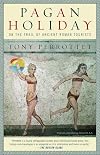
I don't know which is more entertaining: Perrottet's humor or his descriptions of traveling around ancient Rome and Naples. His denial about his wife's pregnancy was funny ("...avoiding our impending parenthood situation" (p 127) as he called it. He certainly went to great lengths to see ancient Italy as a tourist would. Diving to see the lost town of Baiae with its spas, village, and lighthouse was interesting. Visiting the ancient hook-up spots and gladiator arenas. Imagining ancient day show more Ubers with stables for renting mule-pulled wagons. One's status dictated how many mules pulled a customer around and whether or not he or she had a mule driver. Speaking of driving - what about chariot road rage as compared to modern day six lane highway antics? Or imagine soliciting a prostitute at their "office" better known as the local cemetery. Perrottet also visited Greece and Turkey hauling along his increasingly pregnant wife. Learning the sex of the child while on their journey brought them both one step closer to the reality of becoming parents, but it didn't stop Perrottet from seeking out lost cities and crawling around pyramids. show less
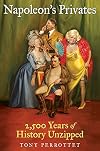
“Napoleon’s Privates” is the type of history book that I lap up. While I’m sure it’s useful to know of important wars and treaties, I much prefer to know about the famous eighteenth century French cross-dresser Chevalier D’Eon, or that Nostradamus wrote a book on making conserves or that smut was (as claimed by the author) invented in 1819. And, it’s always pleasing to read more on Hitler’s testicle(s).
“Napoleon’s Privates” dips into history’s odd and scandalous show more moments, and means that we don’t have to trawl through otherwise dry biographies or history books to find out when, for example, the first “blue” movie was made or what “the semen of Hercules” was (squeezed mustard-rocket leaf apparently). For this, I am eternally thankful to Mr Perrottet. show less
“Napoleon’s Privates” dips into history’s odd and scandalous show more moments, and means that we don’t have to trawl through otherwise dry biographies or history books to find out when, for example, the first “blue” movie was made or what “the semen of Hercules” was (squeezed mustard-rocket leaf apparently). For this, I am eternally thankful to Mr Perrottet. show less
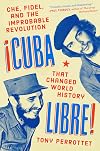
I knew Fidel and Che as Cold War cliche icons but almost nothing about the Cuban Revolution itself. Perrottet sets out to retell that story afresh by putting aside the animosity between the US and Cuba with a straight up "this is what happened" retelling without presuming to know what would transpire in the years after the revolution. The story is way better than I imagined. There is a literary quality to it as Fidel and his group were college educated urbane middle-class romantics, they show more were reading books by Emile Zola, Edward Gibbon and Cervantes while building tree forts in the jungle. How they went from 20 unlikely guys (and a few women) in the remotest mountains who forgot to bring shaving razors, to conquering the island and the attention of the world is the stuff of legend. It is a wonderfully fun and upbeat story. Communism doesn't even enter the story until after the revolution. There are clear good and bad guys, overcoming improbable odds, fame and fortune, humor and drama set in an exotic land of pristine jungle mountains, mafioso casinos, coffee farmers, feudal landlords, and a cast of colorful people. What a delightful way to learn about Cuba as everything comes back this moment and nothing afterwards can be understood without it. show less
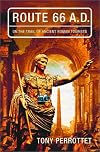
This turned out to be a combination of modern and ancient travelogue. Perrottet stumbled across and account of Marcus Aggrippa's huge map of the ancient world on which all the great tourist sites of the ancients were laid out and he was fascinated. He started looking at the ancient accounts of travelers from the Roman world, in particular the travel account written by Pausanias. It is the only ancient guidebook that has survived to the present day.
At first the author and his wife intended to show more follow Pausanias's route through Greece and end their trip with that. They started out in Rome and then traveled to all the major tourist sites in Greece that were mentioned in Pausanias. Of course, that led them to Turkey and the Greek cities of Ephesus, Pergamum, and Symrna. Once there it was on to Troy and from there the trail led to the greatest of all Roman holiday trips - Egypt. The last third of the book was about the Roman fascination with Egypt and how wrong the Romans got the history and religion of Egypt. It turns out that the Romans were fascinated by the funerary customs of Egypt along with their mummification rites. They were also enthralled with the worship of Sobek - the crocodile god. The Egyptians had created an entire city devoted to this cult in the Faiyum Oasis. The city was named Crocodilopolis and was one of the must see's on the Roman tourist list for Egypt. The author says that the Egyptian priests had developed tourist spectacle to rival those found in Las Vegas hotels. His description of the place made it seem to be an impossibility - but it wasn't.
The author states clearly at the end of the book that this work was not intended to be a scholarly account. Nevertheless he takes great pains to quote from Roman and Greek authors from the Pax Romana and his has an extensive timeline and source list. He also has a glossary of Who's Who at the end of the book.
This was not the more scholarly type of travel book that I was expecting. It is a rather light hearted take on ancient tourism and what is left of those sites for the modern traveler. Some of the places are changed beyond recognition and some are simply not there anymore due to the active geology of the Mediterranean and the desertification of parts of Egypt. show less
At first the author and his wife intended to show more follow Pausanias's route through Greece and end their trip with that. They started out in Rome and then traveled to all the major tourist sites in Greece that were mentioned in Pausanias. Of course, that led them to Turkey and the Greek cities of Ephesus, Pergamum, and Symrna. Once there it was on to Troy and from there the trail led to the greatest of all Roman holiday trips - Egypt. The last third of the book was about the Roman fascination with Egypt and how wrong the Romans got the history and religion of Egypt. It turns out that the Romans were fascinated by the funerary customs of Egypt along with their mummification rites. They were also enthralled with the worship of Sobek - the crocodile god. The Egyptians had created an entire city devoted to this cult in the Faiyum Oasis. The city was named Crocodilopolis and was one of the must see's on the Roman tourist list for Egypt. The author says that the Egyptian priests had developed tourist spectacle to rival those found in Las Vegas hotels. His description of the place made it seem to be an impossibility - but it wasn't.
The author states clearly at the end of the book that this work was not intended to be a scholarly account. Nevertheless he takes great pains to quote from Roman and Greek authors from the Pax Romana and his has an extensive timeline and source list. He also has a glossary of Who's Who at the end of the book.
This was not the more scholarly type of travel book that I was expecting. It is a rather light hearted take on ancient tourism and what is left of those sites for the modern traveler. Some of the places are changed beyond recognition and some are simply not there anymore due to the active geology of the Mediterranean and the desertification of parts of Egypt. show less
Lists
Awards

You May Also Like


Associated Authors
Statistics
- Works
- 17
- Also by
- 7
- Members
- 1,244
- Popularity
- #20,622
- Rating
- 3.7
- Reviews
- 41
- ISBNs
- 36
- Languages
- 6

