
Niccolò Ammaniti
Author of I'm Not Scared
About the Author
Image credit: (c) Greenpeace
Works by Niccolò Ammaniti
Il custode (Italian Edition) 6 copies
Il libro italiano dei morti 6 copies
Il custode 6 copies
Il custode (Italian Edition) 2 copies
Carta e ferro (in Fango) 1 copy
Il custode 1 copy
Rispetto (in Fango) 1 copy
Lo zoologo (in Fango) 1 copy
Il custode 1 copy
Bagno 1 copy
Zverinjak 1 copy
Associated Works
Reader's Digest Condensed Books: The Janson Directive • Winter's End • The House Sitter • I'm Not Scared (2003) 10 copies
Livros Condensados: O Macaco de Pedra | Um Passo de Dança | Eu Não tenho Medo | Melodia do Coração (2004) — Author — 5 copies
Det Bästas Bokval (2004) vol 234: Stenapan; Par och piruetter; Hinder i vägen; Jag är inte rädd — Author — 2 copies
Kirjavaliot - Tokion varjot, Kuikan huuto, Minä en pelkää, Keskellä kylmää talvea (2003) — Contributor — 1 copy
Tagged
Common Knowledge
- Canonical name
- Ammaniti, Niccolò
- Birthdate
- 1966-09-25
- Gender
- male
- Occupations
- screenwriter
writer - Awards and honors
- Premio Viareggio (2001)
Premio Strega (2007)
Premio Dessì (2011) - Nationality
- Italy
- Birthplace
- Rome, Italy
- Places of residence
- Rome, Italy
- Associated Place (for map)
- Rome, Italy
Members
Reviews

I’m Not Scared by Niccolo Ammaniti is a coming of age story, a suspense-thriller and a tale of shattered innocence. I was drawn into this story immediately by first the setting, the hot dry summer of 1978 rural Italy, and then the story of a group of children wandering the countryside on a hot afternoon who discover a deserted farmhouse. One of these children, nine year old Michele, uncovers a secret so immense, it is beyond his immediate comprehension.
The author has captured the actions show more and thoughts of a child who has stumbled into a dangerous adult situation that he doesn’t understand. Throughout the book, the child’s confusion, his not being able to separate the fantasy from the truth, keeps the reader on edge. As the boy learns more about the situation and how the adults around him react, he realizes that he can longer ignore the facts and he needs to act immediately placing himself in extreme danger.
I’m Not Scared had all the elements that I enjoy in a book. The story unfolds at a fast pace and builds to an exciting climax. Although a short book, the author supplies some beautiful descriptions and the story never felt particularly rushed. His portrayal of a nine year old’s inner thoughts felt absolutely authentic, and reading of innocence lost with no expectation of redemption made this a very dark read that I devoured as well as introducing me to an author that I fully intend to read more of. show less
The author has captured the actions show more and thoughts of a child who has stumbled into a dangerous adult situation that he doesn’t understand. Throughout the book, the child’s confusion, his not being able to separate the fantasy from the truth, keeps the reader on edge. As the boy learns more about the situation and how the adults around him react, he realizes that he can longer ignore the facts and he needs to act immediately placing himself in extreme danger.
I’m Not Scared had all the elements that I enjoy in a book. The story unfolds at a fast pace and builds to an exciting climax. Although a short book, the author supplies some beautiful descriptions and the story never felt particularly rushed. His portrayal of a nine year old’s inner thoughts felt absolutely authentic, and reading of innocence lost with no expectation of redemption made this a very dark read that I devoured as well as introducing me to an author that I fully intend to read more of. show less
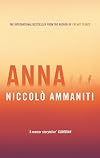
The post-apocalyptic novel—always a compelling and popular subgenre—has gained traction in recent years as the movie industry cashes in with depictions of dystopian realms where everything has gone wrong. Niccolò Ammaniti’s 2015 novel Anna (published in English translation in 2017) presents a disturbingly prescient story of a sister and brother navigating the perils of a world ravaged by a virus that has killed everyone over age fourteen, and which will claim their lives too once they show more pass through puberty and experience hormonal changes that render them vulnerable to the scourge. As the novel begins, it’s been four years since the Red Virus emerged. Widespread looting and destructive wildfires have scorched urban and rural landscapes. Electricity and running water are distant memories. All remnants of civil society have crumbled. On the island of Sicily, Anna Salemi, 13, and her younger brother Astor are living on their own in the family home on Mulberry Farm. Having exhausted the food left behind by their parents, they are surviving on the spoils of Anna’s forays into nearby dwellings and deserted shops, where she scavenges whatever is available, mostly tinned milk and vegetables, and packaged sweets. But their relatively placid way of life is rudely and violently interrupted when, while Anna is out foraging, a band of marauding children invades the homestead, vandalizes the place and abducts Astor. Anna’s search for her brother forces her to abandon her comfort zone and venture into the untamed countryside, where chaos reigns and anything can happen. Along the way she picks up a couple of allies: a boy named Pietro—slightly older than Anna, Pietro believes a specific style of Adidas sneakers will make him immune to the virus—and a huge shaggy sheepdog she names Fluffy. After a grotesquely apocalyptic scene in which she rescues Astor from a bizarre cult that has enslaved him, the four venture north and find refuge in the port of Cefalú before making their way east to Messina, where Anna has decided they must cross the Strait to the mainland, chasing rumours of a cure. Along with the highly visual and detailed prose, what distinguishes Ammaniti’s novel is the persuasively rendered psychology of his cast of juvenile characters. Astor acts like a boy on vacation—he’s young enough to have little memory of life before the virus, so for him all of this is “normal.” Anna and Pietro, in full knowledge of the dangers they face and the certainty they will die in agony in their mid-teens, find time for frivolity. In Anna’s wrecked world cruelty abounds, life is cheap, and death’s leavings are part of the scenery. The novel may be bleak and violent, but it offers hope every time we see how tenaciously Anna clings to her meagre existence and truncated future. In Anna, Niccolò Ammaniti offers an engaging analysis of human behaviour in a time of anarchy. Not for the faint of heart. show less
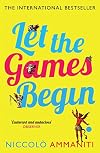
Reading Ammaniti is always a treat and this book was a really good time. A washed-up writer and a group of half-assed Satanists attend a bacchanalia thrown by a mafioso; toss in a pop singer with a heart of gold, a group of feral Russian Olympians and a zoo's worth of wild animals and buckle up. I kind of loved this strange, funny, sad book.

Lord Of The Flies writ large. An apocalypse brought on by an incurable virus has swept the world, leaving only pre-prepubescent children unharmed. Anna and her younger brother have survived four years since the virus came and their mother died. Anna was 9, her brother Astor 5. Isolated in an old farmhouse they have managed to survive by dint of Anna's scrounging for food and by following their Mother's advice, written down in an old exercise book as she lay dying.
Circumstances force them to show more flee their sanctuary and venture out into the wild. Gangs of children roam the countryside searching for food and an answer to the virus. There is no subtlety in the quest for survival, the week tag after the strong, the strong take what they want.
With occasional flashbacks to fill in their backstory we begin to have an idea of who Anna and Astor are. Anna is driven to uphold the promise made to her mother to look after Astor. Every minute, let alone every day, is filled with the challenge to keep them both alive and to teach Astor how to look after himself. Anna has to grow up fast.
Ammaniti cleverly captures the mixture of Anna's childish innocence mixed with worldly ennui as she battles the daily issues of finding food, water and medicines. Narrated through Anna's POV rather than an all seeing wise narrator her problems are those of a child as are her solutions.
It makes you wonder, what would you do? A frightening scenario. show less
Circumstances force them to show more flee their sanctuary and venture out into the wild. Gangs of children roam the countryside searching for food and an answer to the virus. There is no subtlety in the quest for survival, the week tag after the strong, the strong take what they want.
With occasional flashbacks to fill in their backstory we begin to have an idea of who Anna and Astor are. Anna is driven to uphold the promise made to her mother to look after Astor. Every minute, let alone every day, is filled with the challenge to keep them both alive and to teach Astor how to look after himself. Anna has to grow up fast.
Ammaniti cleverly captures the mixture of Anna's childish innocence mixed with worldly ennui as she battles the daily issues of finding food, water and medicines. Narrated through Anna's POV rather than an all seeing wise narrator her problems are those of a child as are her solutions.
It makes you wonder, what would you do? A frightening scenario. show less
Lists
Awards


You May Also Like


Associated Authors
Statistics
- Works
- 42
- Also by
- 7
- Members
- 6,863
- Popularity
- #3,564
- Rating
- 3.6
- Reviews
- 274
- ISBNs
- 361
- Languages
- 26
- Favorited
- 17