
Dr. Seuss (1904–1991)
Author of Green Eggs and Ham
About the Author
Theodor Seuss Geisel was born in Springfield, Massachusetts on March 2, 1904. He wrote and illustrated more than 45 picture books under the pseudonym Dr. Seuss. His first picture book, And to Think That I Saw It on Mulberry Street, was published in 1937. His other books included The Cat in the Hat, show more The Butter-Battle Book, The Lorax, The Bippolo Seed and Other Lost Stories, Fox in Socks: Dr. Seuss's Book of Tongue Tanglers, What Pet Should I Get?, and Oh, the Places You'll Go. In 1984, he received a Pulitzer Prize for his contributions to children's literature. He died of oral cancer on September 24, 1991 at the age of 87. (Bowker Author Biography) show less
Image credit: Dr. Seuss en 1957
Series
Works by Dr. Seuss
Mr. Brown Can Moo! Can You?: Dr. Seuss's Book of Wonderful Noises (Bright and Early Board Books) (1996) 6,319 copies, 55 reviews
The Foot Book: Dr. Seuss's Wacky Book of Opposites {abridged board book} (1996) 5,705 copies, 65 reviews
Dr. Seuss's ABC: An Amazing Alphabet Book! (Bright & Early Board Books) (1996) 5,024 copies, 136 reviews
Maybe You Should Fly a Jet! Maybe You Should Be a Vet! (Beginner Books) (1980) 1,361 copies, 6 reviews
Seuss-isms! A Guide to Life for Those Just Starting Out...and Those Already on Their Way (2015) 767 copies, 10 reviews
Seuss-isms: Wise and Witty Prescriptions for Living from the Good Doctor (1997) 624 copies, 3 reviews
Dr. Seuss' How the Grinch Stole Christmas [1966 TV movie] (1966) — Screenwriter — 461 copies, 3 reviews
Dr. Seuss's Beginner Book Collection (Cat in the Hat, One Fish Two Fish, Green Eggs and Ham, Hop on Pop, Fox in Socks) (2009) 413 copies, 7 reviews
Dr. Seuss's ABC: An Amazing Alphabet Book! (Big Bright & Early Board Book) (2014) 245 copies, 1 review
Dr. Seuss' How the Grinch Stole Christmas [1966] / Horton Hears a Who! [1970 TV movie] (1997) — Screenwriter — 180 copies, 1 review
Dr. Seuss from Then to Now: A Catalogue of the Retrospective Exhibition (1986) — Author — 163 copies, 3 reviews
I Am Not Going to Read Any Words Today!: Learn About Rhyming Words (Beginner Fun Books) (1995) 119 copies
How the Grinch Stole Christmas - Anniversary Edition: A 50th Anniversary Retrospective (2007) 116 copies
The Little Blue Box of Bright and Early Board Books by Dr. Seuss (Bright & Early Board Books(TM)) (2012) 111 copies
Seuss-isms for Success: Insider Tips on Economic Health from the Good Doctor (1999) 106 copies, 1 review
Dr. Seuss's ABC / I Can Read With My Eyes Shut! / Mr. Brown Can Moo! Can You? [1989 film] (1989) — Writer — 100 copies
Dr. Seuss's Book of Bedtime Stories [Dr. Seuss's sleep book/Thidwick the big-hearted moose/Horton hears a who!] (1998) 66 copies, 1 review
Theodor Seuss Geisel: The Early Works, Vol. 1 (The Early Works of Dr. Seuss) (2005) 63 copies, 2 reviews
Reading is Fun With Dr. Seuss [Hop on pop/I can read/Marvin K. Mooney/Oh, the thinks] (1999) 50 copies
Dr. Seuss's 'Tis the Season: A Holiday Celebration: A Christmas Gift Book (Dr. Seuss's Gift Books) (2019) 42 copies, 1 review
Dr. Seuss's Thing One, Thing Two and the Leprechaun (Dr. Seuss's Things Board Books) (2022) 40 copies
The Pocket Book of Boners: An Omnibus of School Boy Howlers and Unconcious Humor (1943) — Illustrator — 32 copies, 1 review
Green Eggs and Ham and Other Stories [Too many Daves/The big brag/What was I scared of?] (2001) 26 copies
Just What the Doctor Disordered: Early Writings and Cartoons of Dr. Seuss (Dover Fine Art, History of Art) (2012) 25 copies
Did I Ever Tell You How High You Can Count?: Learn About Counting Beyond 100 (Dr. Seuss Beginner Fun Books) (1996) 24 copies
Dr. Seuss's Horton Collection Boxed set (Horton Hears a Who and Horton Hatches the Egg) (2008) 22 copies
Dr. Seuss's Thank You for Being Green: And Speaking for the Trees (Dr. Seuss's Gift Books) (2021) 22 copies
Wet Foot, Dry Foot, Low Foot, High Foot: Learn About Opposites (Beginner Fun Books) (1996) 21 copies
One Fish Two Fish Red Fish Blue Fish / Oh, the Thinks You Can Think! / The Foot Book [1989 film] (1989) — Writer — 20 copies
Dr. Seuss's Ultimate Beginning Reader Collection: With 16 Beginner Books and Bright & Early Books (Beginner Books(R)) (2022) 17 copies
How the Grinch Stole Christmas and Other Gifts from Dr. Seuss (11 titles) (2008) 16 copies, 2 reviews
Dr. Seuss Libro de animales (Dr. Seuss's Book of Animals Spanish Edition) (Bright & Early Books(R)) (2020) 14 copies
And to Think that I Saw It on Mulberry Street Coloring & Activity Book: Special 60th Anniversary Edition (Coloring Book) (1997) 12 copies
The Cat in the Hat Comes Back / There's a Wocket in My Pocket! / Fox in Socks [1989 film] (1989) — Writer — 10 copies
How the Grinch Stole Christmas! Grinch and Bear It: Life According to the Supreme Green Meanie (2000) 9 copies
Time to Read with Dr. Seuss [ One fish, two fish/Mulberry Street/Oh the places you'll go] (2006) 9 copies
Seven Promises of a Promise Keeper 7 copies
El gran libro de Beginner Books en español de Dr. Seuss (The Big Book of Beginner Books by Dr. Seuss) (Beginner Books(R)) (Spanish Edition) (2024) 6 copies
Hop on Pop / Marvin K. Mooney Will You Please Go Now! / Oh Say Can You Say? [1989 film] (1989) — Writer — 5 copies
Dr. Seuss Presents Green Eggs & Ham 5 copies
Dr. Seuss's Oh, the Places You'll Go! with 12 Silly Sounds!: An Interactive Read and Listen Book (Dr. Seuss Sound Board Books) (2025) 5 copies
Dr. Seuss Wipe-Clean Workbook: Learning Fun: Activity Workbook for Ages 3-5 (Dr. Seuss Workbooks) (2022) 5 copies
Dr. Seuss's Hop On Pop with 12 Silly Sounds!: An Interactive Read and Listen Book (Dr. Seuss Sound Books) (2025) 5 copies
Dr.Seuss' "The Cat in the Hat": Junior Novelization (Dr Seuss' "The Cat in the Hat") (2004) 5 copies
The Cat in the Hat Comes Back 4 copies
The Grinch Two-Book Boxed Set: Dr. Seuss's How the Grinch Stole Christmas! Full-Color Edition and How the Grinch Lost Christmas! (2024) 4 copies
Dr. Seuss’s Reading Ladder: A perfect collection of classic stories, to help young children learn to read, from the author of The Grinch! (2022) 4 copies
O, Loca Tu Ibis (Oh, the Places You'll Go): A Beginning Latin Reader and Activity Text (1994) 4 copies
Too Many Daves 4 copies
Dr. Seuss Wipe-Clean Workbook: Letters and Numbers: Activity Workbook for Ages 3-5 (Dr. Seuss Workbooks) (2022) 3 copies
Dr. Seuss Handwriting Workbook: Tracing and Handwriting Practice for Kids Ages 4-6 (Dr. Seuss Workbooks) (2024) 3 copies
Bright & Early 3 Pack B (ABC and Amazing Alphabet Book / I'll Teach My Dog a Lot of Words / The Ear Book) (Bright and Early Board Books) (1991) 3 copies
הידד ליום שונשוני מיחד! 3 copies
Dr. Seuss Books Beginning Readers & Bright and Early Books Happy Birthday Thomas & Thomas & the School Trip (Seuss) (2001) 3 copies
King Looie Katz 3 copies
Collection 3 copies
Dr. Seuss' How the Grinch Stole Christmas, Collector's Edition, DVD Interactive Play Set (3 Pop-up Scenes in Hardcover Book) (2001) 2 copies
Will You Please Go Now! 2 copies
Leap Frog Green Eggs and Ham 2 copies
גדליהו והמיסטוק 2 copies
Great Day For Up! Pictures 2 copies
The Cat's Quizzer (Beginner Books(R) Publisher: Random House Books for Young Readers (1975) 2 copies
The Decameron 2 copies
The Essential Dr. Seuss Collection [40 Book Set, Includes The Cat in the Hat Felt Hat!] (2014) 2 copies
In A People House 2 copies
The Dr. Seuss Storybook Collection 2 copies
The Lorax 2 copies
Thidwick, the big-hearted moose 2 copies
הספר שלי על עצמי 2 copies
Five Complete Books [Duck Feet/In a People House/Wacky Wednesday/Octember/Maybe You Should Fly] (1996) 2 copies
Dr. Seuss Cursive Workbook: Beginner Cursive Handwriting for Kids (Dr. Seuss Workbooks) (2024) 2 copies
ספרגל 2 copies
Book of Colors 2 copies
On Fish two fish red fish blue fish 2 copies
There's a Wocket in My Pocket / The Foot Book / The Nose Book - 3 Board Book Set (Bright and Early Board Books) (2010) 2 copies
Dr. Seuss's Classic Collection: Happy Birthday to You!; Horton Hears a Who!; The Lorax; The Sneetches and Other Stories (Classic Seuss) (2021) 2 copies
Put Me in the Zoo / There's a Wocket in My Pocket / I'll Teach My Dog a Lot of Words (Bright and Early Board Books, Pack B) (1988) 2 copies
This is Ann: She's Dying to Meet You 2 copies
UNKNOWN 2 copies
Bright and Early Board Books - 3 Board Book Set (Are You My Mother? / The Shape of Me and Other Stuff / Put Me in the Zoo) (2009) 2 copies
Dr. Seuss"s ABC 1 copy
MR. BROWN CAN MOO! 1 copy
Green Eggs and Ham Tag Book 1 copy
Tactales- Yertle the Turtle 1 copy
Dr. Suess 1 copy
Fish's Tale 1 copy
Mr. Brown Can Moo! Can You? 1 copy
Cum a furat Grinch Crăciunul 1 copy
Mr. Brown Can Moo Can You? 1 copy
Mr.Brown Can Moo 1 copy
I can read it all by myself 1 copy
Dr. Suess ABC 1 copy
I AM NOT GOING TO GET TODAY! 1 copy
Hop on Pop 1 copy
Green Eggs And Ham 1 copy
Mr. Brown can Moo. Can you. 1 copy
Dr. Seuss 123 1 copy
Dr. Seuss on the Loose 1 copy
The BIG Green Book of Beginner Books — Author — 1 copy
Zanniga 1 copy
Cry A Pint 1 copy
Money, Money Honey Bunny! 1 copy
There is no place like space 1 copy
Grinchen – julen är stulen 1 copy
hans dr seuss lot MH14 1 copy
The Foto Book 1 copy
10 Things To Make And Do 1 copy
Cat in the Hat Know Wonder 1 copy
Horton Hears a Who Miniature 1 copy
The Hat is the Hat 1 copy
The Big Foot Book 1 copy
Lorax 3D 1 copy
Cotoi cu palaroi 1 copy
Cat The Cat 1 copy
Wings and Things 1 copy
Dr Suess Collection 1 copy
יש לי צרות אבל לא כאלה 1 copy
Dr. Seuss 4-Game Treasury (cat in the hat, green eggs and ham, ABC gaem, & one fish two fish) (2003) 1 copy
המלך צב-צב 1 copy
Lo Ra'ev velo Ohev 1 copy
What Pet Should I Get? 1 copy
Oh, the places you'll go 1 copy
Oh, The Places You'll Go! 1 copy
Green Eggs And Ham 1 copy
Xhop on Pop 66bks 1 copy
Xhorton Hears a Who Pb 1 copy
What Pet Should I Get? 1 copy
Oh, the Places You'll Go! 1 copy
IF I RAN THE CIRCUS 1 copy
OH, the places You'll go ! 1 copy
El gat disbarat 1 copy
לקרוא בעינים עצומות 1 copy
יש לי ג'יס בכיס 1 copy
Die Loraks 1 copy
We Need More Nuts! 1 copy
My Many Coloured Days 1 copy
Hop On Top 1 copy
Will You Please Go Now! 1 copy
Who Hatches the Egg? 1 copy
Groen Ham en Eiers 1 copy
Sam and the Firefly 1 copy
Dr Suess Doctor's Orders 1 copy
There's a Map on My Lap 1 copy
Dr.Seuss' "The Cat in the Hat": Crazy Cat Sticker Book (Dr Seuss' "The Cat in the Hat") (2004) 1 copy
Kot Prot 1 copy
Dr. Seuss' Sleep Book 1 copy
Sneetches 1 copy
Dr. Seuss Literacy Kit 1 copy
Hop on Pop / Hand, Hand, Fingers, Thumb / The Eye Book (Bright and Early Board Books, Pack E) (2004) 1 copy
Steak for Supper 1 copy
The Great Henry McBride 1 copy
Oh, the Thinks You Can Think! (Bright & Early Board Books(TM)) by Seuss, Dr. (Brdbk Edition) [Boardbook(2009)] (2009) 1 copy
The cat in the hat 1 copy
Foiled by Essolube 1 copy
There's Wocket in my Pocket 1 copy
Tricks and Treats 1 copy
Ocean Commotion! 1 copy
Seuss birthday book 1 copy
Oh Say Can Your Say? 1 copy
The Great Doodler 1 copy
GO, TRAIN, GO! 1 copy
Blue Train, Green Train 1 copy
Cat in the Hat Volume 1 copy
The Strange Shirt Spot 1 copy
Ovos Verdes e Presunto 1 copy
Dr. Suess's Lovey Things 1 copy
Que Amigo Levo Comigo? 1 copy
Tadd and Todd 1 copy
Gustav the Goldfish 1 copy
La rencilla de la mantequilla (The Butter Battle Book Spanish Edition) (Classic Seuss) (2022) 1 copy
Blue Back Books (Series) 1 copy
Green Back Books (Series) 1 copy
Yellow Back Books (Series) 1 copy
There’s A Map On My Lap! 1 copy
Le plus vantary 1 copy
Dr. Seuss: The Early Works 1 copy
Oh, the Things You Can Say from A-Z: Learn about Big and Little Letters (Dr. Seuss Beginner Fun) (1995) 1 copy
Mr. Brown Can Moo! Can You? / Ten Apples Up On Top / Big Dog Little Dog (Bright and Early Board Book (2001) 1 copy
Dr. Seuss Puzzle Story 1 copy
Terrific Time 1 copy
6 I Dr Seuss 1 copy
Dr.Seuss's Seusscase 1 copy
Dr Seuss 2007 Calendar 1 copy
Dr. Seuss Books 1 copy
The Lorax {Audiobook} 1 copy
Dr. Seuss KATTEN 1 copy
up to now 1 copy
Movie Story Book 1 copy
Lo Ra'ev Velo Ohev 1 copy
Mr. Brown can moo can you? 1 copy
Dr. Seuss - Un pez, dos peces, pez rojo, pez azul (One Fish, Two Fish, Red Fish, Blue Fish) (1994) 1 copy
Dr Seuss 3-Book Collection: The Cat In The Hat, The Cat In The Hat Comes Back and Wacky Wednesday (2016) 1 copy
Dr. Suess' ABC Book 1 copy
Dr. Seuss's ABC [ Dr. Seuss's ABC by Dr Seuss ( Author ) Hardcover Aug- 1960 ] Hardcover Aug- 12- 1960 (1960) 1 copy
Dr. Seuss Books (5 titles) 1 copy
flip and flash colours 1 copy
Dr. Seuss' The Grinch 1 copy
Read with Me Volume 3 1 copy
Read with Me Volume 6 1 copy
MEET THE AUTHUR 1 copy
Favorite Children's Stories 1 copy
Associated Works
The 20th-Century Children's Book Treasury: Picture Books and Stories to Read Aloud (1998) — Contributor — 1,825 copies, 14 reviews
The Cat in the Hat Beginner Book Dictionary (1964) — Introduction, some editions — 720 copies, 2 reviews
The Illustrated Treasury of Children's Literature, Volumes 1-2 (1955) — Contributor — 522 copies, 4 reviews
Green Eggs and Ham Cookbook: Yots in Pots and Schlottz's Knots, Who-Roast-Beast, "Fritz-Fed Fred" Food Feast, Moose Juice and Goose Juice -- Recipes Inspired by Dr. Seuss (2006) — Illustrator — 234 copies, 11 reviews
Herrings Go about the Sea In Shawls: ...and other classic howlers from classrooms and examination papers... (1931) — Cover artist, some editions; Illustrator — 139 copies, 3 reviews
The Graphic Canon of Children's Literature: The World's Greatest Kids' Lit as Comics and Visuals (2014) — Contributor — 101 copies, 1 review
Dr. Seuss' How the Grinch Stole Christmas!: Original 1966 Television Special Soundtrack (2015) — Author — 12 copies
Dr. Seuss' How the Grinch Stole Christmas: Original Motion Picture Soundtrack (2000) — Composer — 11 copies
You're a Mean One Mr. Grinch (from How the Grinch Stole Christmas) (1966) — Original book — 8 copies
The Cat in the Hat Knows a Lot About Camping! [2016 TV special] (2016) — Original characters — 7 copies
Dr. Seuss' How the Grinch Stole Christmas! The Musical: 2006 Original Broadway Cast (2013) — Original book — 2 copies
Tagged
Common Knowledge
- Canonical name
- Seuss, Dr.
- Legal name
- Geisel, Theodor Seuss
- Other names
- LeSieg, Theo (pen name)
Stone, Rosetta (pen name)
Seuss, Dr. Theophrastus (pen name) - Birthdate
- 1904-03-02
- Date of death
- 1991-09-24
- Gender
- male
- Education
- Dartmouth College (B.A.|1925)
University of Oxford (Lincoln College) - Occupations
- illustrator
cartoonist (political)
poet
children's author
animator - Organizations
- U.S. Army Signal Corps (Major)
Sigma Phi Epsilon - Awards and honors
- Pulitzer Prize for Lifetime of Contribution to Children's Literature (1984)
Laura Ingalls Wilder Medal (1980)
California Hall of Fame (2008)
Society of Illustrators Lifetime Achievement Award (2009)
Legion of Merit (1946)
Regina Medal (1982) (show all 17)
Academy Award for best Documentary Short (1945)
Academy Award for best Documentary Feature (1947)
Academy Award for Best Short Subject Cartoon (1950)
Hollywood Walk of Fame (2004)
Emmy Award for Best Children's Special (1978)
Emmy Award for Best Children's Special (1982)
Peabody Award (1982)
Caldecott Honor Award (1947)
Caldecott Honor Award (1949)
Caldecott Honor Award (1950)
New York Public Library Literary Lion (1986) - Relationships
- Palmer, Helen (first wife)
Stone-Diamond, Audrey (second wife) - Short biography
- Theodor Seuss Geisel (March 2, 1904 – September 24, 1991) was an American writer, poet, and cartoonist. He was most widely known for his children's books, which he wrote and illustrated under the pseudonym Dr. Seuss. He had used the pen name Dr. Theophrastus Seuss in college and later used Theo LeSieg and Rosetta Stone.
- Cause of death
- cancer
- Nationality
- USA
- Birthplace
- Springfield, Massachusetts, USA
- Places of residence
- Springfield, Massachusetts, USA
La Jolla, California, USA
New York, New York, USA
England, UK - Place of death
- La Jolla, California, USA
- Burial location
- cremated (ashes were scattered in the Pacific Ocean)
- Associated Place (for map)
- USA
Members
Discussions
Children's picture book about a day where everything is "wrong/backwards" in Name that Book (February 2013)
Reviews
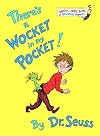
Absolute absurdity reigns here, as Dr. Seuss takes us on a tour through a house populated by his strangest creations yet. From the titular wocket in the pocket to the zillow in the pillow, I'm not sure how the poor boy actually manages to live in such a mad-cap house! But I guess he'll never get lonely that way, since Seuss hasn't given him any siblings and his parents are noticeably nowhere to be found. Maybe this situation is worrying, but Seuss may be exploring the concept of childhood show more loneliness, and is presenting readers with a rather creative method of coping - spot a boring household object, think of a rhyme, and presto, you have an imaginative new companion to help fill your days! I imagine that this game would keep a bored child occupied for hours (if not days), but hopefully they aren't the kind of child to be scared of monsters in their house because the game could quickly get out of control! As for illustrations, I think that this is one of Dr. Seuss's stronger books, even though it lacks a real narrative and has no character development. He pairs colourful household objects with a bevy of even more imaginative creatures, so there is an endless amount of visual discovery here. Surprisingly, the compositions are also very creative, even though the setting is familiar, as Seuss puts his unique perspective and colour schemes to work. Overall, this is an excellent addition to his range for youngest readers as it is sure to stimulate their vocabulary, sight, and sense of humour. show less

This book is a collection of short stories by famed and beloved children's author Dr. Seuss. The title story is about creatures named Sneetches who dislike each other based on whether or not they have stars on their bellies. This is clearly a metaphor for race/ethnic/gender relations, in which some folks think they are better than others because of arbitrary details at birth. Dr. Seuss tackles this as only he can, showing how ridiculous this situation is by having the Sneetches end up in a show more round-and-round battle of adding and removing stars to their bellies to prove who is the best. I remember how even as a child I "got" this story's deeper meaning almost immediately.
Next comes "The Zax," a story about two creatures who refuse to budge in their ways, even as the world grows around them. This could be a morality tale for anyone too stubborn, but based on when this book was published and Dr. Seuss's past in writing political cartoons, I assume this is meant to be symbolic of the Cold War.
The third story, "Too Many Daves," is the silliest - and in my opinion, weakest - of the stories collected here. It's about a woman who names all 23 of her sons Dave and comes to regret this later. Other than presaging George Foreman's progeny, this story is just sort of a throwaway one.
Finally comes the story "What Was I Scared Of?" in which, again, Dr. Seuss uses a seemingly ridiculous story to talk about tolerance and acceptance. In it, a Seussian creature keeps coming across a pair of empty pants when out running errands and such. At first the creature is terrified, until he/she realizes that the pants are just as afraid of him/her! Then the two become friendly. Again, even as a child, I understood that Dr. Seuss was presenting a story about how people may look or dress differently but you can still become friends with them if you learn to get past your initial unease.
I shared this book with my 5-year-old niece, who seemed to enjoy it, being a big Dr. Seuss fan like me. I was glad to find that, despite having not picked up this title in probably 20 years or more, it was exactly as I remembered it. This is a fantastic book for talking about deep topics while having some fun with the absurdities of Seuss's language and art. show less
Next comes "The Zax," a story about two creatures who refuse to budge in their ways, even as the world grows around them. This could be a morality tale for anyone too stubborn, but based on when this book was published and Dr. Seuss's past in writing political cartoons, I assume this is meant to be symbolic of the Cold War.
The third story, "Too Many Daves," is the silliest - and in my opinion, weakest - of the stories collected here. It's about a woman who names all 23 of her sons Dave and comes to regret this later. Other than presaging George Foreman's progeny, this story is just sort of a throwaway one.
Finally comes the story "What Was I Scared Of?" in which, again, Dr. Seuss uses a seemingly ridiculous story to talk about tolerance and acceptance. In it, a Seussian creature keeps coming across a pair of empty pants when out running errands and such. At first the creature is terrified, until he/she realizes that the pants are just as afraid of him/her! Then the two become friendly. Again, even as a child, I understood that Dr. Seuss was presenting a story about how people may look or dress differently but you can still become friends with them if you learn to get past your initial unease.
I shared this book with my 5-year-old niece, who seemed to enjoy it, being a big Dr. Seuss fan like me. I was glad to find that, despite having not picked up this title in probably 20 years or more, it was exactly as I remembered it. This is a fantastic book for talking about deep topics while having some fun with the absurdities of Seuss's language and art. show less

Having mastered the twenty-six letters of the English alphabet, Conrad Cornelius o'Donald o'Dell is surprised to discover that there are other letters out there, beyond Z. Guided by the narrator, who steps in to share this amazing information, he learns about such letters as the Yuzz, used to spell Yuzz-a-ma-Tuzz; or the Thnad, used to spell Thnadners. Following along on a journey of enchanted discovery, Conrad Cornelius learns nineteen new letters, and meets nineteen unusual new creatures, show more realizing that there is so much to be found, beyond the letter Z...
Originally published in 1955, On Beyond Zebra was Dr. Seuss' eleventh picture-book, published the year after Scrambled Eggs Super! and Horton Hears a Who! With its catalogue of fantastic fictional creatures, it is reminiscent of earlier Seuss titles like Scrambled Eggs Super!, as well as If I Ran the Zoo and McElligot's Pool. With its alphabetic element however, it is also unlike these earlier books, and does something wonderful and new, introducing the idea, through a wild and wacky story, that there are other kinds of letters, and by extension, other sorts of writing systems out there, beyond the one that young children might know. I never encountered this one as a child - something I now regret - and picked it up as part of my recently undertaken Dr. Seuss retrospective, in which I plan to read and review all forty-four of his classic picture-books, in chronological publication order. It is a project that I began as an act of personal protest against the suppression of six of the author/artist's titles - this one, as well as And to Think That I Saw It on Mulberry Street, McElligot's Pool, If I Ran the Zoo, Scrambled Eggs Super! and The Cat's Quizzer - by Dr. Seuss Enterprises, because they contain outdated and potentially offensive elements.
As a young girl who had a fascination with languages and writing systems, a girl who created her own make-believe kingdom with its own history and elaborate customs, I would have adored On Beyond Zebra!. As it happens, I too created my own letters, just like Dr. Seuss, and my kingdom (Arcania) had its own language, with its own alphabet. Sadly, I have lost all my papers from that period in my life, but I recall that I enjoyed creating the rather ornate letters in my writing system, which was modeled on the Latin alphabet, but which used very different characters to represent upper and lower case letters, and long and short forms of the vowels. Reading this picture-book reminded me of the pleasure I took in creating my own language as a girl, and how that imaginative play led to my interest in real-world languages as an adult. I got a real thrill, therefore, reading this tale of another child discovering such wonders, and perusing the letters Dr. Seuss created, beyond Z:
In thinking of why Dr. Seuss Enterprises chose to suppress this title, I must conclude that it is owing to the letter Spazz, used to spell Spazzim, a camel-like creature ridden by the Nazzim of Bazzim. This fellow looks to be Middle-Eastern, in a sort of vague way - the camel-riding, the headdress - and is no doubt interpreted by critics as an example of Orientalism. For my part, while I see that the depiction is a caricature - something upon which all of Seuss' work rests - I did not perceive anything hateful in it. If anything, it felt like a reference to stories like Aladdin, or other tales from The Arabian Nights. I would imagine that any number of western retellings of the latter could also be accused of Orientalism, so let's hope these self-styled arbiters of morality don't come for those classic stories as well. It strikes me as such a deep shame, that a book like this, which could lead children naturally and creatively into a better awareness of the richness of human language, and of the writing systems of the world, should be suppressed because of one arguably offensive caricature. It is ironic that, in taking steps to (in their own imagination) defend other cultures and peoples, these critics have decided to oppose a story that could be used to teach young children an appreciation for the linguistic diversity of our world, and for the cultural diversity from which it springs. Then again, these people really aren't defenders of culture (their own or anyone else's) at all, but architects of a new uni-culture, to be enforced through bullying and character assassination. One need only look at the specious accusations of far-right racism lobbed at any reader who opposes this move on the part of Dr. Seuss Enterprises, by some of our commentariat, as well as by private citizens online, to see that this is true.
Joshua T. Katz, a professor of linguistics at Princeton University who teaches a freshman seminar entitled "Wordplay: A Wry Plod from Babel to Scrabble" - a course which includes both On Beyond Zebra and James Joyce's Finnegan's Wake on its syllabus - concludes in his recent article in The New Criterion, that this recent censorious move by Dr. Seuss Enterprises is a form of madness. I quite agree. show less
Originally published in 1955, On Beyond Zebra was Dr. Seuss' eleventh picture-book, published the year after Scrambled Eggs Super! and Horton Hears a Who! With its catalogue of fantastic fictional creatures, it is reminiscent of earlier Seuss titles like Scrambled Eggs Super!, as well as If I Ran the Zoo and McElligot's Pool. With its alphabetic element however, it is also unlike these earlier books, and does something wonderful and new, introducing the idea, through a wild and wacky story, that there are other kinds of letters, and by extension, other sorts of writing systems out there, beyond the one that young children might know. I never encountered this one as a child - something I now regret - and picked it up as part of my recently undertaken Dr. Seuss retrospective, in which I plan to read and review all forty-four of his classic picture-books, in chronological publication order. It is a project that I began as an act of personal protest against the suppression of six of the author/artist's titles - this one, as well as And to Think That I Saw It on Mulberry Street, McElligot's Pool, If I Ran the Zoo, Scrambled Eggs Super! and The Cat's Quizzer - by Dr. Seuss Enterprises, because they contain outdated and potentially offensive elements.
As a young girl who had a fascination with languages and writing systems, a girl who created her own make-believe kingdom with its own history and elaborate customs, I would have adored On Beyond Zebra!. As it happens, I too created my own letters, just like Dr. Seuss, and my kingdom (Arcania) had its own language, with its own alphabet. Sadly, I have lost all my papers from that period in my life, but I recall that I enjoyed creating the rather ornate letters in my writing system, which was modeled on the Latin alphabet, but which used very different characters to represent upper and lower case letters, and long and short forms of the vowels. Reading this picture-book reminded me of the pleasure I took in creating my own language as a girl, and how that imaginative play led to my interest in real-world languages as an adult. I got a real thrill, therefore, reading this tale of another child discovering such wonders, and perusing the letters Dr. Seuss created, beyond Z:
In thinking of why Dr. Seuss Enterprises chose to suppress this title, I must conclude that it is owing to the letter Spazz, used to spell Spazzim, a camel-like creature ridden by the Nazzim of Bazzim. This fellow looks to be Middle-Eastern, in a sort of vague way - the camel-riding, the headdress - and is no doubt interpreted by critics as an example of Orientalism. For my part, while I see that the depiction is a caricature - something upon which all of Seuss' work rests - I did not perceive anything hateful in it. If anything, it felt like a reference to stories like Aladdin, or other tales from The Arabian Nights. I would imagine that any number of western retellings of the latter could also be accused of Orientalism, so let's hope these self-styled arbiters of morality don't come for those classic stories as well. It strikes me as such a deep shame, that a book like this, which could lead children naturally and creatively into a better awareness of the richness of human language, and of the writing systems of the world, should be suppressed because of one arguably offensive caricature. It is ironic that, in taking steps to (in their own imagination) defend other cultures and peoples, these critics have decided to oppose a story that could be used to teach young children an appreciation for the linguistic diversity of our world, and for the cultural diversity from which it springs. Then again, these people really aren't defenders of culture (their own or anyone else's) at all, but architects of a new uni-culture, to be enforced through bullying and character assassination. One need only look at the specious accusations of far-right racism lobbed at any reader who opposes this move on the part of Dr. Seuss Enterprises, by some of our commentariat, as well as by private citizens online, to see that this is true.
Joshua T. Katz, a professor of linguistics at Princeton University who teaches a freshman seminar entitled "Wordplay: A Wry Plod from Babel to Scrabble" - a course which includes both On Beyond Zebra and James Joyce's Finnegan's Wake on its syllabus - concludes in his recent article in The New Criterion, that this recent censorious move by Dr. Seuss Enterprises is a form of madness. I quite agree. show less

Speaking to his younger sister one day in this rhyming picture-book adventure, the imaginative Peter T. Hooper spins a tale of the most extraordinary scrambled eggs ever made - by him, of course! Hen eggs being entirely too mundane for him, this ambitious youngster heads out into the world to collect some very unusual and rare eggs, produced by some very inventive made-up creatures. From the Long-Legger Kwong, whose eggs need to be caught before they hit the ground, to the Grickily Gractus, show more who lays her eggs in a cactus, these birds produce eggs that are worth tracking down, just as Petter T. Hooper produces the much vaunted "Scrambled Eggs Super..."
Originally published in 1954, some four years after his If I Ran the Zoo, Scrambled Eggs Super! is Dr. Seuss' ninth picture-book, and feels like a variation on that earlier book, and on McElligot's Pool, published in 1947. All three titles are a marvelous catalogue of fantastic creatures, dreamt up by a young boy narrator who imagines the fish he might catch in McElligot's Pool, the animals he could imprison in If I Ran the Zoo, and the eggs he might collect in Scrambled Eggs Super! The artwork here is vintage Seuss fun, full of quirky animal characters, expressive human ones - the little girl's face in the final scene had me chuckling! - and created using the black line drawings and colorful accents of earlier titles. The wacky storyline, colorful artwork and rhyming text all make this an entertaining read-aloud selection, like so many of Dr. Seuss' famous titles.
I have vague memories of enjoying Scrambled Eggs Super! as a girl - some of the scenes really popped out at me, during this reread, and I smiled in recognition at some of the birds - but it wasn't one of my childhood favorites, when it comes to Dr. Seuss' work, and I hadn't thought of it in years. My current reread was prompted by the Seuss retrospective I have recently begun, in which I will be reading and reviewing all forty-four of his classic picture-books, in chronological publication order. This is a project that I began as an act of personal protest against the suppression of six of the author/artist's titles - this one, as well as And to Think That I Saw It on Mulberry Street, McElligot's Pool, If I Ran the Zoo, On Beyond Zebra! and The Cat's Quizzer - by Dr. Seuss Enterprises, an action with which I vehemently disagree.
This decision was purportedly taken by Dr. Seuss Enterprises in response to outdated and ostensibly offensive elements in these six books. Reading through Scrambled Eggs Super! I was able to identify two potentially problematic scenes that no doubt led to its inclusion amongst the titles to be suppressed. The first of these was the one involving the arctic Grice, a bird living near the North Pole, whose eggs are obtained by a boatload of men in furry-looking jumpsuits. These men, riding in their Katta-ma-Side (a boat made of the sea leopard's hide), are interpreted by most to be a caricature of the Inuit, whose depiction seems to be a recurring theme - see my review of And to Think That I Saw It on Mulberry Street and McElligot's Pool for my interpretation of the other appearances of the Inuit, thus far in my reading project - in this effort to challenge and disappear some of Seuss' work. The second potentially problematic scene involved the Mount Strookoo Cookoo, whose eggs were collected by Ali, a figure outfitted in traditional Turkish clothing, whose depiction might be interpreted by some as being Orientalist in nature.
As I mentioned in my review of If I Ran the Zoo, it's important to recall that Dr. Seuss' method of storytelling, whether textual or artistic, is heavily reliant upon caricature, and it is often satirical in nature. In thinking about these challenged titles, and considering the specific depictions being criticized, I have found it very helpful to distinguish between cases where the caricature of non-European and non-Euro-American peoples is of the same tone and kind as that of European and Euro-American peoples, and those cases where it is not. In my analysis, I concluded that And to Think That I Saw It on Mulberry Street and McElligot's Pool contained depictions that might be considered racially or culturally insensitive, given the current zeitgeist, but that lacked the animus necessary to label them as racist, or truly objectionable. They were not, in other words, demeaning or hateful - simply satirical, in the way that other depictions in those books were satirical. Sadly, I did not arrive at the same conclusion, reading If I Ran the Zoo, where I found the controversial scenes were indeed of a demeaning and dehumanizing nature.
The two aforementioned scenes, here in Scrambled Eggs Super!, belong very much to the former category, and while I would never question another reader's right to object to them - it is not my place, after all, to tell others how to interpret what they read - I am amazed that they resulted in this book being pulled from publication. The scene with the Grice-hunters never identifies the people in question in anything but a fictional way (no mention of the word "Eskimo," which, by contrast, can be found in the text of McElligot's Pool), and their visual depiction is not particularly pointed or demeaning. It's clear that in the narrator's mind, northern people are associated with northern birds, as they all live in the north, and that no particular commentary (positive or negative) is being offered on the humans in question. Not so with the Turkish Ali, who is described in the text as "brave Ali," for his actions in fighting off flocks of cuckoos, in order to complete his mission. While both of these depictions employ some stereotype - the "Inuit" figures in furry clothing, Ali in a turban - it is not at all clear to me that this stereotyping is any more pointed or hurtful than any other stereotyping that a caricaturist such as Seuss would use.
I've made the point several times now, during the course of this reading project, that I have no objection to other readers deciding that these books are indeed hurtful, and to their making the decision not to share them with the young people in the lives. My objection is to the idea, implicit in Dr. Seuss Enterprises' recent decision, that because some have found these books offensive, no one else should be allowed to easily access them. I have seen the specious argument floated about, both by members of our chattering classes and by private citizens on the internet, that this is not a "book banning," because it is the copyright holder who is making the decision to remove these books, rather than some governmental agency. I find this a curiously naive attitude, and suspect that it rests upon some rather disingenuous double standards. Imagine the following scenario: an author has written a best-selling picture-book featuring same-sex parents. Said author owns the rights to the book (unlikely, in today's publishing market, but let's pretend), and when he dies, those rights pass to a relative who, for religious reasons, believes same-sex marriage is wrong. Acting in accordance with her conscience, the relative decides to stop publication, sincerely convinced that the book in question will harm vulnerable children, by sending them the wrong messages. Would the readers and critics applauding this recent decision by Dr. Seuss Enterprises still be arguing that nothing censorious was going on, in the foregoing scenario, because the one taking action to suppress the book was the copyright holder? Or would they be vehemently protesting what they saw as the imposition of someone else's moral code onto their own reading choices?
I think everyone knows what the reaction would be, to the unlikely scenario posited above, and it certainly wouldn't involve the mental gymnastics we've seen commentators put themselves through recently, to show that this whole debacle wasn't censorship, because copyright holders have the legal authority to make these decisions. A few years ago, objecting to then Vice President Mike Pence's stance on LGBT rights, the talkshow host John Oliver dreamt up a satirical picture-book, A Day in the Life of Marlon Bundo, in response to the publication of another picture-book, Marlon Bundo's Day in the Life of the Vice President, by the Vice President's daughter, Charlotte Pence. While I had some ethical issues with the whole thing, mostly surrounding the idea of attacking a public figure, not through his own work, but through his family, this still strikes me as a superior response to the existence of books with which one doesn't agree, to the strategy employed here. Publish more books! Offer an alternative (and there are MANY, in the world of picture-books) to the stories one finds objectionable. Don't just demand that the books available to the public conform to your own moral compass, as if there were no duty incumbent upon you, as a member of a free society, to persuade people, rather than to dictate to them.
People like to make up their own minds, in this and anything else, and they do not like to feel that others are curtailing their choices, particularly when it comes to the books and other media that they consume. For my own part, I found nothing here that would even remotely have warranted the step take by Dr. Seuss Enterprises, if I were of the opinion that such a step was ever justified. Scrambled Eggs Super! isn't a personal favorite, when it comes to Seuss' oeuvre, but is one I would still recommend, to picture-book readers looking for tales which celebrate a child's imaginative powers. show less
Originally published in 1954, some four years after his If I Ran the Zoo, Scrambled Eggs Super! is Dr. Seuss' ninth picture-book, and feels like a variation on that earlier book, and on McElligot's Pool, published in 1947. All three titles are a marvelous catalogue of fantastic creatures, dreamt up by a young boy narrator who imagines the fish he might catch in McElligot's Pool, the animals he could imprison in If I Ran the Zoo, and the eggs he might collect in Scrambled Eggs Super! The artwork here is vintage Seuss fun, full of quirky animal characters, expressive human ones - the little girl's face in the final scene had me chuckling! - and created using the black line drawings and colorful accents of earlier titles. The wacky storyline, colorful artwork and rhyming text all make this an entertaining read-aloud selection, like so many of Dr. Seuss' famous titles.
I have vague memories of enjoying Scrambled Eggs Super! as a girl - some of the scenes really popped out at me, during this reread, and I smiled in recognition at some of the birds - but it wasn't one of my childhood favorites, when it comes to Dr. Seuss' work, and I hadn't thought of it in years. My current reread was prompted by the Seuss retrospective I have recently begun, in which I will be reading and reviewing all forty-four of his classic picture-books, in chronological publication order. This is a project that I began as an act of personal protest against the suppression of six of the author/artist's titles - this one, as well as And to Think That I Saw It on Mulberry Street, McElligot's Pool, If I Ran the Zoo, On Beyond Zebra! and The Cat's Quizzer - by Dr. Seuss Enterprises, an action with which I vehemently disagree.
This decision was purportedly taken by Dr. Seuss Enterprises in response to outdated and ostensibly offensive elements in these six books. Reading through Scrambled Eggs Super! I was able to identify two potentially problematic scenes that no doubt led to its inclusion amongst the titles to be suppressed. The first of these was the one involving the arctic Grice, a bird living near the North Pole, whose eggs are obtained by a boatload of men in furry-looking jumpsuits. These men, riding in their Katta-ma-Side (a boat made of the sea leopard's hide), are interpreted by most to be a caricature of the Inuit, whose depiction seems to be a recurring theme - see my review of And to Think That I Saw It on Mulberry Street and McElligot's Pool for my interpretation of the other appearances of the Inuit, thus far in my reading project - in this effort to challenge and disappear some of Seuss' work. The second potentially problematic scene involved the Mount Strookoo Cookoo, whose eggs were collected by Ali, a figure outfitted in traditional Turkish clothing, whose depiction might be interpreted by some as being Orientalist in nature.
As I mentioned in my review of If I Ran the Zoo, it's important to recall that Dr. Seuss' method of storytelling, whether textual or artistic, is heavily reliant upon caricature, and it is often satirical in nature. In thinking about these challenged titles, and considering the specific depictions being criticized, I have found it very helpful to distinguish between cases where the caricature of non-European and non-Euro-American peoples is of the same tone and kind as that of European and Euro-American peoples, and those cases where it is not. In my analysis, I concluded that And to Think That I Saw It on Mulberry Street and McElligot's Pool contained depictions that might be considered racially or culturally insensitive, given the current zeitgeist, but that lacked the animus necessary to label them as racist, or truly objectionable. They were not, in other words, demeaning or hateful - simply satirical, in the way that other depictions in those books were satirical. Sadly, I did not arrive at the same conclusion, reading If I Ran the Zoo, where I found the controversial scenes were indeed of a demeaning and dehumanizing nature.
The two aforementioned scenes, here in Scrambled Eggs Super!, belong very much to the former category, and while I would never question another reader's right to object to them - it is not my place, after all, to tell others how to interpret what they read - I am amazed that they resulted in this book being pulled from publication. The scene with the Grice-hunters never identifies the people in question in anything but a fictional way (no mention of the word "Eskimo," which, by contrast, can be found in the text of McElligot's Pool), and their visual depiction is not particularly pointed or demeaning. It's clear that in the narrator's mind, northern people are associated with northern birds, as they all live in the north, and that no particular commentary (positive or negative) is being offered on the humans in question. Not so with the Turkish Ali, who is described in the text as "brave Ali," for his actions in fighting off flocks of cuckoos, in order to complete his mission. While both of these depictions employ some stereotype - the "Inuit" figures in furry clothing, Ali in a turban - it is not at all clear to me that this stereotyping is any more pointed or hurtful than any other stereotyping that a caricaturist such as Seuss would use.
I've made the point several times now, during the course of this reading project, that I have no objection to other readers deciding that these books are indeed hurtful, and to their making the decision not to share them with the young people in the lives. My objection is to the idea, implicit in Dr. Seuss Enterprises' recent decision, that because some have found these books offensive, no one else should be allowed to easily access them. I have seen the specious argument floated about, both by members of our chattering classes and by private citizens on the internet, that this is not a "book banning," because it is the copyright holder who is making the decision to remove these books, rather than some governmental agency. I find this a curiously naive attitude, and suspect that it rests upon some rather disingenuous double standards. Imagine the following scenario: an author has written a best-selling picture-book featuring same-sex parents. Said author owns the rights to the book (unlikely, in today's publishing market, but let's pretend), and when he dies, those rights pass to a relative who, for religious reasons, believes same-sex marriage is wrong. Acting in accordance with her conscience, the relative decides to stop publication, sincerely convinced that the book in question will harm vulnerable children, by sending them the wrong messages. Would the readers and critics applauding this recent decision by Dr. Seuss Enterprises still be arguing that nothing censorious was going on, in the foregoing scenario, because the one taking action to suppress the book was the copyright holder? Or would they be vehemently protesting what they saw as the imposition of someone else's moral code onto their own reading choices?
I think everyone knows what the reaction would be, to the unlikely scenario posited above, and it certainly wouldn't involve the mental gymnastics we've seen commentators put themselves through recently, to show that this whole debacle wasn't censorship, because copyright holders have the legal authority to make these decisions. A few years ago, objecting to then Vice President Mike Pence's stance on LGBT rights, the talkshow host John Oliver dreamt up a satirical picture-book, A Day in the Life of Marlon Bundo, in response to the publication of another picture-book, Marlon Bundo's Day in the Life of the Vice President, by the Vice President's daughter, Charlotte Pence. While I had some ethical issues with the whole thing, mostly surrounding the idea of attacking a public figure, not through his own work, but through his family, this still strikes me as a superior response to the existence of books with which one doesn't agree, to the strategy employed here. Publish more books! Offer an alternative (and there are MANY, in the world of picture-books) to the stories one finds objectionable. Don't just demand that the books available to the public conform to your own moral compass, as if there were no duty incumbent upon you, as a member of a free society, to persuade people, rather than to dictate to them.
People like to make up their own minds, in this and anything else, and they do not like to feel that others are curtailing their choices, particularly when it comes to the books and other media that they consume. For my own part, I found nothing here that would even remotely have warranted the step take by Dr. Seuss Enterprises, if I were of the opinion that such a step was ever justified. Scrambled Eggs Super! isn't a personal favorite, when it comes to Seuss' oeuvre, but is one I would still recommend, to picture-book readers looking for tales which celebrate a child's imaginative powers. show less
Lists
Favourite Books (1)
Read (1)
Cats in Fiction (1)
Put a Bird On It (1)
Christmas Books (1)
1960s (1)
Nifty Fifties (1)
Child Read (1)
ABC (1)
1990s (1)
Best Dystopias (1)
Children's Humor (1)
Youth: Poetry (1)
1940s (1)
Sonlight Books (6)
scav (3)
1970s (16)
Cancelled Books (6)
Purged Books (6)
Five star books (2)
Books About Boys (2)
Food Fiction (1)
Circus (1)
BBC Big Read (1)
1950s (3)
Movies/Shows (3)
BitLife (2)
Unread books (2)
Overdue Podcast (2)
1930s (2)
. (1)
Awards


You May Also Like


Associated Authors
Statistics
- Works
- 772
- Also by
- 52
- Members
- 356,516
- Popularity
- #10
- Rating
- 4.1
- Reviews
- 5,429
- ISBNs
- 2,848
- Languages
- 32
- Favorited
- 290


