
Debra Dean
Author of The Madonnas of Leningrad: A Novel
About the Author
Debra Dean is the best-selling author of a short-story collection and two novels, The Mirrored World and The Madonnas of Leningrad-the latter a New York. Times Editors' Choice and #1 BookSense Pick. She lives in Miami and teaches at Florida International University.
Image credit: reading at 2018 Gaithersburg Book Festival By Slowking4 - Own work, GFDL 1.2, https://commons.wikimedia.org/w/index.php?curid=69292462
Works by Debra Dean
Hidden Tapestry: Jan Yoors, His Two Wives, and the War That Made Them One (2018) 10 copies, 1 review
Tagged
Common Knowledge
- Canonical name
- Dean, Debra
- Birthdate
- 1957-11-19
- Gender
- female
- Education
- Whitman College
The Neighborhood Playhouse
University of Oregon - Occupations
- creative writing teacher
actor
novelist - Nationality
- USA
- Birthplace
- Seattle, Washington, USA
- Places of residence
- Seattle, Washington, USA
Miami, Florida, USA
New York, New York, USA - Associated Place (for map)
- USA
Members
Reviews
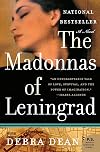
Confessional: I inhaled this book. I could not get enough of the tender and tragic story of Marina. Dean takes her readers through Marina's life, seamlessly weaving Marina's coming of age in wartime Leningrad during the 900-day siege with Marina at eighty-two years old, living in Seattle, Washington, and suffering from Alzheimer's disease. In current day, Marina travels to Drake Island with her husband of nearly sixty-five years to attend the wedding of their granddaughter. The journey is show more fraught with confusion and heartbreak. In the 1940s, Marina was a docent at the famed Hermitage. Just before the siege started she lost her virginity to future husband, Dmitri, just before he heads to war. This time of her life is full of expectations and uncertainty.
The most beautiful part of Madonnas of Leningrad occurs when elderly Marina walks her "memory palace" of the Hermitage and lovingly recalls every detail of her favorite paintings. Her recollections are sad but beautiful; it is as if the reader is standing in front of each piece of art, experiencing it for themselves. The ending of Madonnas of Leningrad is quite abrupt but also exquisite. show less
The most beautiful part of Madonnas of Leningrad occurs when elderly Marina walks her "memory palace" of the Hermitage and lovingly recalls every detail of her favorite paintings. Her recollections are sad but beautiful; it is as if the reader is standing in front of each piece of art, experiencing it for themselves. The ending of Madonnas of Leningrad is quite abrupt but also exquisite. show less
“Whatever is eating her brain consumes only the fresher memories, the unripe moments. Her distant past is preserved, better than preserved. Moments that occurred in Leningrad sixty-some years ago reappear, vivid, plump, and perfumed.”
“She can now walk anywhere in the picture gallery, and the sculptures and paintings appear so readily in her mind that she can rattle most of them off without thinking.
What started as an exercise, a distraction, has come to seem like the very point of her show more existence.”
Marina is an elderly Russian woman, slowly succumbing to Alzheimer's. She is at the wedding of her grandson and is struggling with her present memory but her distant past is well-preserved. She was a young woman in 1941, while the Germans slowly surrounded Leningrad, sealing off the city. Marina worked at the Hermitage Museum. They were tasked with packing up these famous works of art and transporting them to safety, keeping them out of the hands of the approaching Germans.
This is such an excellent story and Dean does a wonderful job describing the devastating effects of the siege, along with stunning interpretations of the art work involved. I have no idea why it took me so long to get to this one but I am sure glad I did. show less
“She can now walk anywhere in the picture gallery, and the sculptures and paintings appear so readily in her mind that she can rattle most of them off without thinking.
What started as an exercise, a distraction, has come to seem like the very point of her show more existence.”
Marina is an elderly Russian woman, slowly succumbing to Alzheimer's. She is at the wedding of her grandson and is struggling with her present memory but her distant past is well-preserved. She was a young woman in 1941, while the Germans slowly surrounded Leningrad, sealing off the city. Marina worked at the Hermitage Museum. They were tasked with packing up these famous works of art and transporting them to safety, keeping them out of the hands of the approaching Germans.
This is such an excellent story and Dean does a wonderful job describing the devastating effects of the siege, along with stunning interpretations of the art work involved. I have no idea why it took me so long to get to this one but I am sure glad I did. show less

I really enjoyed this book, which had been sitting on my shelves a while. I had previously liked Dean's The Madonnas of Leningrad, and this was a good book for me to read now, historical fiction that didn't remind me too much of current events.
Dean has a nice style, writing about historical events as if they were contemporary, and not over-explaining. This is a fictionalized account of St. Xenia (c. 1719–1730 – c. 1803). I didn't know anything about St Xenia, but was familiar with show more the era from reading Massie's Catherine the Great. Xenia was born into minor nobility, and married Colonel Andrey Fyodorovich Petrov. When he died in an accident, she mourned extravagantly, and became a "fool for Christ," giving away her belongings and living in the streets of St. Petersburg, where apparently she became a beloved character thought to bring blessings on those she encountered.
This book is narrated by a close relative (a fictional character, I believe) which allows a contrast between Xenia's emotionalism and spirituality, and that of a more conventional young woman. (who nonetheless ends up with an unconventional life, highlighting the narrow life options available for women in this time and place.) The book raises a lot of issues about religiosity, marriage, parenting, and social roles, but never tells the reader what to think. show less
Dean has a nice style, writing about historical events as if they were contemporary, and not over-explaining. This is a fictionalized account of St. Xenia (c. 1719–1730 – c. 1803). I didn't know anything about St Xenia, but was familiar with show more the era from reading Massie's Catherine the Great. Xenia was born into minor nobility, and married Colonel Andrey Fyodorovich Petrov. When he died in an accident, she mourned extravagantly, and became a "fool for Christ," giving away her belongings and living in the streets of St. Petersburg, where apparently she became a beloved character thought to bring blessings on those she encountered.
This book is narrated by a close relative (a fictional character, I believe) which allows a contrast between Xenia's emotionalism and spirituality, and that of a more conventional young woman. (who nonetheless ends up with an unconventional life, highlighting the narrow life options available for women in this time and place.) The book raises a lot of issues about religiosity, marriage, parenting, and social roles, but never tells the reader what to think. show less
The Madonnas of Leningrad, by Debra Dean…I give it Four Stars!
“Sometimes it requires all her wits to piece together the world with the fragments she is given: an open can of Folgers, a carton of eggs on the counter, the faint scent of toast.”
And, so, begins the story of Marina, a woman caught between her past, and her present, as her life weaves back and forth, memories often overlapping the lines between the here and now. From 1941 Leningrad, and the German siege that follows, to show more relocating to America, the book resounds with ghostly images of starvation, bombings, and paintings by the great Masters of old.
Marina is one of the tour guides in the Hermitage Museum, one of a few staff members who are responsible for packaging up the great paintings, themselves, while leaving the frames on the walls, as a reminder of what was, and what eventually would be returned to its proper place in the Hermitage.
In order to escape the ravages of war, Marina creates a “Memory Palace” in her mind, remembering and visualizing each painting, each stroke of the brush, of the Madonnas and angels within the paintings. The minutes and hours pass by, and life is created within Marina’s mind, often blurring the borders of reality and fantasy. These fantasy images are what help her to get through her horrific situation, both during the war, and during the last years of her life, when the past takes over the present, guiding and comforting her towards the end of days, during her struggle with Alzheimer’s Disease.
The visuals within the story line are incredible, both beautiful and haunting. Dean is masterful at depicting art with all of its minute details, all of the colors and intensities that artists render in their paintings are illuminated through her stunning prose.
Debra Dean brings us a poignant novel of wartime, a beautiful, yet ghostly reminiscence of what was, and how we deal with the emotional pain of loss. She gives us food for thought, and her compelling images leave us to wonder about emotional borders, and where the line ends or begins, between fantasy and reality, between illness and end of life stages. show less
“Sometimes it requires all her wits to piece together the world with the fragments she is given: an open can of Folgers, a carton of eggs on the counter, the faint scent of toast.”
And, so, begins the story of Marina, a woman caught between her past, and her present, as her life weaves back and forth, memories often overlapping the lines between the here and now. From 1941 Leningrad, and the German siege that follows, to show more relocating to America, the book resounds with ghostly images of starvation, bombings, and paintings by the great Masters of old.
Marina is one of the tour guides in the Hermitage Museum, one of a few staff members who are responsible for packaging up the great paintings, themselves, while leaving the frames on the walls, as a reminder of what was, and what eventually would be returned to its proper place in the Hermitage.
In order to escape the ravages of war, Marina creates a “Memory Palace” in her mind, remembering and visualizing each painting, each stroke of the brush, of the Madonnas and angels within the paintings. The minutes and hours pass by, and life is created within Marina’s mind, often blurring the borders of reality and fantasy. These fantasy images are what help her to get through her horrific situation, both during the war, and during the last years of her life, when the past takes over the present, guiding and comforting her towards the end of days, during her struggle with Alzheimer’s Disease.
The visuals within the story line are incredible, both beautiful and haunting. Dean is masterful at depicting art with all of its minute details, all of the colors and intensities that artists render in their paintings are illuminated through her stunning prose.
Debra Dean brings us a poignant novel of wartime, a beautiful, yet ghostly reminiscence of what was, and how we deal with the emotional pain of loss. She gives us food for thought, and her compelling images leave us to wonder about emotional borders, and where the line ends or begins, between fantasy and reality, between illness and end of life stages. show less
Lists
Awards


You May Also Like


Associated Authors
Statistics
- Works
- 4
- Members
- 2,127
- Popularity
- #12,104
- Rating
- 3.8
- Reviews
- 144
- ISBNs
- 47
- Languages
- 9
- Favorited
- 1
