
Julie Andrews
Author of The Last of the Really Great Whangdoodles
About the Author
Julie Andrews was born in Walton-on-Thames, England, on October 1, 1935. She is a film and stage actress. She came to the United States at the age of 19 to star in The Boyfriend on Broadway. Some of her other stage performances include My Fair Lady, Camelot and Victor/Victoria. She has starred is show more numerous movies including The Sound of Music, Thoroughly Modern Millie, 10, Victor/Victoria, The Princess Diaries, and Shrek. She won an Oscar for Mary Poppins, her very first motion picture appearance. She received a Lifetime Achievement Award from the British Academy of Film and Television and in 2000 the title of Dame was bestowed upon her by Queen Elizabeth II for lifetime achievements in the arts and humanities. She is the author or co-author of numerous children's books including Mandy, The Last of the Really Great Whangdoodles, Dumpy the Dump Truck, Dumpy Saves Christmas, Little Bo: The Story of Bonnie Boadicea, Little Bo in France and The Very Fairy Princess Series. She also published an autobiography, Home: A Memoir of My Early Years, in 2008. (Bowker Author Biography) show less
Image credit: Courtesy of the NYPL Digital Gallery (image use requires permission from the New York Public Library)
Series
Works by Julie Andrews
Julie Andrews' Treasury for All Seasons: Poems and Songs to Celebrate the Year (2012) 119 copies, 1 review
A Christmas Treasure 5 copies
At Her Very Best 2 copies
Unconditional Love 2 copies
Julie Andrews Sings 2 copies
Very Rudolph Christmas 1 copy
Gente con clase [DVD] 1 copy
Hawaii - Spain Import 1 copy
Broadway's Fair Julie 1 copy
A Joyous Christmas 1 copy
This Is Christmas — Contributor — 1 copy
I will remember these things forever : children and young people give creative voice to their experience of grief (1999) 1 copy
The Sound Of Julie Andrews 1 copy
Home tr 1 copy
O Gordito e os Bombeiros 1 copy
Love Julie 1 copy
I Feel Pretty 1 copy
Το Τραγούδι του Οδυσσέα 1 copy
Book 1- Dumpy At School Book 2- The Brambleberry's Animal Alphabet Abc — Author — 1 copy
The Sound of Christmas 1 copy
Associated Works
The Thackery T. Lambshead Cabinet of Curiosities: Exhibits, Oddities, Images, and Stories from Top Authors and Artists (2011) — Catalog Contributor — 491 copies, 17 reviews
Alfred Hitchcock: The Masterpiece Collection [14 films 1942-1976] (1942) — Actor — 117 copies, 2 reviews
Best of the Muppet Show: Vol. 1: Elton John / Julie Andrews / Gene Kelly (2001) — Guest Star — 34 copies
Rodgers & Hammerstein's Cinderella: 1957 Original Television Cast Recording (2000) — Preformer — 24 copies
The Disney Collection: Volume 2: Original Soundtrack Recordings — Contributor — 12 copies
Hey, Mr. Producer! The Musical World of Cameron Mackintosh [1998 TV special] (1998) — Actor — 11 copies
The Princess Diaries 2: Royal Engagement: Original Motion Picture Soundtrack (2004) — Contributor — 10 copies
20th Century Fox Studio Classics Collection: Volume 1 (Anna and the King of Siam, Can-Can, Daddy Long Legs, Star) (2010) — Actor — 8 copies
20th Century Fox Best Picture Collection: All About Eve / The Sound of Music / How Green was My Valley / Gentleman's Agreement / The French Connection (2008) — Actor — 5 copies
Ronco Presents the Greatest Hits of Walt Disney [sound recording] — Artist — 4 copies
The Golden Glow of Christmas [1972 Sound Recording Album] (1972) — Performer, some editions — 1 copy
Shrek the Third: Original Motion Picture Soundtrack — Contributor — 1 copy
Tagged
Common Knowledge
- Other names
- Wells, Julia Elizabeth (birth name)
Andrews, Julie - Birthdate
- 1935-10-01
- Gender
- female
- Education
- Cone-Ripman School, London, England, UK
Woodbrook School, Beckenham, England, UK - Occupations
- actor
singer
children's book author - Awards and honors
- Order of the British Empire (2000]
Kennedy Center Honors (2001)
Theatre World Award, Outstanding Broadway Debut (1955)
Academy Award ( 1964)
Golden Globe, Best Actress in a Musical/Comedy ( [1964, 1965, 1982])
British Academy Award, Most Promising Newcomer (1964) (show all 12)
Golden Globe, Henrietta Award - World Film Favorite ( [1967, 1968])
Emmy Award, Outstanding Variety Musical Series (1973)
Hasty Pudding Award, Woman of the Year (1983)
People's Choice Award (1983)
Society of Singers Lifetime Achievement (2001)
Screen Actors Guild Life Achievement Award (2007) - Relationships
- Edwards, Blake (husband)
- Nationality
- UK
- Birthplace
- Walton-on-Thames, Surrey, England, UK
- Places of residence
- Walton-on-Thames, Surrey, England, UK (birthplace)
London, England, UK
New York, New York, USA
Alderney, Channel Islands
Beckenham, Kent, England, UK
Hersham, England, UK - Map Location
- England, UK
Members
Discussions
fantasy:brother and sis try to help creatures in another world in Name that Book (February 2011)
Reviews
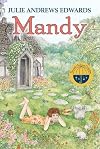
While this review indicates a 2019 read date, I own a copy that I reread often.
Spoilers. This book brought me so much joy and wonder when I read it as a child. I took it into the rain with me, even, and was saddened to learn what water damage can do to a book. I was delighted, however, to learn that I could still read the water-warped words (unintentional alliteration! I feel so cool) perfectly once it dried, and the illustrations only seemed a bit washed out. The front cover came off at show more some point, too, but I kept reading the copy I had. I marveled at the glorious, lush descriptions of gardens, estates, and gardening and house chores. I regularly ignored Sue, Mandy's roommate at the orphanage, and Jonathan, the son of the couple that takes Mandy in. I thought so often reading this as a kid, that Matron just didn't understand Mandy and the cottage was perfect. I always worried about Mandy when she got sick, and the story ending always warmed my heart. I grew out of the book, as it were, when I was probably thirteen or so.
In recent months, I've wanted to read it, so I put in an order at a bookstore. As an adult, um...yeah. I was kind of conflicted about which star rating to give it, and finally settled on three. I'd say this takes place in 1800s rural England, but I was definitely wondering at parts "what adult would do that, even back then?" followed by, "um, maybe it was really different in the 1800s and that was normal." Maybe Dickenson-style orphanages were more common. (muses a bit) So. As an adult, I still delighted in the rich descriptions of the work of gardening and the pride that working hard to clean a dwelling can bring. I was filled with joy at each illustration, large or small. I looked for tiny details, even, and they were indeed there. But I also thought the adults favored Mandy to an unrealistic degree, that she was often rude to Sue, and that there were no real consequences for some serious things Mandy was doing. Hence my frequent thought "maybe things were different in the 1800s." Or maybe Mandy is indeed written unrealistically.
I don't understand why Jonathan was in the book--now that I write that, I realize it was probably solely to give Mandy a sibling. She had two doting parent figures quickly and unrealistically. Jonathan took the whole "we're taking care of a sick, strange, orphaned girl who broke into your dad's new cottage repeatedly to garden and deep clean" pretty well. On reread as adult, this is a clear adoption fantasy. It's so well-written that, had I not read the book's introduction, I'd have guessed the author was writing about herself. I need to stop guessing that. More likely, it's a Little Orphan Annie retelling, sugar-coated and with no dog. It's mentioned Mandy's a terrific singer, but not if she has red hair. Hm. And I'm not poking fun--my youth musical theater career started when I was eleven because I could sing. Here, though, I was kind of surprised Mandy wasn't more smug--it fits with her character. (shrugs)
This book had a profound effect on me as a reader, as a kid. I love descriptions in novels of houses and gardens, and this book is what began it. I write short stories as a hobby, and when someone lives in a nice house, I give the character a garden that will remind me positively of the one described and cared for in this book. If I were to read this again, and I'm still deciding, I'd read it for the descriptions and ignore the story I think. I'm glad I reread it now though. show less
Spoilers. This book brought me so much joy and wonder when I read it as a child. I took it into the rain with me, even, and was saddened to learn what water damage can do to a book. I was delighted, however, to learn that I could still read the water-warped words (unintentional alliteration! I feel so cool) perfectly once it dried, and the illustrations only seemed a bit washed out. The front cover came off at show more some point, too, but I kept reading the copy I had. I marveled at the glorious, lush descriptions of gardens, estates, and gardening and house chores. I regularly ignored Sue, Mandy's roommate at the orphanage, and Jonathan, the son of the couple that takes Mandy in. I thought so often reading this as a kid, that Matron just didn't understand Mandy and the cottage was perfect. I always worried about Mandy when she got sick, and the story ending always warmed my heart. I grew out of the book, as it were, when I was probably thirteen or so.
In recent months, I've wanted to read it, so I put in an order at a bookstore. As an adult, um...yeah. I was kind of conflicted about which star rating to give it, and finally settled on three. I'd say this takes place in 1800s rural England, but I was definitely wondering at parts "what adult would do that, even back then?" followed by, "um, maybe it was really different in the 1800s and that was normal." Maybe Dickenson-style orphanages were more common. (muses a bit) So. As an adult, I still delighted in the rich descriptions of the work of gardening and the pride that working hard to clean a dwelling can bring. I was filled with joy at each illustration, large or small. I looked for tiny details, even, and they were indeed there. But I also thought the adults favored Mandy to an unrealistic degree, that she was often rude to Sue, and that there were no real consequences for some serious things Mandy was doing. Hence my frequent thought "maybe things were different in the 1800s." Or maybe Mandy is indeed written unrealistically.
I don't understand why Jonathan was in the book--now that I write that, I realize it was probably solely to give Mandy a sibling. She had two doting parent figures quickly and unrealistically. Jonathan took the whole "we're taking care of a sick, strange, orphaned girl who broke into your dad's new cottage repeatedly to garden and deep clean" pretty well. On reread as adult, this is a clear adoption fantasy. It's so well-written that, had I not read the book's introduction, I'd have guessed the author was writing about herself. I need to stop guessing that. More likely, it's a Little Orphan Annie retelling, sugar-coated and with no dog. It's mentioned Mandy's a terrific singer, but not if she has red hair. Hm. And I'm not poking fun--my youth musical theater career started when I was eleven because I could sing. Here, though, I was kind of surprised Mandy wasn't more smug--it fits with her character. (shrugs)
This book had a profound effect on me as a reader, as a kid. I love descriptions in novels of houses and gardens, and this book is what began it. I write short stories as a hobby, and when someone lives in a nice house, I give the character a garden that will remind me positively of the one described and cared for in this book. If I were to read this again, and I'm still deciding, I'd read it for the descriptions and ignore the story I think. I'm glad I reread it now though. show less
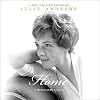
I listened to Julie Andrews' first memoir on audio, which was an utterly delightful experience. The book recounts her life from childhood (with some family history included in the early chapters) through to her departure for California to begin work on Mary Poppins. Her life is a fascinating one and the book includes memories of being in or near London during the Blitz, her time as a child vaudeville performer, and her eventual transition to musical theatre with the Broadway productions of show more My Fair Lady and Camelot. Intertwined with the professional is, of course, the personal and she recounts her relationships with her family, particularly her father and mother who divorced when she was relatively young, as well as her serious romantic relationships up to her first marriage and the birth of her daughter, Emma. The audio production is of excellent quality and there are several moments when you can hear the laugh in Andrews' voice as she reads. Highly recommended. show less

Ben, Tom and Lindy Potter are ordinary children. They lead ordinary lives - until they meet the brilliant Professor Savant. He tells them all about the Whangdoodles, the wise and magical creatures who once lived on earth but then disappeared to another land, and were forgotten forever.
Except by Professor Savant and the three children, who are determined to visit Whangdoodleland, where the last of the really great Whangdoodles rules over his kingdom of fantastic creatures. Getting there isn't show more easy. The children must look "beyond" the ordinary, and see things in a completely different way. It's hard and dangerous work, and sometimes it seems that they'll never reach the Whangdoodle's castle. But little by little the children learn that with a bit of imagination, "anything" is possible. show less
Except by Professor Savant and the three children, who are determined to visit Whangdoodleland, where the last of the really great Whangdoodles rules over his kingdom of fantastic creatures. Getting there isn't show more easy. The children must look "beyond" the ordinary, and see things in a completely different way. It's hard and dangerous work, and sometimes it seems that they'll never reach the Whangdoodle's castle. But little by little the children learn that with a bit of imagination, "anything" is possible. show less

Summary: Ben, Tom, and Lindy Potter are enjoying an autumn day at the zoo when they meet Professor Savant - an eccentric but brilliant biologist. He asks them if they’ve ever heard of the Whangdoodle - the most fantastic creature in the world, and the last of his kind. So begins their adventure in Whangdoodleland, an incredible place filled with amazing creatures, and reachable only through the imagination. For they are on a quest to meet the elusive Whangdoodle, whatever adventures they show more might meet on the way.
Review: I’m sad I never encountered this book as a child - I think I would have loved it. But, even twenty years too late, I loved it anyways. It’s a fun adventure story, full of actually suspenseful adventures, and a dangerous if not particularly menacing bad guy. But, more than that, it’s got a really nice message about using your imagination, and about seeing the miracle of Life. Obviously, 35 years later, the science seems a little dated - in the 1970s, genetics was only very recently establishing itself as a major field of study, and cloning still seemed like a pretty remote possibility. Today, the descriptions of what happens in a laboratory working with DNA seem a little laughable (if I ever had brightly-colored clouds of steam coming from my work, I’d be severely worried… But, of course, these things work differently in Whangdoodleland.) But, even so, if I ever have children, this book will definitely be read to them early - and often. For now, though, it’s definitely going in my pile of childhood favorites, even if I didn’t quite get to it in childhood. 5 out of 5 stars.
Recommendation: If you have kids, read it to them. If you don’t have kids, read it anyways - it’s a fun adventure and a quick kick in the pants to a stagnated adult imagination.
Quote I Particularly Liked: Lindy brought her bike alongside the professor’s. “You know so much,” she said. “Don’t you sometimes feel bewildered when you think of the millions of things that put life together?” The professor smiled. “I’m not bewildered. I’m filled with the deepest awe and wonder. The miracle is that in its complexity it all works.”
Amen, sir. Amen. show less
Review: I’m sad I never encountered this book as a child - I think I would have loved it. But, even twenty years too late, I loved it anyways. It’s a fun adventure story, full of actually suspenseful adventures, and a dangerous if not particularly menacing bad guy. But, more than that, it’s got a really nice message about using your imagination, and about seeing the miracle of Life. Obviously, 35 years later, the science seems a little dated - in the 1970s, genetics was only very recently establishing itself as a major field of study, and cloning still seemed like a pretty remote possibility. Today, the descriptions of what happens in a laboratory working with DNA seem a little laughable (if I ever had brightly-colored clouds of steam coming from my work, I’d be severely worried… But, of course, these things work differently in Whangdoodleland.) But, even so, if I ever have children, this book will definitely be read to them early - and often. For now, though, it’s definitely going in my pile of childhood favorites, even if I didn’t quite get to it in childhood. 5 out of 5 stars.
Recommendation: If you have kids, read it to them. If you don’t have kids, read it anyways - it’s a fun adventure and a quick kick in the pants to a stagnated adult imagination.
Quote I Particularly Liked: Lindy brought her bike alongside the professor’s. “You know so much,” she said. “Don’t you sometimes feel bewildered when you think of the millions of things that put life together?” The professor smiled. “I’m not bewildered. I’m filled with the deepest awe and wonder. The miracle is that in its complexity it all works.”
Amen, sir. Amen. show less
Lists
Awards


You May Also Like


Associated Authors
Statistics
- Works
- 107
- Also by
- 73
- Members
- 10,924
- Popularity
- #2,165
- Rating
- 4.0
- Reviews
- 186
- ISBNs
- 248
- Languages
- 4
- Favorited
- 6


