
Justin D Hill
Author of The Drink and Dream Teahouse
About the Author
Image credit: Justin D. Hill
Series
Works by Justin D Hill
Associated Works
Tagged
Common Knowledge
- Other names
- Hill, Justin D. (used in SFF writing)
- Birthdate
- 1971
- Gender
- male
- Education
- St. Peter's School, York, England
Durham University (Old England and Medieval Literature) - Organizations
- Voluntary Service Overseas
City University of Hong Kong (creative writing lecturer) - Nationality
- UK
- Birthplace
- Freeport, Grand Bahama, Bahamas
- Places of residence
- Freeport, Grand Bahama, Bahamas
York, North Yorkshire, England, UK
Hong Kong, China
East Africa
Yorkshire, England, UK
Members
Reviews

This is a re-read of this historical novel set in the time of Anglo Saxon King Ethelred and Danish invader King Canute, just over 1000 years ago, prompted by the author's co-hosting of a podcast about the writing of historical adventure fiction. The main protagonist here is young Godwin Wulfnothson, better known later in life for his rivalry with King Edward the Confessor and being the father of King Harold II of Battle of Hastings fame. Its a very well written and absorbing novel, and I show more liked the contrast between the scenes of politics and battles, and the domestic life of Godwin's estate. It is a colourful and turbulent time in English history, replete with struggle for the future of the English nation, and sadly much less well known that the more famous invasion by William of Normandy 50 years later. Great stuff. show less
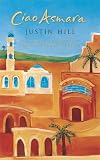
"The dreams we all had which sparkled for a short while in the hot sun of Eritrea"
By sally tarbox on 11 December 2017
Format: Kindle Edition
Justin Hill went out to Eritrea as a volunteer aid worker in 1996. The country had just emerged from thirty years of conflict with neighbouring Ethiopia, and Hill writes of the aftermath: the damaged buildings but far more importantly a damaged people. Countless deaths; people with horrifying tales to tell; and a sense of malaise as the long fought-for show more and dreamed-of independent Eritrea fails to materialise.
As former fighters get the top jobs, there remains a sense that conflict is something to aspire to; warfare remains a glorious state.
Hill's account concludes with his evacuation as war starts to break out anew...
Having read two accounts of Eritrea in the 30s by Italian doctor/ administrator Alberto Denti di Pirajno (qv), which portrayed a rather magical place, it was sad to read Hill's contrasting its time as an Italian colony with the country today:
"The Italian aristocrat Duke Denti di Pirajno had reported lions here in the 1930s; and I saw a village called Elephant Water- but all the big game was long gone. The war had seen to that; when soldiers weren't killing each other they turned their guns on the wildlife around them. They'd left the land barren: dust and stones, devastated by a virulent plague of human beings."
A beautiful country but a seemingly hopeless situation.
B/w photos. show less
By sally tarbox on 11 December 2017
Format: Kindle Edition
Justin Hill went out to Eritrea as a volunteer aid worker in 1996. The country had just emerged from thirty years of conflict with neighbouring Ethiopia, and Hill writes of the aftermath: the damaged buildings but far more importantly a damaged people. Countless deaths; people with horrifying tales to tell; and a sense of malaise as the long fought-for show more and dreamed-of independent Eritrea fails to materialise.
As former fighters get the top jobs, there remains a sense that conflict is something to aspire to; warfare remains a glorious state.
Hill's account concludes with his evacuation as war starts to break out anew...
Having read two accounts of Eritrea in the 30s by Italian doctor/ administrator Alberto Denti di Pirajno (qv), which portrayed a rather magical place, it was sad to read Hill's contrasting its time as an Italian colony with the country today:
"The Italian aristocrat Duke Denti di Pirajno had reported lions here in the 1930s; and I saw a village called Elephant Water- but all the big game was long gone. The war had seen to that; when soldiers weren't killing each other they turned their guns on the wildlife around them. They'd left the land barren: dust and stones, devastated by a virulent plague of human beings."
A beautiful country but a seemingly hopeless situation.
B/w photos. show less
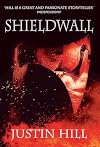
I thought this was well written, but at times I found it a little ponderous and sometimes lacking the passion proclaimed on the cover. Having recently read Ryan Lavelle's biography of King Ethelred, I was a bit disappointed with the wholly negative and one sided depiction of his reign as a complete disaster offered here, which overlooks the successful repulsion of lesser Viking incursions earlier in the reign. The novel ended well, though, and I will read the inevitable later novels in the show more series. The author evokes the sense of a time period well. Godwin comes over well and Kendra was an attractive character.
I was a little annoyed by some aspects that contradicted the known facts, e.g. Ethelred's mother lives until 1013 here when she is believed to have died around the turn of the millennium. Okay, historical records are scant for this era, but had she lived and plotted an extra 15 years or so, there would be some trace in the historical record. The future King Edward (the Confessor) was a few years older here than generally believed. Finally, I couldn't help noticing a discrepancy - Edmund's wife Ealdgyth is small and dark on page 228 and fair haired on page 368. 4/5 show less
I was a little annoyed by some aspects that contradicted the known facts, e.g. Ethelred's mother lives until 1013 here when she is believed to have died around the turn of the millennium. Okay, historical records are scant for this era, but had she lived and plotted an extra 15 years or so, there would be some trace in the historical record. The future King Edward (the Confessor) was a few years older here than generally believed. Finally, I couldn't help noticing a discrepancy - Edmund's wife Ealdgyth is small and dark on page 228 and fair haired on page 368. 4/5 show less
A nicely written and paced novel, rich with drama and intrigue and which begins at the start of a momentous period for what was beginning to become England. The 11th Century.
If '11th Century' says nothing to you - 1066 was the second half of the 11th Century. Better?
But that's not just for fun, because this is actually a novel set in England of the early 11th Century, a century of invasions, clearly. Vikings are banging on Englands door every few years, they invade and conquer a couple of show more times, then there's the pesky Normans, here just waiting and watching. In Normandy.
Beginning at the start of the century and concentrating on the situation in England - and wider afield sometimes - this is a story taking place before the momentous events of later on. Pre-Conquest happenings seem to have been non the less momentous as those later on, by the sounds of it. And as I found here, obviously benefit greatly from a little illumination, context and background.
But it's not just a history lesson, though it is clearly well researched, and not just fleshing out the bare bones of history. Wikipedia could have told me that (and I did have to check a couple of times, to see if the characters were who I thought they were). Here, Justin Hill's writing really brings the period to life, the landscape, the people, the politics, the prevalent mentality of the period. Fully formed and thoroughly immersed, I think you might say it is and one becomes.
We follow, at the start of the book, one Wulfnoth, who seems to have become an Anglicised ex-Viking invader. Then for the majority of the novel, his son Godwin guides the story through the period. And if you add a '-son' to his name, as was the habit in those days, if you know anything at all of the period, you'll understand the significance of the person Justin Hill is writing about. Whilst they are the embodiment of a people becoming 'English', they are also Viking invaders of the first wave. Now fighting against new Viking invaders, to form an new land, their land, 'England'.
So this is the situation in England before the Norman conquest of 1066, that James Aitcheson and James Wilde are currently writing so evocatively about the after effects of. Where James Aitcheson's stories of the Norman knight 'Tancred' show the invaders' side and James Wilde's 'Hereward' series is about the guerrilla war of English resistance to the conquerors, this is a much more relaxed, panoramic view of the the events leading up to the conquest. As I say, there is drama and intrigue, politicking (and later, action) aplenty. And it is all handled with a confident, fluidic surety by Justin Hill. I think this is his first foray into the Historical Novel field, though you'd never know it. You can tell he had great fun writing this one, that's clear from some lovely descriptive passages that are almost lyrical and must have felt lovely when just written. The book has in parts, an almost dream-like feel to it. You can feel him looking back into history, trying to see into the mists, attempting to make sense of and see what is forming. Then there come passages and events clear, sharp and bright. And heart-pounding action, of course. Best I can sum it up as.
Interestingly, if he's got his research right and I can only presume he has, this is an England being formed by and fought over, by what we would think of as boys, young men at best. Godwin is barely 19 at the end of this, Knut is I think a little younger, and all the other main characters, Ethelred apart, are very young men.
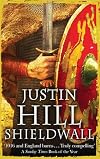
If there was one quibble I had, it was the lack of meaningful action (by which I mean, fighting) in the first half. I saw somewhere he was writing a trilogy and even with having to follow historical events pretty closely (by which I mean that if there weren't any battles, you can hardly write about them, can you?), there could have been a bit more mayhem at the start, even if you are largely setting up for a trilogy. The front cover illustration (of the paperback version I have) is also a bit non-descript. Not gonna be leaping off the shelves with that one.
Oh yeah, if I might recommend one thing to the author/publisher; it would be to change the photo of Justin Hill in the back cover (of the paperback version I have). To something more 'read my book, you'll really enjoy it'- like. Rather than the current 'read my book - or I'll break yer legs!'
Enjoyable though. show less
If '11th Century' says nothing to you - 1066 was the second half of the 11th Century. Better?
But that's not just for fun, because this is actually a novel set in England of the early 11th Century, a century of invasions, clearly. Vikings are banging on Englands door every few years, they invade and conquer a couple of show more times, then there's the pesky Normans, here just waiting and watching. In Normandy.
Beginning at the start of the century and concentrating on the situation in England - and wider afield sometimes - this is a story taking place before the momentous events of later on. Pre-Conquest happenings seem to have been non the less momentous as those later on, by the sounds of it. And as I found here, obviously benefit greatly from a little illumination, context and background.
But it's not just a history lesson, though it is clearly well researched, and not just fleshing out the bare bones of history. Wikipedia could have told me that (and I did have to check a couple of times, to see if the characters were who I thought they were). Here, Justin Hill's writing really brings the period to life, the landscape, the people, the politics, the prevalent mentality of the period. Fully formed and thoroughly immersed, I think you might say it is and one becomes.
We follow, at the start of the book, one Wulfnoth, who seems to have become an Anglicised ex-Viking invader. Then for the majority of the novel, his son Godwin guides the story through the period. And if you add a '-son' to his name, as was the habit in those days, if you know anything at all of the period, you'll understand the significance of the person Justin Hill is writing about. Whilst they are the embodiment of a people becoming 'English', they are also Viking invaders of the first wave. Now fighting against new Viking invaders, to form an new land, their land, 'England'.
So this is the situation in England before the Norman conquest of 1066, that James Aitcheson and James Wilde are currently writing so evocatively about the after effects of. Where James Aitcheson's stories of the Norman knight 'Tancred' show the invaders' side and James Wilde's 'Hereward' series is about the guerrilla war of English resistance to the conquerors, this is a much more relaxed, panoramic view of the the events leading up to the conquest. As I say, there is drama and intrigue, politicking (and later, action) aplenty. And it is all handled with a confident, fluidic surety by Justin Hill. I think this is his first foray into the Historical Novel field, though you'd never know it. You can tell he had great fun writing this one, that's clear from some lovely descriptive passages that are almost lyrical and must have felt lovely when just written. The book has in parts, an almost dream-like feel to it. You can feel him looking back into history, trying to see into the mists, attempting to make sense of and see what is forming. Then there come passages and events clear, sharp and bright. And heart-pounding action, of course. Best I can sum it up as.
Interestingly, if he's got his research right and I can only presume he has, this is an England being formed by and fought over, by what we would think of as boys, young men at best. Godwin is barely 19 at the end of this, Knut is I think a little younger, and all the other main characters, Ethelred apart, are very young men.
If there was one quibble I had, it was the lack of meaningful action (by which I mean, fighting) in the first half. I saw somewhere he was writing a trilogy and even with having to follow historical events pretty closely (by which I mean that if there weren't any battles, you can hardly write about them, can you?), there could have been a bit more mayhem at the start, even if you are largely setting up for a trilogy. The front cover illustration (of the paperback version I have) is also a bit non-descript. Not gonna be leaping off the shelves with that one.
Oh yeah, if I might recommend one thing to the author/publisher; it would be to change the photo of Justin Hill in the back cover (of the paperback version I have). To something more 'read my book, you'll really enjoy it'- like. Rather than the current 'read my book - or I'll break yer legs!'
Enjoyable though. show less
Lists
Awards


You May Also Like


Associated Authors
Statistics
- Works
- 37
- Also by
- 14
- Members
- 776
- Popularity
- #32,779
- Rating
- 3.3
- Reviews
- 13
- ISBNs
- 72
- Languages
- 9