
James Ward (10)
Author of The Perfection of the Paper Clip: Curious Tales of Invention, Accidental Genius, and Stationery Obsession
For other authors named James Ward, see the disambiguation page.
About the Author
James Ward is the cofounder of the Stationery Club and the Boring Conference, featured in the Wall Street Journal and the Observer (UK). His blog, I Like Boring Things, has been featured in the Independent and on the BBC website. He lives in London, and The Perfection of the Paper Clip is his first show more book. show less
Works by James Ward
The Perfection of the Paper Clip: Curious Tales of Invention, Accidental Genius, and Stationery Obsession (2015) 116 copies, 4 reviews
Tagged
Common Knowledge
- Gender
- male
Members
Reviews
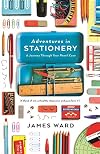
A wonderfully whimsical look at the world of stationery that’s well worth a read whether or not you’re a stationery aficionado.
Each chapter focuses on one particular sphere of stationery: pens, paper, pencils and everything in between. What makes it so fun to read is the author’s passion and humorous way of describing the histories and coincidences that led to the discovery of so many of the things we use in the office and around our homes 365 days a year.
It’ll be a book that will show more hardly leave your hand until you turn the last page and it’s certainly worth every penny. show less
Each chapter focuses on one particular sphere of stationery: pens, paper, pencils and everything in between. What makes it so fun to read is the author’s passion and humorous way of describing the histories and coincidences that led to the discovery of so many of the things we use in the office and around our homes 365 days a year.
It’ll be a book that will show more hardly leave your hand until you turn the last page and it’s certainly worth every penny. show less
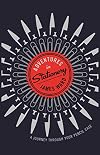
I love stationery, and I absolutely adored reading Adventures in Stationery: A Journey Through Your Pencil Case by James Ward recently.
Ward's love of stationery is infectious, and I frequently lost myself researching his favourite shops, and discovering websites dedicated to various forms of stationery.
Every time I picked up this book, I had to have my tablet handy, just so I could look up images of the items described: the Blackwing 602 pencil, Pink Pearl eraser, different paper clip shapes show more and more. I enjoyed many trips down memory lane, remembering the kinds of glue I used in primary school (clag, PVA and remember these?) to the different types of white out used in high school (liquid paper bottle, the correction pen and who could forget the thinner!).
Adventures in Stationery is funny, entertaining and educational, and I loved reading about the invention of sticky notes, how Scotch tape got its name and even that 3M was originally known as the Minnesota Mining & Manufacturing company. If you've never understood the meaning behind staple sizes then this is the book for you.
Here is just a small selection of my favourite discoveries in Adventures in Stationery:
Page 78 - the term foolscap, "used to describe a sheet of paper 13.5" x 17"... derives from the 'fool's cap' watermark...introduced in the middle of the fifteenth century."
Page 100 - "a ferrule is the metal sleeve holding the eraser in place."
Page 115 - before there were erasers or rubbers, "the preferred method for removing pencil lines was to use stale bread."
Page 213 - "When Blu-Tack was originally developed, it was white in colour, but the blue colouring was added after concerns were raised that children might think it was chewing gum and attempt to eat it."
Finally, Ward's mention of the use of skeuomorphic design by software designers to replicate an object's physical characteristics in another form (for instance, making the icon for the 'cut' function in MS Word look like a pair of scissors) blew my mind.
Adventures in Stationery: A Journey Through Your Pencil Case by James Ward was an absolute joy to read and even the book itself is a treasure with an attractive hard back design featuring paper clips, drawing pins and pen lids. Perfect, right?
Highly recommended for stationery lovers everywhere! show less
Ward's love of stationery is infectious, and I frequently lost myself researching his favourite shops, and discovering websites dedicated to various forms of stationery.
Every time I picked up this book, I had to have my tablet handy, just so I could look up images of the items described: the Blackwing 602 pencil, Pink Pearl eraser, different paper clip shapes show more and more. I enjoyed many trips down memory lane, remembering the kinds of glue I used in primary school (clag, PVA and remember these?) to the different types of white out used in high school (liquid paper bottle, the correction pen and who could forget the thinner!).
Adventures in Stationery is funny, entertaining and educational, and I loved reading about the invention of sticky notes, how Scotch tape got its name and even that 3M was originally known as the Minnesota Mining & Manufacturing company. If you've never understood the meaning behind staple sizes then this is the book for you.
Here is just a small selection of my favourite discoveries in Adventures in Stationery:
Page 78 - the term foolscap, "used to describe a sheet of paper 13.5" x 17"... derives from the 'fool's cap' watermark...introduced in the middle of the fifteenth century."
Page 100 - "a ferrule is the metal sleeve holding the eraser in place."
Page 115 - before there were erasers or rubbers, "the preferred method for removing pencil lines was to use stale bread."
Page 213 - "When Blu-Tack was originally developed, it was white in colour, but the blue colouring was added after concerns were raised that children might think it was chewing gum and attempt to eat it."
Finally, Ward's mention of the use of skeuomorphic design by software designers to replicate an object's physical characteristics in another form (for instance, making the icon for the 'cut' function in MS Word look like a pair of scissors) blew my mind.
Adventures in Stationery: A Journey Through Your Pencil Case by James Ward was an absolute joy to read and even the book itself is a treasure with an attractive hard back design featuring paper clips, drawing pins and pen lids. Perfect, right?
Highly recommended for stationery lovers everywhere! show less
Some people see stationary as a necessary evil, as long as the pen works and the end of it has not been chewed too much, then all is good. Then there are those who covert the clean piece of paper, the curl of wood from a freshly sharpened pencil, the cellophane covering the new pack of Post-It’s or the possibilities that a pristine cover of a Moleskine holds. If you are in the latter group; this book is for you. Each and every one of us uses stationary in some form or other, though that show more has fallen with the advent of smart phones and devices.
Ward has an obsession with stationary bordering on the unnatural, but that obsession has driven him to ask the questions that no one else would ask, such as: What are the 1000’s of uses for blue tack? How many pencils do Ikea supply each year? Who pays $43 for a pencil? Is there a risk when licking a gummed envelope? And where has the sellotape gone again?
He tells us just how the highlighter came into being, the evolution of the pen from quill to gel, Why the staples never fit your stapler and why one bank stopped chaining its pens to the desk. Sadly we seem to be losing the art of writing, as tapping things out on your phone seems to have more appeal. I have always liked stationary; as I look around me I have two of the black and yellow waspish coloured Staedtler pencils, one un branded pen, a Uni-ball pen (my favourite), a plastic eraser and one of those double pencil sharpeners that have a standard and a large hole. In all my years I have never used the large hole to sharpen a pencil…
This is a brilliantly quirky book about those things that we never really consider in any depth. Ward has uncovered the history behind the most mundane of objects and tells the stories of some of the characters who made the brands that we know and love today. Great stuff. show less
Ward has an obsession with stationary bordering on the unnatural, but that obsession has driven him to ask the questions that no one else would ask, such as: What are the 1000’s of uses for blue tack? How many pencils do Ikea supply each year? Who pays $43 for a pencil? Is there a risk when licking a gummed envelope? And where has the sellotape gone again?
He tells us just how the highlighter came into being, the evolution of the pen from quill to gel, Why the staples never fit your stapler and why one bank stopped chaining its pens to the desk. Sadly we seem to be losing the art of writing, as tapping things out on your phone seems to have more appeal. I have always liked stationary; as I look around me I have two of the black and yellow waspish coloured Staedtler pencils, one un branded pen, a Uni-ball pen (my favourite), a plastic eraser and one of those double pencil sharpeners that have a standard and a large hole. In all my years I have never used the large hole to sharpen a pencil…
This is a brilliantly quirky book about those things that we never really consider in any depth. Ward has uncovered the history behind the most mundane of objects and tells the stories of some of the characters who made the brands that we know and love today. Great stuff. show less
Ward is a pleasant writer with a quirky sense of humor and not too shy to insert the obscure reference. (He says foolscap is "the only traditional paper size to be name-checked in a Brian Eno song as far as I know.")* As with so many non-fiction books these days, this originated in a blog, but he's made the transition to book form less awkwardly than most. One trouble is, though, that the significant differences in common office supplies, or at least their names, in the UK and in the US can show more make the book hard to follow for American readers. Certainly I'd never heard of a "desk tidy" before; I'd never even heard the term "tidy" as a noun. Same with drawing pins, the biro (okay, I knew that one), and even Blu-Tack: in my life, the most common such product was white, and we called it "poster putty." So there's a significant amount of translation and understanding from.context to be done. Some differences in the familiar boggle the mind, though. Ward says that some of the desks at his primary school (i.e., elementary school) still had inkwells — in the 1980s.
With those differences in mind, this is a fun, discursive book that has a lot to teach anyone, breezily going through the surprising history of the graphite ("lead") pencil and of Liquid Paper (I knew the one-sentence outline, which I won't spoil for those who don't know, but Ward was able to fill in a lot of the story that I had never heard). It can be read quickly and with pleasure by anyone nerdy enough to be interested in its subject matter.
* I'm not too shy to show off, either. The song is Back in Judy's Jungle. show less
With those differences in mind, this is a fun, discursive book that has a lot to teach anyone, breezily going through the surprising history of the graphite ("lead") pencil and of Liquid Paper (I knew the one-sentence outline, which I won't spoil for those who don't know, but Ward was able to fill in a lot of the story that I had never heard). It can be read quickly and with pleasure by anyone nerdy enough to be interested in its subject matter.
* I'm not too shy to show off, either. The song is Back in Judy's Jungle. show less
You May Also Like


Associated Authors
Statistics
- Works
- 2
- Members
- 227
- Popularity
- #99,085
- Rating
- 3.7
- Reviews
- 9
- ISBNs
- 97
- Languages
- 2