
Jack Lynch (1)
Author of The Lexicographer's Dilemma: The Evolution of 'Proper' English, from Shakespeare to South Park
For other authors named Jack Lynch, see the disambiguation page.
About the Author
Jack Lynch, a Johnson scholar and professor of English at Rutgers University
Image credit: courtesy author
Works by Jack Lynch
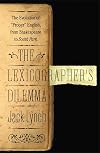
The Lexicographer's Dilemma: The Evolution of 'Proper' English, from Shakespeare to South Park (2009) 563 copies, 48 reviews
Samuel Johnson's Dictionary: Selections from the 1755 Work That Defined the English Language (1755) — Editor — 410 copies, 2 reviews
You Could Look It Up: The Reference Shelf From Ancient Babylon to Wikipedia (2016) 220 copies, 4 reviews
Becoming Shakespeare: The Unlikely Afterlife That Turned a Provincial Playwright into the Bard (2007) 128 copies, 2 reviews
Samuel Johnson's Insults: A Compendium of Snubs, Sneers, Slights and Effronteries from the Eighteenth-Century Master (2004) 98 copies, 1 review
The Age of Johnson, Vol. 17 1 copy
Associated Works
Johnson After Three Centuries: New Light on Texts and Contexts (2011) — Contributor — 3 copies, 1 review
Tagged
Common Knowledge
- Birthdate
- 20th Century
- Gender
- male
- Education
- University of Pennsylvania (BA|English)
University of Pennsylvania (PhD|English) - Occupations
- lexicographer
English professor - Organizations
- Rutgers University, Newark
- Places of residence
- Lawrenceville, New Jersey, USA
- Associated Place (for map)
- New Jersey, USA
Members
Reviews
The Lexicographer's Dilemma: The Evolution of 'Proper' English, from Shakespeare to South Park by Jack Lynch
What a fantastic book! This history illuminates the social and historical context surrounding the origins, evolution, and current state of the English language. As a sociologist I was fascinated by the detailed examination of how changes in English society, then American society, and now world society have led to shifts in the language. As a lover of the written word and sometime pedant I appreciate the great detail included in Lynch's examinations of the rules of spelling and grammar. I show more have even been inspired to loosen my prescriptive ways and brazenly split the occasional infinitive.
Although it reads more like a collection of stories and skips around in time a bit, Lynch covers his ground very thoroughly and in entertaining style. show less
Although it reads more like a collection of stories and skips around in time a bit, Lynch covers his ground very thoroughly and in entertaining style. show less
 This review was written for LibraryThing Early Reviewers.
The Lexicographer's Dilemma: The Evolution of 'Proper' English, from Shakespeare to South Park by Jack Lynch

The dilemma of the title is the conflict between the lexicographer's duty to describe language as it is actually used, and the public's demand for rules and direction in English usage. Lynch exposes the frustrated will-to-power of prescriptivist grammarians, pundits, mavens, and language reformers of all periods--along with the egalitarian naivete of descriptivist lexicographers.
The approach is historical, with a preamble regarding the origins of human language and the beginnings of show more English, and then an evenly-paced coverage from the 17th century into the 21st, most often through biographical lenses. There is attention to both British and American English, as well as reflection on the further global spread of the language. The final chapter discusses the current stresses, mutations, and creativity resulting from technological change and globalization, while a penultimate chapter delves into linguistic obscenity as a special topic.
The style is accessible throughout, both assuming and encouraging the curiosity of the reader. This book should be enjoyable to any reader of English who cares about the language, and as Lynch seems to demonstrate, that's just about any reader of English. show less
The approach is historical, with a preamble regarding the origins of human language and the beginnings of show more English, and then an evenly-paced coverage from the 17th century into the 21st, most often through biographical lenses. There is attention to both British and American English, as well as reflection on the further global spread of the language. The final chapter discusses the current stresses, mutations, and creativity resulting from technological change and globalization, while a penultimate chapter delves into linguistic obscenity as a special topic.
The style is accessible throughout, both assuming and encouraging the curiosity of the reader. This book should be enjoyable to any reader of English who cares about the language, and as Lynch seems to demonstrate, that's just about any reader of English. show less
This review was written for LibraryThing Early Reviewers.The lexicographer's dilemma : the evolution of "proper" English, from Shakespeare to South Park by Jack Lynch
Have you ever wondered why split infinitives and sentence-ending prepositions were forbidden by grammar books? Maybe you're more curious about dictionaries and their history of recording, and sometimes making judgments about, the language. Jack Lynch covers all this and more in The Lexicographer's Dilemma, a history of all those rules (grammar, spelling, etc.) about our native language that we had to study at school - or, as he more succinctly puts it, "the evolution of 'proper' show more English."
That's not to say that he's making fun of these rules, though on the occasions he does, it's very entertaining. Generally Lynch takes a balanced approach, recognizing the need to learn and know standard English for writing at school, work, and other situations, while recognizing and even celebrating the natural changes made in language as years go by. His chapter on eighteenth century grammarians really bring this balance to light. Some pile on these men all the faults of trying to force English into a Latin mode with such rules as "don't split an infinitive." Actually, Lynch argues, many of these rules did not begin in the 18th century - and the three big names in grammar were not strictly lay-down-the-law types. He quotes from many sources at length to prove his points, and I've made note of a few more books I want to read in the future. show less
That's not to say that he's making fun of these rules, though on the occasions he does, it's very entertaining. Generally Lynch takes a balanced approach, recognizing the need to learn and know standard English for writing at school, work, and other situations, while recognizing and even celebrating the natural changes made in language as years go by. His chapter on eighteenth century grammarians really bring this balance to light. Some pile on these men all the faults of trying to force English into a Latin mode with such rules as "don't split an infinitive." Actually, Lynch argues, many of these rules did not begin in the 18th century - and the three big names in grammar were not strictly lay-down-the-law types. He quotes from many sources at length to prove his points, and I've made note of a few more books I want to read in the future. show less
The lexicographer's dilemma : the evolution of "proper" English, from Shakespeare to South Park by Jack Lynch

What is a dictionary for? Is it for people that want to "open a dictionary when they encounter a word they don't know, or aren't sure they know, and want to know how it's being used"? Or is it for people that want to "open a dictionary when they have to *use* words and aren't sure how they'll be received"? This is the lexicographer's dilemma: if you write a dictionary to be used one way you don't necessarily serve people who want to use it the other way. So which kind of dictionary should a show more lexicographer write?
Jack Lynch traces the history of dictionaries of English, focusing on the tension between the two approaches, and on the personalities of the people who wrote them. Along the way he asks the questions: "what does *proper* English mean, and who gets to say what's right?"
In the struggle between prescriptivists and descriptivists, Lynch doesn't make a secret of where he stands. "The same impulse has led many ill-tempered grouches to send angry letters to magazines and newspapers." "The linguistic conservatives have ... mistaken language change for language decay."
His analysis of the controversy over *Webster's Third New International Dictionary* is especially insightful. Essentially, Lynch concludes, Gove was wrong, his critics were "wronger".
The book is written for the intelligent layman, free of linguistic and lexicographic jargon, but not dumbed down. show less
Jack Lynch traces the history of dictionaries of English, focusing on the tension between the two approaches, and on the personalities of the people who wrote them. Along the way he asks the questions: "what does *proper* English mean, and who gets to say what's right?"
In the struggle between prescriptivists and descriptivists, Lynch doesn't make a secret of where he stands. "The same impulse has led many ill-tempered grouches to send angry letters to magazines and newspapers." "The linguistic conservatives have ... mistaken language change for language decay."
His analysis of the controversy over *Webster's Third New International Dictionary* is especially insightful. Essentially, Lynch concludes, Gove was wrong, his critics were "wronger".
The book is written for the intelligent layman, free of linguistic and lexicographic jargon, but not dumbed down. show less
This review was written for LibraryThing Early Reviewers.Lists
Awards

You May Also Like


Associated Authors
Statistics
- Works
- 22
- Also by
- 2
- Members
- 1,559
- Popularity
- #16,536
- Rating
- 4.1
- Reviews
- 57
- ISBNs
- 85
- Favorited
- 1
