
Henry Hitchings
Author of Defining the World: The Extraordinary Story of Dr Johnson's Dictionary
About the Author
Works by Henry Hitchings
Defining the World: The Extraordinary Story of Dr Johnson's Dictionary (2005) 566 copies, 18 reviews
Alexander Solzhenitsyn 1 copy
Associated Works
Pride and Prejudice (1813) — Afterword, some editions; Afterword, some editions — 94,339 copies, 1,511 reviews
Tagged
Common Knowledge
- Birthdate
- 1974-12-11
- Gender
- male
- Education
- University College London
University of Oxford (Christ Church) - Occupations
- journalist
theatre critic
author
reviewer - Agent
- Peter Straus
Melanie Jackson (Melanie Jackson Agency) - Nationality
- UK
- Birthplace
- Nottingham, Nottinghamshire, England, UK
- Places of residence
- England, UK
- Associated Place (for map)
- England, UK
Members
Reviews
Dr. Johnson's Dictionary : The Extraordinary Story of the Book That Defined the World by Henry Hitchings
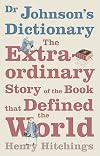
If, at the beginning of the 18th century, France and Italy already had their own dictionaries, England, on the contrary, was lagging behind. Never mind! One man, alone, will attempt
to remedy to that: Samuel Johnson.
The son of a book dealer, autodidact, married to a very sick wife, struggling his whole life against both financial problems and a poor mental health, Samuel Johnson, character with an amazing intellectual strength, will nevertheless write more than 42,000 definitions which will show more remain THE English language's lexicographical reference for more than 150 years. In fact, published in 1755, it won't be supplanted unless by the Oxford English Dictionary (OED) and, even then, the OED itself will keep more than 1,700 of his definitions, words for words! And what definitions!
A unique writing style, erudite, witty, funny at times, Samuel Johnson succeeded doing in 8 years what 40 French academicians had struggled to achieve in more than 55: to 'fix' a language in a dictionary, where words are not only defined and illustrated by quotations, but, also, have their etymology retraced (at a time when philology itself didn't exist yet!). The results would be remarkable:
'Dull': not exhilarating, not delightful; as in "to make dictionaries is dull work"
'Lexicographer': a writer of dictionaries; a harmless drudge.'
And on. And on. And on! Here was a monument, one which became since a national icon in England and to whom Henry Hitchings pays a great tribute here; showing not only the genius of a man and his work, but, also, putting such endeavour within the intellectual storm of the times, when English language itself was being standardised, Johnson himself being one of its fiercer 'purist'. An highly entertaining biography! show less
to remedy to that: Samuel Johnson.
The son of a book dealer, autodidact, married to a very sick wife, struggling his whole life against both financial problems and a poor mental health, Samuel Johnson, character with an amazing intellectual strength, will nevertheless write more than 42,000 definitions which will show more remain THE English language's lexicographical reference for more than 150 years. In fact, published in 1755, it won't be supplanted unless by the Oxford English Dictionary (OED) and, even then, the OED itself will keep more than 1,700 of his definitions, words for words! And what definitions!
A unique writing style, erudite, witty, funny at times, Samuel Johnson succeeded doing in 8 years what 40 French academicians had struggled to achieve in more than 55: to 'fix' a language in a dictionary, where words are not only defined and illustrated by quotations, but, also, have their etymology retraced (at a time when philology itself didn't exist yet!). The results would be remarkable:
'Dull': not exhilarating, not delightful; as in "to make dictionaries is dull work"
'Lexicographer': a writer of dictionaries; a harmless drudge.'
And on. And on. And on! Here was a monument, one which became since a national icon in England and to whom Henry Hitchings pays a great tribute here; showing not only the genius of a man and his work, but, also, putting such endeavour within the intellectual storm of the times, when English language itself was being standardised, Johnson himself being one of its fiercer 'purist'. An highly entertaining biography! show less
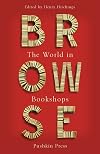
One of the most persistent memories in the life of a bibliophile has to do with a bookshop. THE bookshop, actually. It may be that cozy shop, full of children's fiction, or the bookshop where we spent our allowance as teenagers. Or that second-hand temple, perfect for university students.And along with browsing, hunting for old and new treasures, friendships were forged and the first literary discussions shaped us as readers.
In my case, there were two bookshops that make me feel nostalgic show more at the age of 32. Both are connected to my late grandmother. I grew up in a family that had- and still has- reading as a second religion, but my closest partner in crime was grandma. She would read without getting tired, without omitting a single page even though I could see her eyes growing heavy with sleep. So, she and I had our personal ritual. At the beginning of every month, we would visit two bookshops in our neighbourhood. The first was an ordinary bookshop, its owner one of my mum’s good friends, and from here we would buy all the Classics and books that were always slightly (or significantly) above my age. I was reading books suitable for adolescents when I was 8 or nine years old. The, we would visit a second shop that sold toys and children's books.Its owner was Italian, like my grandma. They would talk for hours in their mother tongue, while I used to sneak around, rummaging the shelves, marvelling at the pictures. I usually left that shop with my arms full of books, 5-6 that grandma had bought me and 2-3 more that had been given to me as a gift by the nice lady. Every month was like Christmas back then.
Now, how much more significant some bookshops can be when you eventually become a writer? The authors of this beautiful collection write about their memories connected to these ‘’temples’’ and the way their writing identity was influenced by them. Quirky owners, dimly-lit second-hand bookshops, industrial, cleancut, immaculately organized shelves. We travel from Scotland to Kenya, from Denmark to China, from Colombia to India, to England,Egypt, Ukraine and Italy, every corner of the world, every culture, every way of thinking and talking about books acquires a voice.
The essays are superbly organized, directly speaking to the reader like a memoir of the common desire to own every book available and express the deepest love for this little item that helps mankind not to fall into eternal darkness. Every text has something to offer and communicate.’’ Leitner and I’’ by Saša Stanišić is what I consider the highlight of the collection. It shows how booklovers are serious addicts through and through, by composing a striking text full of similes and metaphors between junkies and unrepentant book lovers.
The least favourite was ‘’Intimacy’’by Dorthe Nors. In fact, I found it rude and pretentious. A poorly-written blend of childhood memories and an ordinary bookshop owner, while name-dropping Kristin Lavransdatter in the mix for effect’s sake. The author tries to justify her unethical behaviour in a Copenhagen bookshop and blames the owner for throwing her out. Of course, she would throw her out. I would. I don't think Nors had the right to re-arrange the shelves and make the copy of her book stand out. Perhaps, she has no idea of the toil that is to organize a shelf. Hell, when it is so difficult to do it in our bookcases,how much harder will it be in the case of whole store? It was downright unprofessional, self-indulgent and her text had nothing to offer apart from informing us that she had a Degree in Literature without ever reading Sigrid Undset’s masterpiece. It was cringeworthy.
The two bookshops of my childhood don’t exist anymore. They passed away upon the altar of our current times. It doesn’t matter,though. It doesn’t matter if your favourite bookshop belongs to a bookstore chain with classy, gloriously beautiful and shiny shelves, with grey carpets from wall to wall or a cozy second-hand shop where books are in piles reaching the ceiling or carelessly forming a bookish wall on the steps of a wooden staircase. Spaces are made by people. Sometimes, the person who would take you to the shop and let you indulge in your passion from an early age is the one who creates the memories, and for this, my review of this moving, tender book is dedicated to grandma.
Many thanks to Pushkin Press and Edelweiss for providing me with a free copy in exchange for an honest review. show less
In my case, there were two bookshops that make me feel nostalgic show more at the age of 32. Both are connected to my late grandmother. I grew up in a family that had- and still has- reading as a second religion, but my closest partner in crime was grandma. She would read without getting tired, without omitting a single page even though I could see her eyes growing heavy with sleep. So, she and I had our personal ritual. At the beginning of every month, we would visit two bookshops in our neighbourhood. The first was an ordinary bookshop, its owner one of my mum’s good friends, and from here we would buy all the Classics and books that were always slightly (or significantly) above my age. I was reading books suitable for adolescents when I was 8 or nine years old. The, we would visit a second shop that sold toys and children's books.Its owner was Italian, like my grandma. They would talk for hours in their mother tongue, while I used to sneak around, rummaging the shelves, marvelling at the pictures. I usually left that shop with my arms full of books, 5-6 that grandma had bought me and 2-3 more that had been given to me as a gift by the nice lady. Every month was like Christmas back then.
Now, how much more significant some bookshops can be when you eventually become a writer? The authors of this beautiful collection write about their memories connected to these ‘’temples’’ and the way their writing identity was influenced by them. Quirky owners, dimly-lit second-hand bookshops, industrial, cleancut, immaculately organized shelves. We travel from Scotland to Kenya, from Denmark to China, from Colombia to India, to England,Egypt, Ukraine and Italy, every corner of the world, every culture, every way of thinking and talking about books acquires a voice.
The essays are superbly organized, directly speaking to the reader like a memoir of the common desire to own every book available and express the deepest love for this little item that helps mankind not to fall into eternal darkness. Every text has something to offer and communicate.’’ Leitner and I’’ by Saša Stanišić is what I consider the highlight of the collection. It shows how booklovers are serious addicts through and through, by composing a striking text full of similes and metaphors between junkies and unrepentant book lovers.
The least favourite was ‘’Intimacy’’by Dorthe Nors. In fact, I found it rude and pretentious. A poorly-written blend of childhood memories and an ordinary bookshop owner, while name-dropping Kristin Lavransdatter in the mix for effect’s sake. The author tries to justify her unethical behaviour in a Copenhagen bookshop and blames the owner for throwing her out. Of course, she would throw her out. I would. I don't think Nors had the right to re-arrange the shelves and make the copy of her book stand out. Perhaps, she has no idea of the toil that is to organize a shelf. Hell, when it is so difficult to do it in our bookcases,how much harder will it be in the case of whole store? It was downright unprofessional, self-indulgent and her text had nothing to offer apart from informing us that she had a Degree in Literature without ever reading Sigrid Undset’s masterpiece. It was cringeworthy.
The two bookshops of my childhood don’t exist anymore. They passed away upon the altar of our current times. It doesn’t matter,though. It doesn’t matter if your favourite bookshop belongs to a bookstore chain with classy, gloriously beautiful and shiny shelves, with grey carpets from wall to wall or a cozy second-hand shop where books are in piles reaching the ceiling or carelessly forming a bookish wall on the steps of a wooden staircase. Spaces are made by people. Sometimes, the person who would take you to the shop and let you indulge in your passion from an early age is the one who creates the memories, and for this, my review of this moving, tender book is dedicated to grandma.
Many thanks to Pushkin Press and Edelweiss for providing me with a free copy in exchange for an honest review. show less
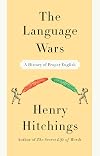
_The Language Wars_ is a wide-ranging discussion of perceptions of English usage. Hitchings strenuously attempts to mediate between the prescriptivist and descriptivist camps, implying that those who take strong positions are usually proven wrong by history.
I especially appreciate his explanations of how usage "rules" were developed and defended by the high priests of grammar. What we think of as iron-clad grammar rules can often prove a barrier to clarity and understanding;"correct" show more pronoun antecedent agreement, for example, sometimes leads to confusing sentences. As an English teacher, this will lead me to be less dogmatic and more flexible with my students' writing and speaking. Ultimately, the standards should be:
1. Is your use of language intelligible?
2. Is your use of language the best way to express your ideas?
3. Does your use of language reflect meaningful, complex, higher-order thinking? show less
I especially appreciate his explanations of how usage "rules" were developed and defended by the high priests of grammar. What we think of as iron-clad grammar rules can often prove a barrier to clarity and understanding;"correct" show more pronoun antecedent agreement, for example, sometimes leads to confusing sentences. As an English teacher, this will lead me to be less dogmatic and more flexible with my students' writing and speaking. Ultimately, the standards should be:
1. Is your use of language intelligible?
2. Is your use of language the best way to express your ideas?
3. Does your use of language reflect meaningful, complex, higher-order thinking? show less
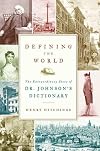
Henry Hitchings' Defining the World: The Extraordinary Story of Dr. Johnson's Dictionary (FSG, 2005) is a lively and readable trek through the incredible feat that was the creation of Johnson's Dictionary of the English Language (1755). Hitchings ably guides his reader through Johnson's haphazard creative process, outlining the way in which the lexicographer culled his illustrative quotations (when not from memory, that is) and worked with his small coterie of amanuenses to make the show more projected dictionary a reality.
This book centers on the Dictionary from first to last; with Johnson it's easy to be distracted by the man himself, and there is just enough of the biography here to get a feel for the creator without losing sight of the creation. Hitchings discusses various aspects (quirks?) of the Dictionary, from Johnson's perennial defining words (interstices, morbid, e.g., which each appear several times) to his nationalistic, "middle-class, backward-looking, Anglocentric, male" biases to the few downright mistakes, and the more common vague or circular definitions. Among those oddities I enjoyed most: the definition of "defluxion" as "a defluxion," and the dismissal of "trolmydames" (used by Shakespeare in The Winter's Tale) with simply "Of this word I know not the meaning."
The definitions of "oats," and a few others notwithstanding, as Hitchings points out, the "real surprise of Johnson's Dictionary is that despite its author's reputation as a man of rather cramped sympathies, its entries are as clinical and unprejudiced as they are." The work was taken seriously, for all its wit.
Hitchings also includes some fascinating details about the printing and publication details of the Dictionary, from the type and paper used to the various later editions, abridgements and pirated versions which spread Johnson's reputation far and wide. These are important and interesting topics, and they were most welcome (to me, at least).
Well footnoted at least, this book's main fault is the lack of a full bibliography. But perhaps Johnson's quote about dictionaries can be extended more widely here: "The worst is better than none, and the best cannot be expected to go quite true."
http://philobiblos.blogspot.com/2007/03/book-review-defining-world.html show less
This book centers on the Dictionary from first to last; with Johnson it's easy to be distracted by the man himself, and there is just enough of the biography here to get a feel for the creator without losing sight of the creation. Hitchings discusses various aspects (quirks?) of the Dictionary, from Johnson's perennial defining words (interstices, morbid, e.g., which each appear several times) to his nationalistic, "middle-class, backward-looking, Anglocentric, male" biases to the few downright mistakes, and the more common vague or circular definitions. Among those oddities I enjoyed most: the definition of "defluxion" as "a defluxion," and the dismissal of "trolmydames" (used by Shakespeare in The Winter's Tale) with simply "Of this word I know not the meaning."
The definitions of "oats," and a few others notwithstanding, as Hitchings points out, the "real surprise of Johnson's Dictionary is that despite its author's reputation as a man of rather cramped sympathies, its entries are as clinical and unprejudiced as they are." The work was taken seriously, for all its wit.
Hitchings also includes some fascinating details about the printing and publication details of the Dictionary, from the type and paper used to the various later editions, abridgements and pirated versions which spread Johnson's reputation far and wide. These are important and interesting topics, and they were most welcome (to me, at least).
Well footnoted at least, this book's main fault is the lack of a full bibliography. But perhaps Johnson's quote about dictionaries can be extended more widely here: "The worst is better than none, and the best cannot be expected to go quite true."
http://philobiblos.blogspot.com/2007/03/book-review-defining-world.html show less
Lists
Awards


You May Also Like


Associated Authors
Statistics
- Works
- 14
- Also by
- 3
- Members
- 1,861
- Popularity
- #13,831
- Rating
- 4.3
- Reviews
- 43
- ISBNs
- 39
- Languages
- 3
- Favorited
- 2