
Bram Dijkstra
Author of Idols of Perversity: Fantasies of Feminine Evil in Fin-de-Siècle Culture
About the Author
Bram Dijkstra is Professor of American and Comparative Literature at the University of California, San Diego
Works by Bram Dijkstra
Idols of Perversity: Fantasies of Feminine Evil in Fin-de-Siècle Culture (1986) 393 copies, 8 reviews
Evil Sisters: The Threat of Female Sexuality in Twentieth-Century Culture (1996) 135 copies, 1 review
Georgia O'Keeffe - N. Y. 1 copy
Tagged
Common Knowledge
- Birthdate
- 1938-07-05
- Gender
- male
- Organizations
- University of California, San Diego
- Nationality
- USA
- Places of residence
- San Diego, California, USA
- Associated Place (for map)
- California, USA
Members
Reviews
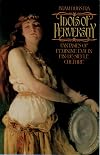
At the turn of the century, an unprecedented attack on women erupted in virtually every aspect of culture: literary, artistic, scientific, and philosophic. Throughout Europe and America, artists and intellectuals banded together to portray women as static and unindividuated beings who functioned solely in a sexual and reproductive capacity, thus formulating many of the anti-feminine platitudes that today still constrain women's potential. Bram Dijkstra's Idols of Perversity explores the show more nature and development of turn-of-the-century misogyny in the works of hundreds of writers, artists, and scientists, including Zola, Strindberg, Wedekind, Henry James, Rossetti, Renoir, Moreau, Klimt, Darwin, and Spencer. Dijkstra demonstrates that the most prejudicial aspects of Evolutionary Theory helped to justify this wave of anti-feminine sentiment. The theory claimed that the female of the species could not participate in the great evolutionary process that would guide the intellectual male to his ultimate, predestined role as a disembodied spiritual essence. Darwinists argued that women hindered this process by their willingness to lure men back to a sham paradise of erotic materialism. To protect the male's continued evolution, artists and intellectuals produced a flood of pseudo-scientific tracts, novels, and paintings which warned the world's males of the evils lying beneath the surface elegance of woman's tempting skin. Reproducing hundreds of pictures from the period and including in-depth discussions of such key works as Dracula and Venus in Furs, this fascinating book not only exposes the crucial links between misogyny then and now, but also connects it to the racism and anti-semitism that led to catastrophic genocidal delusions in the first half of the twentieth century. Crossing the conventional boundaries of art history, sociology, the history of scientific theory, and literary analysis, Dijkstra unveils a startling view of a grim and largely one-sided war on women still being fought today. show less
Idols of Perversity: Fantasies of Feminine Evil in Fin-de-Siècle Culture (Oxford Paperbacks) by Bram Dijkstra
I have long though fin-de-siècle painters used classical themes, like Diana and her arrow as an excuse to pander to .... Well, the subjects are "nude", not "naked". (We still like our young heroines as archers.)
So, Dijkstra discusses this and builds on it and it is cheeky and engaging and scholarly, so enlightening and entertaining. It feels like spectating objectification of women - pornography on the sly - is just base titillation on the sly. This is rather curbed by the fact that many show more plates are small, black-and-white things that cannot really be appreciated or "studied". Here is some of the jocular reflection on fleshy oil paintings where women offer the ultimate vulnerability and promised compliance due to skeletal malfunction:
...and....
I read this book for the "articles" - the paragraphs of context where the salacious trends in art decade by decade such as the impact of writers like Otto Weininger. The Austrian philosopher published the book Geschlecht und Charakter (Sex and Character), which gained popularity after his suicide at the age of 23. Parts of his work were adapted for use by the Nazi regime (which at the same time denounced him). Weininger had a strong influence on Ludwig Wittgenstein, August Strindberg, Julius Evola, and even James Joyce.
This all seems to culminate in the virgin-whore decapitating tender trap of Salome which is more analyzed than most themes:
With decapitation a stand-in for castration, this alluring threat seems to be the pinnacle "perversity" referred to in the title. However, sometimes the author seems to cast the depicted heat of lust as perversity:
The Black Sabbath album "The Eternal Idol" used Auguste Rodin's "The Eternal Idol" sculpture (1889) for the cover art and, heck, even Madonna "Like A Prayer" could be a soundtrack to this carving celebrating direct adoration. Dijkstra should just calm down about it and enjoy it for what it is. To me, the perversity presented here is the sexualized children. show less
So, Dijkstra discusses this and builds on it and it is cheeky and engaging and scholarly, so enlightening and entertaining. It feels like spectating objectification of women - pornography on the sly - is just base titillation on the sly. This is rather curbed by the fact that many show more plates are small, black-and-white things that cannot really be appreciated or "studied". Here is some of the jocular reflection on fleshy oil paintings where women offer the ultimate vulnerability and promised compliance due to skeletal malfunction:
... How nightmarish painters' dreams of infantile flesh could ultimately become is graphically demonstrated in Léon Frédéric's monumental triptych "The Stream", in which this artist, ostensibly to illustrate Beethoven's "Pastoral" Symphony, created with insane literalness the ultimate representation of the familiar equation between water, women, and the world of the child in a carnal orgy of infant flesh. When images of this sort, of this extreme paranoia, arise in man's imagination, can Buchenwald be far behind?
Certainly such images as Frédéric's "The Stream," whatever the long-range impact may have been of the mentality they represented, show how intensely the generation of men who had been brought up by household nuns was torn by conflicting desires and expectations. While the new evolutionary science had undercut the religious focus of the search for a soul-guardian, the theory of evolution had also implanted a new, urgent sense of res ty in the young vanguard intellectuals, making them yearn to pursue the by bring humanity closer to the world of disembodied essences, of "pure pure mind was to be the new soul, a soul whose creation, whose "evo- he responsibility of the young artists and intellectuals.
...and....
Naiads and woodland nymphs with apparently self-inflicted broken backs became a staple of the Paris salon exhibitions, especially during the period between 1880 and 1914. It did not matter whether such women were portrayed as being carried "on the wings of a dream" or, like Pierre Dupuis' playful ondine, on the crest of a wave, or whether they had already been rudely washed ashore. Even if the artists' excuse for painting their nude and sprawled bodies was to show them as the personification of "the wave," or "the breeze," or as "Aphrodite", they always seemed to suffer from the same harsh spinal distortion. Most of these paintings are stylistic echoes of Alexandre Cabanel's succès de scandale of 1863. "The Birth of Venus", which in its own way revolutionized the representation of this theme by having Venus rise out of the waves not standing upright and in control of things, as in Botticelli's famous version, but by having her seem to have floated to the surface from the ocean floor in a conveniently horizontal position. Earl Shinn, commenting on the painting in 1879, remarked laconically that "the form of this personage suffers from bonelessness." Noting this Venus' "delicate and seductive" as well as "rather uncelestial" beauty, Shinn pointed out that "the painter has created her with that absence of which evades responsibility". In addition to exhibiting the lassitude […] of the collapsing woman…
I read this book for the "articles" - the paragraphs of context where the salacious trends in art decade by decade such as the impact of writers like Otto Weininger. The Austrian philosopher published the book Geschlecht und Charakter (Sex and Character), which gained popularity after his suicide at the age of 23. Parts of his work were adapted for use by the Nazi regime (which at the same time denounced him). Weininger had a strong influence on Ludwig Wittgenstein, August Strindberg, Julius Evola, and even James Joyce.
This all seems to culminate in the virgin-whore decapitating tender trap of Salome which is more analyzed than most themes:
Elements of the Salome theme delineated by Moreau, Flaubert, Huysmans, and La- forgue were to come together by 1891, to produce first in French and shortly afterward in an English translation by Lord Alfred Douglas-Oscar Wilde's famous play, which did more than any other single image or piece of writing to make the headhuntress name a household word for pernicious sexual perversity. Wilde's Salome is a very carefully designed dramatization of the struggle between the bestial hunger of woman and the idealistic yearnings of man. The play works up to a conclusion in which the masculine mind is led, through temptation and submission, to an understanding of the need for woman's immediate physical destruction. In Wilde's symbolic drama a wholesale manipulation of the image of woman as aggressor serves as a cleansing ritual of passage designed to expose her mindless perfidy and insatiable physical need. As such the work climaxes in a categorical renunciation of any communication between male and female, and, in effect, be- comes a call to gynecide.
[…] Wilde's Salome is, in Jokanaan's words, "a basilisk" born "from the seed of the serpent," a reptile able to kill a man simply by looking at him...
With decapitation a stand-in for castration, this alluring threat seems to be the pinnacle "perversity" referred to in the title. However, sometimes the author seems to cast the depicted heat of lust as perversity:
In his sculpture "The Eternal Idol" Rodin placed masochistic man in his preferred relationship to woman: A helpless hero, he kneels before the perverse creature...
The Black Sabbath album "The Eternal Idol" used Auguste Rodin's "The Eternal Idol" sculpture (1889) for the cover art and, heck, even Madonna "Like A Prayer" could be a soundtrack to this carving celebrating direct adoration. Dijkstra should just calm down about it and enjoy it for what it is. To me, the perversity presented here is the sexualized children. show less

Bram Dijkstra is a comparative literature professor who specializes in the relationship of literature to the visual arts. Do not be misled about this book, though. It is a book about an ideology, and only concerned with art and literature to the extent that they express and facilitate that ideology. Now, I agree with Dijkstra in large measure regarding the interaction of ideology and culture. In particular, he insists that "by retracing the visual origins of the 'great' literary works of show more turn-of-the-century writers we tend to find ourselves uncomfortably back in a world of intellectual cliches which, in their written form, were elegantly obscured by the apparent profundities embedded in the necessary ambiguities of language." (150) He is also on-target when he remarks the many cases in which "To suggest, as cultural historians have been wont to, that paintings such as these were naive, unconscious images of archetypal sexual symbols whose real meaning the psychoanalysts were in the process of uncovering at just this time represents a fundamental misunderstanding of the anything but unconscious prurience of the nineteenth-century art world." (301)
Alas, it pains me to report, Dijkstra makes it difficult to agree with him. His presentation is so sententious and sanctimonious that it is decidedly off-putting. I am myself a feminist, and so I tended to sympathize with the values that motivated Dijkstra to the reams of condemnations which are the meat of this book. But he never explicitly offers and justifies those values: he just seems to think they go without saying, and that makes him appear to be exchanging an old form of moralistic bigotry for a new one. Perhaps academics in California in the 1980s could afford to think of their perspective as the abundantly vindicated status quo, but that blinkered assumption doesn't play well when addressing a larger readership.
The author is a "man with a hammer," as the saying goes, and misogyny is his nail! There are certainly a few instances where he overplays his hand in the search for supporting instances. His appraisal of Leon Frederic's painting "The Stream" (1900) is a special case-in-point, with overheated rhetoric that is sadly typical of Idols of Perversity:
"How nightmarish painters' dreams of infantile flesh could ultimately become is graphically demonstrated in Leon Frederic's monumental triptych 'The Stream' [VI, 25], in which this artist, ostensibly to illustrate Beethoven's 'Pastoral' symphony, created with insane literalness the ultimate representation of the familiar equation between water, women, and the world of the child in a carnal orgy of infant flesh. When images of this sort, of this extreme paranoia, arise in man's imagination, can Buchenwald be far behind?" (197)
All right, then. I have been fortunate enough to see the original of "The Stream" at the Royal Museums of Fine Arts of Belgium. (This digital reproduction of the middle panel does it even less justice than the half-page black and white version in Dijkstra's book.) Water and children are certainly abundant in it, but I can't figure out where it makes any sort of statement about "women." And the impression it gave me was not one of threat founded in "paranoia," but simply joyful exuberance. It suggested to me a hope for and confidence in the future, emblemized by an irresistible force of humans-becoming. Honi soit qui mal y pense!
Here's another one: Dijkstra's gloss of "The Unknown" (ca. 1912) by John Charles Dollman. (See the image here.) He insists that this painting shows "how monkeys and women, equally childlike in their ignorant astonishment, tried to cope with the concept of fire in the primeval world." (290) Several details of the painting contradict this explanation. The sophisticated textiles worn by the woman disprove the notion that the setting is "primeval," and her imperious gesture makes it clear that, rather than being astonished by the fire, she is using her knowledge of it to dominate the monkeys. The lack of visible fuel for the fire even makes it seem as though she has just conjured it into existence.
Many of Dijkstra's assessments are perfectly reasonable, however, and his summaries of Victorian gender theory are clear, and probably valuable to 21st-century readers who have been sheltered from the likes of sexist savant Otto Weininger. His analysis of the codified misogyny in Stoker's Dracula is precise and accurate, and his indictment of the vampire genre as a whole appears to be massively supported by the current Stephanie Miller Twilight phenomenon.
I had been hoping, throughout this long text, that Dijkstra might conclude on a more reflexive note, one that would observe the persistent chauvinism in late 20th-century Western culture, and how it could be grasped in terms of the earlier currents that the book studies. This hope was more than disappointed when he used his final chapter to "go full Godwin." Not content merely to apply every negatively-charged adjective in his thesaurus to the ideological male chauvanism of the period, he goes on to postulate a causative relationship by which it led to the ascendancy of Nazi power. He had already remarked in earlier chapters, duly and sufficiently I thought, on the eliminationist rhetorical elements in the "bio-sexism" (his term) of the Victorian and Edwardian eras. But to finish the book with a meditation on Nazi genocide seemed to me like it undercut his argument as a whole, and its relevance to the reader. The sort of exceptionalism that makes the Nazi Holocaust into the great demonstration of pure evil also seems to make it into an expiation, a sobering episode that has ensured that "we" not-Nazis won't take any of the ideological wrong-turns that were involved in Nazism.
Other than the dust jacket, there were no color reproductions among the many scores of art illustrations in the book. That was disappointing, but entirely in keeping with the authorial agenda to use these as evidence in a larger ideological thesis, rather than works of inherent interest. Strangely, the image on the front cover juxtaposed with the title Idols of Perversity is one of the few contextualizing counter-examples that Dijkstra provides. He points to Ella Ferris Pell's "Salome" (1890) as a conceptually feminist treatment of a literary theme that had been a staple of misogynist art. In fact, this passage, along with another in the first chapter where he contrasts the gender conceptions underlying 17th- and 18th-century couples portraiture with that of the 19th century, were among the most effectively argued in the book.
My own initial interest in this book stemmed from my attraction to the Symbolist, Decadent, and Academic Orientalist schools of aesthetics, and in particular the way that many of their originally misogynist productions have been later revalorized by proponents of female sovereignty. I did get some valuable pointers to artists and authors I might otherwise have neglected, but always in the context of another interminable sentence of "guilty." I'll take my guilty pleasures where I can find them, thanks. show less
Alas, it pains me to report, Dijkstra makes it difficult to agree with him. His presentation is so sententious and sanctimonious that it is decidedly off-putting. I am myself a feminist, and so I tended to sympathize with the values that motivated Dijkstra to the reams of condemnations which are the meat of this book. But he never explicitly offers and justifies those values: he just seems to think they go without saying, and that makes him appear to be exchanging an old form of moralistic bigotry for a new one. Perhaps academics in California in the 1980s could afford to think of their perspective as the abundantly vindicated status quo, but that blinkered assumption doesn't play well when addressing a larger readership.
The author is a "man with a hammer," as the saying goes, and misogyny is his nail! There are certainly a few instances where he overplays his hand in the search for supporting instances. His appraisal of Leon Frederic's painting "The Stream" (1900) is a special case-in-point, with overheated rhetoric that is sadly typical of Idols of Perversity:
"How nightmarish painters' dreams of infantile flesh could ultimately become is graphically demonstrated in Leon Frederic's monumental triptych 'The Stream' [VI, 25], in which this artist, ostensibly to illustrate Beethoven's 'Pastoral' symphony, created with insane literalness the ultimate representation of the familiar equation between water, women, and the world of the child in a carnal orgy of infant flesh. When images of this sort, of this extreme paranoia, arise in man's imagination, can Buchenwald be far behind?" (197)
All right, then. I have been fortunate enough to see the original of "The Stream" at the Royal Museums of Fine Arts of Belgium. (This digital reproduction of the middle panel does it even less justice than the half-page black and white version in Dijkstra's book.) Water and children are certainly abundant in it, but I can't figure out where it makes any sort of statement about "women." And the impression it gave me was not one of threat founded in "paranoia," but simply joyful exuberance. It suggested to me a hope for and confidence in the future, emblemized by an irresistible force of humans-becoming. Honi soit qui mal y pense!
Here's another one: Dijkstra's gloss of "The Unknown" (ca. 1912) by John Charles Dollman. (See the image here.) He insists that this painting shows "how monkeys and women, equally childlike in their ignorant astonishment, tried to cope with the concept of fire in the primeval world." (290) Several details of the painting contradict this explanation. The sophisticated textiles worn by the woman disprove the notion that the setting is "primeval," and her imperious gesture makes it clear that, rather than being astonished by the fire, she is using her knowledge of it to dominate the monkeys. The lack of visible fuel for the fire even makes it seem as though she has just conjured it into existence.
Many of Dijkstra's assessments are perfectly reasonable, however, and his summaries of Victorian gender theory are clear, and probably valuable to 21st-century readers who have been sheltered from the likes of sexist savant Otto Weininger. His analysis of the codified misogyny in Stoker's Dracula is precise and accurate, and his indictment of the vampire genre as a whole appears to be massively supported by the current Stephanie Miller Twilight phenomenon.
I had been hoping, throughout this long text, that Dijkstra might conclude on a more reflexive note, one that would observe the persistent chauvinism in late 20th-century Western culture, and how it could be grasped in terms of the earlier currents that the book studies. This hope was more than disappointed when he used his final chapter to "go full Godwin." Not content merely to apply every negatively-charged adjective in his thesaurus to the ideological male chauvanism of the period, he goes on to postulate a causative relationship by which it led to the ascendancy of Nazi power. He had already remarked in earlier chapters, duly and sufficiently I thought, on the eliminationist rhetorical elements in the "bio-sexism" (his term) of the Victorian and Edwardian eras. But to finish the book with a meditation on Nazi genocide seemed to me like it undercut his argument as a whole, and its relevance to the reader. The sort of exceptionalism that makes the Nazi Holocaust into the great demonstration of pure evil also seems to make it into an expiation, a sobering episode that has ensured that "we" not-Nazis won't take any of the ideological wrong-turns that were involved in Nazism.
Other than the dust jacket, there were no color reproductions among the many scores of art illustrations in the book. That was disappointing, but entirely in keeping with the authorial agenda to use these as evidence in a larger ideological thesis, rather than works of inherent interest. Strangely, the image on the front cover juxtaposed with the title Idols of Perversity is one of the few contextualizing counter-examples that Dijkstra provides. He points to Ella Ferris Pell's "Salome" (1890) as a conceptually feminist treatment of a literary theme that had been a staple of misogynist art. In fact, this passage, along with another in the first chapter where he contrasts the gender conceptions underlying 17th- and 18th-century couples portraiture with that of the 19th century, were among the most effectively argued in the book.
My own initial interest in this book stemmed from my attraction to the Symbolist, Decadent, and Academic Orientalist schools of aesthetics, and in particular the way that many of their originally misogynist productions have been later revalorized by proponents of female sovereignty. I did get some valuable pointers to artists and authors I might otherwise have neglected, but always in the context of another interminable sentence of "guilty." I'll take my guilty pleasures where I can find them, thanks. show less
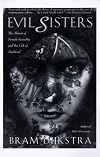
Being an examination of the contemporary world's obsession with women who are evil and/or dominant. The book is a continuation of the author's masterpiece Idols of Perversity, which approached the same theme in nineteenth-century terms through the narrower lens of paintings. This book, though good, is a lesser book for being less focused and too often using interpretations which are elaborately strained.
Awards

You May Also Like


Associated Authors
Statistics
- Works
- 12
- Members
- 679
- Popularity
- #37,220
- Rating
- 4.1
- Reviews
- 10
- ISBNs
- 18
- Languages
- 3
