
Ellen Feldman
Author of Next to Love
About the Author
Works by Ellen Feldman
Tagged
Common Knowledge
- Birthdate
- 1941
- Gender
- female
- Education
- Bryn Mawr College
- Occupations
- writer
- Nationality
- USA
- Birthplace
- New Jersey, USA
- Places of residence
- New York, New York, USA
East Hampton, New York, USA - Associated Place (for map)
- New York, USA
Members
Reviews

"Next to Love" was advertised as a novel about love, war, and loss- “beautifully crafted and unforgettable”. What a disappointment. It was neither. In fact, I was amazed this book got so many great reviews.
The writing style is disjointed and muddled. Written in the third person, the book is divided into increments of three to five year periods of time, each with a focus on only one of the three main characters: Babe, Millie, or Grace. But after completing that increment of time from one show more character’s perspective, the focus moves to the next character and repeats the same period of time, often presenting redundant scenes. This technique allows the reader to see things from various points of view, but is very distracting and irritating, especially when it requires the reader to go back a few years and relive scenes that have already passed and were inconsequential to begin with. It almost feels like the published book was simply the outline for the novel and should have been edited to put everything in proper chronological order.
If the poor craftsmanship had been the only weakness of "Next to Love" I may have been able to overlook it and still enjoy the book, but there were several other major flaws. The novel covers a period of time from 1941 to 1964 and though Feldman goes out of her way to inject little tidbits of information that relate to the past eras, the atmosphere never really evokes a true sense of nostalgia.
In addition, there are too many significant characters and important issues for this 289 page book. In a feeble attempt to cover everything from love, marriage, friendship, death, anti-semitism, racial relations, rape, grieving World War II survivors, inter-faith marriages, women’s changing roles in society, injured and maimed war veterans, the novel jumps from one issue to another, leaving threads of the story dangling in mid-air. Any one of these topics could have filled the entire book, and made an unforgettable story, but Feldman barely skims the surface of these deep personal and social issues, leaving this reader totally unsatisfied. No one issue is explored in depth which makes the characters superficial. One example of this: one of the main characters gets raped, and afterwards, she simply goes about her life and puts it out of her mind. If the rape scene was not meant to summon introspection and be analyzed for the gravity of violation to the character, why even have it happen? This lack of emotion occurs repeatedly in the book. As a result it becomes difficult to invest interest in the plot or any of the characters. The characters remain abstract strangers in a plot that is utterly and irrevocably forgettable. show less
The writing style is disjointed and muddled. Written in the third person, the book is divided into increments of three to five year periods of time, each with a focus on only one of the three main characters: Babe, Millie, or Grace. But after completing that increment of time from one show more character’s perspective, the focus moves to the next character and repeats the same period of time, often presenting redundant scenes. This technique allows the reader to see things from various points of view, but is very distracting and irritating, especially when it requires the reader to go back a few years and relive scenes that have already passed and were inconsequential to begin with. It almost feels like the published book was simply the outline for the novel and should have been edited to put everything in proper chronological order.
If the poor craftsmanship had been the only weakness of "Next to Love" I may have been able to overlook it and still enjoy the book, but there were several other major flaws. The novel covers a period of time from 1941 to 1964 and though Feldman goes out of her way to inject little tidbits of information that relate to the past eras, the atmosphere never really evokes a true sense of nostalgia.
In addition, there are too many significant characters and important issues for this 289 page book. In a feeble attempt to cover everything from love, marriage, friendship, death, anti-semitism, racial relations, rape, grieving World War II survivors, inter-faith marriages, women’s changing roles in society, injured and maimed war veterans, the novel jumps from one issue to another, leaving threads of the story dangling in mid-air. Any one of these topics could have filled the entire book, and made an unforgettable story, but Feldman barely skims the surface of these deep personal and social issues, leaving this reader totally unsatisfied. No one issue is explored in depth which makes the characters superficial. One example of this: one of the main characters gets raped, and afterwards, she simply goes about her life and puts it out of her mind. If the rape scene was not meant to summon introspection and be analyzed for the gravity of violation to the character, why even have it happen? This lack of emotion occurs repeatedly in the book. As a result it becomes difficult to invest interest in the plot or any of the characters. The characters remain abstract strangers in a plot that is utterly and irrevocably forgettable. show less
 This review was written for LibraryThing Early Reviewers.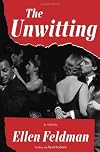
The Unwitting by Ellen Feldman follows a woman from the end of the Second World War and through her marriage and widowhood. Nell meets Charlie when she's still getting over a previous relationship, one which ended badly. Still, Charlie wins her over and they embark on a life together, he as the editor of a small, liberal-leaning magazine and she as a journalist often writing for that same paper. The magazine is lucky enough to receive support from an arts foundation, and Nell and Charlie show more start a family and travel quite a bit for the magazine.
I love the Mad Men era setting of this book, a time when you really could move to New York, get a job in publishing and work your way into a comfortable life, full of interesting parties and meaningful arguments. Nell's determined to keep working, even as a mother and she's got a passion to shed a light on injustice everywhere, marching with civil rights demonstrators and even traveling to Russia with a theater group to see conditions there for herself. When Feldman slows down and lets us experience Nell's life, the book comes alive.
The flaw of The Unwitting is that Feldman is taking on a long swath of history, meaning that much of Nell's story is told in summary and that the important political events of the cold war take precedence. This chops the book up and removes the reader from the immediacy of Nell's life. I really wish that either Feldman had chosen a tighter time frame or written a much longer book. Feldman is fantastic at rendering the telling details of a scene, of capturing the atmosphere of a time and place, a skill used beautifully in her earlier novel, Scottsboro. But she is less adept at the broader strokes of books set on longer time frames or with a large cast of characters. Those scenes in which she takes her time to give us one woman's perspective of a party or a conversation are pitch perfect. show less
I love the Mad Men era setting of this book, a time when you really could move to New York, get a job in publishing and work your way into a comfortable life, full of interesting parties and meaningful arguments. Nell's determined to keep working, even as a mother and she's got a passion to shed a light on injustice everywhere, marching with civil rights demonstrators and even traveling to Russia with a theater group to see conditions there for herself. When Feldman slows down and lets us experience Nell's life, the book comes alive.
The flaw of The Unwitting is that Feldman is taking on a long swath of history, meaning that much of Nell's story is told in summary and that the important political events of the cold war take precedence. This chops the book up and removes the reader from the immediacy of Nell's life. I really wish that either Feldman had chosen a tighter time frame or written a much longer book. Feldman is fantastic at rendering the telling details of a scene, of capturing the atmosphere of a time and place, a skill used beautifully in her earlier novel, Scottsboro. But she is less adept at the broader strokes of books set on longer time frames or with a large cast of characters. Those scenes in which she takes her time to give us one woman's perspective of a party or a conversation are pitch perfect. show less

I was uncertain about this book going in. I loved Ellen Feldman's novel about the Scottsboro trial in the 1930s, but I've been burned before by books set in Paris during WWII and by books set in bookstores in Paris, so a book set in a Paris bookstore during WWII seems to have the highest possible chance of being terrible. Fortunately, this was not the case. Feldman has written a nuanced novel about surviving in an occupied city as a widow with a young child without romanticizing the choices show more she made.
This novel moves back and forth between Charlotte's experiences during and immediately after the war, and her life in New York in the 1950's where she found refuge with a former colleague of her father's. He and his wife provide her with housing and a job in publishing. Her daughter remembers little before their life in New York, where she is entering adolescence and wondering both about her father and her Jewish faith. Her daughter's questions bring back memories Charlotte is working to bury, as does a letter she receives from South America.
Feldman never romanticizes the decisions Charlotte made during the war, and she also makes each character, regardless of who they were or what they did, someone who is also making difficult and sometimes impossible choices. There are no clean consciences and no one emerges without scars. Feldman's writing is clear and she's scrupulous in both her plots and her research. While this one does not supplant Scottsboro as my favorite novel by this author, Paris Never Leaves You comes a close second. show less
This novel moves back and forth between Charlotte's experiences during and immediately after the war, and her life in New York in the 1950's where she found refuge with a former colleague of her father's. He and his wife provide her with housing and a job in publishing. Her daughter remembers little before their life in New York, where she is entering adolescence and wondering both about her father and her Jewish faith. Her daughter's questions bring back memories Charlotte is working to bury, as does a letter she receives from South America.
Feldman never romanticizes the decisions Charlotte made during the war, and she also makes each character, regardless of who they were or what they did, someone who is also making difficult and sometimes impossible choices. There are no clean consciences and no one emerges without scars. Feldman's writing is clear and she's scrupulous in both her plots and her research. While this one does not supplant Scottsboro as my favorite novel by this author, Paris Never Leaves You comes a close second. show less
Charlotte Foret is a single mother in Paris during the Nazi occupation. She was married briefly to a man she adored, Laurent, who died in battle. During the war years she desperately tries to provide nourishment to her young daughter, Vivienne, during a time of great scarcity. Months go by, and both she and her baby become thinner and weaker. One day, a Wehrmacht officer enters the bookstore where Charlotte works. Sometimes he makes a purchase, but he often just browses. Much to Charlotte's show more surprise, this stranger, whose name she later learns is Julian Bauer, begins to bring her provisions. She is ashamed to take gifts from a German (doing so could brand her as a despised collaborator), but she is desperate to stay healthy and prevent Vivi from becoming sick or even dying of malnutrition.
The author fast-forwards to 1954. Vivienne is fourteen and Charlotte is an editor at Gibbon & Field, a respected New York publishing house. Mother and daughter are tenants of Charlotte's boss, Horace Field, and his psychoanalyst wife, Hannah, a couple who sponsored Charlotte and Vivienne's emigration from France to America. Although Horace is wheelchair-bound, he is successful, self-confident and, outspoken. Complicating matters are Charlotte and Hannah's antipathy towards one another; Vivi's attachment to Hannah, who becomes her confidante; and letters that Charlotte receives from South America that bring back disturbing memories.
"Paris Never Leaves You," by Ellen Feldman, is an absorbing work of historical fiction. The title and cover art may mislead readers into assuming that the book is lightweight romance. On the contrary, this is a tale of moral ambiguity, fear, guilt, and secrecy. It is also a psychologically complex and intensely moving story in which the author portrays her characters with compassion and nuance. Charlotte is intelligent and independent, but she can also be stubborn and unforgiving. This beautifully written novel is an exploration of the impact of trauma and the need that we all have for love and connection. To avoid living sterile lives, we must make peace with the past and place our trust in those who genuinely care for us. It is to Feldman's credit that, in this haunting and evocative book, she raises ethical dilemmas for which there are no clear-cut answers. show less
The author fast-forwards to 1954. Vivienne is fourteen and Charlotte is an editor at Gibbon & Field, a respected New York publishing house. Mother and daughter are tenants of Charlotte's boss, Horace Field, and his psychoanalyst wife, Hannah, a couple who sponsored Charlotte and Vivienne's emigration from France to America. Although Horace is wheelchair-bound, he is successful, self-confident and, outspoken. Complicating matters are Charlotte and Hannah's antipathy towards one another; Vivi's attachment to Hannah, who becomes her confidante; and letters that Charlotte receives from South America that bring back disturbing memories.
"Paris Never Leaves You," by Ellen Feldman, is an absorbing work of historical fiction. The title and cover art may mislead readers into assuming that the book is lightweight romance. On the contrary, this is a tale of moral ambiguity, fear, guilt, and secrecy. It is also a psychologically complex and intensely moving story in which the author portrays her characters with compassion and nuance. Charlotte is intelligent and independent, but she can also be stubborn and unforgiving. This beautifully written novel is an exploration of the impact of trauma and the need that we all have for love and connection. To avoid living sterile lives, we must make peace with the past and place our trust in those who genuinely care for us. It is to Feldman's credit that, in this haunting and evocative book, she raises ethical dilemmas for which there are no clear-cut answers. show less
Lists
Awards


You May Also Like


Associated Authors
Statistics
- Works
- 22
- Members
- 2,134
- Popularity
- #12,058
- Rating
- 3.7
- Reviews
- 206
- ISBNs
- 138
- Languages
- 8
- Favorited
- 1
