

Gina Apostol
Author of Insurrecto
About the Author
Image credit: wikipedia
Works by Gina Apostol
Associated Works
Charlie Chan Is Dead 2: At Home in the World: An Anthology of Contemporary Asian-American Fiction (2004) — Contributor — 97 copies, 1 review
Tagged
Common Knowledge
- Birthdate
- 1963
- Gender
- female
- Education
- University of the Philippines
Johns Hopkins University, MFA - Nationality
- Philippines
- Birthplace
- Manila, Philippines
- Places of residence
- New York, New York, USA
Tacloban, Leyte, Philippines
Massachusetts, USA - Map Location
- Philippines
Members
Reviews
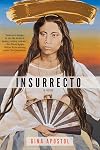
Insurrecto gives me faith that the root meaning of 'novel', nouvelle, something new—will continue to be true for a long time to come. Every sentence here was a revelation. Manila—so perfectly captured. The strange, very strange layer of popular American culture that paints itself over the Philippines—perfect. The strange, very strange way that Tagalog becomes the language of choice for ‘strange’ in English-language movies set in far-off lands....my friend from the Philippines had show more never stopped being indignant at the way Tagalog is spoken by Ewoks and Indonesians and Vietnamese, depending on the movie.
Most of all though this novel is an indictment of the way we forget. As well as an indictment of the way we remember, inaccurately. It is my best book of 2018. I’m so grateful to have read it.
If you try to read it yourself, it helps to be sipping chardonnay as you read along…chardonnay is not obligatory, but it might help you get over any irritation about the complete lack of linearity; about the stacks of stories being told here. It might help you hear the music.
Also it might help to take to heart the advice given on p. 103: "A reader does not need to know everything."
Wonderful.
Also, everyone who matters in this novel is an incredibly interesting woman. Yep. show less
Most of all though this novel is an indictment of the way we forget. As well as an indictment of the way we remember, inaccurately. It is my best book of 2018. I’m so grateful to have read it.
If you try to read it yourself, it helps to be sipping chardonnay as you read along…chardonnay is not obligatory, but it might help you get over any irritation about the complete lack of linearity; about the stacks of stories being told here. It might help you hear the music.
Also it might help to take to heart the advice given on p. 103: "A reader does not need to know everything."
Wonderful.
Also, everyone who matters in this novel is an incredibly interesting woman. Yep. show less
This is one of those books you want to start again immediately after finishing it - there is so much going on on so many levels I know my brain didn't pick it all up. It's a kaleidoscope of stories within stories, and spiralling ideas on colonialism, filmmaking, popular culture and more, but all anchored around the history of the US in the Philippines. This makes it sound like hard work to read, but it isn't - here are some samples to prove it:
In the audiece at an Elvis Presley concert in show more Las Vegas (the bedazzled white jump-suit Elvis):
"The spotlight turns back on. Virginie realizes it is a visual effect, not a snap in her brain, and she sees the man being rearranged, put back together by the strobe lights. A constructed and reconstructed figure, put back together by his audience’s screams.”
An observation:
“The life of a filmmaker is one of scraps of plots sandwiched between the lack of means to fulfill them. The life of a woman in the fifties is one of scraps of plots sandwiched between the lack of means to fulfill them.”
Here is one character's way of reading novels like this one:
“As she reads, Magsalin keeps track of her confusions annotating each chapter as she goes…In the notebook, she includes problems of continuity, the ones not explained by hopscotching chapters; issues of anachronism, given the short life-span of the male subject (1940-1977) contrasted against the women, who have superpowers: longevity and dispassion; words repeated as if they had been spilled and reconstituted then placed on another page; a stage set of interchangeable performers with identical names, or maybe doubles or understudies as they enter and exit the stage; an unexplained switch of characters’ names in one section; and the problem of lapsed time-in which simultaneous acts of writing are the illusions that sustain a story….But she rides the wave, she checks herself. A reader does not need to know everything.”
And last but not least, this reflection on turn of the centuy colonial photographs:
“Photographs of a captured country shot through the lens of the captor possess layers of ambiguity too confusing to grasp:
there is the eye of the victim, the captured, stilled and muted and hallowed in mud and time;
there is the eye of the victim, the captured, who may be bystander, belligerent, blameless, blamed – though there are subtle shifts in pathetic balance, who is to measure them?;
there is the eye of the colonized viewing their captured history in the distance created by time;
there is the eye of the captor, the soldier, who has just wounded the captured;
there is the eye of the captor, the Colonizer who has captured history’s lens;
there is the eye of the citizens, bystander, belligerent, blameless, blamed, whose history has colonized the captured in the distance created by time;
and there is the eye of the actual photographer: the one who captured the captured and the captors in his camera’s lens-what the hell was HE thinking?" show less
In the audiece at an Elvis Presley concert in show more Las Vegas (the bedazzled white jump-suit Elvis):
"The spotlight turns back on. Virginie realizes it is a visual effect, not a snap in her brain, and she sees the man being rearranged, put back together by the strobe lights. A constructed and reconstructed figure, put back together by his audience’s screams.”
An observation:
“The life of a filmmaker is one of scraps of plots sandwiched between the lack of means to fulfill them. The life of a woman in the fifties is one of scraps of plots sandwiched between the lack of means to fulfill them.”
Here is one character's way of reading novels like this one:
“As she reads, Magsalin keeps track of her confusions annotating each chapter as she goes…In the notebook, she includes problems of continuity, the ones not explained by hopscotching chapters; issues of anachronism, given the short life-span of the male subject (1940-1977) contrasted against the women, who have superpowers: longevity and dispassion; words repeated as if they had been spilled and reconstituted then placed on another page; a stage set of interchangeable performers with identical names, or maybe doubles or understudies as they enter and exit the stage; an unexplained switch of characters’ names in one section; and the problem of lapsed time-in which simultaneous acts of writing are the illusions that sustain a story….But she rides the wave, she checks herself. A reader does not need to know everything.”
And last but not least, this reflection on turn of the centuy colonial photographs:
“Photographs of a captured country shot through the lens of the captor possess layers of ambiguity too confusing to grasp:
there is the eye of the victim, the captured, stilled and muted and hallowed in mud and time;
there is the eye of the victim, the captured, who may be bystander, belligerent, blameless, blamed – though there are subtle shifts in pathetic balance, who is to measure them?;
there is the eye of the colonized viewing their captured history in the distance created by time;
there is the eye of the captor, the soldier, who has just wounded the captured;
there is the eye of the captor, the Colonizer who has captured history’s lens;
there is the eye of the citizens, bystander, belligerent, blameless, blamed, whose history has colonized the captured in the distance created by time;
and there is the eye of the actual photographer: the one who captured the captured and the captors in his camera’s lens-what the hell was HE thinking?" show less
Definitely this book would have been better served had I read it in a couple of sittings that were close together. Life intervened & so it took me awhile to get through it.
Loved the style, the layers, the social/historical/cultural items, the flipping viewpoints. Strong women throughout. Shades of A Moment in the Sun (for the Philippine-American War sections) & Hopscotch (for varying orders of reading chapters being an option). And, still very unique & fast-moving, looking at the subjects show more through different lenses. Funny, sardonic, wrenching.
I feel like I'm not really doing the book justice with my few comments. But, I also feel a bit disjointed since I read it over a long time span & there are so many facets to this novel. show less
Loved the style, the layers, the social/historical/cultural items, the flipping viewpoints. Strong women throughout. Shades of A Moment in the Sun (for the Philippine-American War sections) & Hopscotch (for varying orders of reading chapters being an option). And, still very unique & fast-moving, looking at the subjects show more through different lenses. Funny, sardonic, wrenching.
I feel like I'm not really doing the book justice with my few comments. But, I also feel a bit disjointed since I read it over a long time span & there are so many facets to this novel. show less
There is an excellent historical (and little known) story here. In the Philippine American War (1899 – 1913), forty-eight Americans were killed at a garrison, which led to an American reprisal and the killing of thousands of Filipinos. The Americans had helped the Filipinos defeat the Spanish, and then stayed on as “occupiers.”
The narrative centers on four people – a photographer in 1901, a scriptwriter in the 1970s, the daughter of the scriptwriter who is making a film of the show more incident in present times, and a translator (also in present times). There is disagreement between the daughter, Chiara, and translator, Magsalin, over whose perspective should take precedence in the film.
“She had a conversion into the world of the Filipino insurrectos of 1901, Chiara says. That is not the correct term, Magsalin says. What? They were revolutionaries, Magsalin says. It was not an insurrection. Chiara ignores her.”
At first, it felt like someone picked chapter numbers out of a hat. To complicate matters, there are three different timelines. I am not sure what the author accomplished by jumbling up the chapters. This period in history is already largely “forgotten,” so why not tell it in a more straight-forward manner? It is very artistic, but this is not a book for anyone that prefers linear storytelling.
This book would have easily been 4 stars if it had been organized differently. I recommend reading the author’s End Notes and Essay, which are more direct and convey essential background that the narrative does not provide. I plan to read non-fiction to learn more about this period in history. show less
The narrative centers on four people – a photographer in 1901, a scriptwriter in the 1970s, the daughter of the scriptwriter who is making a film of the show more incident in present times, and a translator (also in present times). There is disagreement between the daughter, Chiara, and translator, Magsalin, over whose perspective should take precedence in the film.
“She had a conversion into the world of the Filipino insurrectos of 1901, Chiara says. That is not the correct term, Magsalin says. What? They were revolutionaries, Magsalin says. It was not an insurrection. Chiara ignores her.”
At first, it felt like someone picked chapter numbers out of a hat. To complicate matters, there are three different timelines. I am not sure what the author accomplished by jumbling up the chapters. This period in history is already largely “forgotten,” so why not tell it in a more straight-forward manner? It is very artistic, but this is not a book for anyone that prefers linear storytelling.
This book would have easily been 4 stars if it had been organized differently. I recommend reading the author’s End Notes and Essay, which are more direct and convey essential background that the narrative does not provide. I plan to read non-fiction to learn more about this period in history. show less
Lists
Awards


You May Also Like


Associated Authors
Statistics
- Works
- 7
- Also by
- 5
- Members
- 590
- Popularity
- #42,529
- Rating
- 3.6
- Reviews
- 6
- ISBNs
- 32
- Languages
- 1